



Keeping clear aligners, retainers, and other orthodontic appliances clean is becoming increasingly important for both consumers and dental professionals. As more patients use Invisalign aligners, night guards, and retainers daily, traditional cleaning methods are no longer always enough to maintain long-term hygiene and material integrity.
Modern UV ultrasonic retainer cleaners combine ultrasonic cavitation technology with UV-C sterilization to provide a deeper and more efficient cleaning experience. For clinics, distributors, and oral care brands, these devices also offer a valuable opportunity to improve patient satisfaction while supporting higher hygiene standards.
The Limitations of Manual Cleaning for Orthodontic Appliances
For many years, patients were advised to clean retainers and clear aligners using a soft-bristled toothbrush and mild soap. While this method may remove some visible debris, it also has important limitations.
Research and product development testing have shown that repeated manual brushing can create microscopic scratches on thermoplastic aligner materials. Over time, these tiny surface grooves may trap bacteria, plaque, and biofilm, leading to unpleasant odor and hygiene concerns.
Manual brushing also struggles to reach narrow grooves, deep retainer structures, and hard-to-access areas where bacteria can accumulate. As orthodontic appliances become more advanced and widely used, many users are now looking for cleaning solutions that provide deeper and more consistent hygiene support.

UV-C Sterilization: Beyond Surface Cleaning
Cleaning and disinfecting are not the same process. While ultrasonic waves help remove physical debris, UV-C sterilization provides an additional layer of hygiene support by targeting microorganisms on the appliance surface.
UV-C light in the 260–280nm wavelength range works by disrupting the DNA and RNA structure of bacteria and microorganisms, reducing their ability to reproduce. This technology has been widely used in healthcare, water purification, and hygiene products for years.
For oral appliances that are repeatedly placed back into the mouth, UV-C sanitizing offers added reassurance, particularly for users with sensitive gums or heightened hygiene concerns.
Comparative Analysis: Cleaning Methods for Invisalign and Retainers
Different cleaning methods provide different levels of effectiveness, convenience, and long-term material protection.
Manual Brushing
Manual brushing is inexpensive and widely accessible, but it mainly cleans surface-level debris and may create microscopic scratches over time if too much force is applied.
Chemical Cleaning Tablets
Cleaning tablets can help reduce stains and odor, but they often require soaking time and recurring replacement purchases. Some users may also prefer to avoid regular chemical exposure during daily cleaning.
UV Ultrasonic Retainer Cleaners
UV ultrasonic cleaners combine ultrasonic cavitation with UV-C sanitizing technology to provide a more advanced cleaning solution. These devices offer deeper cleaning support, non-abrasive operation, automatic cleaning cycles, and improved convenience for daily use.
For many users, the combination of cleaning performance, portability, and ease of use makes UV ultrasonic cleaners an attractive long-term oral care investment.

Professional Protocol: Step-by-Step Cleaning Guide
To achieve the best cleaning results, users should follow a consistent cleaning routine when using a UV ultrasonic retainer cleaner.
Preparation
Fill the stainless steel cleaning tank with clean water up to the recommended water level. For appliances with heavy buildup or calcification, a specialized cleaning tablet may be added if needed.
Placement
Place the retainer, aligner, or mouth guard fully into the water chamber, ensuring the appliance is completely submerged.
Cleaning Cycle
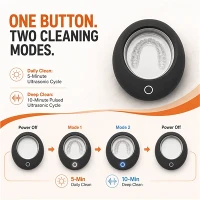
Activate the UV-C cleaning cycle. Most modern devices complete the process automatically in approximately five minutes.
Rinse and Dry
After the cleaning cycle finishes, rinse the appliance with cool water and allow it to air dry before storage or wearing again.
Compliance and Material Integrity: FDA Standards
Safety and material quality are especially important in the oral care industry. High-quality UV ultrasonic cleaners are typically designed using bio-compatible 304 stainless steel tanks to improve durability and reduce contamination risks.
Many professional-grade devices are also manufactured to meet FDA compliance and CE certification standards, helping ensure they satisfy international safety and quality requirements for oral care products.
Additional features such as IPX7 waterproof protection further improve durability and allow the devices to be safely used in both home and professional environments.

Understanding Ultrasonic Cleaning
The performance of an ultrasonic cleaner largely depends on its operating frequency. At 42kHz, ultrasonic transducers generate millions of microscopic bubbles inside the water chamber through a process known as cavitation.
When these bubbles rapidly collapse, they create high-frequency pressure waves that help loosen plaque, debris, and buildup from the surface of retainers and aligners. This process allows ultrasonic cleaning to reach areas that are difficult or impossible to clean with traditional brushing alone.
Deep Penetration Cleaning
Ultrasonic cavitation helps clean small grooves, inner surfaces, and tight spaces that toothbrush bristles often cannot fully reach. This deeper cleaning support is especially useful for clear aligners and retainers with complex shapes.
Gentle Yet Effective Performance
Unlike aggressive brushing, ultrasonic cleaning is non-abrasive and does not rely on physical friction. This helps reduce the risk of scratches, material fatigue, or long-term surface damage while still providing effective daily cleaning.
Scaling Your Practice with Goldrosa Technology
For clinics, distributors, and oral care brands, UV retainer cleaners represent more than just a cleaning device. They also provide an opportunity to enhance patient experience and offer additional value-added products within the orthodontic care market.
As consumers continue searching for easier and more effective ways to clean Invisalign aligners and retainers, technology-driven cleaning solutions are becoming increasingly attractive. Offering professional-grade UV ultrasonic cleaning products can help brands strengthen market differentiation, improve customer trust, and support long-term business growth in the expanding oral care industry.-Contact Us
References
National Institutes of Health (NIH) – Biofilm Formation on Clear Aligners and Orthodontic Appliances
National Center for Biotechnology Information (NCBI) – Ultrasonic Cleaning and Cavitation Technology
U.S. Food and Drug Administration (FDA) – Ultraviolet (UV) Radiation and Safety Information
World Health Organization (WHO) – Ultraviolet Radiation Overview
American Dental Association (ADA) – Retainer and Aligner Care Guidelines
National Library of Medicine – Applications of UV-C Disinfection Technology in Healthcare and Hygiene
Centers for Disease Control and Prevention (CDC) – Oral Health and Hygiene Basics