


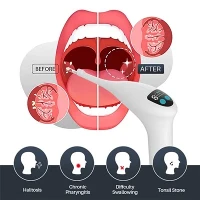




When individuals experience persistent pharyngeal discomfort, two complaints dominate clinical intake: the sensation of an intractable foreign body lodged in the throat and chronic, unmanageable halitosis.
While patients often perceive these sensations as unrelated, otolaryngologists and dental specialists recognize that both conditions converge within a single anatomical structure: the tonsillar crypt.
However, the underlying etiologies stem from entirely different pathophysiological pathways.
Laryngopharyngeal reflux (LPR) delivers aerosolized gastric acid and digestive enzymes past the upper esophageal sphincter directly onto unprotected pharyngeal mucosa.
In contrast, tonsilloliths (tonsil stones) represent calcified polymicrobial concretions anchored deep within invaginated lymphoid tissues.
Differentiating between extraesophageal acid exposure and mechanical crypt mineralization is essential for clinicians, wellness brand aggregators, and healthcare distributors.
Understanding this distinction prevents patients from pursuing hazardous at-home physical interventions when the underlying pathology requires biochemical acid suppression, while simultaneously identifying safe, non-invasive extraction protocols for true tonsillar concretions.
This comprehensive B2B clinical guide analyzes the pathophysiological intersection of LPR and tonsillar calcification, outlines differential diagnostic criteria, reviews evidence-based conservative management, benchmarks professional manufacturing platforms, and establishes institutional procurement protocols.
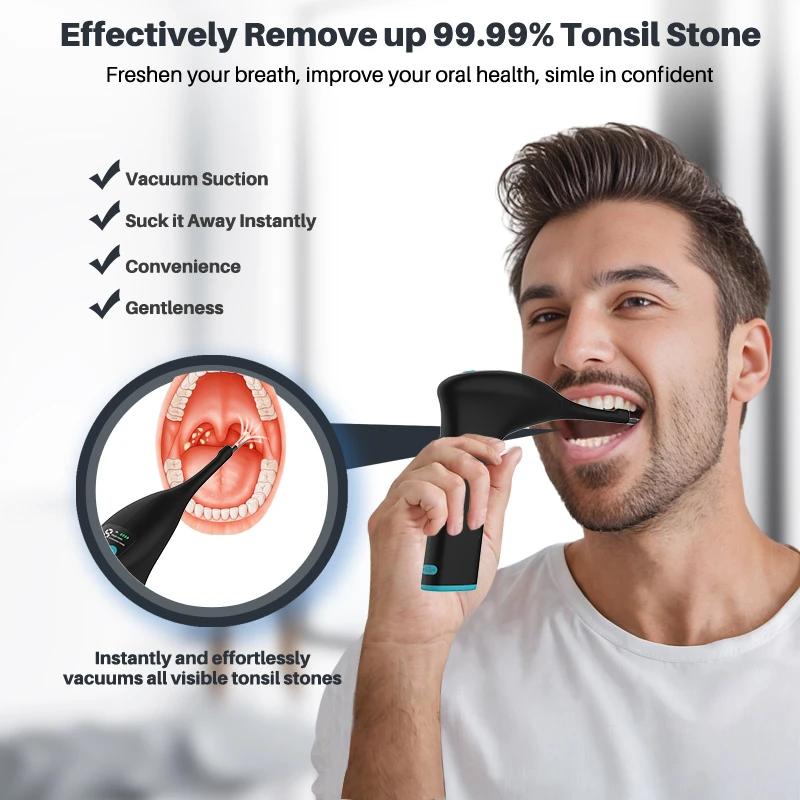
Anatomical Convergence: Two Distinct Conditions in the Pharyngeal Field
Pathophysiology of Laryngopharyngeal Reflux (LPR)
LPR represents an extraesophageal manifestation of retrograde gastric reflux:
Upper Esophageal Sphincter (UES) Dysfunction: Unlike classic gastroesophageal reflux disease (GERD)-where acid primarily irritates the lower esophagus-LPR occurs when both the lower and upper esophageal sphincters fail to maintain resting tone. This permits gastric contents to ascend into the larynx, hypopharynx, and nasopharynx.
Mucosal Vulnerability to Pepsin: The respiratory epithelium lining the laryngeal and pharyngeal structures lacks the multi-layered squamous architecture, bicarbonate buffering capacity, and active peristaltic clearance of the esophagus. Furthermore, gastric pepsin deposits into pharyngeal mucosal cells, where it remains stable until reactivated by subsequent acidic episodes, causing chronic epithelial inflammation.
Clinical Presentation: Patients frequently present without heartburn ("silent reflux"), instead reporting persistent throat clearing, chronic morning hoarseness, globus pharyngeus (a non-obstructive lump-in-the-throat sensation), postnasal drip, and nocturnal coughing spasms.
Etiopathogenesis and Morphology of Tonsilloliths
Tonsilloliths are organized calcareous mineralizations within the palatine tonsils:
Crypt Architecture and Debris Stagnation: Palatine tonsils feature deep, branched invaginations known as tonsillar crypts, designed to increase mucosal surface area for immune sampling. Desquamated epithelial keratinocytes, salivary glycoproteins, and food debris naturally collect within these recesses.
Polymicrobial Biofilms and Volatile Sulfur Production: Anaerobic oral microbiota-including Fusobacterium nucleatum, Actinomyces species, and Treponema denticola-colonize this trapped substrate. These bacteria metabolize sulfur-containing amino acids (cysteine and methionine), producing high concentrations of volatile sulfur compounds (VSCs), such as methyl mercaptan and hydrogen sulfide, which produce characteristic halitosis.
Progressive Calcification: Over time, bacterial phosphatase activity and alkaline shifts precipitate salivary calcium and phosphate salts, transforming organic soft plugs into hard, irregular concretions that cause localized foreign-body irritation and referred otalgia.
Pathophysiological Intersection: How Chronic Acid Exposure Accelerates Mineralization
While reflux acid does not directly synthesize stones, chronic laryngeal acid exposure actively accelerates the biological cascade of tonsillar calcification through two established mechanisms:
Impaired Mucociliary Clearance and Organic Substrate Stagnation
The pharyngeal mucosal surface relies on coordinated ciliary movement to clear debris:
Ciliary Arrest from Acid-Pepsin Aerosols: Exposure to aerosolized gastric secretions impairs the beat frequency of respiratory cilia lining the posterior pharynx and nasopharynx.
Increased Mucosal Viscosity: Chronic acid irritation stimulates goblet cells to hypersecrete thick, viscous mucus. When mucociliary clearance is paralyzed, this dense mucus accumulates around tonsillar crypt orifices, trapping cellular debris and oral bacteria that provide the raw matrix for stone development.
Chronic Cryptic Inflammation and Fibrotic Crypt Dilation
Repeated inflammatory cycles alter tonsillar tissue architecture:
Micro-Ulceration and Lymphoid Hyperplasia: Chronic peptic contact induces mucosal micro-ulcerations and subacute lymphoid inflammation. Healing responses often lead to localized parenchymal fibrosis.
Crypt Ostia Distortion: As tissues undergo repeated swelling and fibrotic remodeling, the entrances to the tonsillar crypts become permanently enlarged or stenosed. Dilated, cavernous crypts dramatically increase mechanical retention capacity, accelerating mineral deposition and ensuring chronic recurrence.
Differential Diagnosis: Distinguishing LPR from Tonsilloliths
Accurate clinical discrimination relies on symptom chronobiology, visual inspection, and diagnostic instrumentation:
Symptom Chronobiology and Patient Complaints
The timing and qualitative nature of symptoms provide immediate diagnostic clues:
LPR Symptoms: Typically worse upon waking in the morning, exacerbated by dietary triggers (acidic foods, caffeine, late-night dining), and characterized by diffuse laryngeal irritation and chronic vocal fatigue, with no discrete mass visible upon inspection.
Tonsillolith Symptoms: Present as localized, unilateral foreign-body sensations that fluctuate independently of meals, accompanied by severe breath malodor that resists standard brushing, often providing immediate symptomatic relief once a stone is mechanically expressed.
Diagnostic Confirmation Pathways
Definitive clinical confirmation requires distinct investigative modalities:
Visual and Physical Examination: Tonsilloliths are confirmed through direct visual inspection with a tongue depressor and focused illumination, revealing white, yellow, or greyish calcified bodies within crypt ostia. Deeply embedded stones require computed tomography (CT) or magnetic resonance imaging (MRI).
LPR Diagnostic Testing: Confirmation of LPR relies on flexible nasopharyngolaryngoscopy demonstrating posterior commissure erythema, interarytenoid edema, and vocal cord vascular congestion, quantified through ambulatory 24-hour dual-probe pH-impedance monitoring and high-resolution esophageal manometry.
Clinical Safety Protocols: Safe At-Home Management and Red Flags
Home management must maintain strict boundaries to avoid iatrogenic pharyngeal trauma:
Supported Throat-Side and Removal Measures
Patients managing visible, superficial tonsillar concretions should follow conservative protocols:
Hypertonic Saline Gargles: Gargling with warm hypertonic salt water reduces mucosal edema, thins tenacious mucus, and encourages spontaneous stone expulsion.
Pre-Hydration and Mucosal Lubrication: Maintaining adequate systemic hydration keeps pharyngeal secretions fluid, preventing desquamated debris from compacting inside crypt recesses.
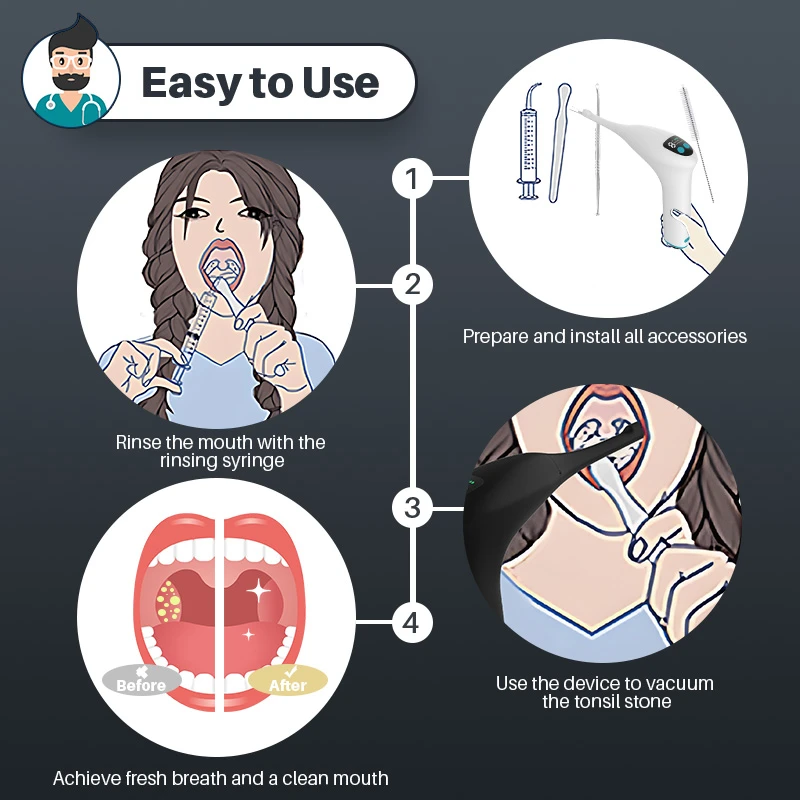
Visualized Non-Invasive Extraction: When expressing visible stones, blind probing with sharp objects must be strictly prohibited. Patients should utilize specialized illuminated tools featuring rounded, medical-grade probes and gentle, adjustable vacuum suction that loosens and evacuates debris without lacerating mucosal folds.
Reflux-Side Lifestyle Interventions
Controlling the acid component halts the cycle of chronic crypt enlargement:
Dietary and Positional Adjustments: Elevating the head of the bed during sleep, allowing at least three hours between the evening meal and recumbency, reducing portion sizes, and eliminating known triggers (alcohol, acidic juices, high-fat foods).
Medical Management: Under physician direction, empirical trials of alginate-based oral suspensions provide a physical rafting barrier against non-acidic pepsin exposure, while proton pump inhibitors (PPIs) suppress gastric acidity.
Red Flags Demanding Immediate ENT Escalation
Patients must discontinue at-home management and seek otolaryngology assessment if they experience:
Persistent unilateral tonsillar enlargement or ulceration, raising concern for tonsillar malignancies (including HPV-positive squamous cell carcinoma).
Frank hemorrhage or continuous bleeding following home manipulation of tonsillar tissues.
Progressive dysphagia, odynophagia, trismus (inability to open the jaw), or systemic fevers, indicating severe peritonsillar abscess (quinsy).
Chronic, recalcitrant tonsillolithiasis unresponsive to conservative hygiene, warranting definitive clinical interventions such as laser cryptolysis, coblation cryptolysis, or bilateral tonsillectomy.
Product Architecture and Engineering Benchmark: Professional Extraction Platforms
In private-label oral hygiene hardware, selecting certified medical-grade extraction appliances ensures consumer safety and regulatory compliance.
The Gold Rose Electric Tonsil Stone Removal Tool represents an advanced personal care kit engineered specifically for safe, non-invasive pharyngeal debridement.
The system utilizes an integrated electronic suction handle featuring multi-level suction regulation, allowing users to precisely control negative pressure to gently evacuate debris without mucosal trauma.
The device features a smooth, medical-grade horn-shaped suction tip designed to prevent micro-lacerations on delicate tonsillar pillars.
To resolve the challenge of dark oral cavities, the kit incorporates a dedicated oral examination lamp and an optical 5X magnifying lens, enabling precise visualization of targeted crypt recesses.
Supported by a warm-water pre-rinsing syringe that loosens tenacious calculus prior to aspiration, the kit is manufactured under comprehensive international certifications-including ISO 13485, FDA medical device establishment registration, CE, FCC, RoHS, and BSCI compliance-with accessible private-label OEM/ODM manufacturing runs starting at 500 units.
The Gold Rose Electronic Vacuum Tonsil Stone Remover platform provides targeted, ergonomic aspiration housed in a streamlined ABS chassis with a matching wireless charging station.
Engineered with five selectable suction levels-ranging from gentle superficial aspiration to deep debris evacuation-the device integrates a medical-grade horn-shaped probe, an oral positioning lamp, and a 5X magnifier.
With an accessible minimum order quantity starting at just 100 units, this platform serves as an ideal introductory product for wellness brands testing the interdental category.
The Gold Rose Power Tonsil Stone Remover Kit delivers a complete retail-ready oral hygiene assortment.
Featuring non-invasive negative-pressure suction paired with chemical-resistant borosilicate glass nozzles, the kit includes a USB-powered LED light, a 5X magnifying inspection mirror, medical tweezers, cleaning brushes, tongue depressors, and an angled oral irrigator, supported by custom OEM packaging at a 500-unit MOQ.
In contrast, unbranded mass-market extraction kits frequently utilize sharp, rigid plastic picks that lacerate pharyngeal walls, uncalibrated high-vacuum suction motors that cause soft-tissue hematomas, and non-biocompatible materials that fail cytotoxicity testing.
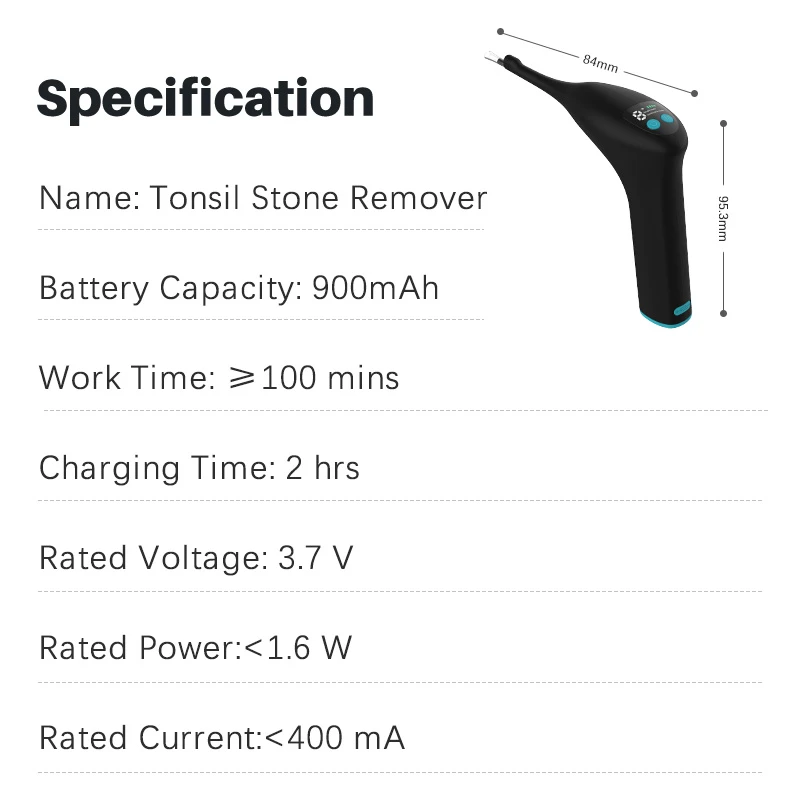
B2B Procurement Protocols: Auditing Tonsil Stone Removal Hardware Manufacturers
When sourcing tonsil hygiene appliances for pharmacy chains, dental distributor networks, or health-tech private labels, commercial buyers must enforce four rigorous quality and compliance standards:
1. Suction Calibration and Mucosal Safety Limits
Vacuum mechanics must be engineered specifically for fragile pharyngeal tissues:
Negative Pressure Calibration: Ensure electric suction units operate within safe vacuum thresholds, verified through digital manometer testing, preventing excessive vacuum force that could induce tissue extravasation or hematoma.
Multi-Level Stepped Regulation: Mandate micro-controller programming that always defaults to the lowest suction setting upon power-on, requiring deliberate user input to increase aspiration intensity.
2. Optical Illumination and Ergonomic Visibility Standards
Safe extraction depends on clear intraoral visualization:
Photobiological Safety: Confirm that integrated oral lamps comply with IEC 62471 / EN 62471 Exempt Group (RG0) standards, emitting glare-free, non-heating light.
Magnification Clarity: Ensure optical magnifying mirrors utilize distortion-free optical acrylic or glass with true 5X focal sharpness, allowing users to accurately distinguish between natural lymphoid follicles and calcified concretions.
3. Material Biocompatibility and Chemical Neutrality
Components entering the pharynx require strict biological evaluation:
ISO 10993 Compliance: Mandate certified laboratory test reports under ISO 10993-5 (Cytotoxicity) and ISO 10993-10 (Sensitization/Irritation) for all mucosal-contact components, including ABS housings, silicone suction tips, and borosilicate glass nozzles, confirming 100% BPA-free composition.
Food-Contact and Hygiene Standards: Ensure all fluid-dispensing syringes and wash reservoirs comply with US FDA 21 CFR food-contact requirements and European LFGB standards.
4. International Regulatory Dossiers and Factory QMS Accreditations
Maintain strict regulatory compliance across global destination markets:
Regulatory Accreditations: Confirm valid registrations for FDA Medical Device Establishment Listing, CE (LVD 2014/35/EU and EMC 2014/30/EU), FCC Part 15 Subpart B, and RoHS 2011/65/EU.
Medical Device Quality Systems: Partner exclusively with factories accredited under ISO 13485:2016, guaranteeing complete raw-material lot traceability, cleanroom manufacturing controls, and documented CAPA procedures.
By collaborating with certified manufacturing leaders like Huizhou Gold Rose Technology Co., Ltd., healthcare brands can deliver clinically sound, ergonomically superior tonsil care appliances that empower safe consumer management while mitigating commercial liability.
Frequently Asked Questions
Q1: Can chronic acid reflux directly cause the formation of tonsil stones?
Acid does not directly form stones; rather, chronic acid and pepsin exposure paralyzes pharyngeal mucociliary clearance and causes chronic inflammation that permanently dilates tonsillar crypts, dramatically increasing the retention of cellular debris that mineralizes into stones.
Q2: How can patients distinguish LPR from tonsilloliths at home?
LPR presents as diffuse laryngeal hoarseness, chronic throat clearing, and morning discomfort without visible physical masses, whereas tonsilloliths manifest as distinct white or yellow concretions visible within the tonsil crypts accompanied by localized halitosis and foreign-body sensation.
Q3: Why is using sharp instruments or toothpicks to remove tonsil stones dangerous?
Sharp or rigid tools can easily puncture vascular pharyngeal mucosa, causing significant hemorrhage, introducing bacterial infections into deep neck spaces, and creating fibrotic scar tissue that worsens future debris retention.
Q4: When should a patient stop at-home tonsil stone removal and consult an ENT specialist?
Home care must cease immediately if the patient notices unilateral tonsillar swelling, persistent bleeding, severe pain radiating to the ear, high fever, or difficulty swallowing, which require professional otolaryngologic evaluation.
Q5: What private-label OEM/ODM customization options does Gold Rose offer for tonsil stone removal devices?
Gold Rose provides comprehensive OEM/ODM manufacturing, including custom mold tooling for silicone and glass probes, suction pressure calibration, private-label branding, customized retail packaging, and complete international compliance documentation (ISO 13485, FDA, CE, FCC, RoHS) directly through goldrosa.com.
References
Cleveland Clinic. (2023). Laryngopharyngeal Reflux (LPR): Symptoms, Causes, and Clinical Management. Cleveland Clinic Health Library, Cleveland, OH.
Cleveland Clinic. (2023). Tonsil Stones (Tonsilloliths): Etiology, Symptoms, and Removal. Cleveland Clinic Health Library, Cleveland, OH.
Mayo Clinic Health System. (2023). All About Tonsil Stones: Anatomy, Risk Factors, and Clinical Interventions. Mayo Foundation for Medical Education and Research, Rochester, MN.
International Organization for Standardization. (2016). ISO 13485:2016 Medical Devices - Quality Management Systems - Requirements for Regulatory Purposes. ISO Standards Catalogue, Geneva, Switzerland.
International Electrotechnical Commission. (2006). IEC 62471: Photobiological Safety of Lamps and Lamp Systems. IEC Standards Catalogue, Geneva, Switzerland.
Gold Rose. Electric Tonsil Stone Removal Tool: Portable Illuminated Vacuum System with Medical-Grade Probes. https://www.goldrosa.com/tonsil-stone-remover/electric-tonsil-stone-removal.html
Gold Rose. B2B Turnkey OEM/ODM Medical Device Engineering and Global Export Services. https://www.goldrosa.com/oem-odm