






Imagine packing your bags for a long-awaited international flight or a quick weekend road trip. You remember your passport, your phone charger, and your clear aligners. But as you board the plane, a familiar problem sets in: how will you keep your dental appliance fresh and sterile while on the move? Cleaning your retainers in a cramped airplane restroom or a busy public bathroom feels anything but hygienic. Traditional effervescent tablets require a cup of clean water, take time to dissolve, and leave a messy liquid residue that is difficult to manage on a bumpy flight.
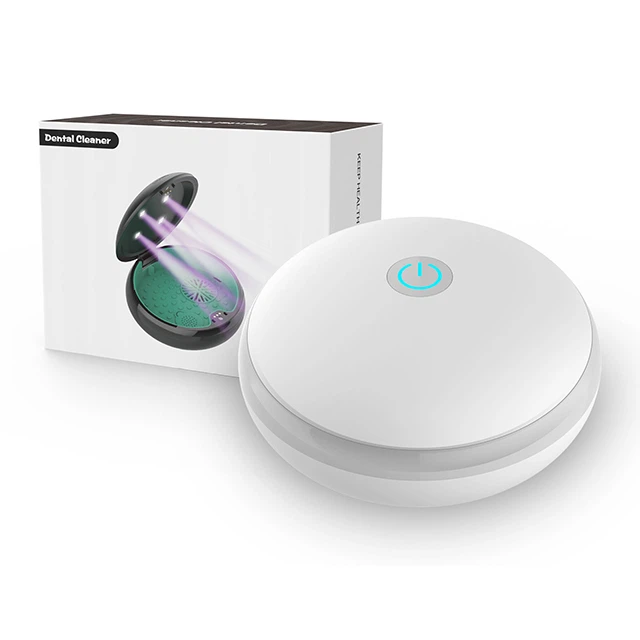
This exact scenario is why the demand for a compact, hassle-free alternative has exploded. Enter the portable UV retainer cleaner for travel. These small, battery-operated pods promise to sanitize your dental appliances using ultraviolet light in just a few minutes, completely eliminating the need for water or messy chemicals. In this ultimate review guide, we will break down the science, compare the costs, evaluate the real-world performance, and look at the manufacturing standards of these portable dental devices. Whether you are an everyday traveler looking for the best travel dental sanitizer case or a brand owner searching for a trusted portable UV cleaning case OEM partner, this breakdown provides everything you need to make an informed decision.
The Science Of UV-C: How Does It Sanitize Without Water?
What Makes UV-C Light Different From Ordinary Light
To understand why a portable UV retainer cleaner for travel is highly effective, you must first understand the specific type of light it utilizes. These devices do not use regular light bulbs; instead, they rely on specialized light-emitting diodes (LEDs) or miniature lamps that generate UV-C light. This particular light operates at a precise ultraviolet wavelength-typically between 250nm and 280nm-which is mathematically proven to be the most destructive zone for microscopic pathogens.
How UV-C Disrupts Microbial DNA and RNA
When bacteria, viruses, or fungi are exposed to UV-C light, the radiation penetrates their thin outer cellular membranes. The light directly attacks their inner genetic structure, breaking the molecular bonds within their DNA and RNA. Once this cellular blueprint is permanently broken, the microorganisms cannot replicate and are declared biologically dead. For individuals wearing clear aligners, this science is vital. Your mouth is home to hundreds of types of bacteria, and when you place a plastic retainer in a dark, damp bag, it turns into a breeding ground for germs. A high-quality Invisalign sanitizer device delivers a concentrated burst of UV-C energy across the entire internal chamber, destroying up to 99.9% of common oral pathogens without requiring a single drop of water.
Head-To-Head Comparison: UV Vs. Ultrasonic Vs. Chemical Soaks
Ultrasonic Cleaning: Strengths and Limitations
When you are planning how to clean aligners on a road trip or a long flight, you generally have three primary sanitizing methods available. Ultrasonic machines use high-frequency sound waves to create microscopic bubbles that physically blast away debris, but they require a steady supply of water and a stable power outlet.
Chemical Soaks: Convenience vs. Practicality
Similarly, chemical tablets require a separate cup and at least 15 minutes of soaking time, which is prone to spilling in a moving vehicle. While effective for deep cleaning, they are less suitable for fast-paced travel routines.
UV-C Dry Sanitization as the Travel-Optimized Solution
In contrast, the portable UV-C light case offers a completely dry process. It functions as a rapid shield that destroys microscopic DNA and RNA in as little as one minute. While it doesn't scrub away hardened tartar like an ultrasonic bath, it ensures your appliance is biologically safe before you place it back into your mouth. This makes the UV pod the superior choice for rapid on-the-go sanitization where water access is limited or inconvenient.
Key Travel Benefits: Why A Portable UV Case Is Worth It
Zero-Liquid Convenience for Air Travel
The practical design benefits of these modern devices make them an essential accessory for any traveler. One of the most significant advantages is the zero liquid hassle. Since TSA checkpoints strictly limit liquids in carry-on luggage, a dry UV pod removes the need to pack specialized rinse solutions or messy chemicals that could leak onto your clothes.
Compact Design and Portability for Everyday Use
This convenience is paired with a compact and lightweight form factor. Engineered for mobility, the best travel dental sanitizer cases feature sleek layouts that take up no more space than a cosmetic compact, sliding easily into a purse or laptop bag.
Rechargeable Power and Dual-Purpose Storage Protection
Furthermore, these devices are built for the digital age with long-lasting rechargeable batteries. Most premium units utilize built-in Lithium-ion batteries that charge via standard USB-C cables, providing enough power for up to 40 cleaning cycles on a single charge. Beyond sanitization, the device also provides dual-purpose protective storage. When the UV light is off, the rugged, impact-resistant shell protects your delicate aligners from getting crushed or accidentally discarded during a busy meal.

Industry Insights: Global Market Trends And The Rise Of Smart Oral Care
Growing Demand Driven by Clear Aligner Users
The macro trends driving this product category are rooted in the unprecedented growth of the global clear aligner market. With millions of new patients starting treatments annually, a highly profitable secondary market for tech-driven accessories has emerged.
Shift Toward Smart and Digital Oral Care Solutions
Today's consumers are no longer satisfied with basic storage boxes; they demand smart accessories that match their digital lifestyles. This shift in behavior has transformed the portable UV sanitizer from a niche luxury into an essential daily tool for aligner maintenance.
Preventive Dental Health and Market Expansion
Additionally, global dental health organizations are placing a heavier emphasis on preventative hygiene education. Keeping an oral appliance clean prevents painful gum infections and secondary tooth decay, which has caught the attention of dental insurance groups. For brand owners and distributors, adding a certified portable UV cleaning case OEM item to their catalog allows them to capture a high-margin consumer group that prioritizes both technology and health.
Case Study: How B2B Brands Benefit From Engineering Reliable UV Devices
Solving Structural and Performance Challenges
In the competitive dental supply market, product quality and safety certifications are the primary differentiators. Engineering teams often face challenges such as uneven UV distribution and weak structural durability in low-cost designs.
Dual-Light Symmetry for Full Coverage Disinfection
The solution involved integrating Dual-Light Symmetry, which uses multiple UV-C LED nodes positioned at specific angles to ensure 360-degree coverage and eliminate "dead zones." This significantly improves sanitization consistency across all surfaces.
Safety, Materials, and Certification Improvements
To further enhance efficiency, the internal chamber was lined with medical-grade reflective material to multiply the light paths. Durability was addressed by upgrading the outer shell to high-impact, BPA-free medical ABS plastic. Most importantly, Intelligent Safety Interlocks were added to instantly shut down the UV-C LEDs if the lid is opened, ensuring complete user protection.

Buyer's Guide: What To Look For In A Quality Travel Sanitizer
Ensuring True UV-C Wavelength Accuracy
Whether you are a personal user or a wholesale buyer, there are critical technical benchmarks to consider. First, you must verify True UV-C Wavelength. Always ensure the specifications state a true wavelength between 250nm and 280nm.
Internal Design, Fit, and Capacity Considerations
Secondly, consider the internal chamber dimensions. A well-designed case must have a universal fit that comfortably holds top and bottom aligners, or even larger appliances like dentures, without forcing the lid shut.
Safety Certifications and Manufacturing Standards
Safety and certification are equally paramount. A reliable device must feature an automated safety shutdown system to prevent accidental skin or eye exposure. Certifications such as CE, FCC, RoHS, and FDA compliance help ensure product reliability and material safety.
Step-By-Step Guide: How To Properly Clean Your Retainer On A Trip
Pre-Cleaning and Placement Preparation
To maximize the effectiveness of your UV sanitizer, it should be part of a structured routine. Start with a preliminary rinse as soon as you remove your retainer to clear away saliva and food debris.
Running the UV Sanitization Cycle Correctly
Once rinsed, dry the appliance and place it flat inside the chamber, ensuring the widest surface areas are facing the UV-C LED nodes. After securing the device, run the automated cycle and wait for the indicator light to signal completion.
Safe Storage After Sanitization
Finally, use the device for safe on-the-go storage. Leaving your clean, dry retainer inside the locked case until you are ready to wear it again protects it from airborne dust, bathroom splashes, and the risk of being lost in transit.

FAQs
1. How does a UV retainer cleaner actually work?
A UV retainer cleaner uses UV-C light (typically 250–280nm) to damage the DNA and RNA of microorganisms. This prevents bacteria, viruses, and fungi from reproducing, effectively reducing microbial contamination without the need for water or chemicals.
2. Can UV cleaning fully replace ultrasonic or chemical cleaning?
Not completely. UV-C sanitization focuses on killing microorganisms, while ultrasonic cleaners physically remove debris like plaque and food particles. For best results, many users combine rinsing or occasional deep cleaning with UV sanitization for daily hygiene maintenance.
3. Is UV-C light safe for daily use in retainer cleaning cases?
Yes, when properly designed. High-quality UV retainer cleaners include safety features such as automatic shut-off when the lid is opened and fully enclosed chambers to prevent UV exposure. These protections make daily use safe under normal operation.
4. How long does a typical UV cleaning cycle take?
Most portable UV retainer cleaners complete a full sanitization cycle in about 1–5 minutes, depending on the device design and UV intensity. This makes them especially convenient for travel or quick daily cleaning routines.
5. What should I look for when buying a UV retainer cleaner?
Key factors include true UV-C wavelength (250–280nm), safety certifications (CE, FCC, RoHS), internal chamber size, reflective design for full coverage, and reliable safety interlocks. Rechargeable battery life and portability are also important for travel use.
References
World Health Organization (WHO). Ultraviolet radiation and health effects. https://www.who.int
U.S. Food & Drug Administration (FDA). Ultraviolet (UV) Lights and Lamps: Ultraviolet-C Radiation, Disinfection, and Coronavirus. https://www.fda.gov
International Ultraviolet Association (IUVA). UV Disinfection Guidelines and Applications. https://www.iuva.org
Centers for Disease Control and Prevention (CDC). UV Germicidal Irradiation Basics. https://www.cdc.gov
American Dental Association (ADA). Guidelines for cleaning removable dental appliances. https://www.ada.org