







Most people brush twice a day and believe that is enough. It is not. Research consistently shows that a toothbrush - no matter how advanced - can only remove roughly 60% of the plaque present on tooth surfaces, leaving the interdental spaces largely untouched. This is where a vibration flosser changes the equation. By combining physical contact with high-frequency micro-vibrations, modern electric flossers reach where brushes cannot and deliver a level of oral cleaning that manual flossing struggles to match. Understanding the science behind this technology helps you make a smarter choice for your daily oral care routine.
Why Traditional Flossing Falls Short
Interdental plaque - the biofilm that accumulates between teeth - is directly linked to cavities, gingivitis, and periodontitis. According to the American Dental Association, more than 500 bacterial species can be found in the oral biofilm, and the majority of periodontal problems originate precisely in the interdental regions that toothbrushes cannot reach. Dental floss has long been considered the gold standard for addressing this problem, yet the reality of how people actually use it tells a different story.
The Compliance Problem with Manual Flossing
A systematic review published in the Journal of Indian Society of Periodontology found that only 10% to 30% of adults floss regularly, despite widespread awareness of its benefits. The reasons are well documented: manual flossing is technique-sensitive, requiring a precise wrapping and sliding motion that many people never fully master. It demands manual dexterity that can be difficult for elderly users, individuals with arthritis, or anyone with orthodontic appliances. For back molars and tight contact points, the challenge is even greater. The result is that most people either skip flossing entirely or perform it inconsistently, leaving interdental plaque to accumulate over days and weeks.
What Happens in the Spaces Between Your Teeth
The interdental space is a uniquely hostile environment for oral health. Bacteria in these areas form structured biofilm communities that adhere tightly to tooth surfaces and resist disruption. Because saliva flow is limited in these tight spaces and a toothbrush bristle cannot physically enter, the biofilm has the opportunity to mature undisturbed. Over time, this leads to demineralization of enamel, gum inflammation, and subgingival colonization - the progression that underlies most cases of tooth decay and gum disease. Effectively disrupting this biofilm on a daily basis is the central challenge that innovation flossers are designed to solve.
The Physics of Micro-Vibrations: How It Actually Works
The core mechanism of a vibration flosser is elegantly simple in concept but sophisticated in execution. Rather than relying solely on the physical scraping action of a floss thread, a sonic flosser adds a second dimension of cleaning power: high-frequency micro-vibrations that transform the oral environment around the flosser tip into an active cleaning zone.
Sonic Frequency and Fluid Dynamics
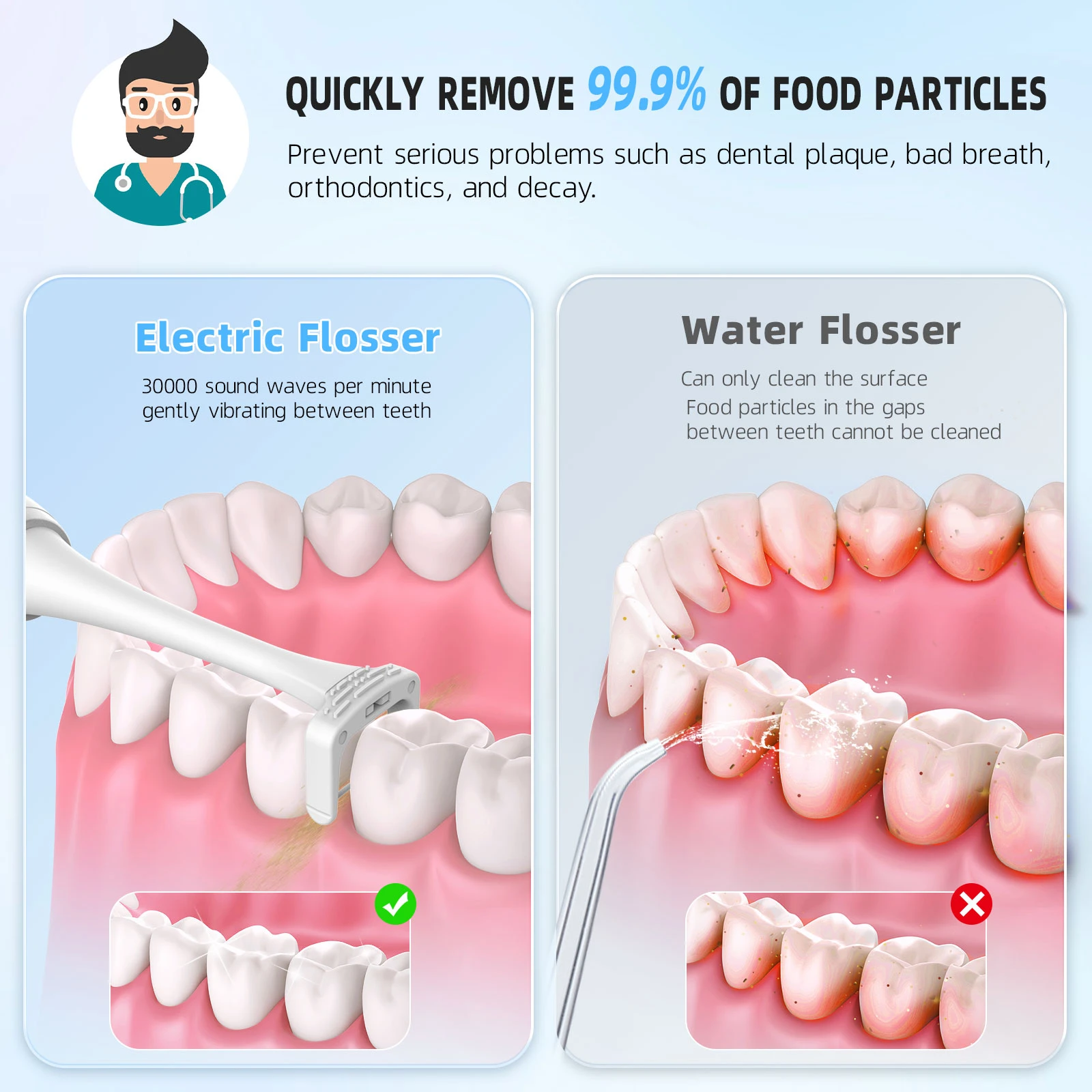
When a flosser tip vibrates at sonic frequencies - between 6,000 and 30,000 oscillations per minute - it does something a static floss thread cannot: it agitates the fluid medium surrounding it. Saliva, present throughout the mouth, responds to these rapid oscillations by generating traveling pressure waves and localized turbulence. This phenomenon, sometimes described as acoustic microstreaming, extends the effective cleaning radius of the flosser tip beyond the point of direct physical contact. The pressure waves penetrate deeper into the gingival sulcus and into the concave surfaces of interdental spaces, disrupting and dislodging biofilm that the tip itself never directly touches. Research into sonic cleaning technology in dental applications has confirmed that this fluid dynamic effect significantly enhances debris removal in areas that are geometrically inaccessible to conventional cleaning tools.
Physical Contact + Vibration: A Dual-Action Mechanism
A vibration flosser does not rely on fluid dynamics alone. The combination of direct physical contact - the flosser tip pressing against and moving along the tooth surface - with simultaneous high-frequency oscillation produces a dual-action cleaning effect that is more powerful than either mechanism alone. The physical contact provides mechanical scrubbing of plaque and calculus deposits from proximal surfaces. The vibration simultaneously loosens the biofilm matrix, making it easier for the physical contact to dislodge and evacuate debris. In contrast, water flossers rely primarily on hydraulic pressure without the physical scrubbing contact, which is why clinical comparisons have found sonic and vibration-based devices to be particularly effective on tightly adhered plaque at proximal surfaces.
Multi-Mode Vibration: Matching Frequency to Your Needs
One of the most important advances in modern dental flosser design is the introduction of selectable vibration modes, each calibrated for a specific oral condition. At the lower end of the frequency range - around 6,000 vibrations per minute - the flosser operates in Standard mode, generating gentle micro-vibrations ideal for daily maintenance cleaning and suitable for users who are new to powered flossing or have mild gum sensitivity. At the mid-range, Pulse mode oscillates between 7,200 and 12,000 vibrations per minute, delivering a variable-intensity clean that provides tactile feedback and is well suited to general interdental plaque removal. At maximum frequency - 12,000 vibrations per minute in Deep Clean mode - the acoustic microstreaming effect is at its strongest, making this setting the appropriate choice for users with significant plaque accumulation, orthodontic hardware, or areas of the mouth that are particularly difficult to access. This graduated approach to vibration frequency ensures that a single device can serve the full spectrum of oral cleaning needs without requiring the user to switch between multiple tools.
Beyond Cleaning: The Full-Mouth Benefits of Vibration Technology
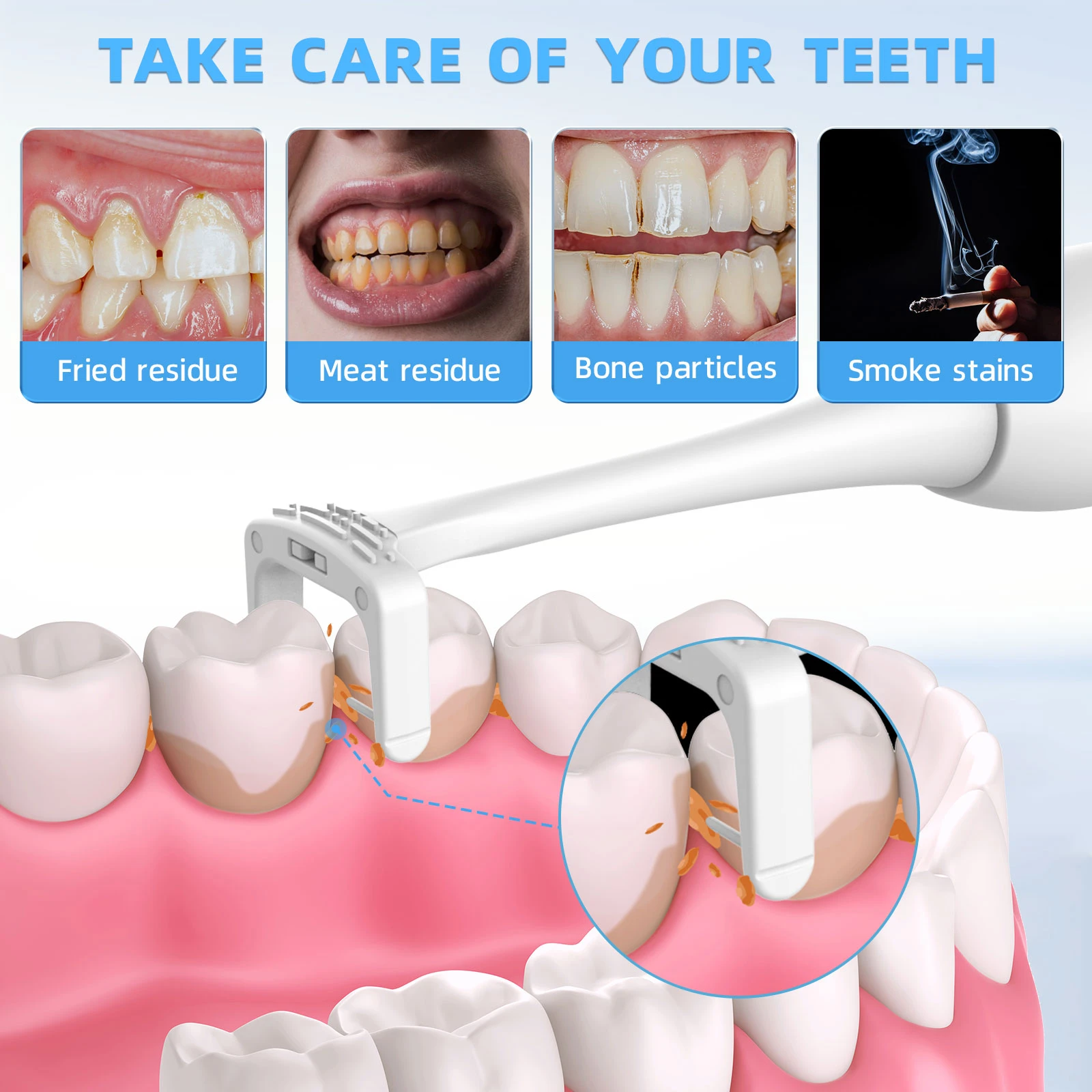
The science of micro-vibrations extends beyond plaque removal. Modern innovation flossers apply the same physical principles to deliver benefits across multiple dimensions of oral health, turning a simple flossing tool into a comprehensive oral care platform.
Gum Stimulation and Blood Circulation
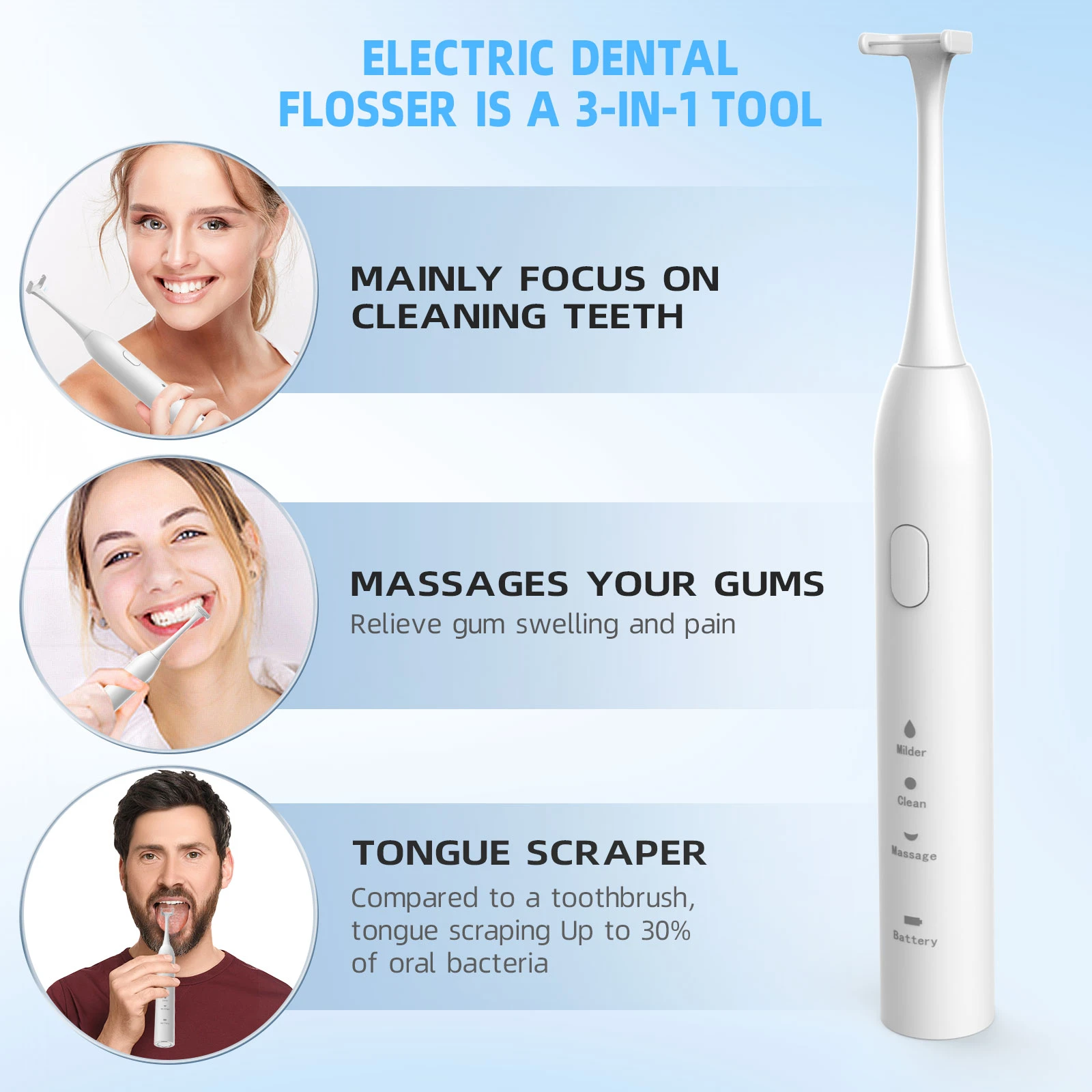
Gum tissue health depends not only on the absence of bacterial irritants but also on adequate blood circulation to support tissue repair and immune response. Low-frequency vibration - as used in dedicated massage or gum stimulation modes - creates gentle mechanical pressure that rhythmically compresses and releases gum tissue. This cyclical action promotes increased local blood flow, which delivers oxygen and nutrients to gum cells and helps clear metabolic waste. Clinical observation of gum massage therapy has associated regular stimulation with reduced gingival inflammation and improved tissue tone. GoldRosa's electric flossers include a dedicated Massage Mode specifically designed to deliver these physiological benefits, recognizing that comprehensive oral care must address gum vitality alongside plaque removal.
Tongue Scraping: Targeting Bad Breath at the Source
A frequently overlooked contributor to oral malodor is the dorsal surface of the tongue. The papillae on the tongue's surface create a textured landscape that traps bacteria, dead cells, and food debris - the anaerobic decomposition of which produces volatile sulfur compounds, the primary chemical cause of bad breath. Standard flossing and brushing do not address the tongue surface at all. Vibration flossers that integrate a tongue scraper function apply controlled physical pressure combined with vibration to this surface, mechanically removing the bacterial load in a way that gentle manual scraping cannot replicate. GoldRosa's 3-in-1 design - available in the Z3-PRO-L and Sensitive Gum models - incorporates this tongue scraping function as a core feature, ensuring that users address all three primary sources of oral bacterial accumulation - teeth, gums, and tongue - within a single daily care routine.
GoldRosa's Vibration Flosser Technology: Where Science Meets Innovation
Understanding the science of micro-vibrations is one thing; seeing it engineered into a reliable, daily-use product is another. GoldRosa - Huizhou Gold Rose Technology Co., Ltd. - has built its electric flosser line around the precise application of sonic vibration principles, supported by 107 technology patents and ISO 13485 medical device quality certification.
GoldRosa Z3-PRO-L: Engineering the 99.9% Clean
The Z3-PRO-L translates the dual-action vibration mechanism into a practical 3-in-1 device designed for all-day, every-day use. Its sonic motor generates three selectable vibration modes - Standard at 6,000 vibrations per minute, Pulse between 7,200 and 12,000 vibrations per minute, and Deep Clean at 12,000 vibrations per minute - directly implementing the frequency-to-need matching described above. The device's 99.9% food residue removal rate reflects both the efficacy of its vibration technology and the precision of its replaceable floss tip design, which is shaped to maximize contact area within the interdental space. A single 3-hour charge delivers 60 to 80 days of continuous use, while Type-C compatibility eliminates the need for proprietary adapters. Each unit includes 50 replacement tips, ensuring that tip hygiene - a critical factor in preventing cross-contamination - is maintained without added cost burden. The Z3-PRO-L is certified under ISO 13485, FDA, CE, and RoHS standards, meaning its performance claims are backed by verified manufacturing quality controls rather than marketing assertion alone.
GoldRosa Professional: Advanced Oscillation for Demanding Users
The GoldRosa Professional Electric Flosser adds a mechanical dimension to sonic vibration: a 30° oscillating motion that sweeps the flosser tip across the tooth surface as it vibrates. This combination increases the physical coverage area of each flossing stroke, addressing the challenge of curved tooth surfaces and tight interproximal contacts that a purely linear vibration motion might miss. The device offers four modes - Gentle, Moderate, Deep Clean, and Massage - covering post-surgical recovery, sensitive gum care, standard daily cleaning, and gum stimulation within a single IPX7-rated waterproof unit. Its 800mAh lithium battery provides up to 60 days of use with wireless charging convenience, and the ergonomic non-slip silicone grip ensures controlled handling even for users with limited hand strength. For those with orthodontic braces, dental implants, or crown bridges - where precise navigation around hardware is essential - the Professional model's oscillation-vibration combination delivers the adaptability that standard flossers cannot offer.
FAQs
Q1: How do micro-vibrations actually remove plaque between teeth?
Micro-vibrations operate at sonic frequencies that agitate surrounding oral fluid, generating pressure waves that penetrate deeper into interdental spaces than the flosser tip can physically reach - a phenomenon known as acoustic microstreaming. This fluid disturbance, combined with the direct mechanical contact of the flosser tip, disrupts and dislodges the biofilm matrix from tooth surfaces. GoldRosa's vibration flossers are engineered to deliver this dual-action effect at up to 12,000 vibrations per minute.
Q2: Is a vibration flosser more effective than traditional string floss?
For most users, yes - particularly in terms of real-world compliance and reach. A systematic review of seven randomized controlled trials found that powered interdental cleaning devices consistently reduced plaque scores, with several studies showing superior performance in inaccessible proximal areas compared to string floss. The ease of use offered by vibration flossers also dramatically improves daily consistency, which is the single greatest predictor of long-term oral health outcomes.
Q3: What vibration frequency is best for sensitive gums?
For sensitive gums, a lower frequency - around 6,000 vibrations per minute - is the recommended starting point, as it provides sufficient agitation for biofilm disruption without placing excessive mechanical pressure on inflamed tissue. GoldRosa's Sensitive Gum model and the Z3-PRO-L both include dedicated Gentle or Standard modes at this frequency range, along with a 360° rotating tip design that further reduces the pressure applied to any single point on the gum surface.
Q4: How does GoldRosa's electric flosser compare to water flossers?
Water flossers clean primarily through hydraulic pressure and pulsation, which is effective for flushing loose debris but less effective at mechanically disrupting adherent plaque biofilm. GoldRosa vibration flossers combine physical contact with sonic vibration, delivering both mechanical scrubbing and acoustic microstreaming in a more portable, reservoir-free package. GoldRosa devices also offer multi-function capability - flossing, tongue scraping, and gum massage - that water flossers do not provide, making them a more comprehensive oral care solution within a single device.
References
1. GoldRosa Z3-PRO-L Electric Dental Flosser - Product Page:
https://www.goldrosa.com/electric-tooth-flosser/dental-flossers.html
2. GoldRosa Professional Electric Flosser - Product Page:
https://www.goldrosa.com/electric-tooth-flosser/professional-electric-flosser.html
3. GoldRosa Electric Flosser for Sensitive Gum - Product Page:
https://www.goldrosa.com/electric-tooth-flosser/electric-flosser-for-sensitive-gum.html
4. American Dental Association (ADA) - Home Oral Care:
https://www.ada.org/resources/ada-library/oral-health-topics/home-care
5. PMC / NCBI - Comparing the effectiveness of water flosser and dental floss in plaque reduction (Systematic Review, 2024):
https://pmc.ncbi.nlm.nih.gov/articles/PMC10906797/
6. Frontiers in Dental Medicine - Innovations in oral hygiene tools: a mini review on recent advances (2024):
https://www.frontiersin.org/journals/dental-medicine/articles/10.3389/fdmed.2024.1442887/full