


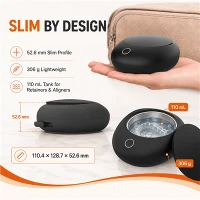

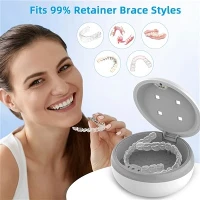

Night guards, clear aligners, retainers, and removable dentures create the same everyday question for consumers: what is the easiest way to keep a removable oral appliance ready for use? For a private label brand, however, the question is larger. Should the range be built around effervescent tablets, a reusable Ultrasonic Retainer Cleaner, or a carefully designed combination of both?
This decision affects the consumer routine, pricing architecture, packaging, replenishment potential, retail channel, and the claims a brand must support. An ultrasonic device can create a durable-product proposition, while tablets create a familiar consumable model. Neither format is automatically right for every brand. This guide compares the two options for brands developing a mouth guard cleaner, Dental Pod-style device category, or broader oral-care assortment. It focuses on product strategy and sourcing rather than medical, disinfection, or sterilization claims.
Why This Category Decision Matters for Private Label Oral Care Brands
The choice changes the commercial model
Effervescent tablets and ultrasonic cleaners solve different commercial problems. Tablets are a consumable: the consumer buys a pack, follows its instructions, and needs replenishment. That structure can suit subscription programs, pharmacy placement, and brands that already manage formula, packaging, and repeat orders. It can also make the initial purchase easy to understand because the format is familiar.
An ultrasonic device is a durable product. The commercial proposition shifts toward hardware design, charging experience, storage, accessories, warranty handling, and premium bundle value. A well-defined device program can support a higher-value launch, clinic onboarding kit, travel bundle, or direct-to-consumer offer. It does not remove the need for clear care instructions or evidence-backed claims. It simply gives the brand a different way to deliver convenience.
One hygiene need can serve several appliance segments
Consumers may search for a mouth guard cleaner, Aligner Cleaning Machine, Ultrasonic Denture Cleaner, Sonic Braces Cleaner, or Orthodontic Cleaning Device. These terms reflect overlapping demand, but they should not be treated as interchangeable product claims. Night guards, retainers, aligners, dentures, and removable orthodontic appliances can use different materials and have different manufacturer care instructions.
For that reason, a private label brief should name the intended appliance categories before sampling begins. The brand should then validate compatibility, product instructions, and all applicable labels for those target materials and destination markets. Broad category reach is valuable only when it is supported by clear, responsible guidance.
How the Two Cleaning Formats Work
Effervescent tablets use a chemical-cleaning routine
Effervescent tablets are generally used by dissolving a tablet in water, soaking the appliance for the time stated by the tablet supplier, and then following the supplier's rinse and use instructions. For consumers, the routine can feel straightforward because there is no charging, tank, or device storage. For brands, the format creates an ongoing purchase cycle and a strong packaging-led experience.
The tablet route also requires formulation discipline. Ingredient disclosures, use instructions, material compatibility, fragrance choices, packaging protection, and permitted claims all need review before market entry. Published research has compared chemical denture cleansers, including alkaline peroxide effervescent tablets, with ultrasonic methods in denture-cleaning contexts. That research provides useful category background, but it does not allow a brand to extend a study result to every tablet formula, night guard material, or consumer routine.
Ultrasonic cleaners support a device-led water routine
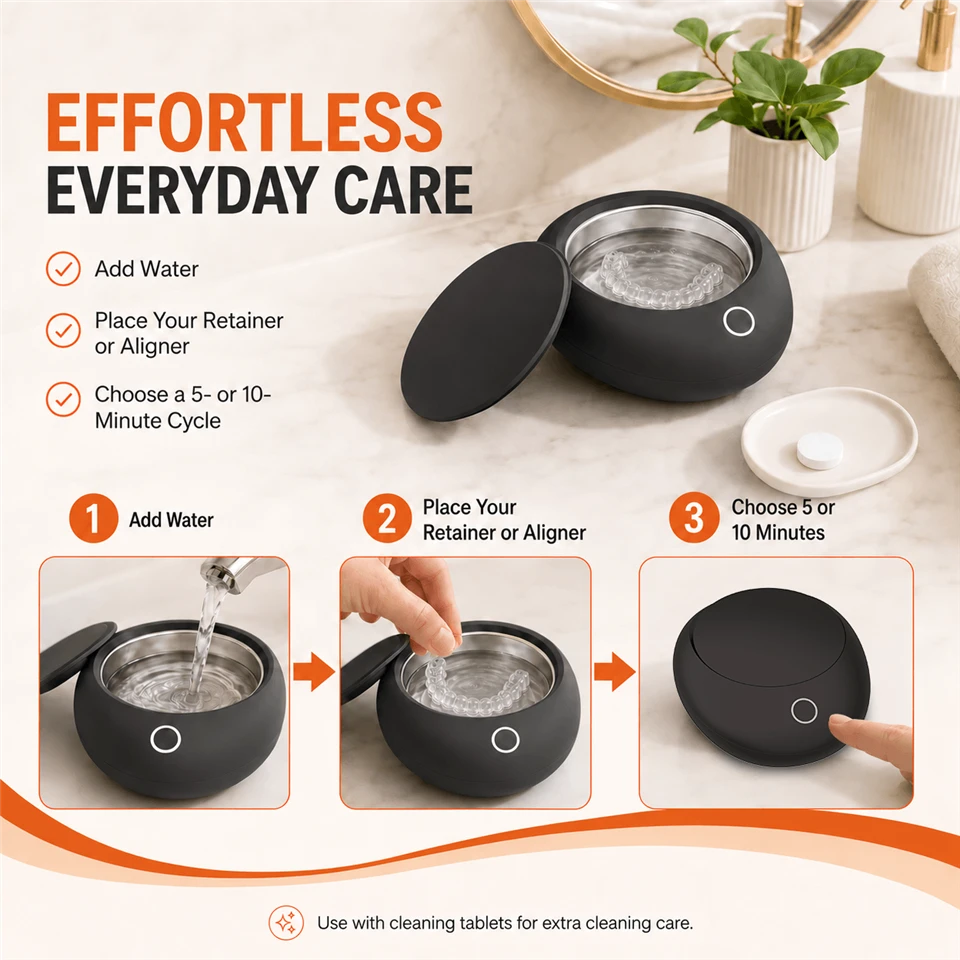
An ultrasonic cleaner uses a water-filled tank and an electronically driven cleaning cycle. From the consumer's point of view, the routine is built around placing the appliance in the tank, selecting the cycle, and following the device instructions. This can create a repeatable at-home, office, or travel ritual without making the consumer manage a tablet for every cycle.
For private label teams, the product experience depends on details that tablets do not require: battery capacity, charging-port protection, tank material, water resistance, weight, dimensions, interface design, and care guidance. The phrase Ultrasonic Retainer Cleaner is a useful search term, but it is not a substitute for substantiated claims. A brand should describe only the cleaning, compatibility, and performance statements that its product evidence supports.
Ultrasonic Cleaning vs. Effervescent Tablets: The Private Label Comparison
The following comparison is a product-planning tool, not a universal performance ranking. Product-specific instructions, compatibility guidance, and validated claims should always take priority.
|
Evaluation area |
Ultrasonic-cleaner program |
Effervescent-tablet program |
Private-label implication |
|
Consumer routine |
Device-led water-based cycle |
Tablet dissolution and soak routine |
Choose the path that best matches the desired user journey. |
|
Commercial model |
Durable product with potential for cases, accessories, and bundles |
Recurring consumable replenishment |
Decide whether product value at launch or repeat purchase is the leading goal. |
|
Travel proposition |
Depends on battery, charging, sealing, weight, and tank design |
Compact packs can travel easily |
A portable device must earn its space in a travel bag. |
|
Claim governance |
Hardware, material, safety, and cleaning claims need validation |
Formula, safety, dissolution, and cleaning claims need validation |
Build the evidence and labeling plan before launch. |
|
Channel fit |
Premium DTC, specialty retail, clinic kits, and gifting |
Pharmacy, replenishment-led retail, and subscriptions |
Align the format with channel economics and shopper expectations. |
|
Range strategy |
Supports appliance-led positioning |
Supports consumable portfolio breadth |
A two-format range requires clear compatibility rules. |
Convenience depends on the whole user journey
Neither format wins on convenience in every scenario. Tablets may suit consumers who prefer a familiar, compact product and do not mind maintaining a supply. A device may appeal to users who want a repeatable water-based routine and prefer not to open a new tablet for each clean. The brand should map the full experience: setup, storage, charging, rinsing, replacement purchases, travel, and support.
This is especially important for a travel-oriented audience. A consumer may accept a larger upfront purchase if the device is cordless, compact, protected against everyday bathroom conditions, and able to stay useful away from a counter outlet. Conversely, a lightweight tablet pack may be the more logical choice for a replenishment-focused brand. The right answer comes from the target user's habits, not from one headline feature.
Revenue logic should be designed before the launch
A tablet program is built around repeat consumables. It requires strong planning for formula sourcing, pack sizes, reorder reminders, subscription mechanics, and shelf-life management. A device program shifts attention toward hardware quality, packaging protection, service processes, accessory opportunities, and a product narrative that justifies the durable purchase.
These paths can also coexist. A brand may build a premium device line while maintaining a tablet-led consumable offer for a different channel or customer segment. That does not mean the products should be bundled automatically. The brand must first confirm that care instructions, intended appliance materials, and marketing statements do not conflict.
Portability is a specification, not a slogan
For a Portable Ultrasonic Cleaner, portability should be visible in the specification sheet. Buyers should examine battery capacity and stated cycles per charge, tank volume, device weight, profile, charging design, waterproof construction, and drop protection. These details determine whether the product can credibly support travel, office, and daily-home use cases.
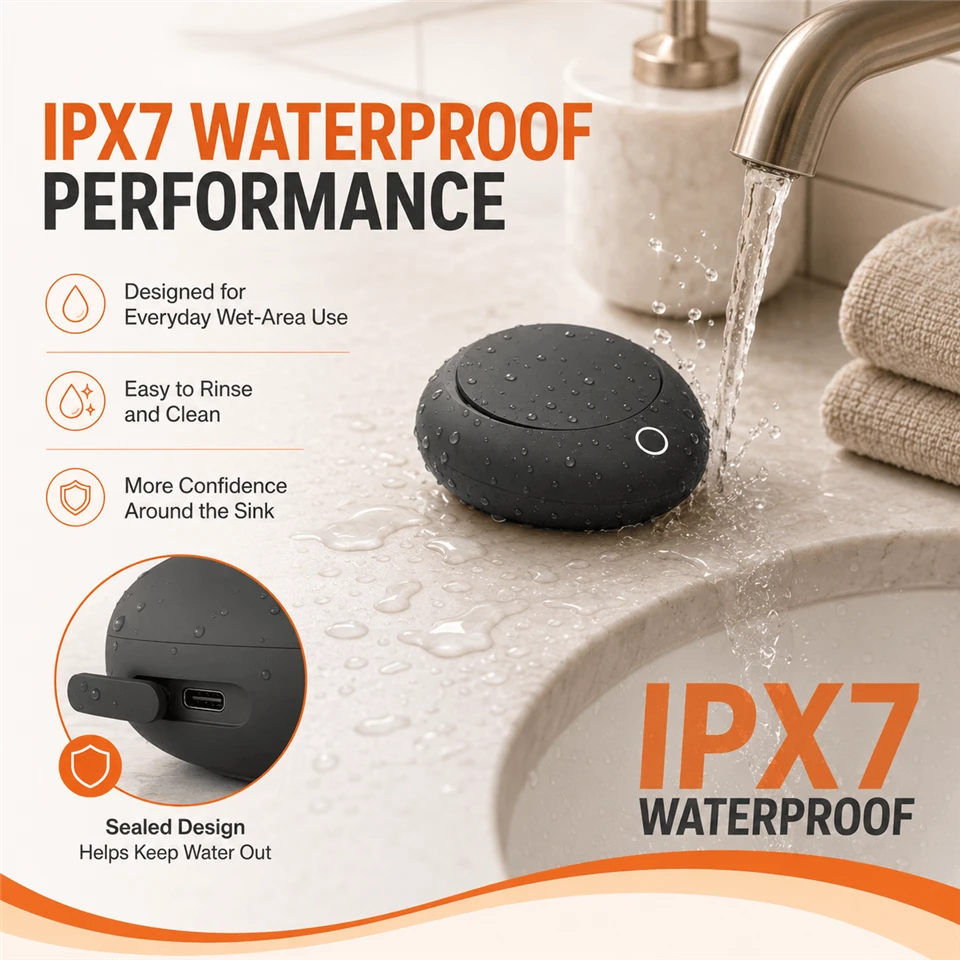
Gold Rose's US601 is a relevant example of a travel-first device brief. Its product page lists a 4,000mAh rechargeable battery supporting up to 14 cleaning cycles per charge, IPX7 waterproof construction, an SUS304 stainless-steel tank, a sealed USB-C port, and 1.2m drop-tested construction. The page also lists a 306g body, 52.6mm slim profile, and 110mL tank. These are sourcing specifications, not clinical efficacy claims, but they are the practical details that a buyer should compare across device proposals.
Claim discipline protects the brand and end user
Cleaning, disinfecting, sanitizing, and sterilizing are not interchangeable marketing terms. A device can be positioned around a cleaning routine only to the extent supported by the product's testing, instructions, and market-specific documentation. The same rule applies to tablets and to claims about odor, staining, microbial reduction, or material safety.
A UV Ultrasonic Cleaner needs the same discipline. Adding UV does not automatically make a device a better choice, nor does it validate a particular safety or efficacy statement. If UV is included in a future product roadmap, the brand should define the intended claim first and then obtain the appropriate evidence, instructions, and label review for the markets it plans to enter.

What to Look for When Sourcing an Ultrasonic Retainer Cleaner
Start with the appliance, user, and claim brief
A sourcing request should do more than ask for a dental cleaner. It should identify the intended appliance categories, target user routine, markets, retail channels, planned accessories, price positioning, and the claims the brand wants to make. This gives the supplier a usable design and documentation brief instead of a generic request for a cleaner.
The right questions are practical. Does the brand need a countertop unit or a travel device? Is the target audience primarily night guard users, aligner users, clinic patients, or a mixed removable-appliance audience? Does the launch require a carry case, branded insert, multilingual manual, retail display, or clinic gift set? Early answers reduce the risk of a product that looks attractive but does not fit the launch model.
Evaluate durable hardware for bathroom and travel use
The Gold Rose US601 provides a specific specification set for evaluating a portable device proposal. The listed 4,000mAh battery and up to 14 cycles per charge address cordless-use expectations. IPX7 waterproof protection, an SUS304 stainless-steel tank, a sealed USB-C port, and 1.2m drop-tested construction address the type of durability questions a buyer should ask for bathroom and travel use.
Its listed 306g weight, 52.6mm profile, and 110mL tank help a buyer evaluate carry-on fit and appliance capacity. These points are most useful when they are matched to a defined consumer scenario. A premium travel kit needs different priorities from a clinic countertop offer, even when both sit within the broader Ultrasonic Retainer Cleaner category.
Assess cycle design and interface clarity
The US601 product page lists two ultrasonic modes: a 5-minute daily cleaning cycle and a 10-minute pulsed deep-clean mode, operated through one-button control. For a private label brand, this is a useful example of how a small set of clear modes can simplify the consumer experience.
The term "deep-clean" on a product page should remain a feature description unless separate evidence supports more specific outcomes. Product teams should make sure the manual, packaging, product-detail page, and customer-service scripts use consistent language. Clear instructions are as important as the number of modes because they help prevent misuse and protect consumer confidence.
Plan OEM and ODM requirements before sampling
Private labeling is not limited to adding a logo. A complete brief may include housing color, logo placement, packaging structure, multilingual manuals, market-specific labels, accessories, forecast quantity, sample testing, and any structural or mold changes. Gold Rose states that it supports OEM and ODM projects including logo customization, packaging, multilingual manuals, private molds, structural modifications, and product development.
For US601, the product page lists a 1,000-piece MOQ for customized colors, logos, packaging, and related branding requirements. It states that sample preparation typically takes 7-15 days, standard bulk orders usually take 15-30 days, and customized bulk orders typically take 30-45 days. These are planning inputs, not fixed commitments; final timelines and specifications should be confirmed for the actual project.
Recommended Private Label Positioning Paths
Position a portable device for premium daily and travel routines
A portable device line suits brands that want to offer a durable, rechargeable product experience rather than only a consumable. The US601 can be evaluated for this route because its listed specifications combine a 4,000mAh battery, up to 14 cycles per charge, IPX7 waterproof construction, an SUS304 tank, sealed USB-C charging, and a compact 306g form factor. That creates a credible product story for daily use, travel, or a clinic patient kit without overstating cleaning outcomes.
The most effective positioning is specific. Rather than saying the device is for everyone, a brand can build a clear offer around consumers who value a cordless routine, compact storage, and a reusable appliance-care product. Packaging, accessories, and content should reinforce that chosen use case.
Use tablets when replenishment is the core strategy
Tablets may be the better fit when a brand already has a consumables business, wants a low-hardware entry point, or can create a strong replenishment program. The important work is then formula validation, stable packaging, clear instructions, and a reorder path that gives customers a reason to remain with the brand.
This is not a lower-value option. It is a different operating model. The brand should avoid presenting tablets as inferior simply because an ultrasonic device is more technical. Consumers may prefer the format that fits their routine, storage space, and buying habits.
Consider a two-format assortment only with clear rules
A device-led premium line and a tablet-led consumable line can broaden an oral-care portfolio, but only when the customer journey is coherent. The brand should define which product is recommended for which appliance, whether they may be used together, what the instructions say, and which claims are permitted for each format.
That discipline also helps sales teams. Instead of offering vague "complete cleaning" language, a brand can explain the role of each product, the intended routine, and the reason it belongs in the assortment. This approach is more credible for distributors, clinics, and informed direct-to-consumer buyers.
Buying Checklist for Private Label Brands
Before choosing an ultrasonic device, tablet program, or combination range, verify the following:
• Intended appliance categories and material-compatibility requirements.
• Target markets, labeling needs, and permitted claims.
• Hardware safety, durability, battery, charging, and tank specifications for a device program.
• Formula documentation, instructions, packaging protection, and replenishment plan for a tablet program.
• Product instructions that use supported terms and avoid unverified disinfection or sterilization claims.
• Packaging, manual, logo, color, accessory, and clinic-kit requirements.
• MOQ, samples, testing plan, production timeline, and after-sales support process.

Conclusion: Choose the Format That Supports Your Brand Model
The best choice is the one that matches the brand's operating model and the consumer routine it wants to own. Effervescent tablets make sense for replenishment-led programs with a validated formula and a strong repeat-purchase path. An ultrasonic device makes sense when the brief calls for a durable, premium, portable product experience.
For brands developing a travel-oriented Ultrasonic Retainer Cleaner, Gold Rose's US601 offers a sourceable starting point with listed 4,000mAh battery capacity, up to 14 cycles per charge, IPX7 waterproof construction, an SUS304 tank, dual 5/10-minute modes, and OEM/ODM customization options.
Explore the [GoldRose Portable Ultrasonic Cleaner](https://www.goldrosa.com/ultrasonic-dental-cleaner/portable-ultrasonic-cleaner.html) to discuss custom colors, logos, packaging, multilingual manuals, and project-specific requirements.
Frequently Asked Questions
Is an ultrasonic retainer cleaner better than effervescent tablets for night guards?
Neither format is automatically better. An Ultrasonic Retainer Cleaner supports a reusable, device-led water routine, while tablets support a consumable-replenishment routine. The right choice depends on the appliance material, user habits, product instructions, and the commercial model the brand wants to build.
Can an ultrasonic denture cleaner replace cleaning tablets?
A brand should not make a blanket replacement claim. The correct care routine depends on the appliance material, the device instructions, the tablet instructions, and the evidence behind each product's claims. Product teams should validate intended use before presenting one format as a substitute for another.
What makes Gold Rose US601 suitable for a portable ultrasonic cleaner line?
Gold Rose lists a 4,000mAh battery supporting up to 14 cleaning cycles per charge, IPX7 waterproof construction, an SUS304 stainless-steel tank, sealed USB-C charging, 1.2m drop-tested construction, dual 5/10-minute modes, a 306g body, and a 110mL tank. These specifications suit a travel-first sourcing brief and should be confirmed against the brand's final product requirements.
Is a UV ultrasonic cleaner necessary for a night guard product range?
Not necessarily. UV is a separate feature, and any related claim needs its own evidence and market review. A brand should choose it only when it supports a defined consumer need, an evidence plan, and compatible product instructions.
Can Gold Rose support OEM and ODM branding for an orthodontic cleaning device?
Gold Rose states that it supports OEM and ODM projects including logo customization, packaging, multilingual manuals, private molds, structural modifications, and product development. The US601 page lists a 1,000-piece MOQ for customized colors, logos, and packaging. Final specifications, samples, compliance documents, and timelines should be confirmed during project review.
References
1. [Gold Rose Portable Ultrasonic Cleaner US601](https://www.goldrosa.com/ultrasonic-dental-cleaner/portable-ultrasonic-cleaner.html)
2. [The effectiveness of chemical denture cleansers and ultrasonic device in complete denture biofilm removal](https://pubmed.ncbi.nlm.nih.gov/22231005/)
3. [Scanning electron microscopy analysis of the growth of dental plaque on removable orthodontic aligners](https://pubmed.ncbi.nlm.nih.gov/26719726/)
4. [MouthHealthy: Dentures](https://www.mouthhealthy.org/all-topics-a-z/dentures)