



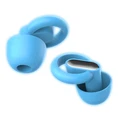


As a supplier of Lively OTC Hearing Aids, I often encounter a common question: Are Lively OTC Hearing Aids suitable for all types of hearing loss? This is a crucial query that deserves a comprehensive exploration. In this blog, we will delve into the nature of different hearing losses, the features of Lively OTC Hearing Aids, and determine their suitability across various scenarios.
Understanding Different Types of Hearing Loss
Hearing loss is not a one - size - fits - all condition. It can be broadly classified into three main types: conductive, sensorineural, and mixed hearing loss.
Conductive hearing loss occurs when there is a problem in the outer or middle ear that prevents sound from being conducted effectively to the inner ear. This can be caused by issues such as earwax blockage, middle ear infections, or a perforated eardrum. In many cases, conductive hearing loss is temporary and can be treated medically or surgically.
Sensorineural hearing loss, on the other hand, is the most common type of permanent hearing loss. It results from damage to the hair cells in the inner ear (cochlea) or the auditory nerve. Aging, exposure to loud noises, certain medications, and genetic factors are common causes of sensorineural hearing loss. This type of hearing loss typically leads to a reduced ability to hear soft sounds and understand speech clearly.
Mixed hearing loss is a combination of both conductive and sensorineural hearing loss. It means that there are problems in both the outer/middle ear and the inner ear or auditory nerve.
Features of Lively OTC Hearing Aids
Lively OTC Hearing Aids are designed with several features that make them a popular choice for many individuals with hearing difficulties.
One of the key features is their user - friendly nature. These hearing aids are over - the - counter (OTC) devices, which means they can be purchased without a prescription. This provides greater accessibility for people who may be hesitant to visit an audiologist or who want a more convenient option. They are also relatively easy to operate, with simple controls that allow users to adjust the volume according to their needs.
Lively OTC Hearing Aids are equipped with advanced sound - amplification technology. They can amplify sounds in a way that enhances speech clarity while reducing background noise. This is particularly important for individuals who have trouble understanding conversations in noisy environments.
Another advantage is their affordability. Compared to traditional prescription hearing aids, which can be quite expensive, Lively OTC Hearing Aids offer a more cost - effective solution for those on a budget.
Suitability for Different Types of Hearing Loss
Conductive Hearing Loss
For mild to moderate cases of conductive hearing loss, Lively OTC Hearing Aids can be a suitable option. Since the problem is mainly related to the conduction of sound in the outer or middle ear, the amplification provided by these hearing aids can help compensate for the reduced sound transmission. For example, if the conductive hearing loss is due to earwax blockage, once the blockage is removed, the hearing aid can further enhance the sound quality. However, in cases where the conductive hearing loss is severe or caused by a more complex medical condition, such as a serious middle - ear infection or a structural problem in the ear, medical treatment should be the first step. After the medical issue is resolved, Lively OTC Hearing Aids can be considered as an additional support.
Sensorineural Hearing Loss
Lively OTC Hearing Aids can be beneficial for individuals with mild to moderate sensorineural hearing loss. The advanced sound - amplification technology can help amplify the soft sounds that are difficult for these individuals to hear. However, it's important to note that sensorineural hearing loss often involves a more complex issue with the hair cells or auditory nerve. In severe cases of sensorineural hearing loss, the damage to the inner ear may be so extensive that OTC hearing aids may not provide sufficient amplification or sound quality. In such situations, a more customized solution, such as prescription hearing aids, may be necessary. These prescription devices can be fine - tuned by an audiologist based on the individual's specific hearing loss profile.
Mixed Hearing Loss
The suitability of Lively OTC Hearing Aids for mixed hearing loss depends on the relative severity of the conductive and sensorineural components. If the conductive component is mild and the sensorineural component is also in the mild - to - moderate range, these hearing aids may offer some improvement. However, due to the complexity of mixed hearing loss, it is advisable to consult a healthcare professional or an audiologist first. They can assess the situation and determine whether Lively OTC Hearing Aids are the right choice or if a more comprehensive treatment plan is required.
Limitations and Considerations
While Lively OTC Hearing Aids have many advantages, they also have some limitations. As mentioned earlier, they may not be sufficient for severe cases of hearing loss, especially sensorineural hearing loss. Additionally, since they are OTC devices, they do not offer the same level of customization as prescription hearing aids. Prescription hearing aids can be precisely calibrated to match an individual's unique hearing loss pattern, which may result in better sound quality and speech understanding.
Another consideration is that self - fitting OTC hearing aids may not be appropriate for everyone. Some individuals may have difficulty adjusting the settings correctly to achieve the best results. In such cases, it may be necessary to seek professional help or consider a different type of hearing aid.
Conclusion
In conclusion, Lively OTC Hearing Aids can be a suitable option for many individuals with mild to moderate hearing loss, whether it is conductive, sensorineural, or a mild form of mixed hearing loss. Their user - friendly design, advanced sound - amplification technology, and affordability make them an attractive choice. However, they are not a one - size - fits - all solution, especially for severe cases of hearing loss.


If you are considering purchasing Lively OTC Hearing Aids, it is always a good idea to have your hearing tested first. You can visit an audiologist or use a reliable at - home hearing test kit. This will help you determine the type and severity of your hearing loss and whether Lively OTC Hearing Aids are the right fit for you.
If you are interested in learning more about our Lively OTC Hearing Aids or are considering a purchase, we encourage you to reach out to us for a procurement discussion. We are happy to provide more information, answer your questions, and help you make an informed decision.
We also recommend exploring other related products such as Hearing Amplifier for Elderly People and OTC Hearing Assistance Devices to find the best solution for your hearing needs.
References
- American Speech - Language - Hearing Association (ASHA). Types of hearing loss.
- World Health Organization (WHO). Deafness and hearing loss fact sheet.
- National Institute on Deafness and Other Communication Disorders (NIDCD). Hearing loss.