


In commercial aviation, aerospace medicine, and travel wellness technology, modern high-altitude flight presents complex environmental challenges to the human auditory system.
During long-haul flights, passengers are subjected to continuous acoustic sound pressure levels ranging between 75 and 85 decibels, dominated by the low-frequency rumble of jet turbofan engines, high-velocity aerodynamic boundary-layer air turbulence, and internal environmental control systems.
Simultaneously, commercial aircraft cabins undergo rapid barometric pressure swings during ascent and descent, fluctuating between sea-level atmospheric pressure (approximately 101.3 kPa) and cruise cabin altitudes of 6,000 to 8,000 feet (equivalent to 75 to 81 kPa).
When travelers and corporate procurement teams ask whether specialized earplugs exist for air travel, the answer is a definitive yes.
However, air-travel hearing protection extends far beyond basic foam plugs designed for construction sites.
Aviation-grade earplugs fall into two distinct engineering classifications: acoustic attenuation barriers designed to prevent sensory fatigue and long-term hearing degradation, and pressure-regulating fluidic devices engineered to mitigate ear barotrauma caused by Boyle's law.
For travel retail brands, airline amenity kit suppliers, and consumer health distributors, sourcing air-travel earplugs requires a thorough understanding of middle ear physiology, noise reduction ratings (NRR/SNR), medical-grade polymer biocompatibility, and factory-direct OEM manufacturing standards.

Middle Ear Biomechanics and Acoustic Physics: Cabin Altitude and Pressure Regulation
Evaluating air-travel hearing protection requires examining the physiological mechanics of atmospheric pressure changes and cabin sound wave dynamics:
Barometric Pressure Swings, Boyle's Law, and Airplane Ear Barotrauma
The human tympanic membrane separates the external auditory canal from the air-filled middle ear cavity, which vents into the nasopharynx via the Eustachian tube.
During aircraft climb and descent, cabin pressure changes according to Boyle's Law, which dictates that gas volume is inversely proportional to surrounding pressure (P1V1=P2V2P1V1=P2V2).
During aircraft descent, cabin pressure increases rapidly, compressing the air volume inside the middle ear and causing the eardrum to retract inward.
If the Eustachian tube fails to open-often due to mucosal edema, allergies, or upper respiratory congestion-a painful pressure differential develops across the tympanic membrane.
This condition, clinically termed aerotitis media or airplane ear barotrauma, induces intense otalgia, transient conductive hearing loss, vestibular vertigo, and, in severe cases, tympanic hemotympanum or membrane perforation.
Pressure-regulating flight earplugs solve this problem by incorporating porous ceramic or sintered stainless-steel micro-filters that act as fluidic flow resistors, slowing atmospheric air transfer into the external ear canal and giving the Eustachian tube adequate time to equalize naturally.
Jet Engine Acoustic Profiles and Neurosensory Travel Fatigue
Cabin noise is not merely an inconvenience; it represents chronic acoustic stress that elevates sympathetic nervous system activity and induces neurosensory exhaustion.
The dominant sound energy inside an aircraft cabin sits in the low-frequency spectrum between 50 Hz and 500 Hz, generated by turbofan compressor blades and boundary-layer fuselage vibration.
Exposure to continuous 80-decibel noise over an eight-hour flight strains the stereocilia of the cochlear hair cells, triggers systemic cortisol and catecholamine release, and impairs sleep architecture by preventing travelers from reaching restorative slow-wave N3 and REM sleep stages.
Specialized travel earplugs provide passive acoustic damping that lowers perceived cabin noise to whisper-quiet levels (below 55 decibels), preserving sensory comfort and facilitating restful in-flight sleep.
Technical Comparison of Travel Earplug Architectures: Materials, Form Factors, and Filtration
Understanding the engineering trade-offs among different earplug constructions allows B2B buyers to configure balanced retail and travel amenity product lines:
Slow-Recovery Polyurethane Foam Formulations
Slow-recovery viscoelastic polyurethane foam earplugs represent the most widely used disposable hearing protection worldwide.
To use them, the passenger rolls the foam into a tight, narrow cylinder, inserts it deep into the ear canal, and allows the polymer to expand outward against the canal walls to create an acoustic seal.
These plugs provide high acoustic attenuation, frequently achieving Noise Reduction Ratings (NRR) between 28 dB and 33 dB.
However, standard foam plugs create an impermeable barrier that traps air inside the ear canal, worsening pressure discomfort during altitude changes.
Furthermore, porous foam matrices collect epithelial shed, cerumen, and environmental bacteria, making them unhygienic for repeated reuse without replacement.
Reusable Medical-Grade Liquid Silicone and Multi-Flange Profiles
Engineered from ultra-soft, hypoallergenic liquid silicone rubber (LSR), reusable silicone earplugs provide superior durability, ease of cleaning, and repeatable anatomical sealing.
Featuring dual-flange or triple-flange umbrella contours, these plugs flex dynamically with jaw movement, swallowing, and side-sleeping against airplane headrests.
Advanced models (such as the Gold Rose Y10FR0 Silicone Noise Reduction Earplugs) incorporate rigid ABS acoustic stems, decorative aluminum bezels, and interchangeable dual-layer and single-layer silicone tips (available in small, medium, and large sizing).
This modular architecture allows travelers to customize their fit while maintaining an effective acoustic seal and reducing ear canal pressure.
Moldable Silicone Putty and Paraffin Wax Formulations
For travelers with small, tortuous, or surgically altered ear canals who experience discomfort from cylindrical plugs, moldable paraffin wax and silicone putty provide an external concha seal.
Rather than penetrating deep into the bony ear canal, these formulations are softened by hand warmth and flattened over the canal opening.
While they eliminate canal friction, their acoustic attenuation is comparatively lower (typically NRR 20 dB to 22 dB), and paraffin wax can soften and stick under warm cabin conditions, limiting its practical utility for frequent flyers.
Active Noise-Canceling (ANC) Electronic In-Ear Transducers
Active noise-canceling earbuds utilize external feed-forward and internal feedback microphones paired with digital signal processors (DSP) to generate inverted, anti-phase acoustic waves that cancel out low-frequency engine hum.
While ANC technology excels at neutralizing steady engine noise below 1,000 Hz, active electronic earbuds are bulkier than passive plugs, risk ear canal soreness when pressed against travel pillows, and rely on rechargeable lithium-ion batteries that require in-flight charging.

Hygiene and Travel Convenience: Bacterial Colonization and In-Flight Loss Prevention
Operating hearing protection inside an aircraft cabin introduces distinct hygiene and handling challenges that modern product engineering must resolve:
Microbial Contamination and UV-C Photolytic Sanitization
The warm, dark, and humid environment of the human external ear canal naturally supports colonies of Staphylococcus epidermidis, Pseudomonas aeruginosa, and Aspergillus fungal spores.
Repeatedly inserting and removing earplugs using hands that have touched airplane tray tables, armrests, and seatback pockets introduces foreign environmental pathogens directly into the ear canal.
Over prolonged flights, trapped perspiration and moisture elevate bacterial counts, causing acute otitis externa (swimmer's ear) and canal pruritus.
To overcome this hygiene risk, advanced travel earplug systems integrate automated sanitizing charging cases equipped with UV-C LEDs emitting at 260 nm to 280 nm.
These systems deliver germicidal ultraviolet irradiation that breaks bacterial DNA/RNA base pairings, achieving a 99.9% reduction in viable pathogens between uses without chemical sprays.
Low-Light Cabin Visibility and Photoluminescent Phosphor Compounding
Long-haul passenger cabins dim ambient cabin lighting for prolonged periods to encourage sleep.
When passengers remove small flesh-colored earplugs in darkened cabins, the plugs frequently fall between seat cushions or roll onto cabin floors, resulting in frustration and loss.
To prevent this common annoyance, modern travel earplugs incorporate non-toxic, inorganic photoluminescent phosphors directly into their silicone rubber matrix.
These phosphors absorb ambient airport gate lighting before boarding and emit a gentle green or blue luminescence in darkened cabins, allowing travelers to locate their earplugs instantly without switching on overhead reading lights.
Sourcing Benchmark: Advanced Earplug Platforms from Gold Rose
International travel retail brands, airline amenity buyers, and e-commerce health sellers can partner with Huizhou Gold Rose Technology Co., Ltd. for verified, factory-direct hearing protection hardware:
The Gold Rose UV-C Sterilizing Sleep Earplug provides an advanced travel hearing protection system that combines passive acoustic attenuation with automated ultraviolet sanitization.
Engineered with an ultra-low-profile silicone contour that sits flush within the ear canal for zero-pressure side-sleeping against airplane headrests, these earplugs effectively seal out cabin engine roar and passenger chatter.
The accompanying smart storage case integrates automated 360-degree UV-C germicidal LEDs powered by a 500 mAh lithium battery, delivering a 99.9% reduction in bacteria alongside up to 365 days of standby power, available for OEM customization from 3,000 units.
The Gold Rose Glow in The Dark Earplugs offer a highly practical travel solution engineered from soft, hypoallergenic silicone that fits securely within the ear canal.
Compounded with skin-safe photoluminescent materials, these earplugs glow brightly in darkened aircraft cabins, preventing accidental loss during overnight flights.
Packaged with dedicated cleaning and maintenance tools for long-term hygiene, this model is available for private-label production starting at 1,000 sets.
The Gold Rose Model Y10FR0 Silicone Noise Reduction Earplugs feature an advanced multi-component mechanical structure, combining an ABS core, decorative aluminum bezel, SUS304 acoustic filter mesh, and interchangeable multi-tier silicone tips.
Engineered for dual-purpose noise isolation during travel and concerts, each set includes hanging lanyards and compact flip-top storage cases, with custom branding from 1,000 sets.
The Gold Rose Comfy Earbuds for Sleeping utilize ultra-soft, flexible silicone construction designed to eliminate tragus and concha pressure during in-flight rest, available from 1,000 units.
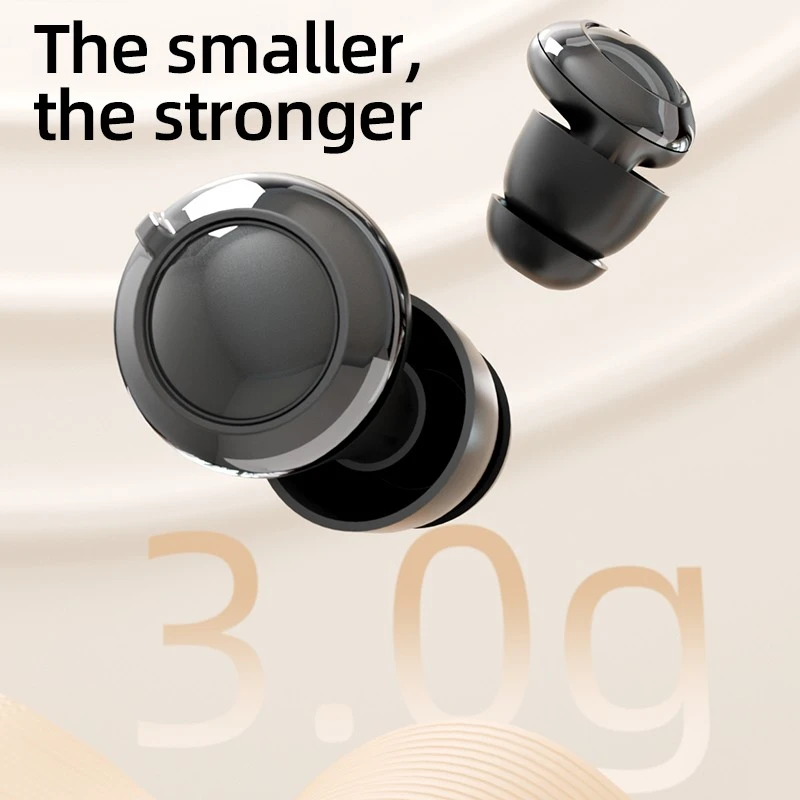
The Gold Rose Noise Reduction Earplugs deliver durable passive sound isolation optimized for open travel, study, and sleep environments, available for bulk OEM supply from 1,000 units.
B2B Commercial Blueprint: Travel Amenities, Airport Retail, and Compliance
Commercial procurement managers incorporating travel earplugs into their product catalogs must balance merchandising architecture with international hearing protection compliance:
Travel Retail and Hospitality Distribution Channels
Aviation-grade hearing protection offers versatile commercialization paths across global retail channels:
Airport Duty-Free and Travel Convenience Stores: Package reusable silicone and photoluminescent earplugs in compact, impulse-friendly clamshell blister cards with carabiner travel cases for high-margin sales at airport transit hubs.
First-Class and Business-Class In-Flight Amenity Kits: Supply commercial airlines and luxury charter operators with custom-branded, hypoallergenic silicone earplugs housed in embossed metal or leatherette cases, enhancing passenger comfort on long-haul routes.
Cross-Merchandising with Circadian Sleep Hardware: Bundle passive travel earplugs alongside morning phototherapy lamps-such as the Gold Rose Curved SAD Light Therapy Lamp-and circadian sleep devices like the Gold Rose Wake Up Pillow, providing frequent travelers with a complete circadian wellness toolkit for managing jet lag.
Technical Quality Audits and Manufacturing Compliance Standards
Procurement managers auditing earplug manufacturing facilities should enforce five essential regulatory and technical inspection benchmarks:
Acoustic Attenuation Testing and Certification: Verify certified laboratory test reports conforming to ANSI S3.19-1974 (North America NRR) and EN 352-2:2020 (European CE SNR), confirming accurate noise reduction ratings without misleading attenuation claims.
Skin Biocompatibility and Cytotoxicity Testing: Ensure all silicone and polymer materials touching the ear canal are certified compliant with ISO 10993-5 (Cytotoxicity), ISO 10993-10 (Skin Irritation and Sensitization), and FDA food-grade regulations (21 CFR 177.2600).
Hazardous Chemical and Polymer Safety Directives: Confirm full compliance with EU REACH Regulation (EC No 1907/2006) and RoHS Directive 2011/65/EU, certifying complete absence of phthalates, polycyclic aromatic hydrocarbons (PAHs), heavy metals, and bisphenol-A (BPA).
UV-C Photolytic Safety and Ingress Protection: For self-sanitizing models, verify that the charging case complies with IEC 62471 photobiological safety standards (ensuring complete enclosure of UV-C light without external eye exposure) and CE EMC/FCC electrical directives.
Factory Quality Systems and Traceability: Partner exclusively with factories accredited under ISO 13485:2016 and ISO 9001, ensuring automated clean-room injection molding, multi-point visual inspection for silicone flashing, and rigorous 32-step quality testing.
Frequently Asked Questions
Q1: Can regular foam earplugs protect against airplane ear pressure pain during descent?
Standard foam earplugs provide excellent acoustic noise reduction, but their impermeable construction does not equalize pressure and may even trap air inside the canal, whereas specialized flight earplugs feature porous ceramic or sintered filters that slow pressure changes and ease Eustachian tube equalization.
Q2: How often should reusable silicone travel earplugs be cleaned and replaced?
Reusable silicone earplugs should be washed after every flight using warm water and mild soap, then air-dried thoroughly; with proper hygiene maintenance, a high-quality pair can be used safely for two to four weeks before tip replacement.
Q3: How does UV-C light sanitize sleep earplugs without damaging the silicone?
Integrated travel charging cases emit a controlled, low-power 260 nm to 280 nm germicidal UV-C cycle for several minutes, targeting and destroying surface microbial DNA without heating or degrading high-grade silicone polymers.
Q4: Are earplugs safe to wear for the entire duration of an eight-hour transatlantic flight?
Yes, wearing soft, hypoallergenic medical-grade silicone earplugs for eight hours is safe, provided they fit comfortably without pain, are inserted with clean hands, and do not push existing impacted earwax deep against the tympanic membrane.
Q5: What private-label OEM and ODM options does Gold Rose offer for travel earplugs?
Huizhou Gold Rose Technology Co., Ltd. provides comprehensive OEM/ODM manufacturing starting at 1,000 to 3,000 sets, covering custom multi-tier silicone molds, bespoke Pantone colors, glowing luminescent compounding, branded travel cases, and international compliance documentation (CE EN 352-2, ANSI S3.19, RoHS, ISO 13485) directly via goldrosa.com.
References
National Institute on Deafness and Other Communication Disorders. (2022). Noise-Induced Hearing Loss and Aviation Sound Pressure Exposure. NIH Publication No. 14-4233, Bethesda, MD.
Occupational Safety and Health Administration. (2021). Occupational Noise Exposure: Hearing Protection Assessment and Attenuation Standards. OSHA Technical Manual, TED 01-00-015, Washington, DC.
Mirza, S., & Richardson, H. (2005). Otic barotrauma from air travel: Pathophysiology, Eustachian tube dysfunction, and prevention strategies. The Journal of Laryngology & Otology, 119(5), 361–366.
International Organization for Standardization. (2020). ISO 10993-5: Biological Evaluation of Medical Devices - Tests for In Vitro Cytotoxicity. ISO Standards Catalogue, Geneva, Switzerland.
European Committee for Standardization. (2020). EN 352-2: Hearing Protectors - General Requirements - Part 2: Earplugs. CEN Standards, Brussels, Belgium.
American National Standards Institute. (1974). ANSI S3.19-1974: Method for the Measurement of Real-Ear Protection of Hearing Protectors and Physical Attenuation of Earmuffs. Acoustical Society of America, Melville, NY.