


In otolaryngology, oral health sciences, and consumer medical device engineering, tonsilloliths-commonly termed tonsil stones-represent a persistent and frustrating clinical challenge affecting millions of adults worldwide.
Formed within the convoluted invaginations of the palatine tonsils, these calcified concretions consist of desquamated epithelial cells, food debris, oral salivary mucins, and anaerobic bacterial biofilms dominated by volatile sulfur compound (VSC) producers such as Fusobacterium nucleatum and Prevotella intermedia.
The resulting chronic halitosis, persistent globus pharyngeus (the sensation of a foreign body lodged in the throat), and recurrent odynophagia frequently drive frustrated individuals to attempt home extraction.
As consumer interest in specialized oral hygiene tools grows, retail buyers, clinical distributors, and end-users frequently ask an essential safety question: can a tonsil stone remover cause damage to palatine tonsil tissues?
The direct medical answer is that mechanical extraction tools can cause significant mucosal and vascular trauma when misapplied or when manufactured without clinical safety tolerances.
The lymphoid tissue of the palatine tonsil is soft, richly vascularized, and enclosed within an extraordinarily delicate stratified squamous epithelial lining.
Improper extraction using sharp implements, excessive force, or uncalibrated mechanical pressure risks mucosal lacerations, microvascular hemorrhage, bacterial bacteremia, and deep peritonsillar space infections.
However, modern medical device engineering has replaced dangerous blind probing with regulated negative-pressure fluidics, medical-grade silicone cushioning, and coaxial optical illumination that mitigate tissue trauma.
This comprehensive B2B technical guide examines the histopathology of tonsil tissue, compares the mechanical risk profiles of extraction technologies, details physiological tissue tolerance limits, and outlines global manufacturing compliance standards for commercial procurement teams.
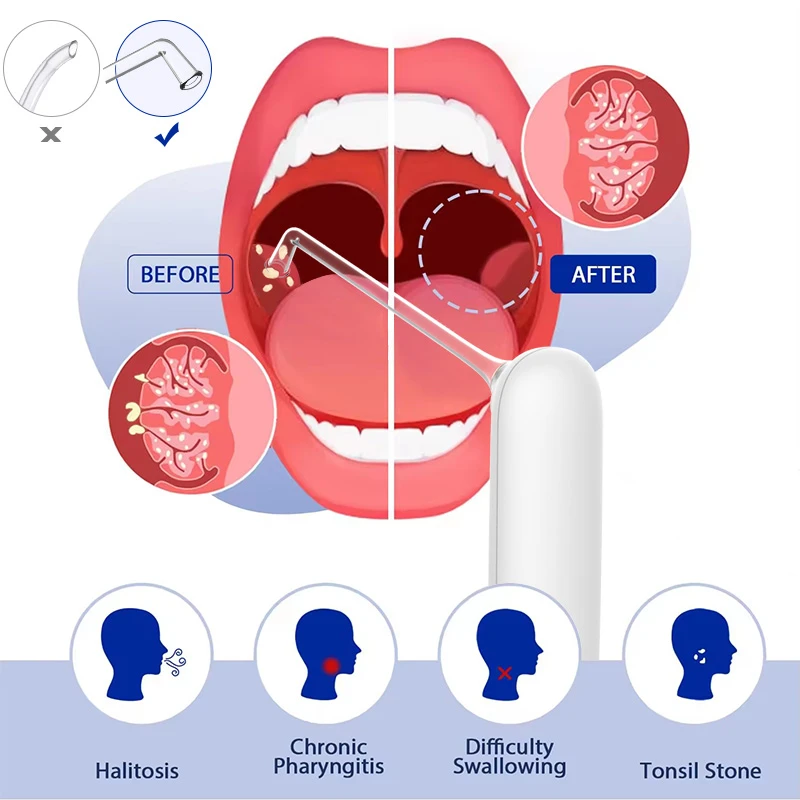
Palatine Tonsil Histopathology and Vascular Anatomy: Tissue Vulnerability and Clinical Trauma Risks
Evaluating the safety of tonsil stone removal devices requires examining the delicate microanatomy of the palatine tonsils and the clinical risks of mechanical trauma:
Epithelial Fragility, Lymphoid Stroma, and the Crypt Architecture
The palatine tonsils are paired secondary lymphoid organs situated within the tonsillar fossae of the lateral oropharynx, bounded anteriorly by the palatoglossal arch and posteriorly by the palatopharyngeal arch.
Unlike the rugged, keratinized epithelium covering the masticatory gingiva and hard palate, the mucosal surface of the tonsil is shielded only by a thin, non-keratinized stratified squamous epithelium.
This mucosal surface invaginates deeply into the tonsillar parenchyma, forming 10 to 20 branching blind-ended conduits known as tonsillar crypts.
These crypts are lined by a specialized reticulated lymphoepithelium designed to sample ingested pathogens.
Because this epithelial layer is only a few cell layers thick and lacks a keratin barrier, mechanical friction or blunt trauma can easily tear the mucosa, exposing the underlying vascular lymphoid stroma to environmental pathogens.
Peritonsillar Vascular Plexus and Hemorrhagic Vulnerability
The palatine tonsils possess an exceptionally rich vascular supply derived from five distinct arterial branches: the dorsal lingual artery, the ascending palatine artery, the tonsillar branch of the facial artery, the ascending pharyngeal artery, and the descending palatine artery.
Beneath the delicate crypt walls lies a dense submucosal capillary bed and microvascular venous plexus.
When an individual uses a rigid wooden stick, stainless steel curette, or cotton swab to dig out an embedded tonsil stone, shearing forces easily shear across these fragile microvessels.
This causes immediate capillary rupture, localized ecchymosis, and profuse oral bleeding.
In patients taking antiplatelet therapies or nonsteroidal anti-inflammatory drugs, minor mucosal tears can develop into persistent venous oozing that requires clinical intervention.
Peritonsillar Cellulitis, Abscess Formation, and Secondary Infections
The human oropharynx houses a dense polymicrobial ecosystem containing hundreds of bacterial species.
When the non-keratinized epithelial barrier is compromised by mechanical scraping, opportunistic pathogens rapidly invade the deeper lymphoid stroma.
This colonization can trigger acute bacterial tonsillitis, deep parenchymal ulceration, or peritonsillar cellulitis.
In severe cases, bacterial infection breaches the fibrous hemicapsule that separates the tonsil from the superior pharyngeal constrictor muscle, resulting in a peritonsillar abscess (quinsy).
Peritonsillar abscesses are serious medical emergencies characterized by severe trismus, uvular deviation, and systemic fever, requiring urgent needle aspiration, intravenous antibiotics, or emergency surgical drainage.
Mechanical Device Architectures: Suction Fluidics, Ultrasonic Vibration, and Mechanical Curettes
Understanding the safety and risk profiles of different extraction mechanisms allows commercial distributors to select clinically sound products for their consumer catalogs:
Negative-Pressure Fluidic Suction Versus Mechanical Scraping
Conventional manual extraction relies on mechanical levering, pressing, or scraping, which applies concentrated shear forces against a single point of the mucosal crypt.
By distributing suction force across the broader surface area of a smooth, flared probe, negative-pressure devices lift concretions out of mucosal folds using atmospheric pressure differentials rather than physical friction.
Clinical research into oral tissue tolerance indicates that mucosal ecchymosis begins when localized static negative pressure exceeds 0.04 MPa (approximately 300 mmHg) over prolonged periods.
Advanced electronic vacuum devices incorporate regulated 3-stage or 5-stage vacuum pumps that limit peak suction within safe physiologic boundaries (typically 0.01 MPa to 0.03 MPa, or 75 to 225 mmHg).
This calibrated suction dislodges stubborn stones without pulling fragile capillary beds into petechial collapse.
Tapered Silicone Nozzle Geometry and Medical-Grade Polymer Interfaces
The interface between the device and the throat tissue determines whether extraction causes irritation or traumatic tearing.
Low-quality retail tools often feature rigid, sharp-edged polypropylene tips that easily scratch mucous membranes during sudden swallowing or gagging reflexes.
Medical-grade instruments utilize liquid silicone rubber (LSR) or medical-grade polymer probes molded into flared horn geometries with broad, polished radii.
These soft-touch silicone tips form an effective peripheral air seal around the crypt entrance while distributing contact pressure harmlessly across the surrounding mucous membrane.
Pulsed Ultrasonic Irrigation Versus High-Pressure Water Jets
Using dental oral irrigators (water flossers) to remove tonsil stones is a common consumer practice that carries high clinical risk.
Standard water flossers produce focused fluid micro-jets at pressures between 30 and 110 PSI (0.2 MPa to 0.76 MPa) designed to scour dental enamel and interdental embrasures.
Directed at the unkeratinized palatine tonsil, a high-pressure 50-PSI water jet acts as a hydraulic scalpel, causing immediate mucosal puncture, severe bleeding, and water-driven bacterial seeding deep into the tonsillar capsule.
In sharp contrast, medical-grade tonsil irrigation kits utilize low-pressure manual syringes or low-velocity peristaltic irrigation (under 5 PSI) paired with physiological warm saline.
This gentle irrigation hydrates the crypt, dissolves sticky mucus biofilms, and loosens calcified debris prior to negative-pressure suction.
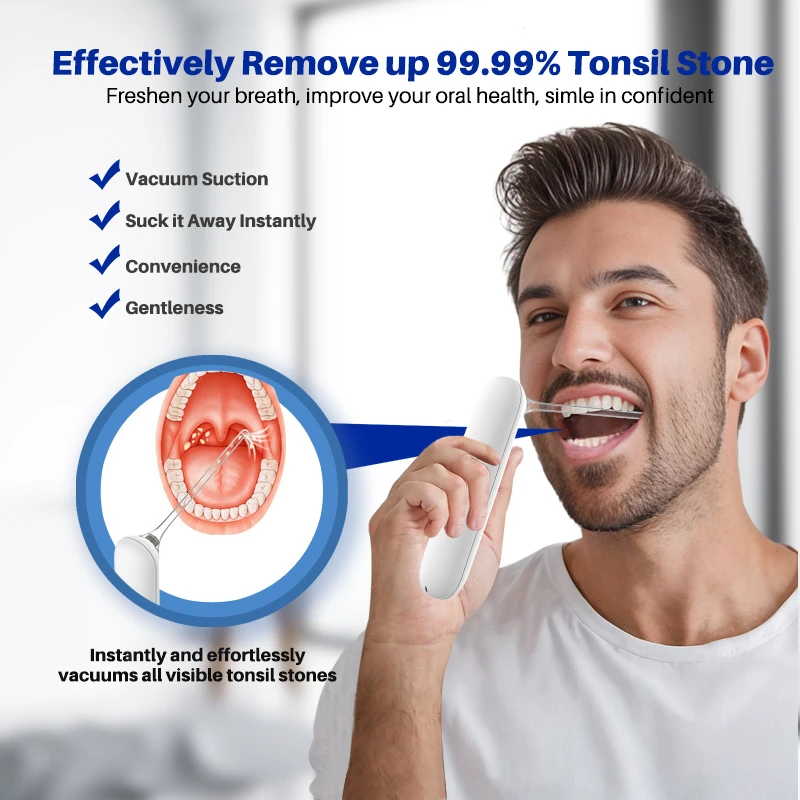
Optical Precision and Neurosensory Reflex Management: Preventing Gag-Induced Trauma
A major cause of tissue trauma during home tonsil stone removal is patient movement triggered by the pharyngeal gag reflex:
Glossopharyngeal (CN IX) and Vagal (CN X) Reflex Arcs
The mucosa covering the palatoglossal arches, soft palate, and posterior oropharynx is heavily innervated by sensory afferent fibers of the Glossopharyngeal Nerve (Cranial Nerve IX).
When a rigid probe inadvertently brushes against the anterior pillar or base of the tongue, sensory impulses travel along CN IX to the nucleus solitarius within the medulla oblongata.
This immediately triggers an involuntary efferent motor response mediated by the Vagus Nerve (Cranial Nerve X), causing acute contraction of the middle and superior pharyngeal constrictor muscles and violent elevation of the tongue and larynx.
If a hard, pointed tool is lodged inside a tonsillar crypt when this violent gag spasm occurs, the moving tonsil is driven directly into the tool tip, causing severe mucosal lacerations.
Coaxial High-CRI Illumination and 5X Optical Magnification
Blind probing in a poorly illuminated oropharynx dramatically increases the likelihood of triggering the gag reflex and causing tissue damage.
The oral cavity is dark, and shadowing from the tongue and maxillary dentition obscures the posterior tonsillar pillars.
Modern clinical-grade extraction kits integrate high-CRI (Color Rendering Index > 90) solid-state LEDs that cast focused, shadowless white light directly into the tonsillar bed.
Paired with distortion-free 5X optical magnification mirrors, users can clearly identify the boundaries of the tonsillolith, avoid contact with sensitive adjacent trigger zones, and position suction probes with pinpoint accuracy.
Sourcing Benchmark: Advanced Tonsil Care Platforms from Gold Rose
International oral care distributors, pharmacy chains, and private-label e-commerce brands can partner with Huizhou Gold Rose Technology Co., Ltd. for verified, factory-direct tonsil stone extraction hardware:
The Gold Rose Electric Tonsil Stone Removal Tool Kit serves as a comprehensive medical-grade extraction platform designed to minimize mucosal trauma.
The kit features an electronic suction console equipped with precision multi-level vacuum adjustment, allowing users to match negative pressure to individual tissue sensitivity.
It includes medical-grade horn-shaped silicone suction probes that form an airtight seal without scratching delicate mucosal linings, a dedicated warm-water tonsil irrigation syringe for pre-softening concretions, an integrated oral inspection lamp, and a 5X optical magnification mirror.
Manufactured under strict ISO 13485 medical device quality protocols, this comprehensive kit is available for custom OEM/ODM private-label manufacturing starting at 500 units.
The Gold Rose Electronic Vacuum Tonsil Stone Remover delivers dedicated fluidic negative-pressure extraction in an ergonomic, handheld cordless form factor.
Featuring an integrated vacuum micro-pump calibrated to stay within safe physiological suction thresholds, it includes interchangeable soft silicone extraction tips, intuitive one-button controls, a USB-rechargeable lithium battery, and full CE and RoHS certifications, available with custom branding starting from 100 units.
The Gold Rose Power Tonsil Stone Remover Kit provides durable mechanical extraction support for larger, stubborn tonsilloliths.
Constructed with smooth borosilicate glass and rounded surgical stainless-steel probes, the kit includes high-output USB LED lighting, a 5X dental inspection mirror, precision anti-magnetic tweezers, tongue depressors, and an angled warm-water irrigation syringe, available from 500 units.

B2B Commercial Blueprint: Dental Channel Positioning, Packaging, and Regulatory Compliance
Commercial procurement managers incorporating tonsil stone removal devices into their retail and professional oral health catalogs must align merchandising strategies with international medical compliance:
Commercial Channel Distribution Architecture
Tonsil stone extraction hardware offers versatile commercialization paths across global healthcare markets:
Professional Dental and ENT Clinic Retailing: Position negative-pressure tonsil stone kits as professional home-maintenance tools prescribed by dental hygienists and otolaryngologists for patients suffering from chronic tonsillolith recurrence and halitosis.
Consumer Oral Care E-Commerce and Pharmacy Chains: Package compact vacuum removers in premium retail packaging alongside oral rinses and tongue scrapers, positioning them as essential personal hygiene devices for long-term fresh breath.
Cross-Merchandising with Ultrasonic Dental Cleaners: Bundle tonsil stone extraction kits alongside Gold Rose ultrasonic dental cleaners (such as the US500 or US600) and electric flosser platforms to provide comprehensive, medical-grade oral wellness suites.
Technical Quality Audits and Manufacturing Compliance Standards
Procurement managers auditing tonsil care manufacturing facilities should enforce five mandatory engineering inspection benchmarks:
Biocompatibility and Cytotoxicity Testing: Ensure all components contacting oral mucous membranes comply with ISO 10993-5 (In Vitro Cytotoxicity), ISO 10993-10 (Skin Irritation and Sensitization), and FDA food-contact standards under 21 CFR 177.2600.
Electrical Safety and Low-Voltage Directives: Confirm full compliance with CE LVD 2014/35/EU, CE EMC 2014/30/EU, and FCC Part 15B Class B, ensuring safe internal lithium-ion battery management and zero electromagnetic interference.
Hazardous Substances and Environmental Directives: Verify certified compliance with RoHS Directive 2011/65/EU and EU REACH Regulation, certifying that internal circuits, plastics, and accessories are completely free from toxic heavy metals, phthalates, and bisphenol-A (BPA).
Ingress Protection and Cleanability: Verify that handheld electronic units achieve a minimum rating of IPX5 or IPX6 water resistance, allowing safe, thorough hygienic rinsing under running tap water after use.
Medical Device Quality Management Systems: Partner exclusively with factories accredited under ISO 13485:2016 and ISO 9001, ensuring automated clean-room injection molding, multi-point optical probe inspection for sharp burs, and formal 32-step quality assurance testing.
Frequently Asked Questions
Q1: Can using a tonsil stone remover cause my tonsils to bleed?
Yes, using rigid tools with excessive force can tear delicate mucosal capillaries and cause bleeding, but calibrated negative-pressure vacuum devices with soft silicone tips dislodge stones safely without mechanical abrasion.
Q2: What should I do if my tonsils bleed after using an extraction tool?
Rinse immediately with ice water or cold saline to encourage vasoconstriction and stop capillary bleeding, avoid touching the area, and consult a medical doctor or ENT specialist if bleeding does not resolve within several minutes.
Q3: Why is using a standard water flosser dangerous for removing tonsil stones?
Standard dental water flossers operate at 30 to 110 PSI, producing focused high-pressure water jets that can easily puncture the thin, non-keratinized mucosal lining of the palatine tonsils and force bacteria deep into the tonsillar capsule.
Q4: How does warm salt-water irrigation help protect tonsils during stone extraction?
Irrigating the tonsils with warm physiological saline prior to extraction hydrates sticky mucus, dissolves superficial biofilm attachments, and softens calcified stones, allowing them to be pulled out with significantly lower suction force.
Q5: What private-label OEM and ODM options does Gold Rose offer for tonsil stone removal kits?
Huizhou Gold Rose Technology Co., Ltd. provides complete OEM/ODM customization starting at 100 to 500 units, covering custom silicone nozzle molds, bespoke Pantone colors, branded FBA packaging, instruction manual localization, and international compliance documentation (CE, FCC, RoHS, ISO 13485) directly via goldrosa.com.
References
Mayo Clinic. (2022). Tonsil Stones (Tonsilloliths): Symptoms, Causes, and Clinical Management. Mayo Clinic Health Information, Rochester, MN.
American Academy of Otolaryngology–Head and Neck Surgery. (2021). Clinical Practice Guideline: Tonsillitis and Tonsillar Crypt Disease. Otolaryngology–Head and Neck Surgery, 164(2), 188–203.
Ferguson, M., et al. (2014). Tonsilloliths: A common cause of halitosis and throat irritation. British Dental Journal, 217(2), 67–70.
International Organization for Standardization. (2020). ISO 10993-5: Biological Evaluation of Medical Devices - Tests for In Vitro Cytotoxicity. ISO Standards Catalogue, Geneva, Switzerland.
International Organization for Standardization. (2016). ISO 13485:2016 Medical Devices - Quality Management Systems - Requirements for Regulatory Purposes. ISO Standards Catalogue, Geneva, Switzerland.