


In chronobiology, sleep technology, and consumer electronics, smart bedding has emerged as one of the fastest-growing categories in modern home wellness.
Conventional sleep surfaces have long provided passive mechanical cushioning, relying on static foam or down fills that cannot adapt as sleeping postures shift or nocturnal sleep stages evolve.
In contrast, next-generation smart pillows integrate embedded micro-sensors, Internet of Things (IoT) wireless connectivity, near-field audio drivers, and electromechanical vibration actuators.
As consumer awareness of sleep health and sleep inertia expands, retailers, distributors, and hotel procurement managers frequently ask a practical operational question: do smart pillows have a vibration function, and what biological mechanisms make vibration effective?
The direct answer is yes.
Advanced smart pillows routinely incorporate calibrated electromechanical vibration systems engineered for two distinct clinical and behavioral roles.
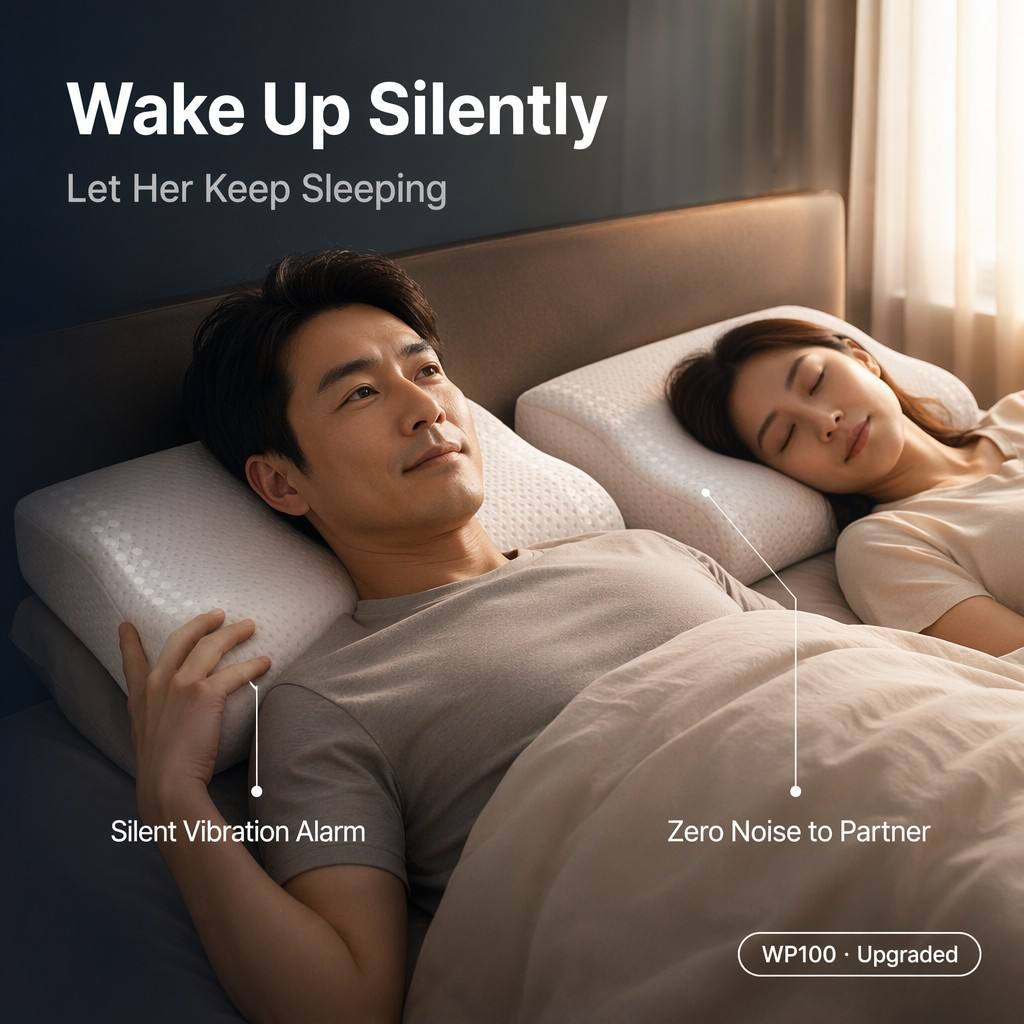
First, as an arousal mechanism, localized somatosensory vibration delivers an effective, silent morning wake-up signal that rouses the sleeper quietly without room-filling noise or cardiovascular shock.
Second, at low operational frequencies, gentle rhythmic tactile oscillations act as a pre-sleep relaxation tool, soothing hyperactive paraspinal muscle tone and facilitating parasympathetic nervous system activation.
For smart bedding brands, e-commerce sellers, and hospitality procurement directors, commercializing vibrating smart pillows requires moving beyond marketing claims.
Understanding linear resonant actuator mechanics, tactile mechanoreceptive pathways, cervical spine ergonomics, and certified OEM manufacturing standards provides a clear framework for building a high-margin, clinically grounded smart sleep catalog.
Somatosensory Neurobiology: Tactile Afferent Pathways and Sleep-Wake Transitions
Understanding why vibration serves as an effective wake-up and relaxation medium requires examining how the human nervous system processes mechanical oscillations:
Tactile Mechanoreceptors and Ascending Somatosensory Pathways
The human neck and occipital scalp contain dense populations of specialized low-threshold mechanoreceptors.
Rapid mechanical oscillations stimulate Pacinian Corpuscles (sensitive to high-frequency vibrations between 100 Hz and 300 Hz) and Meissner's Corpuscles (responsive to lower-frequency vibrations between 20 Hz and 50 Hz).
When activated, these mechanoreceptors generate afferent action potentials that ascend through the dorsal column-medial lemniscal pathway, synapsing within the dorsal column nuclei of the medulla before projecting to the ventral posterolateral nucleus of the thalamus and the primary somatosensory cortex.
This mechanical pathway bypasses the auditory cortex entirely, delivering direct sensory arousal without the cognitive shock associated with sudden auditory buzzers.
Silent Awakening: Eliminating Auditory Stress and Partner Disturbance
Conventional acoustic alarm clocks sound at 70 to 85 decibels, triggering an abrupt sympathetic nervous system discharge.
This acoustic shock activates the locus coeruleus, spikes heart rate, and causes an acute surge of cortisol that deepens morning sleep inertia and leaves users groggy for hours.
Furthermore, loud alarms inevitably wake bed partners, creating recurring friction in dual-sleeper households.
By delivering tactile stimulation directly to the base of the skull and cervical vertebrae, a vibrating smart pillow rouses only the person sleeping on it, waking deep sleepers reliably while leaving their partner undisturbed.
Rhythmic Somatosensory Entrainment and Pre-Sleep Muscular Relaxation
At sub-arousal operational frequencies (typically between 10 Hz and 30 Hz), steady or pulsating mechanical micro-vibrations stimulate cutaneous Ruffini endings and muscle spindle afferents.
This rhythmic input activates the descending pain-inhibitory system and reduces isometric muscle spasm across the upper trapezius, splenius capitis, and levator scapulae muscles.
Combined with guided 4-7-8 breathing exercises or calming soundscapes, low-frequency somatosensory stimulation promotes vagal nerve tone, decreases sympathetic arousal, and helps users fall asleep faster.
Electromechanical Actuation: Actuator Architectures, Acoustic Damping, and Controls
Delivering tactile vibration through a soft bedding product without creating unwanted buzzing noise requires careful internal hardware engineering:
Linear Resonant Actuators (LRAs) Versus Eccentric Rotating Mass (ERM) Motors
Early vibrating pillows relied on basic eccentric rotating mass (ERM) motors, which use an off-center weight spinning on a DC motor shaft.
ERM motors suffer from sluggish start-up and stop times, limited frequency control, and noticeable mechanical whining.
Modern high-performance smart pillows utilize precision Linear Resonant Actuators (LRAs).
LRAs move an internal magnetic mass linearly along a single axis via an electromagnetic voice coil suspended on tuned springs.
This architecture allows precise, rapid control over vibration amplitude and frequency, delivering sharp tactile pulses with minimal power consumption and near-silent operation.
Acoustic Foam Damping Chambers and Structural Isolation
A poorly engineered actuator placed in a pillow will vibrate the internal housing, producing an irritating airborne rattle that defeats the purpose of a silent alarm.
Professional smart pillows isolate LRAs inside custom silicone damping boots embedded within dense acoustic cavity cutouts in the foam core.
This mechanical suspension absorbs lateral acoustic vibrations while directing axial somatosensory energy upward toward the user's neck and occiput, keeping the operation quiet and comfortable.
Wireless Mobile App Control and Multi-Mode Customization
Leading smart pillows feature integrated Bluetooth Low Energy (BLE) microcontrollers paired with companion iOS and Android mobile applications.
Users can customize their experience through intuitive digital interfaces:
Variable Amplitude Ladders: Select from multiple vibration intensity tiers (such as mild, medium, and deep-sleeper settings) to match individual arousal thresholds.
Dynamic Waveform Patterns: Choose between continuous steady humming, rhythmic breathing wave pulses, and escalating arousal ladders that gradually intensify over several minutes.
Independent Alarms and Schedule Customization: Program multi-event schedules and automated pre-sleep relaxation timers directly from a smartphone, with over-the-air (OTA) firmware upgradeability ensuring lasting product utility.
Biomechanical Ergonomics: Cervical Lordosis and Viscoelastic Polymer Design
A smart pillow must function as an exceptional orthotic sleep surface before any electronic features are engaged:
Anatomical Lordosis Support and Airway Patency
The adult human head weighs approximately 4.5 to 5.5 kilograms.
During nocturnal rest, this weight must be supported in neutral alignment across the seven cervical vertebrae (C1 through C7).
Inadequate spinal alignment strains paraspinal musculature and causes morning occipital headaches and chronic neck stiffness.
Furthermore, poor head positioning allows the tongue base and soft palate to collapse backward into the hypopharynx, obstructing upper airway airflow and exacerbating positional snoring.
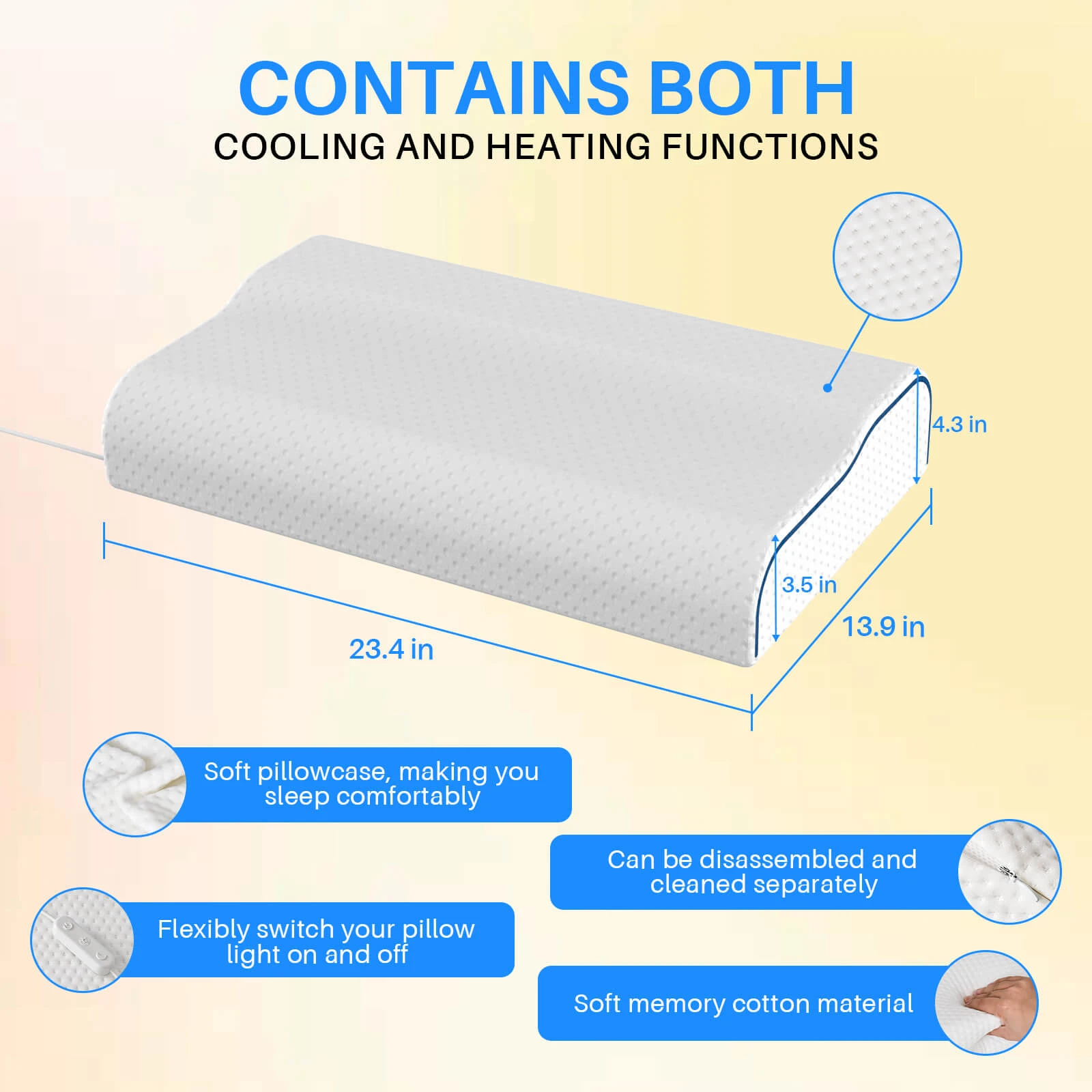
Medical-grade smart pillows incorporate contoured butterfly profiles with reinforced cervical rolls that maintain open airway patency across supine, lateral, and prone sleep postures.
Viscoelastic Slow-Rebound Polyurethane Memory Foam
The physical foundation of a medical-grade smart pillow relies on high-density, viscoelastic slow-rebound polyurethane memory foam.
Unlike down or fiber fills that shift and flatten overnight, high-density memory foam dynamically adapts to cranial contours, evenly redistributing contact pressure while securely cradling internal electronics and actuators.
To maintain skin hygiene, the pillow is protected by a breathable, hypoallergenic, and machine-washable outer cover that keeps users cool and comfortable.
Sourcing Benchmark: Advanced Smart Pillow Hardware from Gold Rose
International sleep wellness brands, hotel hospitality procurement directors, and corporate gift distributors can partner with Huizhou Gold Rose Technology Co., Ltd. for verified, factory-direct smart sleep hardware:
The Gold Rose LumaRest WP100 Vibrating Alarm Clock Pillow serves as a flagship smart sleep platform engineered for silent morning waking and dual-sleeper bedrooms.
Equipped with three adjustable vibration intensity levels, the WP100 replaces loud alarms with gentle tactile stimulation delivered directly through the cervical support zone, ensuring reliable waking without waking a sleeping partner.
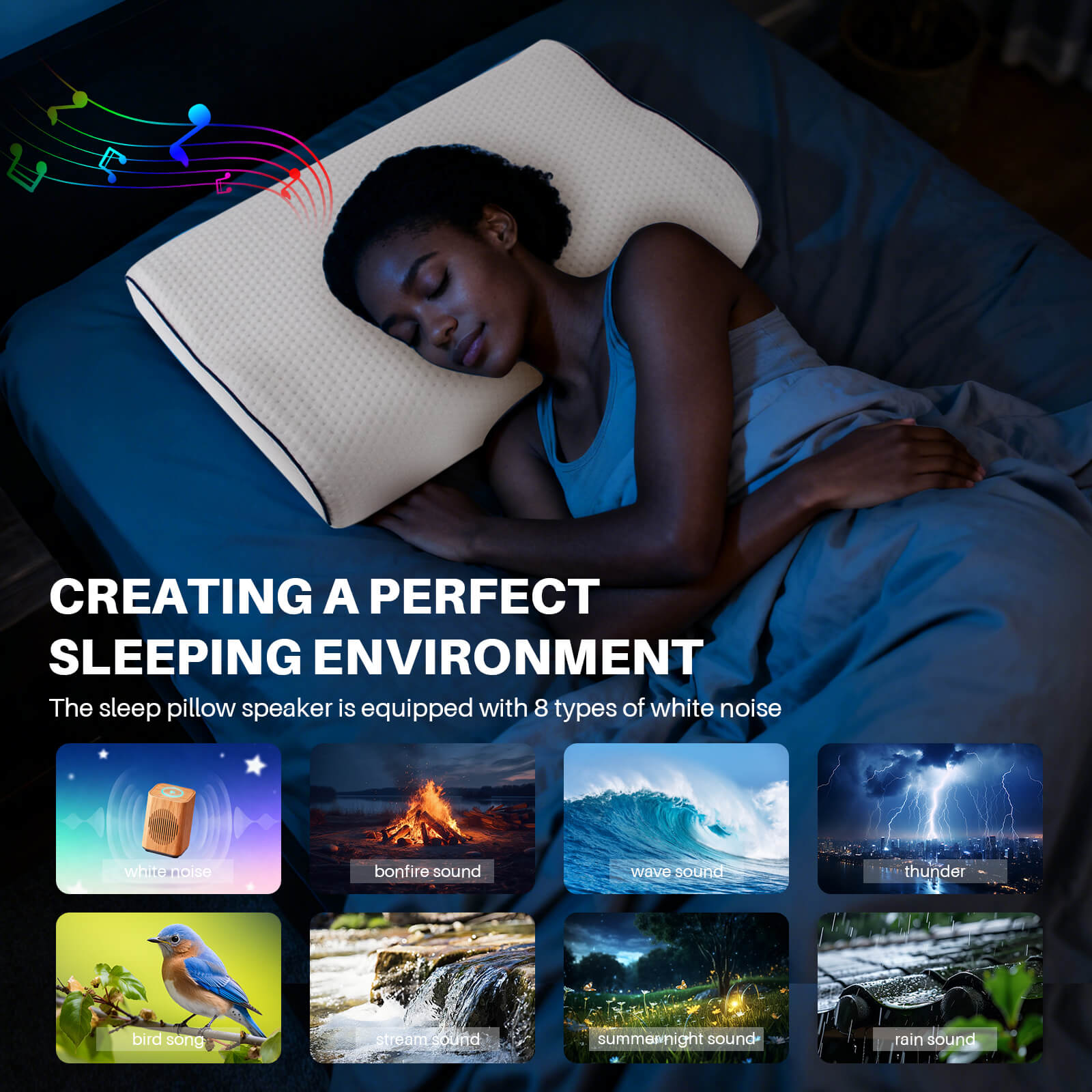
The pillow pairs its silent vibration alarm with a 30-minute simulated dawn ramp and an integrated Bluetooth audio system that streams white noise, natural soundscapes, and guided 4-7-8 breathing exercises privately without earbuds.
Controlled via an intuitive, white-labelable mobile app with over-the-air (OTA) firmware update support, this platform is available for turnkey private-label OEM manufacturing starting at 1,000 units.
The Gold Rose Wake Up Pillow delivers an integrated multi-sensory arousal system that combines gradual sunrise lighting with gentle, escalating vibration cues.
Featuring an ergonomic contoured profile that maintains cervical lordosis and keeps airways open, this pillow incorporates built-in wireless Bluetooth audio streaming with intelligent sleep-stage detection that automatically lowers volume or pauses playback during deep sleep, available with custom branding from 500 units.
The Gold Rose WP100 Best Side Sleeper Pillow provides specialized orthotic memory foam support optimized for lateral sleep postures.
Featuring integrated white noise, Bluetooth audio, and natural dawn simulation lighting, it relieves shoulder and neck pressure while offering gentle wake-up functions from 500 units.
The Gold Rose Sleep Aid Pillow Model WP-H100 features a butterfly-shaped memory foam contour embedded with 32 soothing white-noise tracks and meditation soundwaves, providing cord-free rechargeable operation for pre-sleep relaxation from 500 units.
The Gold Rose Best Ergonomic Neck Pillow delivers high-density slow-rebound memory foam support designed to alleviate spinal fatigue and neck stiffness, available for custom OEM production from 500 units.
B2B Commercial Blueprint: Hospitality Deployment, Retail Architecture, and Compliance
Commercial buyers adding vibrating smart pillows to their portfolios must balance hospitality and retail opportunities with strict manufacturing compliance:
Hospitality and Retail Channel Architecture
Smart sleep technology offers diverse monetization channels across global markets:
Hospitality and Hotel Wellness Upgrades: Modern hotel chains and wellness retreats increasingly implement smart sleep rooms as premium guest amenities. Standalone smart pillows like the WP100 require zero in-wall electrical installation or property management system integration, operating independently via guest smartphone Bluetooth pairing.
Corporate Wellness and Executive Gifting: Position vibrating smart pillows as premium corporate wellness assets designed to combat burnout, improve executive sleep quality, and enhance workplace alertness.
24-Hour Circadian System Cross-Merchandising: Bundle vibrating smart pillows alongside morning phototherapy devices-such as the Gold Rose Curved SAD Light Therapy Lamp-to provide consumers with a comprehensive, round-the-clock circadian optimization ecosystem.
Technical Quality Audits and Manufacturing Compliance Standards
Procurement managers auditing smart pillow manufacturing facilities should enforce five essential regulatory and technical inspection benchmarks:
Photobiological Optical Safety and Eye Comfort: Verify that all embedded sunrise simulation LEDs comply with IEC 62471 Exempt Group (RG0) standards, certifying zero ultraviolet emissions and no blue-light retinal hazards.
Foam Chemical Safety and Non-Toxic Certification: Require verified documentation confirming internal memory foam is certified under CertiPUR-US and OEKO-TEX Standard 100, certifying zero toxic emissions, heavy metals, formaldehyde, or volatile organic compounds (VOCs).
Wireless Telecommunications and Radio Equipment Directives: Confirm full compliance with FCC Part 15C and CE RED (Radio Equipment Directive 2014/53/EU), ensuring Bluetooth modules transmit safely without interfering with other domestic electronics.
Low-Voltage Electrical Safety and Electromagnetic Compatibility: Verify certified compliance with CE LVD 2014/35/EU, CE EMC 2014/30/EU, and RoHS 2011/65/EU, ensuring fire-retardant enclosures, safe low-voltage operation, and the complete absence of hazardous substances.
Factory Quality Systems and Traceability: Partner exclusively with factories accredited under ISO 13485:2016 and ISO 9001, ensuring automated SMT electronic assembly, rigorous 24-hour pre-shipment aging tests, and multi-point quality control.
Frequently Asked Questions
Q1: How does a smart pillow's vibration function wake you up without disturbing your partner?
A smart pillow uses localized linear resonant actuators embedded within dense acoustic damping foam, directing tactile vibrations upward into the user's cervical spine and skull without broadcasting airborne acoustic noise across the mattress.
Q2: Can the vibration function in a smart pillow be used to help you fall asleep?
Yes, running the vibration actuators on a low, steady frequency (between 10 Hz and 30 Hz) stimulates cutaneous mechanoreceptors, easing muscular tension across the neck and shoulders to promote parasympathetic relaxation.
Q3: Are vibrating smart pillows safe for daily head and neck use?
Yes, high-performance smart pillows utilize low-voltage, shielded electronic components that meet international safety standards, delivering gentle mechanical oscillations that stay safely within certified human vibration exposure thresholds.
Q4: Can smart pillows with built-in vibration motors be machine washed?
The outer fabric cover is removable and machine washable, but the inner memory foam core housing the vibration motors, electronic wiring, and Bluetooth modules must not be submerged in water.
Q5: What private-label OEM and ODM options does Gold Rose offer for vibrating smart pillows?
Huizhou Gold Rose Technology Co., Ltd. provides full-scope OEM/ODM manufacturing starting at 500 to 1,000 units, covering custom memory foam densities, branded fabric covers, bespoke packaging, mobile app white-labeling, and international compliance documentation (CE, FCC, RoHS, ISO 13485) directly via goldrosa.com.
References
Grandner, M. A., et al. (2006). Sleep duration and all-cause mortality: A critical review of clinical sleep architecture and waking transitions. Sleep Medicine Reviews, 10(5), 329–347.
Czeisler, C. A., et al. (1999). Stability, precision, and near-24-hour period of the human circadian pacemaker under controlled environmental conditions. Science, 284(5423), 2177–2181.
International Electrotechnical Commission. (2006). IEC 62471: Photobiological Safety of Lamps and Lamp Systems. IEC Standards Catalogue, Geneva, Switzerland.
International Organization for Standardization. (2016). ISO 13485:2016 Medical Devices - Quality Management Systems - Requirements for Regulatory Purposes. ISO Standards Catalogue, Geneva, Switzerland.