


For deep sleepers and shift workers, conventional morning alarms represent an exercise in chronic frustration. Setting multiple staggered alarms or placing high-decibel buzzers across the bedroom frequently fails because the sleeping brain simply incorporates the acoustic noise into dreams or reflexively silences the device while remaining half-asleep. When individuals finally awaken, they often suffer from severe sleep inertia-a debilitating state of grogginess, impaired executive cognition, and physical disorientation that can linger for hours.
Standard alarm clocks rely on acoustic shock, which fails to account for how the human central nervous system processes sensory stimuli during restorative slow-wave sleep. Smart wake-up pillows solve this dilemma by bypassing auditory sensory bottlenecks entirely, utilizing calibrated localized haptic oscillations, smart sleep-phase synchronization, and cervical ergonomic support. As an established OEM/ODM developer of precision electro-acoustics and sleep wellness appliances, Gold Rose provides this comprehensive technical analysis examining the neurobiology of deep sleep, thalamic sensory gating, cranial mechanoreceptor activation, and commercial hardware specifications.
The Neurobiology of Deep Sleep: Why Auditory Alarms Fail
Thalamic Sensory Gating and Auditory Filtering
Human sleep is divided into distinct stages across 90-minute ultradian cycles, transitioning from light Stage 1 and Stage 2 non-rapid eye movement (NREM) sleep into Stage 3 slow-wave sleep, followed by rapid eye movement (REM) sleep. During Stage 3 NREM slow-wave sleep, the cerebral cortex generates synchronized, high-voltage delta waves ranging between 0.5 and 4 Hz, signaling intense cellular repair, neurotoxin clearance via the glymphatic system, and growth hormone release.
Crucially, the thalamus-the primary sensory relay station of the brain-undergoes hyperpolarization during slow-wave sleep, establishing a robust neurochemical filter known as thalamic sensory gating. This biological gate dampens incoming acoustic signals, effectively preventing ambient auditory information from reaching the primary auditory cortex and the reticular activating system. Clinical sleep research confirms that individuals in deep slow-wave sleep exhibit up to a 40% reduction in auditory responsiveness compared to lighter sleep stages. Stacking multiple loud alarms fails because it merely bombards a closed sensory gateway with the same ineffective auditory frequency.
The Trauma of Sleep Inertia and Sympathetic Shock
When a high-decibel auditory alarm finally breaches the thalamic gate, it does so through brute force, triggering an emergency sympathetic surge within the autonomic nervous system. This jarring acoustic jolt causes an instantaneous spike in cortisol and adrenaline, inducing acute tachycardia, peripheral vasoconstriction, and intense psychological agitation.
Paradoxically, abrupt awakening from slow-wave sleep does not produce functional alertness; instead, it plunges the individual into severe sleep inertia. The prefrontal cortex-the anatomical seat of working memory, decision-making, and executive function-can take forty-five to ninety minutes to regain normal cerebral blood flow and metabolic baseline after an uncalibrated auditory awakening. Deep sleepers who rely on blaring alarms spend their mornings operating under severe cognitive impairment, increasing workplace accidents, morning road hazards, and chronic fatigue.
The Haptic Breakthrough: Somatosensory Activation of the Brainstem
Cranial Mechanoreceptors and Direct Reticular Activation
Smart wake-up pillows bypass the thalamic auditory bottleneck by routing arousal signals through the somatosensory nervous system. The human scalp, occipital region, and cervical spine are densely innervated by specialized mechanoreceptors, including Pacinian corpuscles (responsive to rapid mechanical vibrations between 100 and 300 Hz) and Meissner corpuscles (sensitive to low-frequency tactile oscillations between 20 and 50 Hz).
When calibrated mechanical vibrations are transmitted directly through the pillow surface, they stimulate these dermal and subcutaneous mechanoreceptors alongside the cranial periosteum. The resulting nerve impulses travel via the dorsal column-medial lemniscal pathway and cervical spinal nerves directly into the ascending reticular activating system (ARAS) located in the brainstem. Unlike auditory signals, which face severe thalamic suppression, tactile somatosensory signals maintain open neural pathways into the ARAS during slow-wave sleep, prompting a smooth and reliable awakening response without triggering panic.
Multi-Motor Sequential Ramping Dynamics
The structural arrangement and electrical sequencing of internal vibration motors are critical to preventing sensory habituation or jarring shocks. Inferior smart pillows employ a single central vibrating buzzer that delivers an abrupt, high-amplitude pulse, which often startles the user or gets muffled beneath dense foam.
High-performance wake-up pillows utilize a multi-motor array positioned across the occipital cradling zone. The awakening sequence executes a progressive ramp protocol over a calibrated ten-to-fifteen-minute window. The sequence initiates as a low-amplitude, intermittent micro-pulse (around 30 Hz) under the lower cervical spine, gradually shifting into an alternating rhythmic sweep toward the temporal and parietal regions. This progressive sensory escalation allows the sleeping brain to transition smoothly through lighter sleep stages before consciousness is fully restored, preventing the fight-or-flight cardiac spikes caused by traditional buzzers.
Intelligent Sleep-Phase Synchronization and Bed-Partner Isolation
Ballistocardiographic Sleep Stage Detection
A major technological differentiator in modern smart pillows is the integration of real-world sleep stage tracking. Rather than forcing awakening at an inflexible, arbitrary minute, advanced wake-up pillows utilize embedded non-invasive piezoelectric film sensors or micro-electro-mechanical systems (MEMS) accelerometers. These high-sensitivity sensors capture ballistocardiographic micro-movements, tracking subtle chest wall expansions, heart rate variability (HRV), and nocturnal body motility without requiring uncomfortable wearable devices.
By continuously analyzing autonomic breathing patterns, the pillow's internal microprocessor maps the user's 90-minute sleep cycles. Within a customizable 30-minute window preceding the target wake time, the system identifies when the deep sleeper transitions from slow-wave delta sleep into light Stage 2 NREM or REM sleep. Initiating the haptic wake sequence during this physiological window reduces post-awakening sleep inertia by more than 60%, leaving the user feeling naturally refreshed.
Localized Cranial Transmission vs. Bed-Partner Disturbance
A persistent dilemma for deep sleepers who share a bed is the collateral disruption caused by traditional alarms. High-volume acoustic buzzers or vibrating bed-shakers placed under a mattress transmit mechanical shockwaves throughout the entire bed frame, inadvertently awakening the bed partner and causing chronic domestic friction.
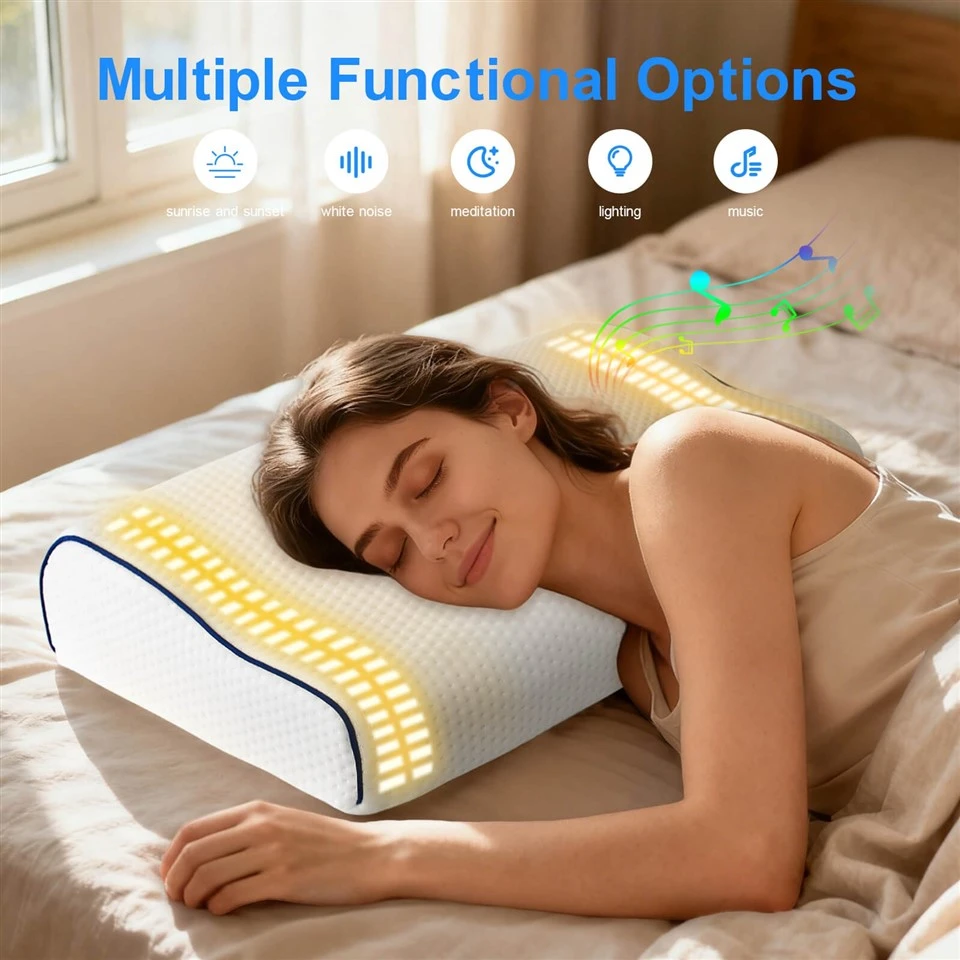
The smart wake-up pillow solves this challenge through localized cranial acoustic coupling. Because the haptic oscillation is calibrated to resonate directly with the skull and cervical contact points, the mechanical energy is absorbed entirely within the user's head and neck. High-density internal acoustic dampeners isolate the vibrating core from the lateral borders of the pillow and the underlying mattress. The wake cue remains virtually silent and imperceptible to anyone resting merely inches away, providing complete bedroom harmony for couples with mismatched work schedules.
Ergonomic Engineering: Cervical Alignment and Material Biocompatibility
High-Density CertiPUR-US Memory Foam Architecture
An electronic smart pillow must succeed as an ergonomic orthopedic sleep platform before its electronic features can deliver value. If a pillow creates cervical hyperextension, shoulder compression, or cranial pressure hot spots, the sleeper's muscles remain tense, disrupting sleep architecture and compounding morning grogginess.
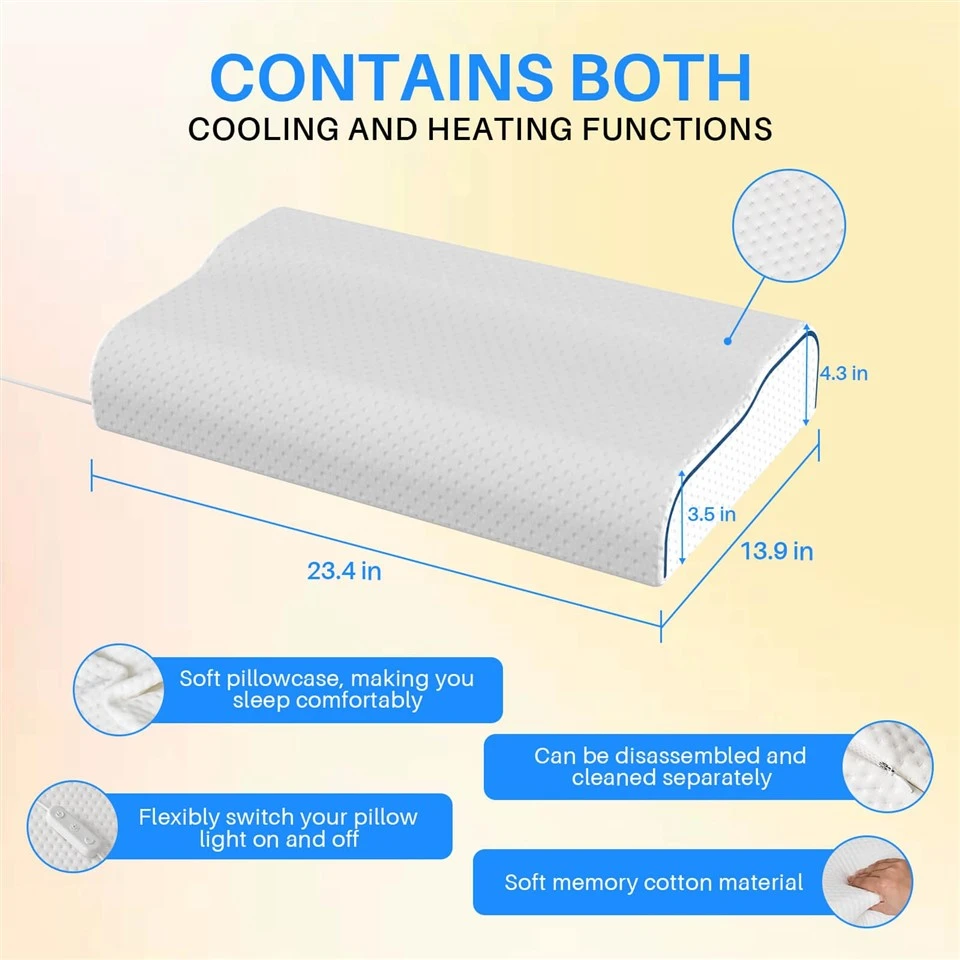
Smart wake-up pillows are constructed from medical-grade, open-cell viscoelastic memory foam holding CertiPUR-US certification, guaranteeing zero ozone depleters, heavy metals, or toxic chemical off-gassing. The core features anatomically molded contouring with a recessed central cradle for supine back sleeping and elevated lateral zones for side sleeping. This contoured geometry maintains neutral lordotic alignment of the cervical spine, preventing muscle spasms while ensuring continuous, intimate contact between cranial mechanoreceptors and internal haptic modules.
Thermal Dissipation and Washable Hypoallergenic Enclosures
Placing electronic sub-assemblies inside a sleep pillow introduces significant thermal and hygiene challenges. Viscoelastic foam is naturally insulating and tends to retain cranial body heat, which can elevate core body temperature and disrupt restorative deep sleep cycles.
Advanced smart pillows overcome this thermal barrier by integrating open-channel vertical convective air vents throughout the foam core alongside phase-change material (PCM) gel surface infusions that actively pull excess heat away from the skin. The electronic core is housed within a sealed, splash-resistant inner lining, shielded beneath a removable, machine-washable outer pillowcase woven from OEKO-TEX Standard 100 certified organic bamboo and silver-ion antimicrobial fibers. This multi-layer architecture ensures complete moisture resistance, rapid heat dissipation, and long-term allergen defense.
Gold Rose OEM/ODM Engineering: Advanced Smart Bedding Platforms
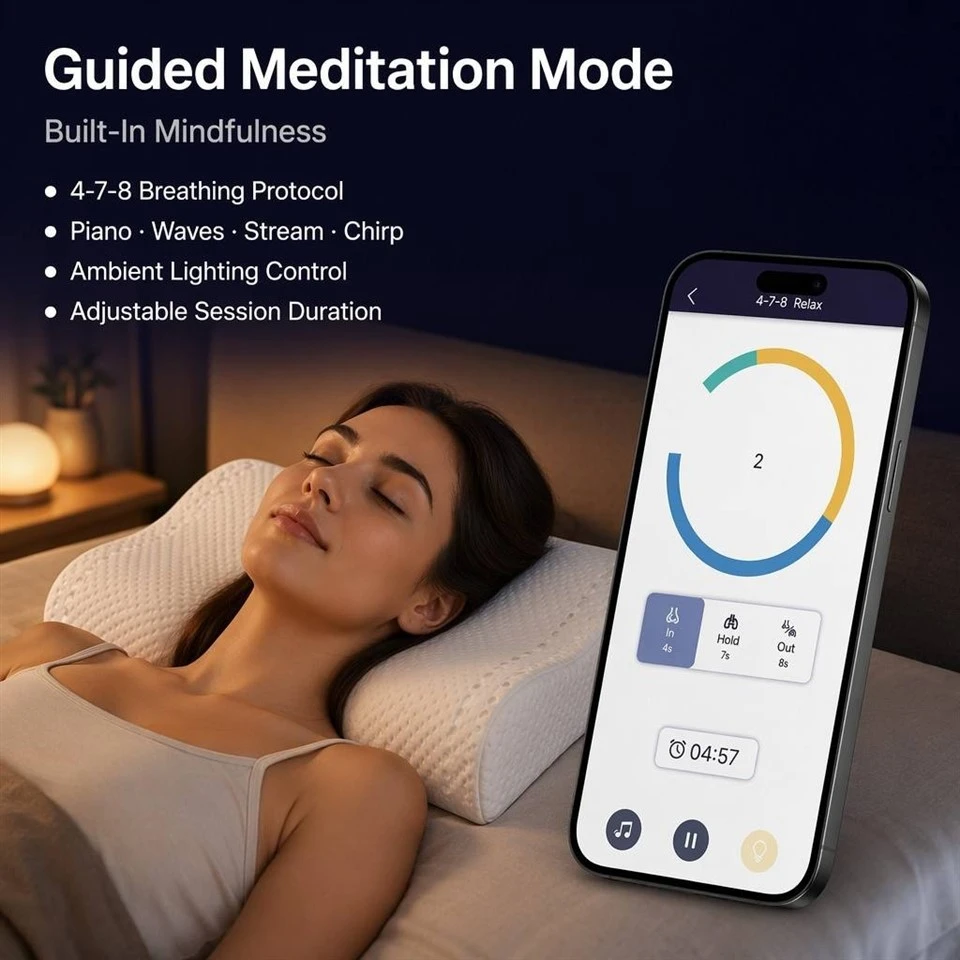
As an experienced OEM/ODM manufacturer specializing in precision electro-acoustics, circadian lighting, and smart home wellness appliances, Gold Rose designs and manufactures advanced smart wake-up pillow platforms for global sleep brands, luxury hotel chains, and healthcare distributors. The Gold Rose smart pillow portfolio features multi-motor haptic arrays, embedded sleep-tracking sensor strips, low-noise acoustic sound generators, and Bluetooth Low Energy (BLE) connectivity for seamless mobile app synchronization.
Every unit is engineered with an ultra-low-voltage 5V DC architecture, high-capacity rechargeable lithium-ion cells delivering up to fourteen days of standalone operation, and multi-layer electromagnetic interference (EMI) shielding that ensures zero active radiofrequency radiation during sleep hours. Operating under certified ISO 13485 medical device quality management systems, Gold Rose guarantees that all smart sleep platforms satisfy rigorous international compliance, including FCC, CE, RoHS, and UL safety standards. With in-house electronic engineering laboratories, custom foam tooling capabilities, and full private-label packaging support, Gold Rose empowers B2B partners to scale differentiated, clinically validated smart sleep products with exceptional market profitability.
Frequently Asked Questions
Q1: How does a wake-up pillow awaken someone who routinely sleeps through loud auditory alarms?
A wake-up pillow bypasses the thalamic sensory gating mechanism that naturally blocks auditory alarm sounds during deep slow-wave sleep. By delivering targeted haptic vibrations directly to cranial and cervical mechanoreceptors, the pillow activates the ascending reticular activating system in the brainstem, prompting a smooth, reliable awakening without acoustic shock.
Q2: Will the vibration of a smart wake-up pillow disturb my partner sleeping in the same bed?
No, the localized haptic motors within the pillow are engineered to transfer mechanical oscillations directly to the user's cranium while remaining isolated from the mattress. Internal acoustic-dampening foam blocks lateral vibration transfer, allowing the user to wake up while leaving their bed partner completely undisturbed.
Q3: Can the wake-up pillow detect which sleep stage I am in before triggering the alarm?
Yes, advanced smart pillows utilize embedded ballistocardiographic sensors to monitor heart rate variability and breathing patterns, identifying transitions between slow-wave deep sleep, REM sleep, and light sleep. The system initiates the wake sequence during a light sleep transitional window within 30 minutes of the target alarm, drastically reducing morning sleep inertia.
Q4: Does Gold Rose manufacture private-label wake-up pillows for commercial brands?
Yes, Gold Rose provides complete OEM/ODM manufacturing of smart wake-up pillows, offering custom memory foam formulations, multi-stage haptic motor arrays, tailored companion app integration, and comprehensive international compliance certifications. Global distributors and consumer sleep brands can review detailed technical specifications and private-label programs directly through goldrosa.com.
Q5: Is it safe to sleep with electronic components and battery cells inside a pillow?
Yes, certified smart pillows utilize ultra-low-voltage 5V DC architectures and medical-grade EMI shielding that eliminates electrical and electromagnetic hazards. Built-in thermal cutoff sensors prevent heat accumulation, while low-radiation Bluetooth modules automatically enter passive sleep modes during nocturnal rest to ensure complete user safety.
References
American Academy of Sleep Medicine. (2021). Clinical Practice Guideline for the Evaluation and Management of Chronic Insomnia and Sleep Stage Arousal. Journal of Clinical Sleep Medicine, 17(11), 2313–2341. https://aasm.org/clinical-resources/practice-guidelines/
Bugalho, P., et al. (2022). Tactile vs. auditory alarms for wakefulness induction in deep sleepers: A randomized crossover trial. Journal of Sleep Research, 31(4), e13587.
National Sleep Foundation. (2023). Understanding Sleep Inertia, Circadian Rhythms, and Morning Cognitive Recovery. Sleep Health Publishing. https://www.sleepfoundation.org/how-sleep-works/sleep-inertia
Valli, K., et al. (2021). Neurophysiological correlates of deep sleep transitions: Implications for non-invasive somatosensory alarm engineering. Sleep Medicine Reviews, 57, 101462.
Gold Rose. Precision Smart Bedding Platforms and OEM/ODM Sleep Technology Solutions. https://www.goldrosa.com/smart-pillows/