


In chronobiology, sleep medicine, and consumer wellness technology, the biological transition between nocturnal sleep and daytime alertness-known as the sleep-wake transition-fundamentally dictates daily metabolic efficiency, cardiovascular health, and cognitive performance.
For over a century, modern society has relied on acoustic alarm clocks sounding between 70 and 85 decibels to terminate sleep.
However, medical consensus increasingly indicates that abrupt acoustic awakenings induce acute sympathetic nervous system shock, provoke profound sleep inertia, and trigger an erratic cortisol spike that leaves individuals fatigued for hours.
To resolve this physiological conflict, smart bedding engineers have introduced the Wake Up Pillow.
Far from being a passive foam cushion, a modern wake up pillow is an integrated, multi-sensory circadian health platform.
By combining calibrated photobiological dawn simulation, near-field audio entrainment, silent somatosensory vibration actuation, and orthotic cervical biomechanics, these devices align human waking biology with natural evolutionary cues.
For hotel wellness directors, corporate wellness executives, and consumer electronics distributors, commercializing smart wake up pillows requires looking beyond basic feature lists.
Understanding the neurobiological mechanics of sleep inertia, the retinal pathways governing dawn simulation, cervical lordosis preservation, and international OEM manufacturing standards provides a clear roadmap for scaling high-margin, clinically grounded smart sleep hardware.
Chronobiological Mechanisms: Sleep Architecture, Sleep Inertia, and Sympathetic Shock
Understanding why wake up pillows represent a fundamental improvement over traditional alarms requires examining the neurobiology of human awakening:
Ultradian Sleep Staging and the Pathology of Sleep Inertia
Human sleep is organized into recurring ultradian cycles lasting 90 to 110 minutes, alternating between Non-Rapid Eye Movement (NREM stages N1, N2, and slow-wave N3) and Rapid Eye Movement (REM) sleep.
When a loud alarm sounds abruptly while a sleeper is submerged in deep stage N3 slow-wave sleep, the cerebral cortex struggles to transition instantly into functional beta-wave wakefulness.
This state of severe grogginess, impaired working memory, and psychomotor slowness is termed sleep inertia.
Under abrupt acoustic shock, complete resolution of sleep inertia can take up to four hours, significantly reducing workplace productivity and increasing morning accident rates.
The Cortisol Awakening Response (CAR) Versus Sympathetic Surge
Under healthy circadian conditions, the body naturally initiates the Cortisol Awakening Response (CAR), characterized by a smooth, controlled 50% rise in salivary cortisol over the first 30 to 45 minutes after waking to prepare muscles and organs for daytime activity.
Conversely, an unexpected 80-decibel alarm triggers an immediate alarm reaction mediated by the locus coeruleus and the hypothalamic-pituitary-adrenal (HPA) axis.
This acute surge releases surges of epinephrine and norepinephrine, causing transient tachycardia, elevated blood pressure, and intense morning anxiety.
Wake up pillows prevent this cardiovascular spike by using gradual, multi-sensory cues that gently raise the sleeper from deep sleep into light N1 sleep before full consciousness is reached.
Multi-Sensory Hardware Physics: Dawn Simulation, Near-Field Audio, and Silent Vibration
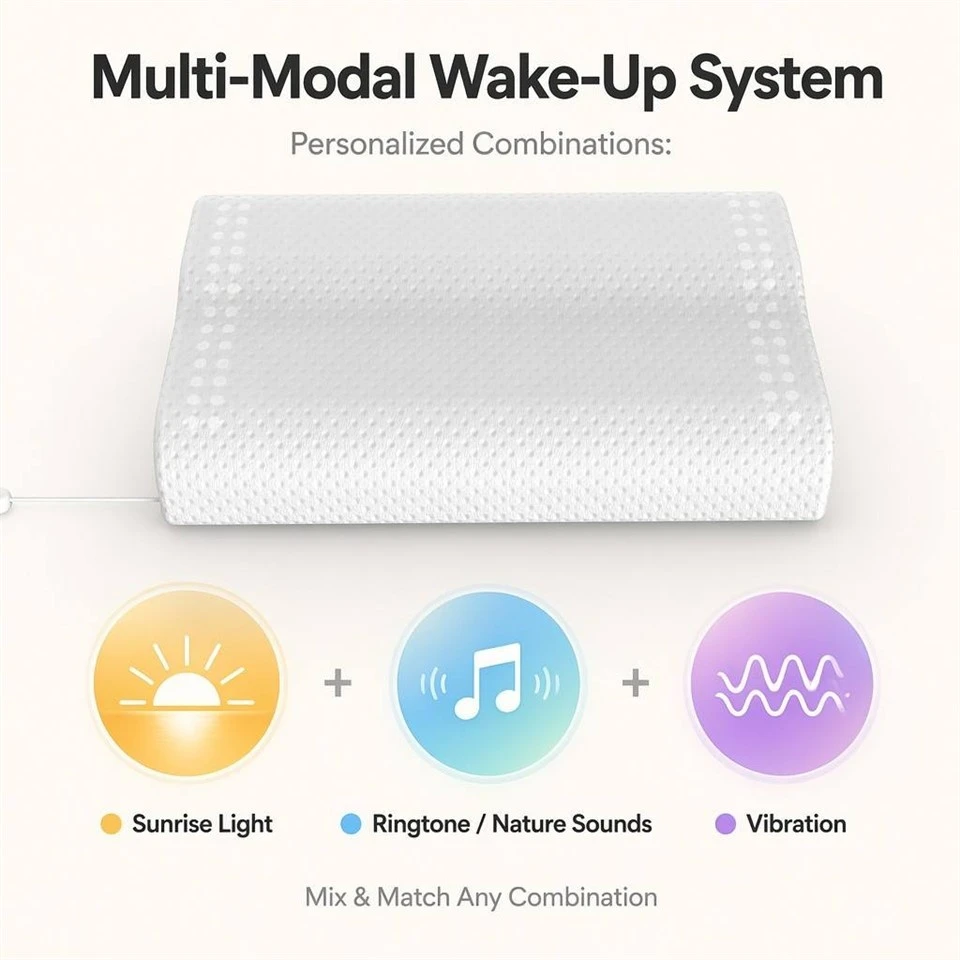
Advanced wake up pillows integrate three synchronized electromechanical subsystems that replace jarring alarms with biological sensory cues:
Photobiological Dawn Simulation and Retinohypothalamic Entrainment
The primary arousal mechanism of an advanced wake up pillow is photobiological dawn simulation.
Over a programmable 15-to-30-minute window preceding the scheduled alarm, embedded solid-state LEDs gradually increase in luminance, shifting smoothly from deep amber (1,800 K) to soft daylight white (4,000 K to 5,000 K).
This progressive light penetrates the eyelids, stimulating intrinsically photosensitive Retinal Ganglion Cells (ipRGCs) expressing the photopigment melanopsin.
These photoreceptors transmit non-image-forming signals along the retinohypothalamic tract (RHT) directly to the Suprachiasmatic Nucleus (SCN) in the hypothalamus.
This neural signal downregulates pineal melatonin synthesis, initiates gentle CAR elevation, and transitions the brain into light sleep naturally.
Near-Field Acoustic Waveguides and Deep-Sleep Volume Tapering
Unlike loud bedside speakers that broadcast sound across the entire room, or in-ear headphones that cause ear canal irritation, smart wake up pillows embed shielded near-field stereo transducers deep within acoustic foam baffles.
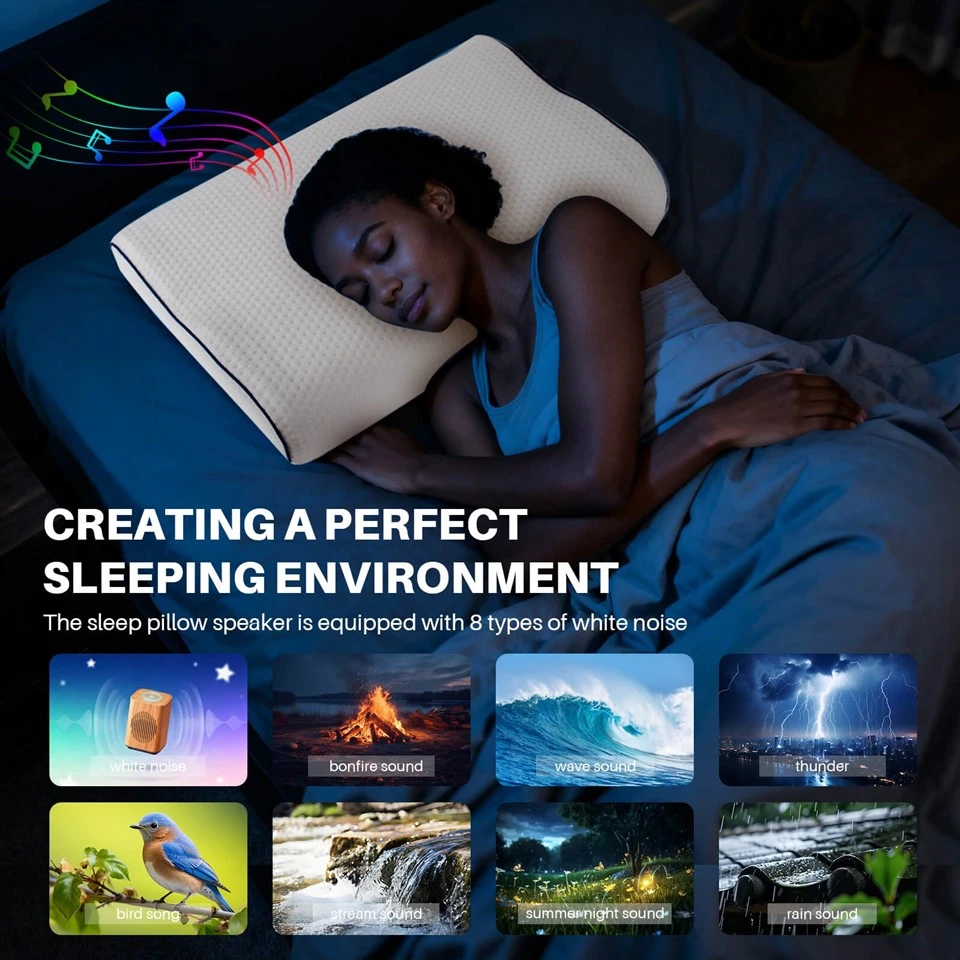
These speakers deliver private binaural beats, pink noise, guided 4-7-8 breathing tracks, or natural soundscapes directly to the sleeper's ears at whisper-quiet levels (under 40 decibels).
Furthermore, intelligent sleep-stage detection automatically tapers playback volume or pauses audio once the user transitions into deep sleep, ensuring zero sleep fragmentation.
Silent Somatosensory Arousal via Linear Resonant Actuators
For heavy sleepers or dual-sleeper bedrooms, wake up pillows incorporate precision Linear Resonant Actuators (LRAs).
Suspended inside silicone damping boots within the cervical roll of the pillow, these actuators deliver localized tactile micro-vibrations directly to the cervical vertebrae and base of the skull.
This mechanical stimulation triggers dorsal column mechanoreceptors without broadcasting airborne acoustic noise, ensuring that deep sleepers are awakened reliably without disturbing their sleeping partner.
Biomechanical Ergonomics: Cervical Lordosis and Airway Patency Preservation
A smart pillow must serve as an exceptional orthotic sleep surface before any electronics are engaged:
Cervical Biomechanics and C1–C7 Lordosis Support
The adult human head weighs approximately 4.5 to 5.5 kilograms, exerting continuous mechanical load across the seven cervical vertebrae (C1 through C7).
Inadequate spinal alignment strains the trapezius, sternocleidomastoid, and levator scapulae musculature, leading to morning occipital headaches and chronic cervicalgia.
Furthermore, improper elevation allows the tongue base and soft palate to collapse posteriorly into the hypopharynx, obstructing upper airway airflow and exacerbating positional snoring.
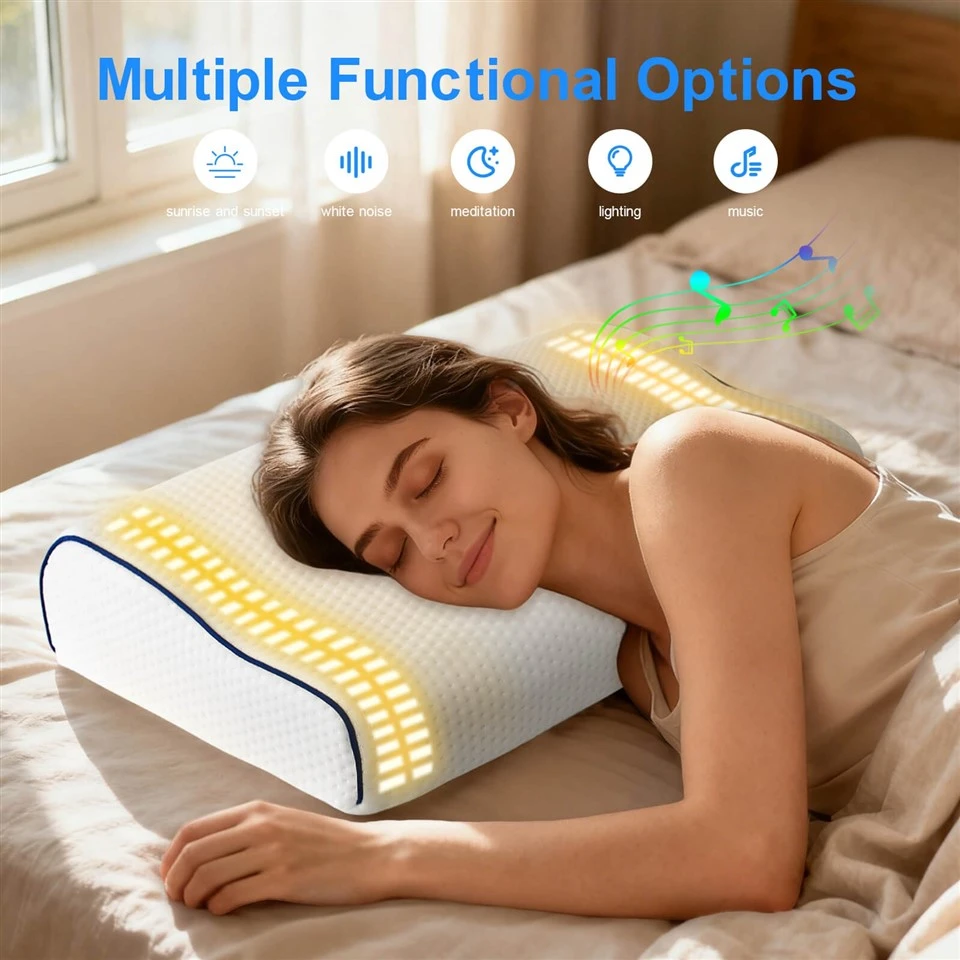
Medical-grade wake up pillows utilize contoured butterfly geometries and reinforced cervical rolls to maintain neutral cervical lordosis across supine, lateral, and prone postures.
Viscoelastic Slow-Rebound Polyurethane Memory Foam
The physical foundation of a medical-grade wake up pillow relies on high-density, viscoelastic slow-rebound polyurethane memory foam.
Unlike down or fiber fills that shift and flatten overnight, high-density memory foam dynamically adapts to cranial contours, evenly redistributing contact pressure while securely cradling internal electronics and actuators.
To maintain skin hygiene, the pillow is protected by a breathable, hypoallergenic, and machine-washable outer cover that keeps users cool and comfortable.
Sourcing Benchmark: Advanced Smart Sleep Hardware from Gold Rose
International sleep wellness brands, hotel hospitality procurement directors, and corporate gift distributors can partner with Huizhou Gold Rose Technology Co., Ltd. for verified, factory-direct smart sleep hardware:
The Gold Rose Wake Up Pillow serves as the flagship multi-sensory circadian sleep platform.
It integrates natural sunrise light simulation that gradually brightens before waking, high-fidelity wireless Bluetooth audio streaming, and deep-sleep volume fading within an orthotic cervical butterfly contour.
Engineered with breathable, washable fabrics and rechargeable cord-free convenience, this platform is available for private-label OEM manufacturing starting at 500 units.
The Gold Rose LumaRest WP100 Vibrating Alarm Clock Pillow delivers specialized silent wake-up functionality designed for shared bedrooms and heavy sleepers.
Equipped with a 30-minute simulated dawn ramp, three-level adjustable linear resonant vibration alarms, and built-in Bluetooth audio for guided 4-7-8 relaxation exercises, the WP100 wakes users quietly through cervical bone conduction without disturbing their partner, available with custom mobile app white-labeling from 1,000 units.
The Gold Rose WP100 Best Side Sleeper Pillow provides specialized orthotic memory foam support optimized for lateral sleep postures.
Featuring integrated white noise, Bluetooth audio, and natural dawn simulation lighting, it relieves shoulder and neck pressure while offering gentle wake-up functions from 500 units.
The Gold Rose Sleep Aid Pillow Model WP-H100 features a butterfly-shaped memory foam contour embedded with 32 soothing white-noise tracks and meditation soundwaves, providing cord-free rechargeable operation for pre-sleep relaxation from 500 units.
The Gold Rose Best Ergonomic Neck Pillow delivers high-density slow-rebound memory foam support designed to alleviate spinal fatigue and neck stiffness, available for custom OEM production from 500 units.
B2B Commercial Blueprint: Hospitality Deployment, Retail Architecture, and Compliance
Commercial buyers adding wake up pillows to their portfolios must balance hospitality and retail opportunities with strict manufacturing compliance:
Hospitality and Retail Channel Architecture
Smart sleep technology offers diverse monetization channels across global markets:
Hospitality and Hotel Wellness Upgrades: Modern hotel chains and wellness retreats increasingly implement smart sleep rooms as premium guest amenities. Standalone wake up pillows like the WP100 require zero in-wall electrical installation or property management system integration, operating independently via guest smartphone Bluetooth pairing.
Corporate Wellness and Executive Gifting: Position wake up pillows as premium corporate wellness assets designed to combat burnout, improve executive sleep quality, and enhance workplace alertness.
24-Hour Circadian System Cross-Merchandising: Bundle wake up pillows alongside morning phototherapy devices-such as the Gold Rose Curved SAD Light Therapy Lamp-to provide consumers with a comprehensive, round-the-clock circadian optimization ecosystem.
Technical Quality Audits and Manufacturing Compliance Standards
Procurement managers auditing smart pillow manufacturing facilities should enforce five essential regulatory and technical inspection benchmarks:
Photobiological Optical Safety and Eye Comfort: Verify that all embedded sunrise simulation LEDs comply with IEC 62471 Exempt Group (RG0) standards, certifying zero ultraviolet emissions and no blue-light retinal hazards.
Foam Chemical Safety and Non-Toxic Certification: Require verified documentation confirming internal memory foam is certified under CertiPUR-US and OEKO-TEX Standard 100, certifying zero toxic emissions, heavy metals, formaldehyde, or volatile organic compounds (VOCs).
Wireless Telecommunications and Radio Equipment Directives: Confirm full compliance with FCC Part 15C and CE RED (Radio Equipment Directive 2014/53/EU), ensuring Bluetooth modules transmit safely without interfering with other domestic electronics.
Low-Voltage Electrical Safety and Electromagnetic Compatibility: Verify certified compliance with CE LVD 2014/35/EU, CE EMC 2014/30/EU, and RoHS 2011/65/EU, ensuring fire-retardant enclosures, safe low-voltage operation, and the complete absence of hazardous substances.
Factory Quality Systems and Traceability: Partner exclusively with factories accredited under ISO 13485:2016 and ISO 9001, ensuring automated SMT electronic assembly, rigorous 24-hour pre-shipment aging tests, and multi-point quality control.
Frequently Asked Questions
Q1: How does a wake up pillow wake you up naturally without a loud sound?
A wake up pillow uses gradual dawn simulation lighting to stimulate intrinsically photosensitive retinal ganglion cells, signaling the brain to suppress melatonin and raise cortisol levels smoothly before gentle near-field audio or silent vibration initiates final wakefulness.
Q2: Can the electronics inside a wake up pillow cause radiation or overheating during sleep?
High-quality wake up pillows utilize low-energy, Class II direct-current electronics and shielded Bluetooth Low Energy (BLE) modules that comply with FCC Part 15C and CE RED safety directives, producing negligible thermal output and zero harmful electromagnetic radiation.
Q3: How do linear resonant actuators wake heavy sleepers without disturbing their partner?
The actuators deliver localized mechanical micro-vibrations through the pillow's internal foam core directly into the sleeper's cervical spine and skull, providing physical tactile arousal without broadcasting airborne acoustic noise across the mattress.
Q4: Can smart wake up pillows be machine washed like standard bedding?
The removable, breathable outer fabric cover is machine washable, but the inner viscoelastic memory foam core housing the LEDs, speakers, actuators, and wiring must not be submerged in water.
Q5: What private-label OEM and ODM options does Gold Rose offer for wake up pillows?
Huizhou Gold Rose Technology Co., Ltd. provides comprehensive OEM/ODM manufacturing starting at 500 to 1,000 units, covering custom memory foam densities, branded fabric covers, bespoke packaging, mobile app white-labeling, and international compliance documentation (CE, FCC, RoHS, ISO 13485) directly via goldrosa.com.
References
Grandner, M. A., et al. (2006). Sleep duration and all-cause mortality: A critical review of clinical sleep architecture and waking transitions. Sleep Medicine Reviews, 10(5), 329–347.
Czeisler, C. A., et al. (1999). Stability, precision, and near-24-hour period of the human circadian pacemaker under controlled environmental conditions. Science, 284(5423), 2177–2181.
Berson, D. M., Dunn, F. A., & Takao, M. (2002). Phototransduction by retinal ganglion cells that set the circadian clock. Science, 295(5557), 1070–1073.
International Electrotechnical Commission. (2006). IEC 62471: Photobiological Safety of Lamps and Lamp Systems. IEC Standards Catalogue, Geneva, Switzerland.
International Organization for Standardization. (2016). ISO 13485:2016 Medical Devices - Quality Management Systems - Requirements for Regulatory Purposes. ISO Standards Catalogue, Geneva, Switzerland.