


In personal oral hygiene and preventive periodontal care, electric tooth flossers-encompassing sonic vibrating filament flossers and pressurized hydrodynamic oral irrigators-have transitioned from luxury niche accessories to standard daily health essentials.
For commercial distributors, oral care private-label brands, medical procurement directors, and retail buyers, calculating product return on investment depends on understanding the true operational service life of these appliances.
When assessing product warranties, customer return rates, and clinical reliability, industry professionals frequently evaluate what the realistic lifespan of an electric tooth flosser is and which engineering factors dictate premature failure.
The engineering benchmark is straightforward.
A high-grade, clinically certified electric flosser delivers an active operating lifespan of two to five years (representing roughly 1,500 to 3,500 individual cleaning cycles) when properly maintained.
Conversely, budget consumer units constructed with low-tier brushed DC motors, unsealed printed circuit boards, and inferior lithium-ion cells often fail prematurely within twelve to twenty-four months.
Achieving five-year durability requires rigorous mechanical engineering: integrating brushless or balanced maglev motors, installing dynamic elastomeric seals to prevent fluid ingress, selecting high-cycle lithium-ion battery chemistries, and enforcing routine user decalcification.
This comprehensive technical guide examines the electro-mechanical failure modes of electric tooth flossers, details environmental and user variables, reviews verified manufacturing architectures, and establishes institutional procurement protocols.
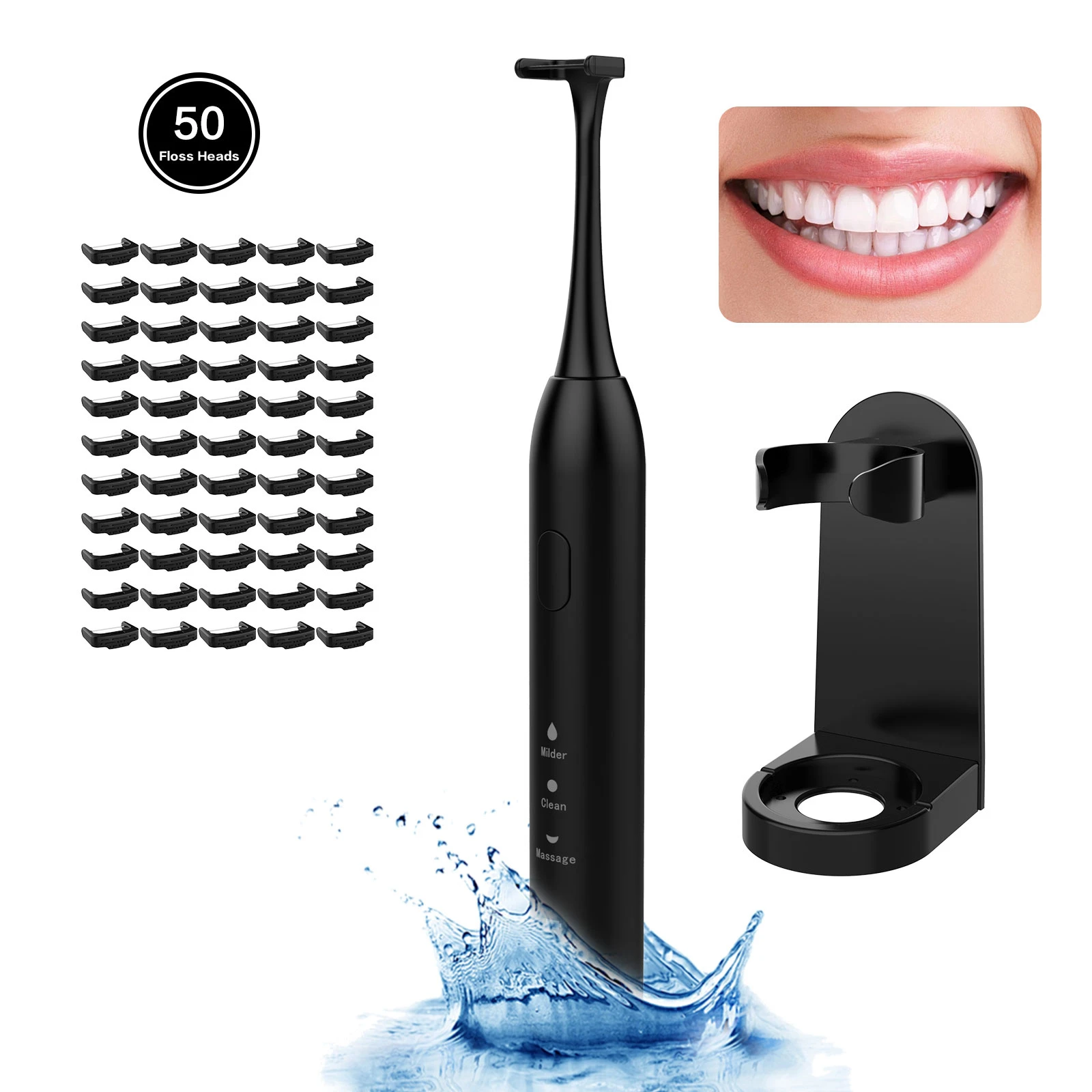
Electro-Mechanical Degradation: Anatomy of Component Longevity
An electric tooth flosser is a compact, high-stress electro-mechanical system that operates under severe moisture and chemical exposure.
Long-term durability depends on the structural integrity of four primary internal subsystems:
1. Drive Motors and Acoustic Transduction Assemblies
The drive motor converts stored electrical energy into mechanical cleaning action:
Brushless DC and Magnetic Levitation Motors: Commercial-grade electric flossers utilize magnetic levitation (maglev) sonic motors or brushless direct-current (BLDC) motors that operate between 18,000 and 30,000 vibrations per minute (VPM). Because these assemblies lack physical carbon brushes, they eliminate frictional contact, mechanical thermal buildup, and brush wear, reliably exceeding 3,000 hours of continuous operational runtime.
Brushed DC Motors in Budget Hardware: In contrast, low-cost consumer units rely on miniature brushed DC motors. Mechanical friction erodes the copper commutators and carbon contact pads over time, causing power loss, increased noise (exceeding 70 dB), and complete electrical open-circuit motor burnout within 12 to 18 months.
2. High-Pressure Micro-Pumps and Fluid Delivery Circuits
In hydrodynamic water flossers, the micro-reciprocating pump mechanism represents the component subjected to the highest mechanical stress:
Piston-Driven Reciprocating Fluid Systems: Industrial-grade pumps utilize ceramic or reinforced polyoxymethylene (POM) pistons driven by precision eccentric cams to generate water pulsation frequencies between 1,200 and 1,800 pulses per minute at pressures ranging from 30 to 120 PSI.
Fatigue and Micro-Cracking: Lesser-grade units construct cylinder chambers from non-reinforced ABS plastics. Continuous cyclic hydraulic pressure shocks cause micro-cracking across manifold junctions, internal valve seizure, and severe flow leakage, degrading system pressure and inducing internal motor drowning.
3. Electrochemical Degradation of Lithium-Ion Power Cells
Internal battery capacity degradation directly controls the real-world operational lifespan of cordless appliances:
Charge-Discharge Cycle Life: Premium appliances integrate cylindrical lithium-ion cells (such as 14500, 18650, or custom pouch cells) rated for 500 to 800 complete charge-discharge cycles before original cell capacity drops to 80%. When engineered with advanced power management circuits (PMIC) that achieve 60 to 80 days of runtime per charge, a single battery pack lasts beyond five years without noticeable capacity loss.
Parasitic Drain and Deep-Discharge Failures: Budget units lack low-voltage cutoff protection, allowing lithium cells to undergo irreversible copper shunting and internal anode dissolution when stored uncharged, permanently destroying the battery within months.
4. Hermetic Elastomeric Seals and Ingress Barriers
Because oral hygiene devices reside in wet bathroom environments, fluid ingress represents the primary catalyst for catastrophic electronic failure:
Dynamic Shaft Seals and Ultrasonic Enclosure Welds: Premium devices utilize medical-grade liquid silicone rubber (LSR) O-rings, double-lipped rotary shaft seals, and hermetic ultrasonic casing welds certified to IEC 60529 IPX7 standards, preventing pressurized water and steam from contacting sensitive circuit boards.
Corrosive PCB Delamination: Substandard enclosures permit bathroom water vapor and surfactant-laden fluids to penetrate the battery compartment, inducing copper dendrite growth, galvanic electrolytic corrosion, and short-circuiting across the microprocessor traces.
Operating Variables: How User Frequency, Pressure, and Water Quality Govern Wear
The practical service life of any electric tooth flosser is heavily modified by daily handling, operating stress, and water chemistry:
Frequency and Pressure Settings
Operational cycles compound mechanical stress:
Intense Multi-User Cycles: Using a device three times daily at maximum pressure (100+ PSI) exerts three times the cyclic stress on piston seals, motor bushings, and gearboxes compared to standard once-daily use at low pressure (30 to 50 PSI).
Thermal Dissipation Margins: Prolonged continuous operation beyond two minutes generates internal thermal saturation within compact cordless handles. High-grade units integrate automated two-minute auto-shutoff timers to prevent thermal degradation of motor windings and battery electrolytes.
Water Mineralization and Internal Limescale Occlusion
Water chemistry is a critical, often-overlooked factor in hydrodynamic appliance longevity:
Calcium Carbonate Scaling: Using unsoftened municipal tap water (high in calcium and magnesium ions) leads to progressive mineral precipitation within internal fluid conduits, solenoid valves, and narrow nozzle orifices.
Hydraulic Back-Pressure Spikes: As mineral scaling narrows the nozzle lumen, pump back-pressure spikes dangerously, overloading the drive motor, causing piston seal blowouts, and reducing jet velocity. Flushing internal circuits with distilled water or periodic food-grade citric acid decalcification is essential to preserve hydrodynamic balance.
High-Humidity Bathroom Storage Environments
Environmental storage conditions accelerate or retard component oxidation:
Moisture Retention: Leaving an electric flosser stored inside an enclosed, unventilated, steamy bathroom traps condensed water vapor inside micro-seams, degrading rubber gaskets and accelerating contact oxidation.
Microbial Biofilm Colonization: Leaving stagnant water pools inside unvented reservoirs encourages black mold (Stachybotrys) and bacterial biofilms (Pseudomonas aeruginosa) to colonize internal conduits, compromising sanitary integrity and producing unpleasant odors that force premature product disposal.
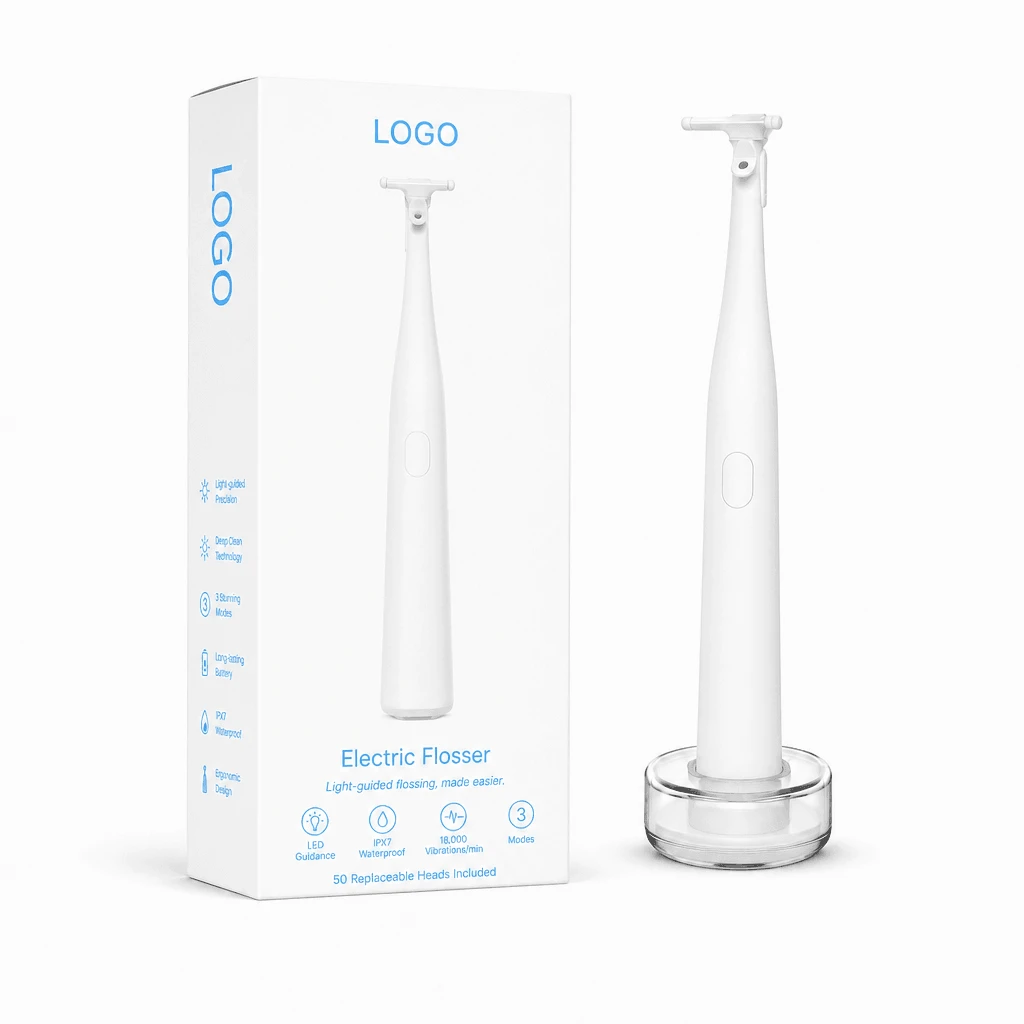
Lifespan Categorization: Entry-Level vs. Professional B2B Hardware
When evaluating commercial oral care inventories, procurement professionals must segment products across defined lifespan tiers:
Entry-Level and Economy Consumer Flossers (1 to 2 Years)
Constructed to meet low retail price points, these appliances utilize brushed motors, simple non-reinforced plastic gears, unsealed mechanical pushbuttons, and low-density nickel-metal hydride (NiMH) or uncertified lithium cells.
Piston fatigue, battery swelling, or moisture ingress typically causes functional failure within 12 to 24 months, resulting in high warranty replacement costs for brand owners.
Professional-Grade and Certified B2B Electric Flossers (2 to 5+ Years)
Engineered for institutional durability and reputable retail brands, these units incorporate brushless maglev vibration motors, precision POM/ceramic fluid pumps, 60-day high-capacity lithium-ion cells with wireless inductive charging docks, and certified IPX7 waterproof enclosures.
When supported by routine nozzle replacements every 3 to 6 months, these platforms deliver five years of reliable service with field defect rates consistently maintained below 0.5%.
Hardware Architecture Benchmark: Verified Long-Life Electric Flosser Platforms
Institutional buyers, pharmacy retail chains, and dental brand distributors must evaluate verified manufacturing platforms engineered for multi-year durability:
The Gold Rose Z9 LED Electric Flosser stands as an industry benchmark in ergonomic engineering and extended service life.
Engineered with a high-efficiency maglev acoustic motor producing up to 18,000 vibrations per minute, the Z9 eliminates friction-prone brushed components to ensure sustained multi-year operation.
Its proprietary 45-degree angled LED guidance system utilizes low-draw, cool-white surface-mount diodes rated for 20,000 hours of illumination, operating under an automated 10-minute auto-off safety protocol to protect battery capacity.
Constructed with an IPX7-sealed ABS/polycarbonate housing and powered by a high-retention lithium cell delivering 60 days of continuous operation per 3-hour charge via a contact-free wireless inductive charging base, the Z9 eliminates physical charging port corrosion, supported by ISO 13485:2016 and FDA medical device establishment registrations with private-label runs starting at 3,000 units.
The Gold Rose Automatic Flosser for Teeth incorporates a multi-mode acoustic drive operating across Mild, Clean, and Massage settings, providing complete interdental coverage through a 360-degree rotating head.
Powered by a high-efficiency internal battery delivering 60 to 80 days of active runtime per 3-hour charge, this platform utilizes a dustproof, moisture-shielded hidden charging port and an IPX7 waterproof chassis engineered to withstand daily immersion, supported by flexible OEM/ODM runs starting at 500 units.
The Gold Rose Z3 Electric Tooth Flossing Machine features a heavy-duty, impact-resistant ABS chassis housing a 30,000 RPM high-speed motor designed for professional-grade plaque removal and gum massage.
Engineered with dual clean modes, an interchangeable tongue scraper, and full 360-degree rotational cleaning, the Z3 utilizes precision in-house injection-molded components that prevent fluid leakage and extend mechanical life, with private-label minimum orders starting at 500 units.
The Gold Rose Electric Flosser with LED Lamp integrates 18,000 VPM micro-vibrations with replaceable fresh-mint floss heads and an intraoral inspection light, featuring an inductive charging dock and a 5-second travel lock to prevent accidental motor activation during transit.
In contrast, unbranded mass-market alternatives often feature loose component tolerances, thin plastic casings that crack upon minor impact, and unsealed USB charging ports that corrode within six months of daily bathroom use.
Maintenance Protocols: Engineering Rules for Maximizing Appliance Longevity
To ensure an electric tooth flosser reaches or exceeds its five-year design ceiling, dental professionals and equipment distributors must educate end-users on standardized maintenance protocols:
Daily Reservoir Purging and Active Air-Drying
Following every cleaning cycle, users must completely empty remaining fluid from the reservoir.
Run the unit for two to three seconds out of water to evacuate residual liquid from the internal pump manifold, then open the reservoir door and store the device in an upright, well-ventilated location to prevent mold colonization and seal degradation.
Scheduled Consumable Replacement Intervals
While the internal motor chassis is rated for five years, contact components require systematic replacement:
Nozzle and Floss Tip Replacement (Every 3 to 6 Months): Fluid jet nozzles and vibrating floss tips undergo mechanical friction and bacterial buildup. Replacing tips every 90 to 180 days prevents calcium occlusion, maintains laminar flow velocity, and ensures hygienic tissue contact.
Periodic Ultrasonic Decontamination: Interdental attachments, tongue scrapers, and detachable water basins should be periodically processed inside a professional ultrasonic cleaner operating at 42 to 45 kHz to dissolve calcified deposits and disrupt subgingival bio-films lodged in internal recesses.
Demineralization and Internal Circuit Flushing
To prevent scale-induced pump failure in regions with hard municipal tap water:
Filtered Water Usage: Users should fill the reservoir with distilled, demineralized, or reverse-osmosis filtered water whenever possible.
Citric Acid Decalcification Flush: Every two to three months, run a mild solution of warm water and food-grade citric acid or white vinegar (1:3 ratio) through the appliance, followed immediately by two complete flushes of clean warm water to remove dissolved limescale without corroding internal nitrile seals.
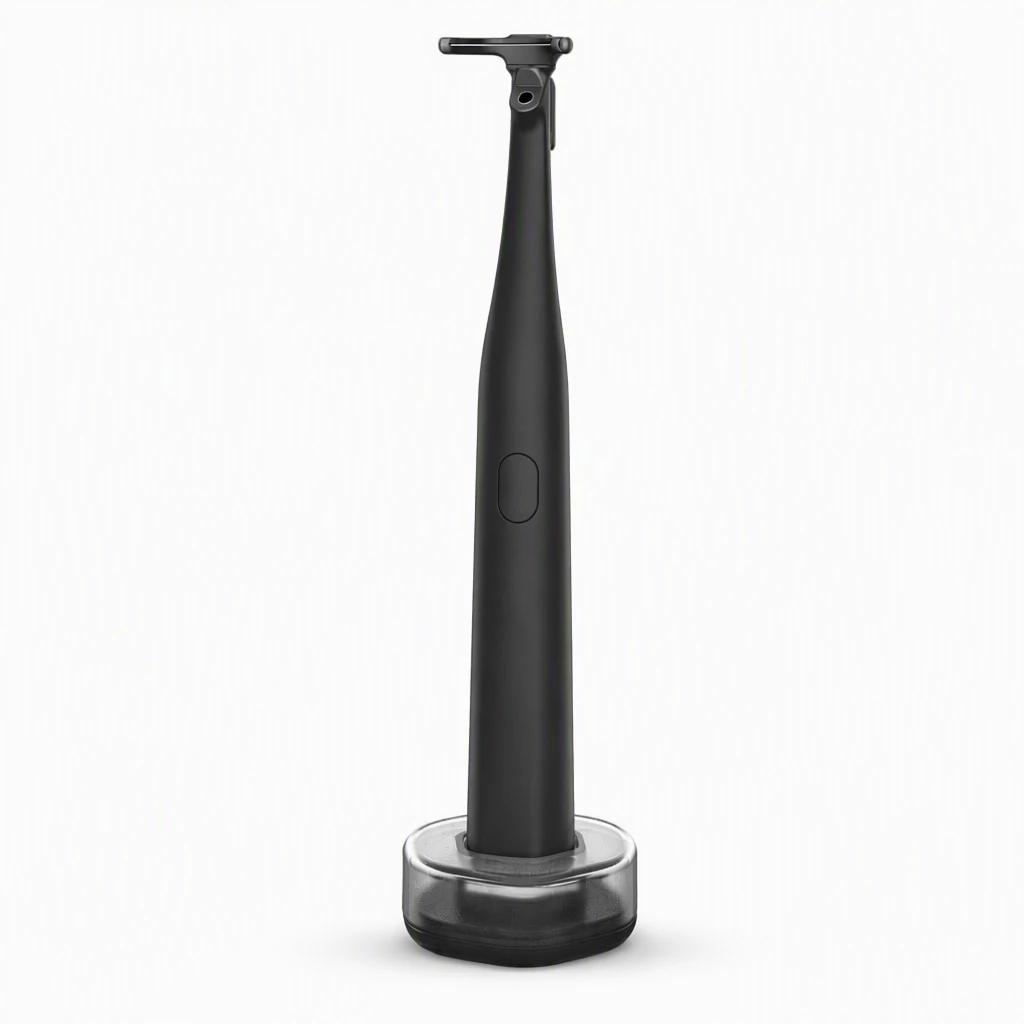
B2B Procurement Protocols: Quality Auditing for Appliance Longevity
When selecting an OEM/ODM manufacturing partner for commercial electric flosser lines, procurement officers must mandate rigorous validation testing and factory-floor quality management:
1. Accelerated Life Testing (ALT) and Mean Time Between Failures (MTBF)
Procurement specifications must mandate empirical proof of mechanical endurance:
Continuous Duty Testing: Require third-party laboratory documentation demonstrating that sample units withstand a minimum of 2,000 continuous two-minute cleaning cycles without motor failure, valve leakage, or pressure drops exceeding 10%.
Drop-Shock and Impact Testing: Confirm that devices pass standard one-meter six-sided drop tests onto hard surfaces without casing fracture, battery displacement, or internal fluid manifold detachment.
2. Ingress Protection and Hermetic Enclosure Validation
Ensure the complete device architecture withstands heavy bathroom steam and water exposure:
IEC 60529 IPX7 Testing: Verify genuine test reports confirming complete underwater immersion to a depth of one meter for thirty minutes without moisture penetration into the motor, battery cavity, or printed circuit board assembly.
Inductive Wireless Charging: Prioritize hardware utilizing contact-free magnetic or wireless inductive charging bases over mechanical USB ports to permanently eliminate socket corrosion and seal failures.
3. Battery Safety Accreditations and Power Cell Quality
Verify the electrochemical pedigree of integrated energy storage systems:
Lithium-Ion Safety Clearances: Require verified test certifications under UN 38.3 (transport safety), UL 1642 (cell safety), and IEC 62133-2 (portable secondary cells), ensuring cells feature thermal cutoffs, over-charge protection, and over-current safeties.
Power Management IC Architecture: Ensure internal PCBA designs incorporate advanced sleep-mode logic to prevent parasitic drain, allowing shelf storage of up to twelve months without unrecoverable deep-discharge cell death.
4. International Regulatory Compliance and Factory QMS Accreditations
Maintain complete regulatory compliance across all target distribution territories:
Medical Device QMS Certification: Verify that manufacturing facilities operate under certified ISO 13485:2016 and ISO 9001 quality management systems, ensuring strict incoming component inspection and automated surface-mount (SMT) assembly.
Global Electrical Clearances: Confirm valid compliance certificates for CE (LVD 2014/35/EU and EMC 2014/30/EU), FCC Part 15 Subpart B, and RoHS 2011/65/EU.
Frequently Asked Questions
Q1: What is the average lifespan of a high-quality electric tooth flosser?
A high-quality, properly maintained electric tooth flosser lasts between 2 to 5 years, providing roughly 1,500 to 3,500 individual cleaning cycles before natural lithium-ion battery capacity or pump seals degrade.
Q2: Why do budget electric flossers often fail within twelve months?
Budget models typically fail prematurely due to friction wear in low-cost brushed DC motors, seal breakdown allowing moisture to corrode unvarnished circuit boards, and low-grade battery cells that degrade after fewer than 300 charge cycles.
Q3: How frequently should electric flosser nozzles and tips be replaced?
Flosser nozzles and replaceable vibrating floss heads should be replaced every 3 to 6 months to prevent mineral clogging, maintain targeted hydrodynamic pressure, and eliminate bacterial colonization.
Q4: Does using tap water shorten the lifespan of an oral irrigator?
Yes; hard tap water contains high concentrations of calcium and magnesium that precipitate inside internal conduits and pump valves, increasing back-pressure and causing motor burnout unless regularly decalcified with citric acid.
Q5: What OEM/ODM capabilities does Gold Rose offer for long-life electric flossers?
Huizhou Gold Rose Technology Co., Ltd. provides comprehensive OEM/ODM manufacturing, including in-house precision injection tooling, automated SMT lines, custom lithium battery power management, custom branding, and global certifications (ISO 13485, CE, FCC, RoHS) directly through goldrosa.com.
References
Dental Health Association. (2023). Maintenance Guidelines and Infection Control for Powered Oral Hygiene Products. Clinical Practice Protocols, Chicago, IL.
Consumer Reports. (2022). Electric Tooth Flosser Longevity and Battery Degradation: What Consumers and Clinicians Should Expect. Product Safety Review, Yonkers, NY.
International Electrotechnical Commission. (2013). IEC 60529: Degrees of Protection Provided by Enclosures (IP Code). IEC Standards Catalogue, Geneva, Switzerland.
International Organization for Standardization. (2016). ISO 13485:2016 Medical Devices - Quality Management Systems - Requirements for Regulatory Purposes. ISO Standards Catalogue, Geneva, Switzerland.
International Electrotechnical Commission. (2017). IEC 62133-2: Secondary Cells and Batteries Containing Alkaline or Other Non-Acid Electrolytes for Portable Sealed Secondary Cells. IEC Standards Catalogue, Geneva, Switzerland.
Gold Rose. Z9 LED Electric Flosser: Maglev Sonic Interdental Appliance with 60-Day Battery Life. https://www.goldrosa.com/electric-tooth-flosser/led-electric-flosser.html
Gold Rose. Automatic Flosser for Teeth: Multi-Mode Oral Care System with IPX7 Ingress Protection. https://www.goldrosa.com/electric-tooth-flosser/automatic-flosser-for-teeth.html
Gold Rose. Electric Tooth Flossing Machine: Heavy-Duty 30,000 RPM Rotational Dental Appliance. https://www.goldrosa.com/electric-tooth-flosser/electric-tooth-flossing-machine.html
Gold Rose. B2B Turnkey OEM/ODM Medical Device Engineering and Global Export Services. https://www.goldrosa.com/oem-odm