



Many people wonder: Can an ultrasonic dental cleaner remove stains from teeth? I asked the same question when I first considered buying one, especially after seeing claims that "ultrasonic cleaners can whiten teeth."
After researching scientific principles and real-world use, I realized an important fact:
Ultrasonic cleaners are highly effective for cleaning retainers, dentures, and other oral appliances, but they cannot directly remove stains on natural teeth.

What Are Teeth Stains and Why Are They Hard to Remove?
Common Types of Teeth Stains
Teeth stains are generally classified into two types:
- Extrinsic stains – caused by dietary habits such as coffee, tea, red wine, or smoking. These stains attach to the enamel surface. Coffee and tea contain compounds that bind to enamel, forming surface discoloration.
- Intrinsic stains – caused by internal factors such as medications, age, or enamel development issues. Intrinsic stains are much harder to remove.
How Stains Form on Teeth
Enamel is not perfectly smooth. Tiny pores allow pigments to settle and attach over time. Plaque and leftover food can further stabilize these stains, making them difficult to remove with brushing alone. Plaque and biofilm are the foundation of stain accumulation.
What Is an Ultrasonic Dental Cleaner?
How Ultrasonic Cleaning Works
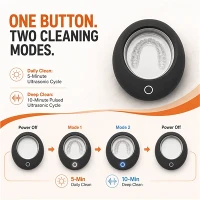
Ultrasonic dental cleaners generate high-frequency vibrations, usually around 40 kHz, in water. Tiny bubbles form and collapse rapidly, creating a gentle yet effective cleaning action called cavitation. This removes debris from surfaces and hard-to-reach gaps without scrubbing.
A frequency of 40 kHz provides optimal cleaning effectiveness while remaining safe for most oral appliance materials.
What Ultrasonic Cleaners Are Best Suited For
Ultrasonic cleaners are specifically designed for:
- Clear aligners and retainers
- Dentures
- Night guards
- Toothbrush heads and oral appliance parts
They are not designed for direct cleaning of natural teeth, which is why their stain-removing ability is limited on enamel.

Can Ultrasonic Dental Cleaners Remove Stains on Teeth?
Why Direct Use on Teeth Is Not Recommended
- Most home ultrasonic cleaners are not designed for enamel safety.
- They cannot generate enough energy to break down firmly attached tooth stains.
- Unlike professional dental equipment, they lack precision and protective controls.
Using a home ultrasonic cleaner on teeth can give a false sense of whitening or even risk enamel damage. Professional dental cleaning remains the only effective method for stain removal.
Common Misconceptions
I noticed many people mistakenly assume that ultrasonic cleaning can:
- Replace professional dental cleaning
- Whiten teeth instantly
- Remove intrinsic stains
These are all incorrect expectations for home devices.
Why Do Some People Think Stains Improve?
Indirect Effects
Cleaning retainers or dentures removes bacteria and pigments that might otherwise re-enter the mouth. This indirectly reduces new stain formation, making teeth appear cleaner.
Combined Oral Hygiene Practices
Many users also adopt better brushing and flossing habits when they start using an ultrasonic cleaner. This combination helps reduce stain accumulation more effectively.

What Ultrasonic Cleaners Are Truly Effective For
Removing Stains on Retainers and Dentures
They can effectively clean tea, coffee, and light surface stains on dental appliances. Long-term use helps maintain the original color and clarity of retainers and dentures.
Reducing Bacterial Build-Up and Odor
Ultrasonic cleaning significantly reduces biofilm and bacterial colonies on appliances, improving overall oral hygiene and decreasing odor.
Effective Home Practices for Reducing Tooth Stains
Even with an ultrasonic cleaner, proper oral care remains essential:
1. Brush Properly – Time and Technique Matter
Recommended brushing time: at least 2–3 minutes per session. Brushing for at least 3 minutes removes most plaque.
Technique: Use the Bass Method – place the bristles at a 45° angle to the gum line, gently brushing each surface for 10–15 seconds. This covers all tooth surfaces: outer, inner, and chewing surfaces.
2. Use Floss or Water Flossers
Flossing or using an oral irrigator reaches tight gaps and gumline areas that brushing cannot clean.
Daily use of floss or water flossers reduces plaque and prevents stain formation.
3. Professional Dental Cleaning (Scaling)
Recommended frequency: every 6 months for healthy adults; every 3–6 months for high-risk individuals such as smokers, diabetics, or those with gum disease.
Professional cleaning removes hardened tartar and stains unreachable by brushing or flossing.

Ultrasonic Cleaner vs Professional Cleaning vs Whitening Products
| Cleaning Method | Removes Tooth Stains? | Safety for Teeth | Professional Required? | Best Use Case |
|---|---|---|---|---|
| Ultrasonic Cleaner | ❌ Indirect only | ✔ Safe for appliances | ❌ No | Retainers, dentures, night guards |
| Professional Dental Cleaning | ✔ Yes | ✔ Yes | ✔ Yes | Natural teeth |
| Whitening Products | ✔ Surface stains | ⚠ Depends on product | ❌ No | Tooth enamel discoloration |
| Brushing + Flossing | ❌ Not for deep stains | ✔ Yes | ❌ No | Daily maintenance |
Key Takeaways
Ultrasonic dental cleaners cannot directly remove stains from natural teeth.
They are highly effective for cleaning retainers, dentures, and oral appliances, reducing bacteria and odor.
Consistent brushing, flossing, and regular professional dental cleanings are essential for managing tooth stains.
Understanding the true function of an ultrasonic cleaner ensures safe, effective, and realistic oral care.