



Maintaining clean dentures, retainers, and other removable dental appliances is essential for oral comfort, confidence, and long-term appliance performance. While many users rely on brushing or soaking tablets, these traditional cleaning methods often fail to remove debris and buildup from hard-to-reach areas.
As awareness of oral hygiene continues to grow, more consumers are turning to ultrasonic cleaning technology for daily maintenance. Originally used in dental clinics and laboratories, ultrasonic cleaning has become increasingly accessible for home users through compact and affordable devices.
But what makes an ultrasonic denture cleaner different from traditional cleaning methods? And why are more distributors, retailers, and oral care brands adding ultrasonic cleaning products to their portfolios?
In this guide, we'll explore the benefits of daily ultrasonic cleaning, how the technology works, and what buyers should consider when selecting an ultrasonic cleaner for home oral care.
Why Daily Denture and Retainer Cleaning Matters
Many people underestimate how much buildup can accumulate on dental appliances in a single day.
Hidden Contaminants Accumulate Quickly
Dentures, retainers, mouth guards, and night guards are exposed to saliva, food particles, and oral bacteria every time they are worn. Even after rinsing, microscopic residues can remain trapped within tiny grooves, corners, and textured surfaces.
Over time, these deposits can affect appearance, comfort, and overall user satisfaction.
Oral Appliances Contain Hard-to-Reach Areas
Most removable dental appliances are designed with detailed contours to ensure a proper fit. While these shapes improve comfort, they also create narrow spaces that are difficult to clean using a toothbrush alone.
Manual cleaning often removes visible debris while leaving buildup hidden within deeper areas.
Consistent Cleaning Supports Better User Experience
Daily cleaning helps maintain freshness, appearance, and wearing comfort. Users who establish a regular cleaning routine often notice that their appliances feel cleaner and more pleasant to wear throughout the day.
For manufacturers and retailers, this growing awareness is driving increased demand for effective cleaning solutions.

Understanding How an Ultrasonic Denture Cleaner Works
The effectiveness of ultrasonic cleaning comes from a scientific process known as cavitation.
The Science Behind Ultrasonic Cleaning
An ultrasonic denture cleaner generates high-frequency sound waves through water or a cleaning solution. These sound waves create millions of microscopic bubbles that rapidly form and collapse.
When the bubbles collapse, they release small bursts of energy capable of loosening debris from surfaces and narrow spaces that are difficult to reach manually.
Unlike brushing, ultrasonic cleaning works without direct friction, making it a gentle cleaning method for many dental appliances.
Why Ultrasonic Technology Is Suitable for Daily Use
One of the key advantages of ultrasonic cleaning is consistency. Every cleaning cycle delivers a similar level of cleaning performance without relying on user technique.
This makes ultrasonic systems particularly attractive for elderly users, orthodontic patients, and individuals seeking a simple daily cleaning routine.
From Dental Clinics to Home Care
For decades, dental professionals have used ultrasonic equipment to assist in cleaning instruments and appliances. Today's home-use ultrasonic dental cleaner models bring similar cleaning principles into a compact and user-friendly format suitable for everyday maintenance.
Top Benefits of Using an Ultrasonic Denture Cleaner Every Day
Daily ultrasonic cleaning offers several practical advantages that contribute to better appliance maintenance and user satisfaction.
Improved Removal of Plaque and Surface Deposits
Food particles and plaque can accumulate gradually on dentures and retainers. While these deposits may not always be visible, they can affect the cleanliness and appearance of oral appliances.
Regular ultrasonic cleaning helps remove these residues before significant buildup occurs, supporting a cleaner daily wearing experience.
Fresher and More Comfortable Appliances
Many users report that regularly cleaned dentures feel fresher and more comfortable. This is because ultrasonic cleaning targets residues that may remain after brushing alone.
A cleaner appliance often contributes to greater confidence during daily use.
Reduced Need for Aggressive Scrubbing
Traditional brushing can sometimes create surface scratches over time, particularly when excessive force or abrasive products are used.
An ultrasonic retainer cleaner reduces the need for vigorous scrubbing by using water-based cavitation to assist the cleaning process. This gentler approach can help preserve the appearance of dental appliances.
Convenient and Time-Efficient Cleaning
Most home ultrasonic cleaning cycles take only a few minutes to complete. Users simply place the appliance into the cleaning tank, start the cycle, and allow the machine to perform the work.
This convenience makes daily cleaning easier to maintain as a long-term habit.

Ultrasonic Cleaning Compared with Traditional Denture Cleaning Methods
Understanding the differences between cleaning methods helps consumers make informed purchasing decisions.
Manual Brushing
Brushing remains one of the most common cleaning methods because it is simple and inexpensive. However, its effectiveness depends heavily on user technique.
While brushing can remove visible debris, it may not effectively clean narrow crevices or internal contours found in many dental appliances.
Effervescent Cleaning Tablets
Cleaning tablets provide a convenient soaking solution and are widely used by denture wearers. However, tablets rely on chemical action and often require longer soaking times.
Many users continue to combine tablet soaking with brushing to achieve satisfactory results.
Ultrasonic Cleaning Technology
A modern denture cleaning machine combines ease of use with consistent cleaning performance. By reaching complex surfaces through cavitation, ultrasonic cleaning provides a practical balance between convenience and effectiveness.
This combination is one of the reasons ultrasonic cleaners are becoming increasingly popular in home oral care markets worldwide.
Long-Term Value for Users
Although an ultrasonic cleaner requires an initial investment, many consumers view it as a cost-effective solution due to its reusable nature and minimal ongoing maintenance requirements.
For distributors and retailers, this creates a strong value proposition that supports repeat sales and customer satisfaction.
Choosing the Best Ultrasonic Cleaner for Daily Oral Care
Not all ultrasonic cleaners are designed specifically for dental appliances. Understanding key features can help buyers select the right product.
Frequency and Cleaning Performance
Most oral care applications perform well within the 40kHz to 50kHz frequency range. This range provides effective cleaning while remaining suitable for common dental appliance materials.
A quality ultrasonic dental cleaner should offer stable performance and uniform cleaning results throughout the tank.
Tank Size and Appliance Compatibility
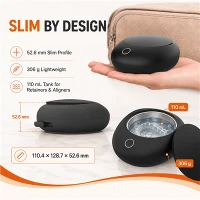
The cleaning chamber should be large enough to fully immerse dentures, retainers, mouth guards, or aligners. Full immersion helps ensure more consistent cleaning across all surfaces.
Compact designs are ideal for home users, while larger models may appeal to clinics and professional environments.
User-Friendly Operation
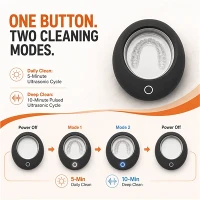
Simple controls encourage daily use. Many consumers prefer one-touch operation and automated cleaning cycles that eliminate guesswork.
Products designed for convenience often achieve higher user satisfaction and better long-term adoption.
Build Quality and Material Selection
Durable materials such as SUS304 stainless steel cleaning tanks provide better resistance to corrosion and daily wear. High-quality construction also contributes to product longevity and a more premium user experience.
For OEM and private-label brands, material quality can become an important differentiator in competitive markets.

Why Ultrasonic Denture Cleaners Are Becoming a Fast-Growing Product Category
The oral care market continues to evolve as consumers seek smarter and more efficient hygiene solutions.
A growing aging population, increased orthodontic treatment adoption, and rising awareness of preventive oral care are all contributing to demand for dental appliance maintenance products.
Products such as the dental appliance cleaner are particularly attractive because they serve multiple user groups, including denture wearers, retainer users, clear aligner patients, mouth guard owners, and night guard users.
For distributors and private-label brands, ultrasonic cleaners offer several advantages:
High perceived value for consumers.
Growing global demand across oral care categories.
Opportunities for OEM and ODM customization.
Strong compatibility with e-commerce and retail channels.
Potential for product bundling with retainers, aligners, and oral care accessories.
As consumer interest in home healthcare products continues to expand, ultrasonic cleaning technology is well-positioned for sustained market growth.
Conclusion
Daily appliance hygiene plays a critical role in maintaining comfort, appearance, and long-term usability of dentures, retainers, and other removable dental devices.
Compared with traditional cleaning methods, an ultrasonic denture cleaner offers a convenient, consistent, and user-friendly approach to daily maintenance. By utilizing cavitation technology, these devices help clean areas that are often difficult to reach through manual brushing alone.
For consumers, ultrasonic cleaning provides an easy way to support daily oral hygiene habits. For retailers, distributors, and oral care brands, it represents a growing product category with strong market potential and broad customer appeal.
As more consumers prioritize preventive oral care, ultrasonic cleaning technology is becoming an increasingly important part of modern home dental appliance maintenance.
FAQs
1. Can I use an ultrasonic denture cleaner every day?
Yes. Most home-use ultrasonic cleaners are designed for regular daily cleaning of dentures, retainers, aligners, and similar dental appliances.
2. Is ultrasonic cleaning better than brushing dentures?
Ultrasonic cleaning and brushing can complement each other. Ultrasonic cleaning helps reach areas that may be difficult to clean manually.
3. What frequency is best for cleaning dentures?
Most dental appliance cleaners operate between 40kHz and 50kHz, which provides effective cleaning performance for common oral appliance materials.
4. Can ultrasonic cleaners be used for retainers and mouth guards?
Yes. Many ultrasonic retainer cleaner models are suitable for retainers, night guards, mouth guards, and clear aligners.
5. Do ultrasonic cleaners require special cleaning solutions?
Many users clean with water alone, while others choose appliance-specific cleaning solutions. Always follow the manufacturer's recommendations.
References
American College of Prosthodontists (ACP) – Denture Care and Maintenance Guidelines.
American Dental Association (ADA) – Oral Appliance Cleaning Recommendations.
Journal of Prosthetic Dentistry – Studies on Denture Hygiene and Biofilm Control.
International Journal of Dental Hygiene – Cleaning Methods for Removable Dental Appliances.
National Institute of Dental and Craniofacial Research (NIDCR) – Oral Health and Denture Care Resources.