





Dental clinic operators, clear aligner wearers, and orthodontic laboratory technicians frequently notice a curious physical phenomenon: an ultrasonic cleaner filled with fresh municipal tap water performs markedly better on its second operational cycle than on its first.
The cleaning fluid has not chemically strengthened, and the bath temperature has barely shifted.
The underlying variable governing this performance gap is dissolved gas concentration.
Understanding the acoustic physics of fluid degassing marks the boundary between an ineffective cleaning cycle that merely wets orthodontic appliances and an optimized protocol that completely dislodges adherent polymicrobial biofilms.
In dental hygiene and orthodontic device maintenance, clear retainers, vacuum-formed aligners, and acrylic night guards present intricate anatomical micro-grooves that harbor dense matrices of Streptococcus mutans, Candida albicans, and filamentous anaerobic bacteria.
Traditional mechanical brushing scratches vulnerable thermoplastic substrates, creating microscopic crevices that accelerate future plaque deposition.
While ultrasonic baths provide the gold standard for non-abrasive decontamination, fresh aqueous solutions contain elevated concentrations of entrapped atmospheric air and dissolved gases.
These dissolved gases cushion acoustic shockwaves, severely dampening the mechanical shearing forces required to strip tenacious extracellular polymeric substance (EPS) matrices.
This comprehensive technical guide examines the acoustic cavitation dynamics of dissolved gases, details the biomechanical advantages of pulsed ultrasonic degassing, establishes clinical protocols for retainer biofilm debridement, benchmarks verified manufacturing hardware, and outlines institutional procurement specifications.
Acoustic Cavitation Physics: The Interplay Between Fluid Degassing and Shockwave Intensity
Acoustic cavitation in liquid media is governed by alternating high-frequency acoustic pressure waves.
The physical mechanics of this process and the dampening effects of dissolved gases can be analyzed across three fundamental stages:
1. Transient Cavitation Dynamics and Micro-Jet Genesis
An ultrasonic transducer affixed to the base of a stainless steel basin radiates high-frequency acoustic sound waves through the liquid medium, generating alternating sinusoidal cycles of rarefaction (low pressure) and compression (high pressure).
During the negative rarefaction phase, local fluid pressure drops below the saturated vapor pressure of the liquid, causing sub-microscopic void nuclei to nucleate, expand, and grow into transient cavitation bubbles.
Upon transitioning into the subsequent positive compression phase, the surrounding hydrostatic pressure forces these unstable cavities into a sudden, asymmetric, adiabatic collapse.
This violent implosion generates localized micro-jets traveling at velocities exceeding 100 meters per second, accompanied by localized acoustic shockwaves that exert powerful mechanical shearing forces against adjacent submerged surfaces, lifting contaminants from micro-recesses inaccessible to standard mechanical bristles.
2. The Cushioning Phenomenon of Dissolved Atmospheric Gases
The internal gaseous composition of a cavitation bubble dictates whether its implosion generates destructive scrubbing energy or a dampened pulsation:
Cushioned Gas-Filled Cavities: In untreated, fresh solutions saturated with dissolved atmospheric air (nitrogen, oxygen, and carbon dioxide), gas molecules diffuse rapidly into expanding bubbles during the rarefaction phase. During compression, these entrapped permanent gases cannot instantly re-dissolve; instead, they act as an elastic internal cushion that absorbs kinetic energy, causing the bubble to oscillate stably rather than collapse adiabatically.
High-Velocity Vapor Bubble Implosions: Conversely, in a thoroughly degassed liquid medium, cavitation bubbles consist almost entirely of evaporated liquid vapor. When compressed, this vapor undergoes instantaneous condensation back into liquid form, producing a nearly complete vacuum collapse that yields uninhibited hydrodynamic micro-jets and high-energy acoustic shockwaves.
Acoustic Energy Attenuation: Saturated solution displays a dense cloud of microscopic gas bubbles clinging to the tank walls and suspended within the fluid. This visible bubbling phenomenon represents ongoing degassing rather than active cleaning, as the gas pockets scatter and attenuate acoustic wave propagation before energy reaches the appliance.
3. The Inception Paradox and Nucleation Kinetics
While fluid degassing dramatically amplifies the violent kinetic yield of individual bubble implosions, acoustic physics presents an engineering nuance known as the inception paradox:
Acoustic Inception Thresholds: Dissolved gas pockets serve as low-threshold nucleation seeds, lowering the acoustic pressure required to initiate cavitation. Stripping all dissolved gas molecules from the fluid elevates the cavitation inception threshold, requiring higher transducer acoustic power to trigger bubble formation.
Population Shift Optimization: Consequently, the clinical objective of degassing is not achieving absolute molecular zero gas content, but systematically shifting the bubble population balance from cushioned, stable gas bubbles toward transient vapor cavities capable of delivering maximum interfacial shearing stress against stubbornly adhered oral biofilms.
Degassing Protocols: Overcoming Acoustic Trapping Through Pulsed Dynamics
Achieving thorough fluid degassing in small benchtop dental ultrasonic tanks requires specific physical and mechanical operational parameters:
Fresh Solution Attenuation and Empty Tank Pre-Cycles
Municipal tap water drawn directly from pressurized plumbing lines contains super-saturated atmospheric gases that immediately suppress acoustic efficiency.
Loading a contaminated dental appliance directly into a freshly filled basin forces the transducer to expend the initial three to five minutes of acoustic energy stripping dissolved gases from the fluid, leaving insufficient time and diminished energy for biofilm debridement.
The standard operating protocol requires running a preliminary empty cycle with warm water for three to five minutes prior to loading the orthodontic appliance, ensuring that the primary operational cycle operates exclusively within a vapor-dominant cavitation environment.
Acoustic Node Trapping and Intermittent Pulse Modulation
Continuous acoustic excitation is inherently inefficient at expelling micro-bubbles due to the physics of acoustic standing waves:
Bjerknes Forces and Nodal Suspension: Under continuous-wave ultrasonic irradiation, acoustic radiation forces (Bjerknes forces) trap coalescing gas bubbles at the nodal planes of the acoustic field, suspending them within the fluid column and preventing upward buoyant escape.
Intermittent Duty-Cycle Degassing: By introducing an intermittent pulsed duty cycle-such as two seconds of acoustic excitation followed by one second of transducer deactivation-the sound field is momentarily collapsed. This brief quiescent interval allows suspended, buoyant gas bubbles to rise freely to the fluid surface and vent into the atmosphere. Once acoustic power resumes, the degassed liquid immediately supports violent, uninhibited vapor cavitation.
Fluid Thermodynamics, Surface Tension, and Substrate Elevation
Three critical operational variables dictate degassing efficiency and subsequent cleaning performance:
Thermal Acceleration: Elevating bath temperature between 35°C and 45°C lowers gas solubility according to Henry's Law, accelerating the rate at which dissolved gases break out of solution while enhancing the chemical activity of specialized dental detergents.
Surfactant Modification: Incorporating specialized ultrasonic cleaning tablets containing neutral surfactants reduces aqueous surface tension, lowering the energetic barrier for bubble nucleation and maximizing micro-jet contact angles.
Acoustic Transducer Unloading: Submerged dental appliances must never contact the bottom of the stainless steel tank directly. Resting appliances on the tank floor damps the mechanical resonance of the piezoelectric transducer, causing localized overheating and acoustic detuning. Utilizing suspended, acoustically transparent baskets preserves wave propagation and maintains uniform fluid degassing.
Biofilm Dynamics: Substrate Adhesion on Retainer and Aligner Polymers
Dental plaque is not a loosely deposited particulate film; it is a complex, highly structured polymicrobial biofilm encased in a self-produced matrix of extracellular polymeric substances (EPS) composed of polysaccharides, structural proteins, and extracellular DNA.
The biomechanical challenges of biofilm removal can be categorized across specific substrate dynamics:
Interfacial Shear Requirements on Polymeric Biomaterials
The interfacial adhesion strength of dental biofilm varies dramatically depending on the underlying substrate:
Hydrophobic Polymeric Substrates: Modern clear aligners and retainers fabricated from polyurethane, polyethylene terephthalate glycol (PETG), or poly(methyl methacrylate) (PMMA) exhibit hydrophobic surface characteristics that foster rapid colonization by Streptococcus mutans and Actinomyces viscosus.
Vapor-Dominant Mechanical Clearance: Weakly adhered particulate debris can be dislodged by gentle acoustic streaming or cushioned gas bubbles. However, disrupting firmly attached EPS biofilms anchored within the micro-pores of polymeric aligners requires the high-energy localized shear stresses and micro-jets generated exclusively by vapor-dominant bubble implosions.
Standardized Degassing and Biofilm Debridement Protocol
Dental clinics, clear aligner patients, and orthodontic laboratories should enforce a structured, five-step operational workflow:
Step 1: Basin Filling: Fill the stainless steel tank to the indicated maximum line with lukewarm water (approximately 38°C to 40°C) and dissolve a formulated dental cleaning tablet.
Step 2: Preliminary Degassing Cycle: Activate a 5-minute empty cycle or dedicated pulsed mode without appliances in the tank to liberate entrapped tap water gases.
Step 3: Suspended Appliance Loading: Seat the clear retainer or night guard securely inside the suspended immersion basket, ensuring appliances do not overlap or touch the tank floor.
Step 4: Primary Decontamination Run: Execute a 10-minute pulsed ultrasonic cycle to combine continuous bubble release with high-energy vapor cavitation, optionally assisted by simultaneous germicidal photolytic disinfection.
Step 5: Post-Cycle Evacuation: Rinse the decontaminated appliance thoroughly under running water, drain the contaminated bath fluid, and wipe the stainless steel basin dry to prevent mineral scale accumulation.
Hardware Architecture Benchmark: Verified Degas-Capable Ultrasonic Platforms
Procurement managers, orthodontic supply distributors, and private-label dental brands must evaluate prospective manufacturing partners against verified hardware specifications:
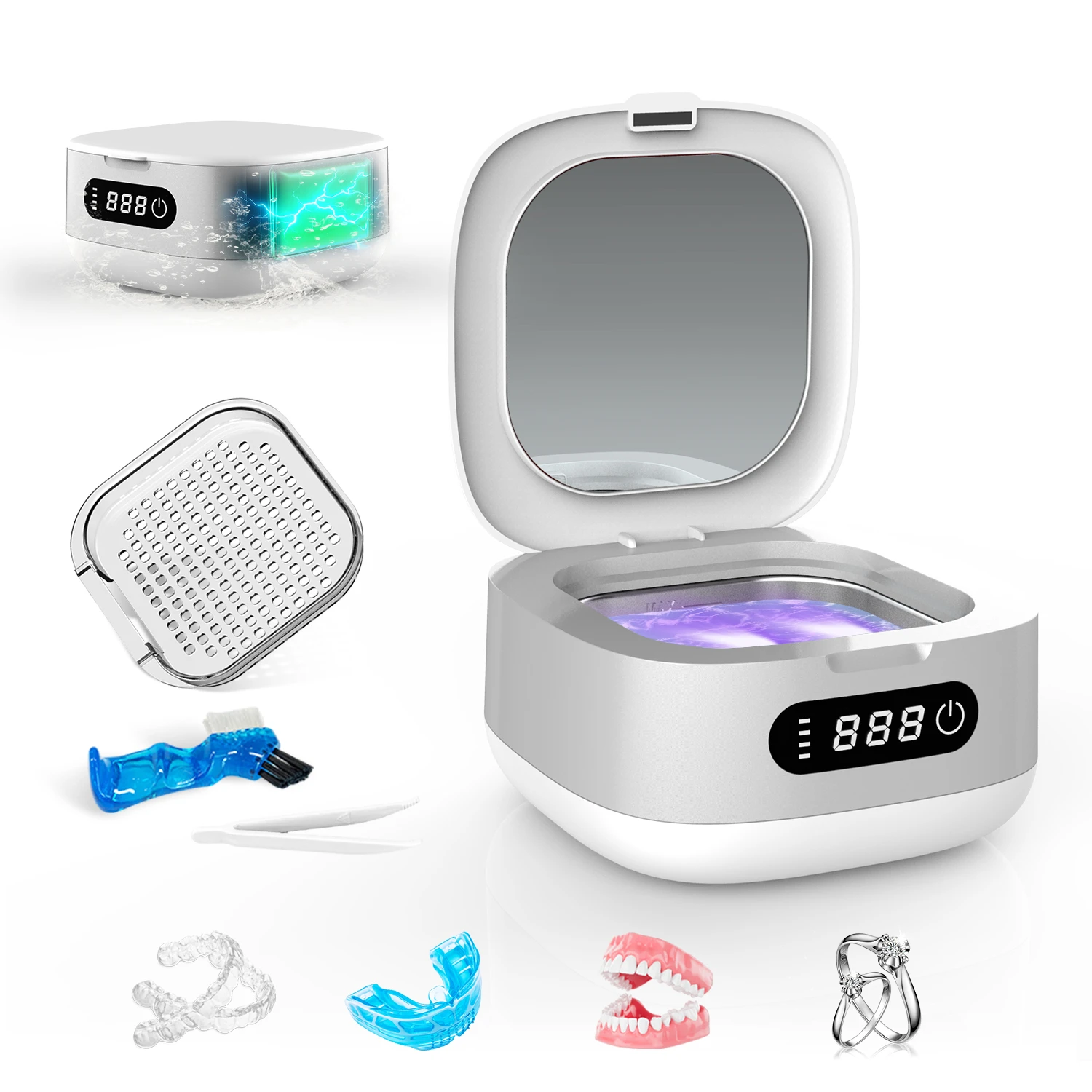
The Gold Rose US600 Rechargeable Ultrasonic Cleaner represents an engineering benchmark in portable, multi-modal acoustic debridement.
Operating within a calibrated high-frequency sweep band of 47 kHz to 52 kHz, the US600 generates dense, microscopic vapor cavitation bubbles engineered specifically for delicate orthodontic aligners and prosthetic margins.
The appliance features three selectable operational modes: a 5-minute daily ultrasonic cycle with simultaneous UV-C photolysis, a 10-minute UV-only maintenance cycle, and an advanced 10-minute pulsed ultrasonic deep-clean mode that alternates acoustic bursts to accelerate fluid degassing and maximize cavitation energy.
Constructed with a medical-grade SUS304 food-grade stainless steel fluid reservoir, an IPX6 water-resistant chassis, ultra-quiet 35 dB acoustic dampening, a magnetic Hall-effect safety lid sensor, and an internal lithium-ion power cell delivering ten complete cleaning cycles per charge via Type-C fast charging, the US600 is fully customizable across frequency, timer, and housing aesthetics with private-label OEM runs starting at 1,000 units.
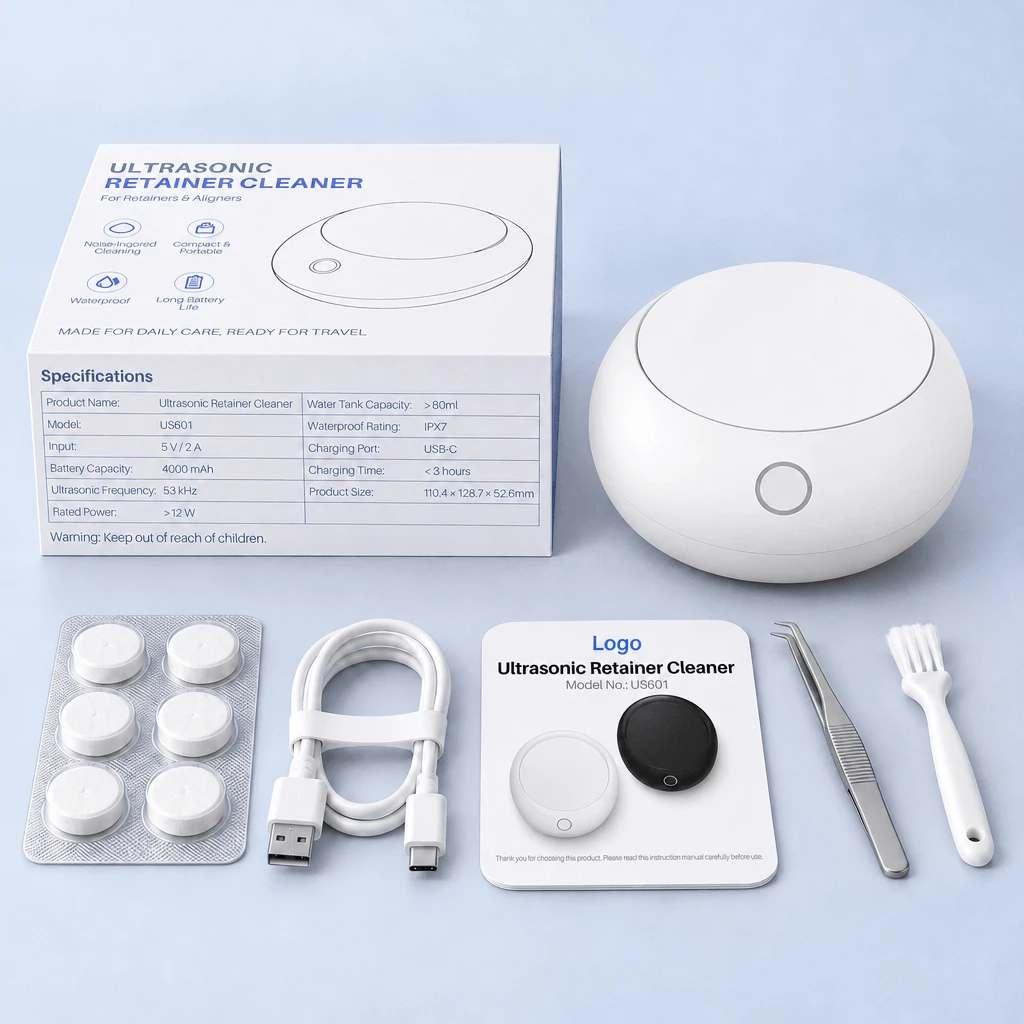
The Gold Rose US601 Portable Ultrasonic Cleaner delivers high-durability interdental cleaning tailored for mobile and travel applications.
Featuring a compact 110 mL SUS304 stainless steel basin, IPX7 immersion sealing, and a reinforced chassis engineered to withstand 1.2-meter drop impacts, the US601 incorporates a dual-mode interface providing a 5-minute daily cycle and a 10-minute pulsed deep-cleaning cycle that effectively degasses fresh hotel tap water.
Powered by a high-capacity 4,000 mAh rechargeable lithium cell delivering up to 14 complete cycles per charge, this travel-ready platform supports custom branding and packaging starting at 1,000 pieces.
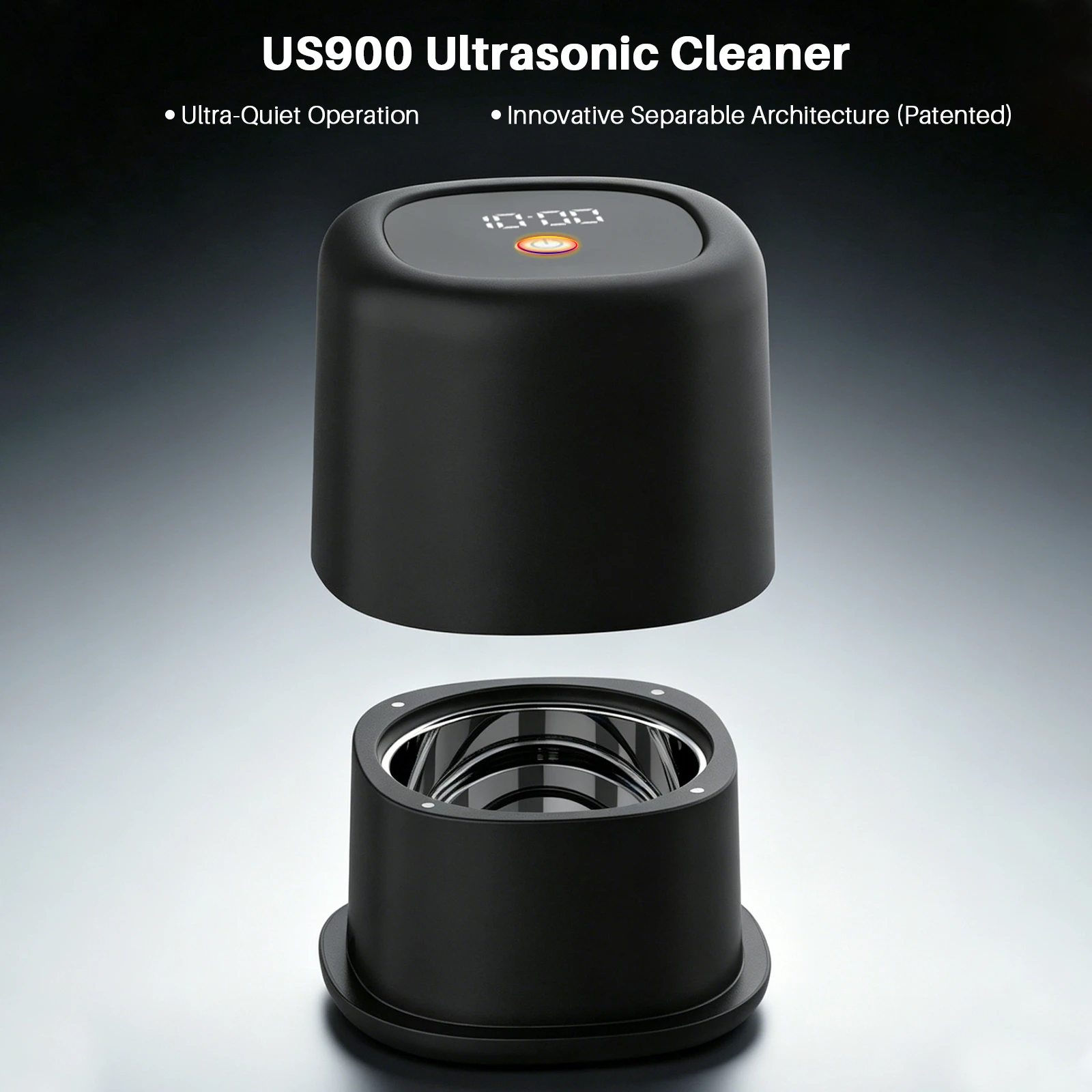
The Gold Rose US900 Ultra-Quiet Ultrasonic Cleaner provides professional-grade capacity for shared clinical and residential environments, operating at 43 kHz to 45 kHz with acoustic noise restricted to 45 dB or lower.
The US900 features four distinct operating programs-including a dedicated sonic-only pre-cycle that functions as an optimal fluid degassing phase prior to deep cleaning-paired with four dual-band UVA and UV-C germicidal lamps and a patented separable split-body architecture that permits direct basin refilling without transporting the electrical base, available under private-label runs starting at 3,000 units.
The Gold Rose US201 Ultrasonic Dental Retainer Cleaner provides an accessible entry-level platform featuring a 42 kHz acoustic sweep, integrated 260 nm to 280 nm UV photolysis, and an ergonomic half-moon drainage basket, with OEM minimum order quantities starting at 500 pieces.
The Gold Rose SJ-W3 Large Ultrasonic Cleaner delivers an expanded 500 mL to 650 mL SUS304 tank capacity driven by a 35 W industrial-grade 45 kHz transducer, incorporating capacitive touch controls across five pre-programmed timed cycles (90, 180, 280, 380, and 480 seconds) featuring automated frequency sweep and integrated fluid degas sequences, with OEM runs starting at 1,000 units.
In contrast, unbranded mass-market consumer cleaners frequently incorporate non-calibrated continuous-wave transducers that overheat rapidly, unsealed plastic casings vulnerable to fluid ingress, and rigid single-mode microcontrollers lacking the pulsed duty cycles necessary to discharge dissolved fluid gases.
B2B Procurement Specifications: Quality Auditing for Degas-Enabled Hardware
When auditing OEM/ODM manufacturing facilities for clinical and consumer ultrasonic cleaning hardware, procurement officers must mandate compliance across four technical pillars:
1. Acoustic Resonance, Pulse Modulation, and Transducer Calibration
Acoustic performance must be verified across dynamic operating conditions:
Resonance Tolerancing and Frequency Sweeping: Require suppliers to specify operating frequency with strict tolerances (e.g., 48 kHz ± 2 kHz) and incorporate automatic frequency sweeping to prevent destructive acoustic dead zones within the fluid volume.
Pulsed Duty-Cycle Verification: Audit the microcontroller firmware to ensure pulsed modes incorporate an off-time of at least 800 to 1,200 milliseconds, providing adequate latency for buoyant gas bubbles to escape acoustic standing nodes.
2. Cavitation Energy Distribution and Field Validation
Verify that cavitation energy is uniformly distributed across the entire working volume:
Standardized Aluminum Foil Erosion Testing: Mandate that production lots undergo standardized aluminum foil erosion testing, where calibrated household aluminum foil (15 to 20 microns thick) is suspended vertically in a degassed water bath for 60 to 90 seconds.
Erosion Homogeneity: Inspect the perforated foil for uniform micro-pitting across all quadrants to confirm the absence of acoustic shadowing, transducer debonding, or dead zones.
3. Material Biocompatibility, Tank Metallurgy, and Seal Integrity
Ensure fluid-contacting surfaces resist aggressive cavitation erosion and chemical degradation:
Deep-Drawn SUS304 and SUS316L Stainless Steel: Mandate that fluid reservoirs are fabricated from passivated, deep-drawn SUS304 or SUS316L stainless steel with a minimum wall thickness of 0.8 mm to resist cavitational erosion pitting.
Ingress Sealing Validation: Require certified IEC 60529 IPX6 or IPX7 test reports verifying that fluid spills, steam, and sink splashes cannot penetrate the electrical chassis.
4. Photobiological and Global Electrical Safety Clearances
Confirm complete regulatory documentation across all distribution territories:
Medical and Quality System Registrations: Verify that the manufacturing partner holds certified ISO 13485:2016 and ISO 9001 quality management systems.
Optical and Electrical Clearances: Confirm valid test certificates for IEC 62471 (photobiological safety of integrated UV lamps), CE (LVD 2014/35/EU and EMC 2014/30/EU), FCC Part 15 Subpart B, and RoHS 2011/65/EU, alongside UN 38.3 and IEC 62133-2 battery transport certifications.
Frequently Asked Questions
Q1: Do I need an ultrasonic cleaner with a dedicated degas button?
No, because fluid degassing is an acoustic physical process rather than a proprietary mechanical switch. You can effectively degas any ultrasonic bath by running an empty 3-to-5-minute cycle with fresh warm water before loading appliances, or by utilizing intermittent pulsed modes such as those engineered into the Gold Rose US600 and US601.
Q2: Does eliminating dissolved gases always make ultrasonic cleaning stronger?
Degassing shifts the cavitation bubble population from cushioned gas bubbles to violent vapor bubbles, which is essential for dislodging tenacious oral biofilms from retainers. However, complete elimination of all gas is impossible and unnecessary, as residual microscopic gas nuclei remain vital for seeding initial cavitation bubble formation.
Q3: How long does it take to fully degas a small dental ultrasonic bath?
In a compact 100 mL to 650 mL dental tank, running a continuous or pulsed cycle for 3 to 5 minutes with warm water (35°C to 40°C) is sufficient to expel dissolved atmospheric air, visually confirmed when fluid surface bubbling subsides into a fine, uniform ripple pattern.
Q4: Why does an ultrasonic cleaner work more effectively on its second consecutive cycle?
The initial operational cycle expends acoustic energy pulling dissolved atmospheric gases out of fresh tap water while cushioning bubble implosions. By the second cycle, the liquid medium has become degassed and vapor-dominant, allowing cavitation bubbles to implode violently against appliance surfaces with unmitigated micro-jet shear forces.
Q5: Which Gold Rose ultrasonic models are best optimized for degas-aware retainer cleaning?
The Gold Rose US600 is optimal due to its 47–52 kHz high-frequency band, 10-minute pulsed deep-cleaning mode, and UV-C assistance; the Gold Rose US601 provides a rugged, IPX7 portable pulsed platform for travel; the Gold Rose US900 offers a separable tank and a sonic-only pre-cycle for quiet residential spaces; and the Gold Rose SJ-W3 delivers an expanded 650 mL basin with dedicated timed degas programs.
References
ProEquip. (2023). How Ultrasonic Cleaning Works: Cavitation Dynamics, Degassing of Fresh Solutions, and Transducer Loading Rules. Industrial Cleaning Technical Bulletin, Cleveland, OH.
Fuchs, F. J. (2022). Ultrasonics: Degassing Using a Pulse Degas Cycle - Mechanisms of Acoustic Nodal Trapping and Bubble Release. Blackstone-NEY Ultrasonics Technical Papers, Jamestown, NY.
Park, R., Choi, M., Park, E. H., Shon, W. J., Kim, H. Y., & Kim, W. (2021). Comparing cleaning effects of gas and vapor bubbles in ultrasonic fields. Ultrasonics Sonochemistry, 76, 105618. https://pmc.ncbi.nlm.nih.gov/articles/PMC8207306/
American Society for Testing and Materials. (2020). ASTM E2858-12: Standard Test Method for Evaluating Performance of Ultrasonic Cleaning Equipment Using the Aluminum Foil Test. ASTM International, West Conshohocken, PA.
International Organization for Standardization. (2016). ISO 13485:2016 Medical Devices - Quality Management Systems - Requirements for Regulatory Purposes. ISO Standards Catalogue, Geneva, Switzerland.
International Electrotechnical Commission. (2013). IEC 60529: Degrees of Protection Provided by Enclosures (IP Code). IEC Standards Catalogue, Geneva, Switzerland.
Gold Rose. US600 Rechargeable Ultrasonic Cleaner: 47–52 kHz Multi-Mode Dental System with Pulsed Degas and UV-C Sanitation. https://www.goldrosa.com/ultrasonic-dental-cleaner/rechargeable-ultrasonic-cleaner.html
Gold Rose. US900 Ultra-Quiet Separable Ultrasonic Cleaner: 43–45 kHz Dual-Band Disinfection System. https://www.goldrosa.com/ultrasonic-dental-cleaner/ultra-quiet-ultrasonic-cleaner.html
Gold Rose. SJ-W3 Multi-Stage Large Ultrasonic Cleaner: 650 mL SUS304 Basin with Degas Timing Sequences. https://www.goldrosa.com/ultrasonic-dental-cleaner/large-utrasonic-cleaner.html
Gold Rose. B2B Turnkey OEM/ODM Medical Device Engineering and Global Export Services. https://www.goldrosa.com/oem-odm