






A sonic flosser lives in the wettest room in the house, is rinsed after every use, and stores a lithium cell a few millimetres from a hole in its shell. The seal around the tip shaft is all that stands between that environment and the electronics, and it is the line of the spec sheet buyers rarely examine.
Why the Shaft, Not the Housing, Decides Whether a Flosser Survives
The Only Boundary That Moves
A moulded ABS shell is a static sealing problem, and a solved one: welding, gaskets and interference fits close it reliably. The neck is different. The floss tip must reciprocate or oscillate to work, so the shaft crosses the housing wall through a dynamic seal that holds back water while tolerating continuous motion. Every rinse directs flow at exactly that point, which is why handles fail at the neck, not at the seam, and why "waterproof" on a box says nothing about the component that decides service life.
What a Lip Seal Actually Promises
The standard solution is a radial lip seal: a flexible elastomer element riding on the shaft, loaded by a garter spring - a helically coiled wire spring, ends connected, held in tension to maintain radial sealing force. It is a controlled-leak device, not a zero-leak device. The lip rides on a micro-film meant to be replenished, and contact stress is tuned high enough to exclude particles and low enough not to burn the elastomer; a seal specified by shaft diameter alone will be wrong.
Why Sonic Frequency Is the Harshest Duty Cycle for an Elastomer Lip
Rotary shaft seals partly pump, as a helical lip drags fluid back toward the sump each revolution. Reciprocation kills that mechanism: the direction reverses, net pump rate collapses toward zero, and contact stress does all the work. Sonic drives make it worse - at 6,000 vibrations per minute the shaft reverses 200 times a second, at 30,000 a thousand times. An elastomer lip cannot track that reversal without losing contact at the extremes, and every loss of contact is an open path.
What Humidity Does Inside a Sealed Handle
Condensation Has Nowhere to Go
A handle sealed tightly enough to pass an immersion test also traps the vapour present at assembly, plus what diffuses through the polymer over months. Run the motor and the cell warms that air; set the unit down in a cool bathroom and it condenses on the coldest conductive surface in the compartment - usually the motor can or the cell. Water in a sealed box cannot leave. It redistributes across the PCB, commutator and cell terminals on every cycle. A breathable expanded-PTFE vent fixes this, equalising pressure and passing vapour while blocking liquid water.
Thermal Gradients and the 5 K Clause
IEC 60529 does not ignore temperature. For IPX7 it specifies that water temperature must not differ from that of the equipment by more than 5 K, a clause that exists because a thermal gradient across a seal drives pressure-driven flow: a warm handle plunged into cold water sees internal pressure fall, and the differential pulls water past the lip. A bathroom recreates this every morning at a far larger gradient, so passing at equilibrium says nothing about surviving that transient.
The Battery Compartment as a Safety Boundary
Moisture in a lithium compartment is a safety question before a reliability one. Water at the cell terminals promotes corrosion and self-discharge; sustained humidity under applied voltage degrades the cell and encourages gas generation and swelling, loading the housing and preloading the very seal meant to protect it. The framework is settled: IEC 62133-2 covers portable sealed secondary lithium systems, and UN Manual of Tests and Criteria subsection 38.3 covers altitude simulation, thermal cycling, vibration, shock, short circuit, impact, overcharge and forced discharge. Cell certification assumes a defined environment; it does not certify that the enclosure maintains it for three years.
What an IPX7 Rating Actually Certifies
Immersion Is Not a Jet
IPX7 means the enclosure survived temporary immersion with its lowest point 1,000 mm below the surface for 30 minutes, in its service position. It says nothing about jets, and ratings are not cumulative: IPX7 does not demonstrate compliance with IPX5 or IPX6 water-jet requirements, and where a product must withstand both, separate tests are required. The real bathroom threat is a jet, not a bath. A flosser dropped in a basin is an immersion event; one held under a running tap at 40 °C with the motor running is a jet.
Stationary Versus Energised Testing
IEC 60529 uses supplementary letters to record test state: S for stationary parts, M for parts in motion. Ratings on personal-care devices are usually earned stationary and unpowered, the least representative condition for a shaft seal, which is stressed only when the shaft moves and thermally loaded only when the motor runs. Ask whether the unit was energised; if not, the number describes a different product from the one in the customer's hand.
The Gold Rose Sonic Flosser Range: Sealing-Relevant Comparison
Gold Rose Z9 - Best Overall
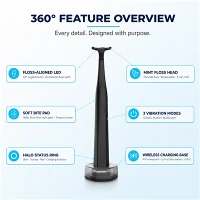
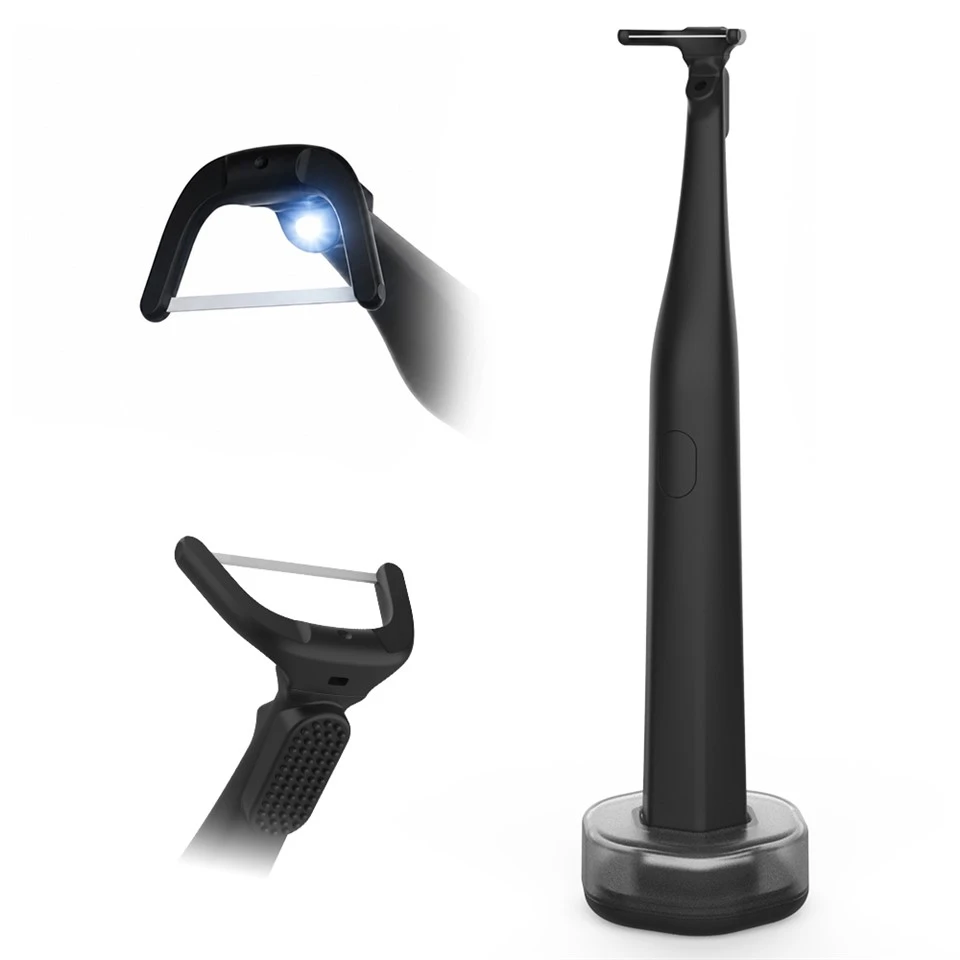
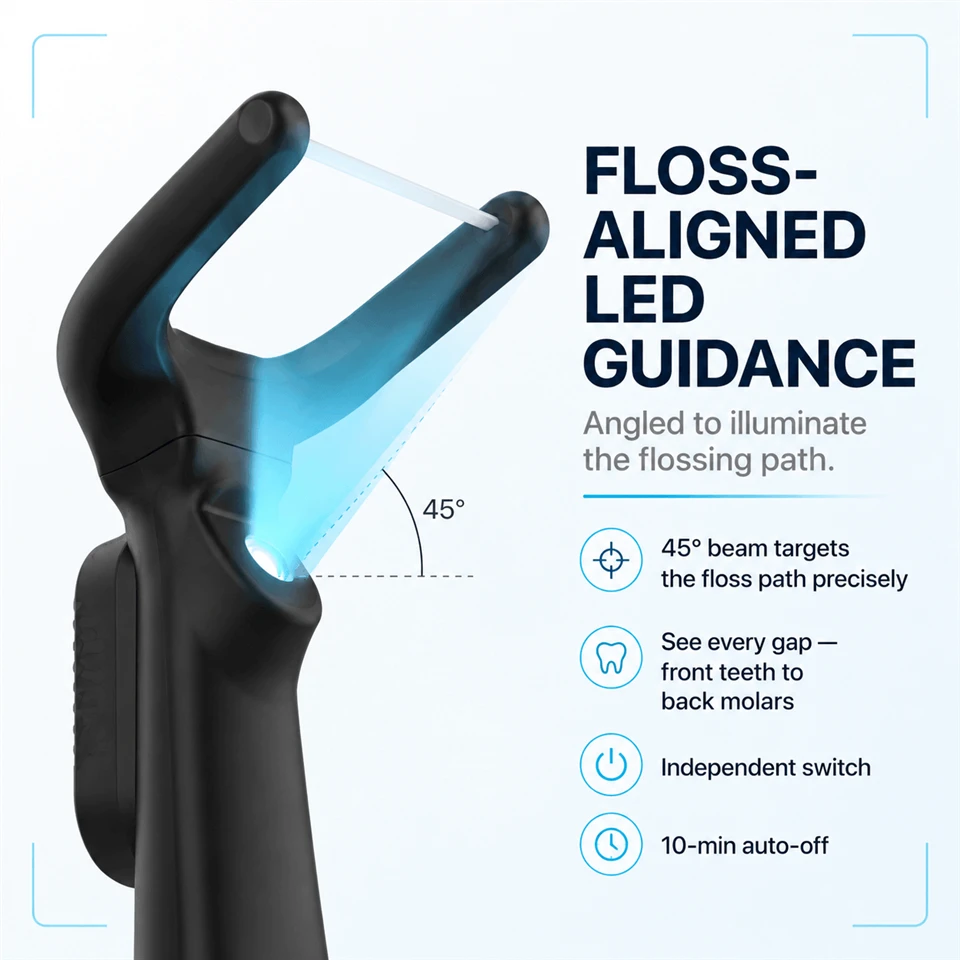
The Z9 is the range's strongest sealing proposition because it removes a boundary. Charging is inductive through a wireless dock rather than through a port in the housing, so the only dynamic interface left is the tip shaft. It publishes IPX7, drives three modes up to 18,000 vibrations per minute, and adds a 45° angled LED, a soft bite pad, mint floss heads with an integrated tongue scraper and a five-second button lock, on roughly 60 days per charge.
Gold Rose Professional - Best for Four-Mode Control
The Professional model publishes the same IPX7 rating and also charges wirelessly: 800mAh at 3.7V, a 238 × 31.5 mm body with a non-slip silicone grip, four modes from Gentle to Deep Clean, high-frequency vibration with 30° oscillation, and 50 replacement heads. The battery figure is the useful detail, because it lets a buyer calculate how many charge cycles a warranty period implies.
Z3-PRO-L and the Sensitive Gum Model - Where the Spec Sheet Stops
The Z3-PRO-L three-in-one publishes modes at 6,000, 7,200–12,000 and 12,000 vibrations per minute, 60–80 days per charge, Type-C charging and 50 tips. The Sensitive Gum model runs up to 30,000 with a 360° tip and a Type-C port at the base. Neither page states an IP number, describing rinseability in words rather than to a code - not a product defect, but a gap a distributor should close in writing before printing a claim.
Comparison Table
|
Metric |
Gold Rose Z9 |
Gold Rose Professional |
Port-Charging Sonic Flosser |
|
Ingress rating |
IPX7 |
IPX7 |
Often IPX7 or unstated |
|
Charge interface |
Wireless dock |
Wireless dock |
Type-C port plus cover |
|
Dynamic boundaries |
Tip shaft only |
Tip shaft only |
Tip shaft plus port seal |
|
Vibration drive |
Up to 18,000 vpm, 3 modes |
High frequency plus 30° oscillation, 4 modes |
6,000–30,000 vpm |
|
Battery and run time |
About 60 days |
800mAh, 3.7V, about 60 days |
Varies widely |
|
MOQ |
1,000 units |
1,000 units |
Not applicable |
Writing Dynamic Sealing Into an OEM Brief
Clauses That Separate a Rated Sample From a Durable Product
Specify the seal as a system rather than a part: lip geometry, elastomer compound and hardness, spring load, shaft finish and lubricant, all fixed on the drawing. Then state the duty cycle it must survive - rinses per day, water temperature, whether the motor runs during rinsing, and the cycles the warranty implies. Require the IPX7 claim to name the laboratory, service position and energised state. Add a jet test even where the rating does not call for one, because that is the failure mode the end user will create.
What to Ask Beyond the Rating
Ask for ageing data, not the initial result: seal compression set after accelerated ageing, and whether a production or golden sample was tested. Ask how condensation is managed inside the handle, and whether the cell compartment is sealed separately from the motor one, since a shared volume lets brush dust and moisture reach the cell. Gold Rose runs 100% inspection with a 24-hour aging test across 32 technological tests, quotes a standard minimum of 1,000 units on the range, and backs it with a one-year warranty.

Frequently Asked Questions
Q1: Does an IPX7 rating make a sonic flosser safe in the shower?
A: It certifies 30 minutes of immersion at one metre, and it does not cover water jets, because jet and immersion ratings are not cumulative. A shower stream is a jet, so ask for IPX6 or a separate jet test.
Q2: Why does a flosser fail at the neck rather than at the battery cover?
A: The neck is the only boundary with relative motion, so its seal wears and absorbs load on every rinse. A static cover carries no such duty cycle.
Q3: Can a sealed handle suffer condensation on the inside?
A: Yes. It traps assembly moisture and vapour that diffuses through the polymer, and thermal cycling condenses both on the coldest surface. A breathable membrane vent is the usual remedy, which is why the sealing brief matters as much as the IPX7 rating on the Z9.
Q4: Which Gold Rose flossers publish an ingress rating?
A: The Gold Rose Z9 and the Professional model both publish IPX7 and charge wirelessly, leaving the tip shaft as the only dynamic boundary. The Z3-PRO-L and Sensitive Gum pages describe rinseability without an IP number.
Q5: Is IEC 62133-2 certification sufficient for a lithium-powered flosser?
A: It certifies the cell to a defined environment, not the enclosure's ability to hold that environment. Pair it with ingress, thermal-cycling and seal-ageing data on the assembled product.