







You pull out a piece of string floss. You wrap it around your fingers and slide it between two tight molars. Suddenly, the string snaps downward. A sharp sting follows. When you rinse, there is red in the sink. If you wonder why do gums bleed with floss, you are not alone. Millions of people see blood every time they clean between their teeth.
Many people think bleeding is always a sign of diseased gums. That is only half the truth. Traditional string floss often causes painful floss cuts on gums through pure mechanical force. When tight teeth block the string, users push harder. The string snaps through and slices into delicate tissue. Fortunately, learning how sonic vibrating flossers prevent floss cuts shows how to reverse early gingivitis without fear of the next snap.
This guide explores the true causes of bleeding gums when flossing. It compares traditional string floss vs sonic flosser performance and outlines a 7-day protocol to help your gums heal safely.
Visual suggestion - hero image: A split-screen macro photo. On the left, a taut nylon thread cutting into an inflamed gum margin with visible bleeding. On the right, an ergonomic sonic vibrating flosser tip gliding smoothly between teeth next to healthy, pale-pink gums.
The Two Culprits Behind Bleeding Gums: Inflammation vs. Mechanical Trauma
Bleeding gums usually stem from two distinct triggers: biological infection or physical injury. Often, both happen at the same time. Knowing the difference is key to fixing the problem.
Culprit 1: Biological Inflammation (The Plaque Biofilm Trigger)
The first cause is bacterial inflammation, known as gingivitis. Between your teeth lies a shallow groove called the sulcus. Food particles and saliva gather here, feeding oral bacteria.
Within 48 hours, bacteria form a sticky plaque biofilm. As they feed, they release acidic toxins. Your body sends extra blood to fight these germs.
This reaction leaves tiny blood vessels swollen and fragile. Even light pressure causes these weak capillaries to bleed. Skipping floss allows the biofilm to thicken, worsening the infection.
Culprit 2: Mechanical Laceration (The Physics of the "Floss Snap")
The second cause comes down to pure physical force. Where two teeth touch, they form a tight contact point. Sliding thin floss past that contact requires heavy pressure.
As you push, resistance breaks suddenly. The string snaps down at high speed into the triangular gum tissue, called the papilla.
Manual floss acts like a thin wire cheese slicer. When it strikes the gum seal, it creates micro-tears called floss cuts on gums. Over months, repeated snaps can turn these cuts into permanent V-shaped floss clefts.
Your gums often bleed not from poor hygiene, but because string physically cuts your tissue.
Why Traditional String Floss Fails for Millions of Daily Users
Dentists have urged daily flossing for decades, yet most people quit. The problem is not poor willpower. It is poor product design.
The Myth of Flawless Manual Technique
Dentists advise wrapping floss into a "C-shape" around each tooth, sliding gently without snapping.
In real life, under 10% of users master this curve on rear molars. Tight spaces force awkward hand angles. When fingers slip, users yank straight down, slicing the gum collar.
The Frustrating Floss Cycle
This mechanical failure creates a harmful psychological trap that drives people away from dental care:
You skip flossing because string hurts, takes effort, and leaves bleeding cuts.
Bacterial biofilm grows undisturbed between your teeth for days or weeks.
Gum tissue swells as bacterial toxins dilate small blood vessels.
You try flossing again, but the sharp string strikes swollen tissue and draws blood.
You quit once more, believing that flossing only makes your gums worse.
Data from the Centers for Disease Control and Prevention (CDC) shows that fewer than 40% of American adults floss every day, while roughly 20% never floss at all. The fear of pain and floss cuts remains the single biggest roadblock to healthy daily habits.
Visual suggestion - infographic: A circular flow diagram illustrating "The Vicious Flossing Cycle" (Skip Flossing -> Biofilm Accumulation -> Tissue Swelling -> Floss Cuts & Bleeding -> Abandon Flossing). A bold green arrow breaks out of the circle, labeled "Sonic Micro-Vibration Breaks the Cycle."
How Sonic Vibrating Flossers Work: Micro-Kinetics over Brute Force
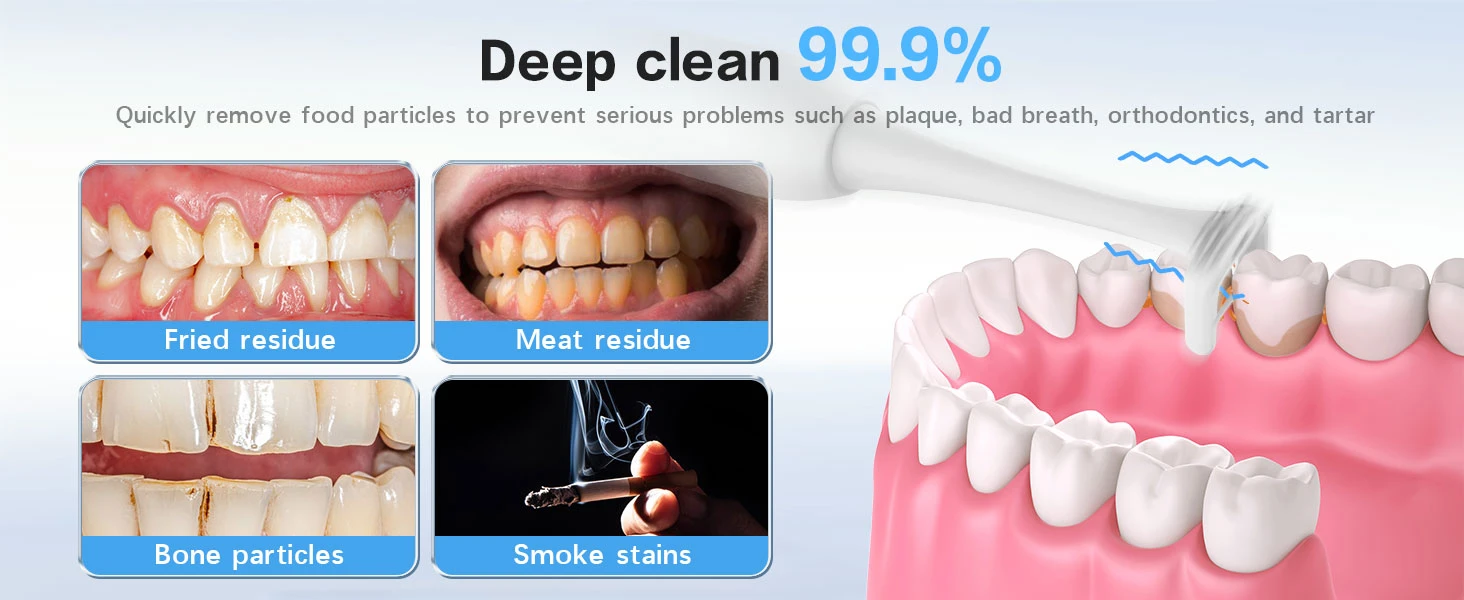
A sonic vibrating flosser for bleeding gums solves this problem with high-speed micro-vibrations instead of brute hand force.
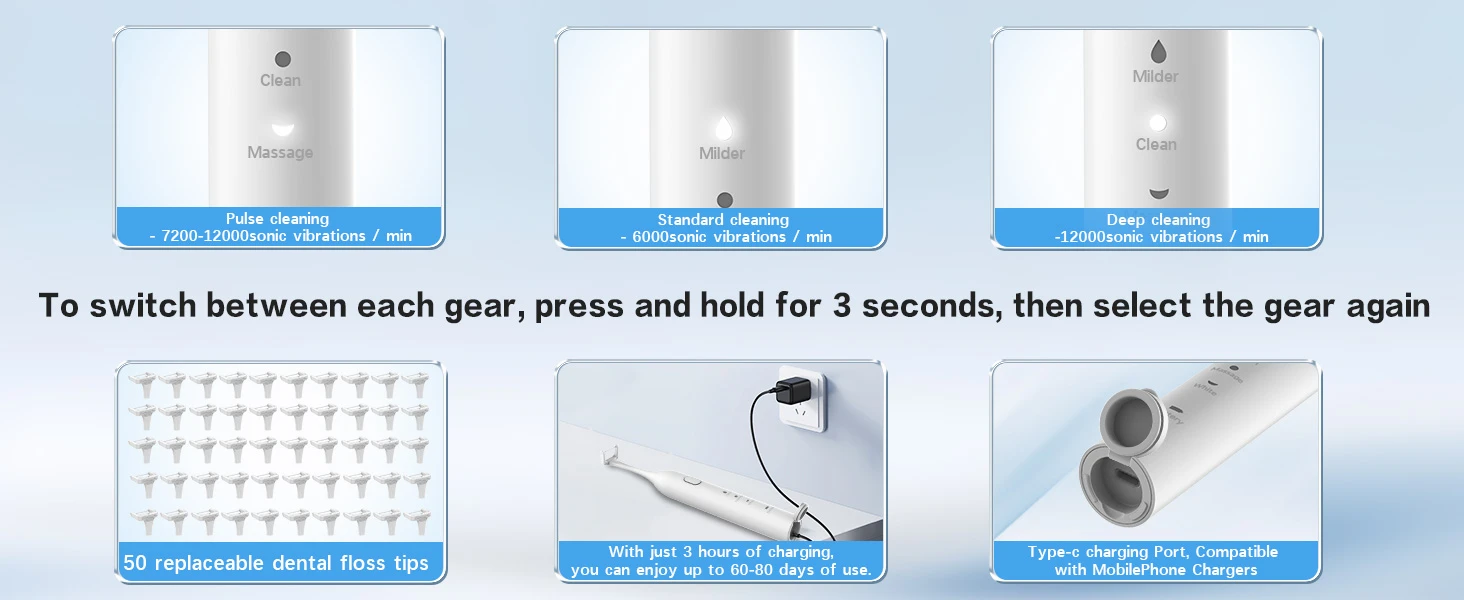
Models like the GoldRosa Z3-PRO-L 3-in-1 Electric Tooth Flosser deliver 6,000 to 12,000 vibrations per minute (VPM), completely changing how the tip enters tight spaces.
Friction Reduction Through Sonic Micro-Oscillations
Rapid sonic oscillations break surface friction against enamel. The tip glides between teeth without heavy pushing. Because you never force it, the string never snaps into the gum papilla.
Acoustic Fluid Shear Waves Beyond Physical Contact
Manual floss cleans only surfaces it touches directly. A sonic flosser agitates saliva into microscopic bubble streams. These fluid waves wash into pockets and grooves that flat string misses, loosening biofilm without scraping.
Microcirculation Massage to Promote Gum Recovery
Sonic vibration also provides gentle gum massage. Low-amplitude pulses stimulate blood circulation, bringing fresh oxygen and immune cells to swollen margins. This daily stimulation helps reverse early gingivitis within days, returning gums to firm, healthy pink tissue.
Traditional String Floss vs. Sonic Vibrating Flossers: Side-by-Side Comparison
The table below outlines how manual string floss and sonic vibrating flossers compare across key clinical, technical, and usability factors:
| Feature / Factor | Traditional Manual String Floss | Sonic Vibrating Flosser (e.g., Z3-PRO-L) |
|---|---|---|
| Primary Action | Static friction from manual pull | High-speed acoustic vibration (6,000–12,000 VPM) |
| Risk of Floss Cuts | High (frequent vertical snaps) | Near zero (smooth micro-glide entry) |
| Plaque Disruption | Contact surfaces only | Physical contact plus acoustic fluid shear waves |
| Tight Tooth Entry | Needs heavy force; slips easily | Effortless; vibration glides past tight contacts |
| Gum Tissue Impact | Mechanical trauma and slicing | Soothing micro-massage; lowers tissue swelling |
| Skill Requirement | High (demands complex C-shape wrap) | Low (point, guide, and let vibration clean) |
| Back Molar Reach | Hard; awkward fingers and cheeks | Easy; angled neck reaches rear teeth easily |
| Comfort on Sore Gums | Painful; often increases bleeding | Gentle; soft modes protect healing gums |
| Daily Habit Retention | Low (under 40% long-term use) | High (quick, clean, and pain-free routine) |
A Step-by-Step 7-Day Protocol to Reverse Early Gingivitis Without Bleeding
If your gums bleed whenever you floss, do not stop cleaning. You can help your gum tissue transition from tender and inflamed to pink and resilient in one week. Follow this simple 7-day plan:
Days 1 to 2: The Acclimation Phase
Start on the lowest speed (around 6,000 VPM). Hold the tip at a 45-degree angle to the gum line. Let vibration guide the tip into the gap without pushing. Dwell for three to five seconds per space. Minor spotting on early days is normal as trapped fluid drains.
Days 3 to 5: The Plaque Clearance Phase
Move up to standard mode (about 9,000 VPM). Tilt the tip against each tooth side for two seconds. Trace along the gum line without probing too deep. By Day 4, bleeding and soreness should drop noticeably.
Days 6 to 7: The Tissue Recovery Phase
Inspect your gums in bright light. Healthy margins look pale pink and firm. Clean every space across both arches. Within one week, daily biofilm removal and micro-massage stop bleeding in most early cases.
Visual suggestion - comparison chart: A 7-day progress bar chart showing clinical Bleeding on Probing (BOP) rates dropping from 65% on Day 1 down to under 15% on Day 7 with daily sonic flosser use.
Clinical Evidence: What Modern Research Shows
Dental science has moved well beyond plain string recommendations. Modern clinical trials confirm that powered interdental cleaners deliver substantial advantages for gum recovery:
The 2023 Randomized Clinical Trial on Sonic Interdental Care
A 2023 clinical trial (PubMed ID: 36951212) compared adults with gingivitis using either manual floss or a sonic flosser. The sonic flosser group achieved significantly greater drops in bleeding and plaque than manual floss users. Patients also reported less discomfort and better daily compliance.
The Cochrane Review on Interdental Cleaners
A landmark Cochrane review (Worthington et al., 2019) confirmed that interdental cleaning is essential for preventing gum disease. The authors noted that ease of use dictates compliance. When flossing causes cuts, patients quit. Gentle powered tools make daily care sustainable.
What to Look for in a Gentle Sonic Flosser: A Buyer's Checklist
Not all electric flossers protect tender gums equally. When shopping for personal use or evaluating OEM/ODM manufacturing for an oral-care brand, verify these essential specifications:
| Feature | Why It Matters for Bleeding Gums | What to Look For |
|---|---|---|
| Multiple Speeds | Lets sore gums start softly and build strength | 3 modes: Gentle (~6,000 VPM), Clean (~9,000 VPM), Pulse (~12,000 VPM) |
| Flexible Micro-Tips | Bends with tooth contours instead of cutting tissue | Medical-grade polymer or ultra-soft flexible filament |
| Angled Tip Design | Reaches back molars without stretching your mouth | 15° to 20° ergonomic neck curve |
| Full Waterproofing | Safe for shower use and easy sink washing | Certified IPX7 waterproof rating |
| Long Battery Life | Keeps the device ready so you never skip a day | 60 to 80 days standby, USB-C or wireless dock |
| Low Motor Noise | Keeps nighttime routines quiet and peaceful | Quiet motor running below 55 decibels |
For private-label brands and retail buyers, GoldRosa provides comprehensive OEM/ODM manufacturing for the Z3-PRO-L 3-in-1 Electric Tooth Flosser, offering custom vibration profiles, branded packaging, and full FDA and CE compliance.
Visual suggestion - video demonstration: A 30-second video clip showing a user guiding a sonic vibrating flosser smoothly between tight back molars with one hand, highlighting the lack of snap and water micro-bubbling.
When Bleeding Signals a Deeper Problem: Warning Signs
Most bleeding comes from mild gingivitis or mechanical cuts. However, consult a dentist if you notice these deeper red flags:
Bleeding Without Contact: Your gums bleed spontaneously while resting, talking, or sleeping.
Receding Gums or Loose Teeth: Gums pull back from tooth roots, creating visible gaps or shifting teeth.
Chronic Bad Breath: A sour taste or foul odor that persists after thorough brushing and mouthwash.
Pus Around Teeth: Visible white or yellow discharge along the gum margin.
Bleeding Past Two Weeks: Bleeding that fails to improve after 14 days of gentle sonic cleaning.
Bottom Line: You Do Not Have to Bleed to Have Clean Teeth
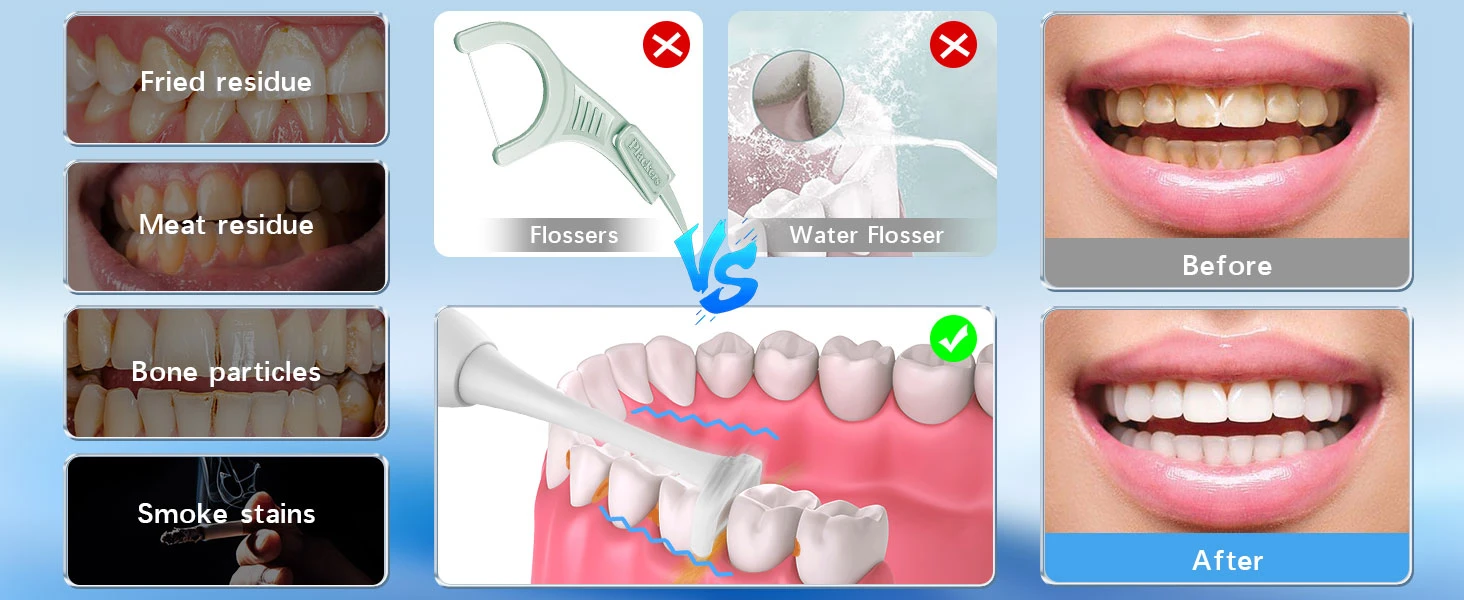
For decades, patients were told to floss harder if gums bled. Modern science proves that advice wrong. You should never have to injure your gums to clean your teeth. Comparing traditional string floss vs sonic flosser models shows that acoustic vibration clears plaque while protecting delicate tissue.
By replacing harsh hand force with sonic movement, you prevent floss cuts, heal swollen gums, and build a healthy habit that lasts for life.
Frequently Asked Questions
1. Why do gums bleed with floss even if I brush my teeth twice every day?
Toothbrush bristles only reach about 60% of your tooth surfaces. The remaining 40% sits in the tight spaces between your teeth where bacterial plaque grows untouched. Even if your teeth look clean, bacteria hiding in these gaps inflame tiny blood vessels. When string floss strikes these swollen capillaries-or snaps downward into tender tissue-the fragile vessels bleed right away.
2. How long does it take for bleeding gums to heal after switching to a sonic flosser?
For mild to moderate gingivitis, most people see bleeding drop significantly within 5 to 7 days of daily sonic flosser use. Sonic vibration breaks up plaque without slicing your gum margin, giving damaged blood vessels time to heal. If bleeding continues after two full weeks of gentle use, visit your dentist to check for deeper periodontitis or medical conditions.
3. How can I tell the difference between a floss cut and gum disease bleeding?
Gum disease bleeding comes from biological swelling: bacterial toxins make blood vessels throughout your mouth fragile, causing widespread bleeding with little to no sharp pain. A floss cut, by comparison, is an acute slice from manual string snapping past a tight contact. Floss cuts cause a sharp, stinging pain in one exact spot and leave a tiny red slit in the gum tissue.
4. Can a sonic vibrating flosser harm crowns, dental implants, or veneers?
No. Sonic micro-vibrations are engineered to remove soft plaque biofilm, not scratch hard dental materials. Quality tips made from medical-grade polymers flex safely around crown margins and implant posts. Dental specialists frequently recommend sonic flossers for implant care because they clean subgingival spaces without scratching sensitive titanium surfaces.
5. Is a sonic vibrating flosser the same thing as a water flosser?
No, although both are electric oral care tools. A water flosser uses a pressurized stream of pulsing water to rinse away food and loose plaque. A sonic vibrating flosser uses an ultra-fine, oscillating tip vibrating at 6,000 to 12,000 VPM. This design combines physical contact with acoustic micro-bubbles, giving you steady tactile control without splashing water across your bathroom mirror.
6. Should I stop flossing if my gums bleed?
Never stop interdental cleaning when you see blood. Quitting allows bacterial plaque to grow unchecked, turning mild gingivitis into severe, permanent gum disease. Instead of stopping, put away tight string floss that snaps into your gums. Switch to a gentle sonic vibrating flosser on low speed and give your gum tissue time to heal.
References
Centers for Disease Control and Prevention (CDC). Oral Health Tips for Adults & Periodontal Disease Facts. CDC Division of Oral Health, 2024.
American Dental Association (ADA). Home Oral Care and Interdental Cleaning Guidelines. ADA Science & Research Institute, 2024.
Cochrane Oral Health Group. Home Use of Interdental Cleaning Devices, in Addition to Toothbrushing, for Preventing and Controlling Periodontal Diseases and Dental Caries. Cochrane Database of Systematic Reviews, 2019.
PubMed / NCBI. Effectiveness of a Sonic-Flosser Toothbrush and Manual Toothbrush plus Dental Floss on Plaque, Gingival Bleeding and Inflammation in Adults with Naturally Occurring Gingivitis: A 4-Week Randomized Controlled Trial. International Journal of Dental Hygiene, 2023.
American Academy of Periodontology (AAP). Gum Disease Information and Gingivitis Warning Signs. AAP Patient Resources, 2024.
PubMed / NCBI. Comparative Evaluation of Powered and Manual Interdental Cleaning Devices on Gingival Health and Biofilm Control. PMC Journal of Clinical Dentistry, 2021.