




Maintaining good oral hygiene is about more than simply brushing your teeth twice a day. Some of the most difficult areas to clean are the narrow spaces between teeth and around the gumline, where plaque, food debris, and bacteria can easily accumulate. These hard-to-reach areas are also where many common dental problems begin.
As more consumers look for advanced at-home oral care solutions, ultrasonic dental cleaners have become increasingly popular. Many people are curious about whether these devices can truly clean the gaps between teeth and gums effectively, especially compared to traditional toothbrushes and floss.
The short answer is yes - ultrasonic dental cleaners can help improve cleaning in these difficult areas. By using high-frequency vibrations and cavitation technology, ultrasonic cleaners are designed to remove debris and support better oral hygiene in places that are often challenging to reach manually.
In this article, we'll explore how ultrasonic dental cleaners work, how they interact with interproximal spaces and the gumline, and why they are becoming an important addition to modern oral care routines.
What Is an Ultrasonic Dental Cleaner?
An ultrasonic dental cleaner is a device that uses high-frequency sound waves to help clean teeth, dental appliances, and oral surfaces. Unlike traditional brushing methods that rely mainly on physical scrubbing, ultrasonic cleaning technology uses vibration energy and water movement to loosen debris and plaque.
These devices typically operate at frequencies between 20,000 and 45,000 hertz. At these high frequencies, ultrasonic waves create tiny microscopic bubbles in water through a process known as cavitation.
When the bubbles rapidly collapse, they release small bursts of energy that help dislodge plaque, bacteria, and food particles from surfaces. This process creates a cleaning effect that can reach narrow gaps and irregular areas more effectively than manual brushing alone.
Ultrasonic technology is already widely used in professional dental clinics for teeth cleaning and tartar removal. Modern home-use ultrasonic dental cleaners bring similar principles into everyday oral care routines.
Why Cleaning Between Teeth and Gums Matters
The spaces between teeth and around the gumline are some of the most vulnerable areas in the mouth. These areas can trap food particles and moisture, creating an environment where bacteria thrive.
If plaque is not removed regularly, it can harden into tartar and contribute to oral health issues such as bad breath, cavities, gingivitis, and periodontal disease.
Traditional toothbrushes are effective for cleaning visible tooth surfaces, but they often struggle to fully reach tight interproximal spaces or areas slightly below the gumline. Dental floss can help, but many people find flossing uncomfortable, time-consuming, or difficult to perform consistently.
This is one reason why ultrasonic dental cleaners have gained attention. Their cleaning action is designed to improve access to difficult areas without relying entirely on manual pressure.

How Ultrasonic Dental Cleaners Clean Interproximal Spaces
Interproximal spaces are the small gaps between neighboring teeth. These areas are common locations for plaque buildup because they are difficult to access with standard toothbrush bristles.
Cavitation Helps Reach Narrow Gaps
One of the biggest advantages of ultrasonic cleaning technology is cavitation. The microscopic bubbles created during ultrasonic cleaning can move through water and reach tiny spaces around the teeth.
As these bubbles collapse, they generate energy that helps loosen debris and plaque from difficult-to-reach areas. Since the cleaning action occurs through water movement rather than direct brushing alone, ultrasonic dental cleaners can help improve cleaning coverage in narrow spaces.
This makes them especially useful for people with crowded teeth, braces, aligners, or dental restorations where traditional brushing may be less effective.
Water Agitation Improves Debris Removal
Ultrasonic vibrations also create movement in the surrounding water or cleaning solution. This agitation helps flush loosened debris away from interproximal spaces.
Unlike manual brushing, which relies heavily on contact pressure, ultrasonic cleaning uses fluid motion to support cleaning performance. This can help reduce plaque buildup in areas where food particles commonly become trapped.
The gentle movement of water may also feel more comfortable for users with sensitive gums.
Can Ultrasonic Dental Cleaners Help Clean the Gumline?
The gumline is another important area for oral hygiene. Plaque accumulation near the gums can contribute to inflammation and gum disease if not cleaned properly.
Gentle Cleaning Around Sensitive Areas
Ultrasonic dental cleaners can help clean along the gumline by loosening plaque and bacteria through vibration energy and water movement. Because the cleaning action does not depend entirely on aggressive scrubbing, ultrasonic cleaning may feel gentler on sensitive gum tissue.
Many users appreciate that ultrasonic cleaning can support oral hygiene while minimizing irritation compared to overly forceful brushing techniques.
Supporting Gum Health
Keeping the gumline clean is essential for reducing the risk of gingivitis and periodontal problems. While home ultrasonic cleaners are not a replacement for professional periodontal treatment, they may help improve daily plaque management around the gums.
Regular cleaning around the gumline can also help reduce bad breath and improve overall oral freshness.
Comparing Ultrasonic Dental Cleaners With Traditional Oral Care Tools
Ultrasonic dental cleaners are often compared with toothbrushes, dental floss, and water flossers. Each tool offers different benefits for oral hygiene.
Ultrasonic Cleaners vs. Toothbrushes
Traditional toothbrushes rely on physical bristle contact to remove plaque. While effective for general cleaning, toothbrushes may have difficulty reaching tight gaps between teeth.
Ultrasonic dental cleaners use vibration and cavitation to improve cleaning access in narrow areas. This technology can complement traditional brushing by targeting places that may be harder to clean manually.
However, ultrasonic cleaning should not completely replace daily brushing. Instead, it works best as part of a complete oral hygiene routine.
Ultrasonic Cleaners vs. Dental Floss
Dental floss remains one of the most effective tools for cleaning directly between teeth. However, many people skip flossing because it can feel inconvenient or uncomfortable.
Ultrasonic cleaning offers a more automated approach that may encourage more consistent oral care habits. While floss still provides direct physical cleaning between teeth, ultrasonic technology can help support plaque removal in surrounding areas.
For best results, many dental professionals recommend combining multiple oral hygiene methods rather than relying on a single tool alone.
Ultrasonic Cleaners vs. Water Flossers
Water flossers use pressurized water streams to clean between teeth and along the gumline. Ultrasonic dental cleaners differ because they use high-frequency vibrations and cavitation effects.
Both devices help improve access to hard-to-reach areas, but ultrasonic cleaners may provide additional cleaning support through microscopic bubble activity and vibration energy.
Some consumers choose to combine water flossing and ultrasonic cleaning for a more comprehensive oral care routine.
Benefits of Using an Ultrasonic Dental Cleaner
The growing popularity of ultrasonic dental cleaners is driven by several practical advantages.
Improved Cleaning Efficiency
Ultrasonic technology helps loosen debris and plaque in areas that are difficult to access manually. This can support more thorough daily cleaning, especially for people with orthodontic appliances or crowded teeth.
Comfortable User Experience
Many users find ultrasonic cleaning gentler than aggressive manual brushing. The vibration-based cleaning process can feel smoother and less abrasive on sensitive gums and teeth.
Convenience for Daily Oral Care
Modern ultrasonic dental cleaners are designed for easy at-home use. Compact sizes, rechargeable batteries, and ergonomic handles make them convenient additions to daily hygiene routines.
Some models also include multiple cleaning modes and interchangeable tips for different oral care needs.
Suitable for Dental Appliances
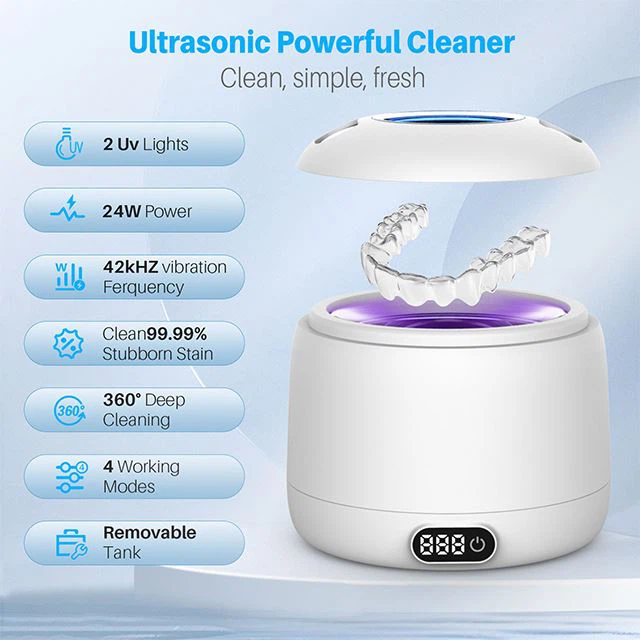
Ultrasonic cleaners are commonly used to clean retainers, aligners, dentures, mouth guards, and whitening trays. The cavitation process helps remove buildup from small crevices without harsh scrubbing.
This makes ultrasonic cleaning technology versatile for both personal oral hygiene and appliance care.

Features to Look for in an Ultrasonic Dental Cleaner
Not all ultrasonic cleaners offer the same performance or functionality. Consumers should evaluate several factors before choosing a device.
Adjustable Cleaning Modes
Different intensity settings allow users to customize their cleaning experience based on comfort and sensitivity levels.
Ergonomic Design
A comfortable grip and lightweight design make the device easier to use consistently.
Multiple Cleaning Tips
Some ultrasonic cleaners include specialized tips designed for gumlines, interproximal spaces, or dental appliances.
Durable and Safe Materials
High-quality materials improve durability and ensure safe use inside the mouth. Waterproof construction is also important for convenience and hygiene.
The Role of Professional Dental Care
Although ultrasonic dental cleaners can improve at-home oral hygiene, they are not substitutes for professional dental treatment.
Dentists and dental hygienists use advanced professional equipment to remove hardened tartar and perform deep cleanings below the gumline. Regular dental checkups remain essential for identifying cavities, gum disease, and other oral health concerns.
Ultrasonic dental cleaners work best as part of a complete oral care routine that includes brushing, flossing, and professional cleanings.
Why Consumers Are Embracing Advanced Oral Care Technology
Modern consumers are increasingly interested in smart personal-care technology. From electric toothbrushes to ultrasonic cleaning systems, people want products that improve convenience, efficiency, and hygiene.
Oral health awareness has also grown significantly in recent years. Consumers now understand that preventive care plays an important role in long-term wellness.
Ultrasonic dental cleaners align perfectly with these trends by offering a modern approach to everyday oral hygiene.
As technology continues to evolve, more advanced ultrasonic cleaning systems are likely to become common in home oral care routines.
Final Thoughts
So, can ultrasonic dental cleaners effectively clean the gaps between teeth and gums?
In many cases, yes. Through cavitation technology, high-frequency vibrations, and water agitation, ultrasonic dental cleaners can help loosen plaque and debris in difficult-to-reach areas that traditional brushing may miss.
While they are not replacements for professional dental care or traditional oral hygiene practices, they can serve as valuable tools for improving daily cleaning routines and supporting better gum health.
For consumers looking to enhance their oral hygiene, especially around interproximal spaces and the gumline, ultrasonic dental cleaners offer a convenient and modern solution.

FAQ
1. Can ultrasonic dental cleaners remove plaque between teeth?
Yes. Ultrasonic dental cleaners use cavitation and vibration technology to help loosen plaque and debris from narrow spaces between teeth.
2. Are ultrasonic dental cleaners safe for gums?
Most ultrasonic dental cleaners are designed to be gentle on gums when used correctly. Many users find them more comfortable than aggressive brushing.
3. Can ultrasonic cleaners replace flossing?
Ultrasonic cleaning can support oral hygiene, but dental floss still provides direct cleaning between teeth. Many dental professionals recommend using both methods together.
4. Are ultrasonic dental cleaners suitable for braces and retainers?
Yes. Ultrasonic cleaning technology is commonly used for cleaning braces, retainers, aligners, dentures, and other dental appliances.
5. How often should I use an ultrasonic dental cleaner?
Usage frequency depends on the product instructions and individual oral care needs. Many users include ultrasonic cleaning as part of their daily or weekly oral hygiene routine.
References
American Dental Association - Oral Hygiene Recommendations
https://www.ada.org
National Institute of Dental and Craniofacial Research - Gum Disease Information
https://www.nidcr.nih.gov
Mayo Clinic - Oral Health Basics
https://www.mayoclinic.org
Cleveland Clinic - Plaque and Tartar Prevention
https://health.clevelandclinic.org
Healthline - Benefits of Ultrasonic Dental Cleaning
https://www.healthline.com