




Chronic nocturnal snoring affects more than forty percent of adult populations worldwide, causing severe sleep fragmentation, morning cognitive impairment, and relationship strain for bed partners. As awareness of sleep health and sleep hygiene continues to surge, consumers and institutional procurement channels increasingly turn to acoustic earplugs as an immediate, non-invasive countermeasure.
However, a fundamental clinical and acoustic question remains: do earplugs truly work for snoring, and what are their real-world attenuation limits?
The clinical reality is that high-grade earplugs significantly reduce snoring noise below the psychological awakening threshold, transforming disruptive sleep environments into restful ones. However, earplugs cannot completely eliminate heavy snoring due to the biophysical limits of bone conduction. As an established OEM/ODM manufacturer specializing in medical-grade silicone ear protection and sleep wellness solutions, Gold Rose provides this comprehensive technical guide analyzing acoustic decibel physics, material biomechanics, clinical attenuation limits, and private-label procurement benchmarks.

The Acoustic Physics of Snoring and Ear Canal Attenuation
Decibel Levels and Frequency Signatures of Human Snoring
Snoring is generated by aerodynamic turbulence vibrating the soft palate, uvula, and pharyngeal tissues during sleep inspiration. In acoustic terms, simple benign snoring produces sound pressure levels ranging between 40 and 60 A-weighted decibels (dBA), roughly equivalent to conversational speech or background ambient noise. In contrast, severe obstructive sleep apnea (OSA) snoring routinely registers between 70 and 90 dBA at bedside distance, reaching volume levels comparable to a vacuum cleaner or busy city traffic. Furthermore, human snoring predominantly concentrates acoustic energy in the low-to-mid frequency spectrum, specifically between 60 Hz and 1,000 Hz, presenting an acoustic challenge because lower sound wavelengths penetrate physical barriers far more readily than high-frequency treble.
Airborne Sound Transmission vs. Bone Conduction Limits
The human auditory system perceives environmental sound through two distinct pathways: airborne conduction via the external auditory canal and bone conduction via cranial resonance. Passive earplugs function strictly by occluding the external acoustic meatus, blocking airborne sound pressure from reaching the tympanic membrane. However, when environmental noise exceeds 40 to 45 dBA, sound waves induce subtle mechanical vibrations directly into the temporal bone and skull bones, bypassing the ear canal entirely to stimulate the cochlea. Consequently, no passive hearing protector, regardless of manufacturer claim, can attenuate snoring volume beyond approximately 33 to 36 decibels because natural cranial bone conduction sets the absolute biological threshold of human hearing protection.
Evaluating Earplug Materials for Snoring Attenuation
Molded Medical-Grade Silicone (Best Overall for Ergonomics and Hygiene)
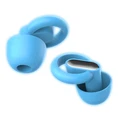
Medical-grade liquid silicone rubber (LSR) earplugs, engineered in dual-flange or tri-flange ergonomic geometries, represent the modern benchmark for reusable nocturnal hearing protection. Liquid silicone possesses an ultra-soft durometer-typically between 20 and 30 Shore A-enabling the material to conform dynamically to the contours of the ear canal without exertion or friction. Silicone earplugs deliver a certified Noise Reduction Rating (NRR) of 26 to 32 dB, providing optimal attenuation across mid-frequency snoring profiles. Because medical-grade silicone is inherently hypoallergenic, non-porous, and washable, it eliminates the bacterial accumulation and cerumen contamination associated with disposable porous materials, making it ideal for daily long-term use.
Slow-Recovery Polyurethane (PU) Memory Foam
Disposable expanded polyurethane (PU) foam earplugs have long served as a traditional solution for general occupational noise exposure. When compressed into a narrow cylinder, the open-cell foam expands slowly inside the ear canal, creating an acoustic seal with laboratory NRR ratings reaching 29 to 33 dB. However, foam presents severe drawbacks for nocturnal sleep: the continuous outward radial expansion pressure against the ear canal lining frequently induces ischemic chondritis and acute ear pain for side sleepers. Furthermore, porous open-cell foam rapidly absorbs perspiration, skin sebum, and earwax, creating an unsanitary environment that fosters external auditory canal infections if reused.
Moldable Silicone Putty and Paraffin Wax
Moldable paraffin wax and silicone putty earplugs operate by sealing only the concha bowl and the opening of the ear canal rather than penetrating deep into the acoustic canal. This design eliminates internal canal pressure, making moldable plugs popular among individuals with extremely narrow or sensitive ear canals. However, because they do not seat within the deeper cartilaginous canal, their acoustic attenuation is lower, typically yielding an NRR between 18 and 24 dB. While sufficient for gentle rhythmic breathing sounds, moldable wax is often inadequate for blunting the high-intensity acoustic spikes of severe pharyngeal collapse.

Real-World Decibel Reduction: What Sleepers Can Actually Expect
Understanding NRR in Practical Sleep Environments
In real-world sleep environments, the laboratory-tested Noise Reduction Rating (NRR) does not translate to a direct subtraction from environmental decibels. According to established occupational and acoustic health standards, the realistic noise reduction of an earplug is calculated by subtracting 7 from the stated NRR and dividing the remainder by two. For instance, a high-performance medical silicone earplug with an NRR of 31 dB provides an estimated derated reduction of 12 dB in everyday consumer use, with higher reductions achieved when properly fitted. When confronted with a 65 dBA snoring partner, attenuating the sound to approximately 50 dBA reduces the acoustic power significantly, dropping the noise below the awakening threshold of sleep stage 3 and 4 deep restorative sleep.
Preserving Critical Emergency Alarm Audibility
A primary safety concern voiced by consumers is whether sleeping with high-attenuation earplugs will prevent them from awakening to critical emergency signals, such as residential smoke alarms, child monitors, or personal morning alarm clocks. High-frequency acoustic alarms operate at standardized industrial frequencies between 2,500 Hz and 4,000 Hz at volumes exceeding 85 dBA. Because passive earplugs deliver predictable attenuation profiles rather than absolute acoustic isolation, emergency signals and digital smartphone alarms positioned nearby remain audible through residual bone conduction and acoustic transmission, providing safe noise protection without isolating users from life-safety alerts.
Clinical Safety Protocols and Side-Sleeper Optimization
Preventing Impacted Cerumen and Otitis Externa
While high-grade earplugs are completely safe for chronic use, improper hygiene protocols can compromise ear canal health. Inserting non-sterile earplugs repeatedly without routine sanitization transfers opportunistic pathogens into the warm, humid ear canal, predisposing the user to otitis externa (swimmer's ear). Furthermore, pushing plugs too forcefully into the bony portion of the canal can compress natural cerumen (earwax) against the tympanic membrane, resulting in cerumen impaction, temporary conductive hearing loss, and tinnitus. Users must wash reusable silicone plugs with mild soap and warm water daily, dry them thoroughly, and insert them using clean hands.
Structural Engineering for Side Sleepers
Over sixty percent of the global population sleeps on their side, a position that creates severe mechanical challenges for conventional earplugs. Standard cylindrical or protruding earplug stems press against the pillow, transferring lateral mechanical force into the acoustic canal and causing morning cartilaginous soreness. To solve this clinical vulnerability, modern sleeping earplugs must incorporate an ultra-low-profile concha-lock structure with a shortened, flexible pull-tab. This flush profile prevents pillow contact and dislodgement while maintaining an uninterrupted acoustic seal throughout frequent nocturnal head shifts.

Gold Rose Engineering: Advanced Acoustic Protection for OEM/ODM Brands
As a specialized OEM/ODM manufacturer of precision medical-grade silicone personal care and sleep wellness appliances, Gold Rose designs acoustic solutions that balance laboratory-grade decibel attenuation with nighttime ergonomic comfort. Gold Rose sleep earplug platforms are molded from certified biocompatible liquid silicone rubber (LSR), delivering an optimal 28–32 dB NRR rating without exerting painful outward radial pressure. Our multi-tier acoustic acoustic-filter architectures selectively dampen low-frequency snoring rumbles while allowing higher emergency frequencies to penetrate, ensuring both undisturbed rest and personal safety.
For international retail brands, pharmacies, and dental/sleep distributor networks, Gold Rose provides comprehensive turnkey manufacturing backed by ISO 13485 medical device quality systems, FDA registrations, and CE, RoHS, and BSCI certifications. From proprietary ergonomic tooling, custom silicone durometer formulation, and dual-layer acoustic filtering to bespoke luxury packaging, travel carry cases, and private-label branding, Gold Rose enables global B2B clients to scale reliable, clinically compliant sleep wellness product lines with competitive volume margins.
Frequently Asked Questions
Q1: Can earplugs completely block out a loud snoring partner?
No, earplugs cannot completely silence loud snoring because human cranial bone conduction naturally transmits sound vibrations directly to the inner ear above 40 to 45 decibels. However, a properly fitted high-NRR earplug reduces snoring volume down to a faint, tolerable background level that prevents sleep fragmentation.
Q2: Is it safe to wear silicone earplugs every night while sleeping?
Yes, wearing medical-grade silicone earplugs every night is safe provided you maintain daily washing hygiene and do not force them excessively deep into the ear canal. High-quality silicone is hypoallergenic, does not release irritating chemical residues, and prevents moisture-trapping risks associated with porous foam.
Q3: Why do my ears hurt in the morning after sleeping with earplugs?
Morning ear soreness is typically caused by improper size selection, excessive outward radial pressure from expanding foam, or rigid stems pressing against your pillow if you are a side sleeper. Switching to an ergonomically contoured, low-profile silicone earplug with an ultra-soft Shore A durometer eliminates mechanical pressure against the sensitive ear canal lining.
Q4: Does Gold Rose manufacture private-label earplugs designed specifically for sleep?
Yes, Gold Rose provides end-to-end OEM/ODM manufacturing of ergonomic sleep earplugs, multi-flange noise reduction plugs, and custom acoustic-filter protectors molded from certified medical liquid silicone. Global distributors and consumer wellness brands can explore complete private-label specifications and manufacturing capabilities directly through goldrosa.com.
Q5: What Noise Reduction Rating (NRR) should I look for in snoring earplugs?
For effective snoring dampening, look for earplugs with a certified NRR between 27 dB and 33 dB. This rating provides sufficient acoustic attenuation to suppress mid-frequency snoring rumbles while ensuring you can still awaken to high-frequency domestic smoke detectors and morning alarms.
References
American Academy of Otolaryngology–Head and Neck Surgery. (2023). Clinical Practice Guideline: Adult Snoring and Obstructive Sleep Apnea Evaluation. AAO-HNS Health Resources. https://www.enthealth.org/conditions/snoring/
National Institute for Occupational Safety and Health. (2022). Criteria for a Recommended Standard: Occupational Noise Exposure and Hearing Protector Attenuation. Centers for Disease Control and Prevention. https://www.cdc.gov/niosh/topics/noise/
Journal of Clinical Sleep Medicine. (2021). The impact of acoustic attenuation devices on sleep architecture and nocturnal awakenings among bed partners of snorers. American Academy of Sleep Medicine.
Centers for Disease Control and Prevention. (2020). Infection Prevention and Ear Hygiene for Reusable Hearing Protection. CDC Oral and Auditory Health. https://www.cdc.gov/hygiene/
Gold Rose. Precision Medical-Grade Silicone Earplugs and Sleep Wellness OEM Solutions. https://www.goldrosa.com/earplugs/