


In modern personal oral care engineering, acoustic performance represents a primary indicator of mechanical refinement and user compliance.
While manual string floss operates silently, powered interdental devices-encompassing hydrodynamic water flossers and high-frequency sonic vibrating flossers-rely on electromechanical drive trains to dislodge interproximal plaque and food residues.
The interaction between internal electric motors, mechanical gearing, fluid compression pumps, and structural enclosures inevitably generates acoustic emissions during operation.
For international oral care distributors, pharmacy retail chains, and medical device brand buyers, evaluating electric tooth flosser noise requires objective acoustic metrics rather than subjective claims.
Operating sound levels directly influence consumer habit formation, household morning discretion, and perceived product quality.
Examining the physical sources of flosser noise, sound attenuation engineering, standardized decibel benchmarks, and certified OEM manufacturing standards provides a technical framework for evaluating oral appliances in international commercial distribution.
Acoustic Physics: Sources of Mechanical and Fluid Noise in Powered Flossers
The operational sound profile of an electric tooth flosser originates from three distinct mechanical and fluid dynamic mechanisms:
Motor Commutation and Drive Train Vibration
The primary source of acoustic energy within powered interdental devices is the internal electric motor.
In traditional or entry-level models, brushed DC motors generate continuous mechanical friction between carbon brushes and the rotating copper commutator, producing high-frequency electrical whining and mechanical vibration.
In advanced appliances, magnetic levitation or brushless DC motors replace physical commutators with electronic commutation, drastically lowering friction and motor noise.
However, secondary gearboxes, drive shafts, and reciprocating cams that translate rotational motor power into linear motion still produce meshing noise and mechanical vibrations that propagate through the internal chassis.
Reciprocating Fluid Compression and Hydraulic Cavitation
In oral irrigators (water flossers), the fluid delivery mechanism represents a major acoustic contributor.
Generating pulsating fluid streams requires high-speed reciprocating piston or diaphragm pumps cycling between 1,200 and 1,800 pulses per minute.
Each stroke creates rapid pressure differentials within the fluid manifold, producing intermittent hydraulic impact sounds.
Furthermore, rapid suction cycles within the pump chamber can induce transient hydraulic cavitation-the formation and sudden implosion of microscopic vapor bubbles within the fluid stream-which emits sharp, high-frequency acoustic clicks as fluid accelerates through the narrow exit nozzle.
Sonic Filament Resonance and Acoustic Air Agitation
In waterless sonic vibrating flossers, fluid pump noise is eliminated entirely.
Instead, acoustic emissions stem from high-velocity oscillatory mechanics operating between 18,000 and 30,000 vibrations per minute.
The rapid oscillation of the polymer floss filament or elastomeric tip against air generates soft aerodynamic shearing tones.
When the flosser head engages tooth enamel and interdental contact zones, mechanical acoustic energy transfers into the craniofacial bone structure, creating subjective bone-conducted sound that seems louder to the user than to nearby observers.
Decibel Benchmarks: Measuring Sound Profiles Against Household Baselines
Evaluating oral appliance noise requires referencing standardized acoustic decibel (dB) measurements across everyday acoustic baselines:
Quantitative Decibel Scale in Powered Flossers
Acoustic testing conducted in anechoic chambers at a standardized distance of one meter reveals distinct noise ranges across flosser categories:
High-Performance Water Flossers: Countertop and high-pressure handheld oral irrigators typically operate between 60 dB and 72 dB. The higher noise level reflects the structural resonance of reciprocating mechanical pumps operating under hydraulic pressures reaching 30 to 110 PSI.
Ultra-Quiet Sonic Vibrating Flossers: Waterless sonic flossers operate at significantly lower sound levels, typically between 45 dB and 58 dB. Without fluid pumps or high-pressure valves, these units emit a steady, muted hum comparable to premium sonic electric toothbrushes.
Comparative Household Context
To contextualize these measurements for consumer packaging and retail positioning:
A whisper or quiet bedroom background registers at approximately 30 dB.
Normal, conversational speech between two individuals at one meter measures between 50 dB and 60 dB.
Standard powered interdental flossers (45 dB to 68 dB) fall directly within or slightly above ambient conversational sound levels.
A standard household hair dryer or blender operates between 80 dB and 90 dB, representing an acoustic power output over ten to one hundred times greater than a personal flosser.
Noise Reduction Engineering: Structural Damping and Chassis Acoustic Isolation
Top-tier medical device manufacturers implement sophisticated acoustic damping architectures to lower sound emissions and enhance consumer comfort:
Dynamic Motor Balancing and Floating Suspension Gaskets
To prevent internal motor vibration from converting into structural casing noise, advanced flossers utilize internal floating suspension architectures.
The motor and drive assembly are mounted within custom-molded liquid silicone rubber (LSR) or thermoplastic elastomer (TPE) isolation boots.
These elastomeric dampers absorb radial and axial mechanical oscillations before they reach the rigid external chassis.
Furthermore, dynamic laser balancing of motor armatures eliminates rotational eccentricity, smoothing motor rotation and eliminating low-frequency handle resonance.
Acoustic Enclosure Baffling and Resonance-Damped Resins
The external housing of an electric flosser acts as an acoustic resonator.
Uninsulated thin-walled plastics amplify internal motor and pump noise.
High-reliability manufacturers engineer dual-wall enclosures incorporating internal acoustic baffling chambers that trap and dissipate high-frequency sound waves.
By utilizing dense, medical-grade acrylonitrile butadiene styrene (ABS) or polycarbonate (PC) compounds with high internal acoustic damping loss factors, manufacturers prevent thin-wall flexure, deadening sound transmission and producing a solid, quiet operational feel.
Sourcing Benchmark: Advanced Low-Noise Interdental Platforms from Gold Rose
International oral care distributors, pharmacy chains, and private-label retail brands can source verified, low-noise personal hygiene appliances manufactured by Huizhou Gold Rose Technology Co., Ltd.:
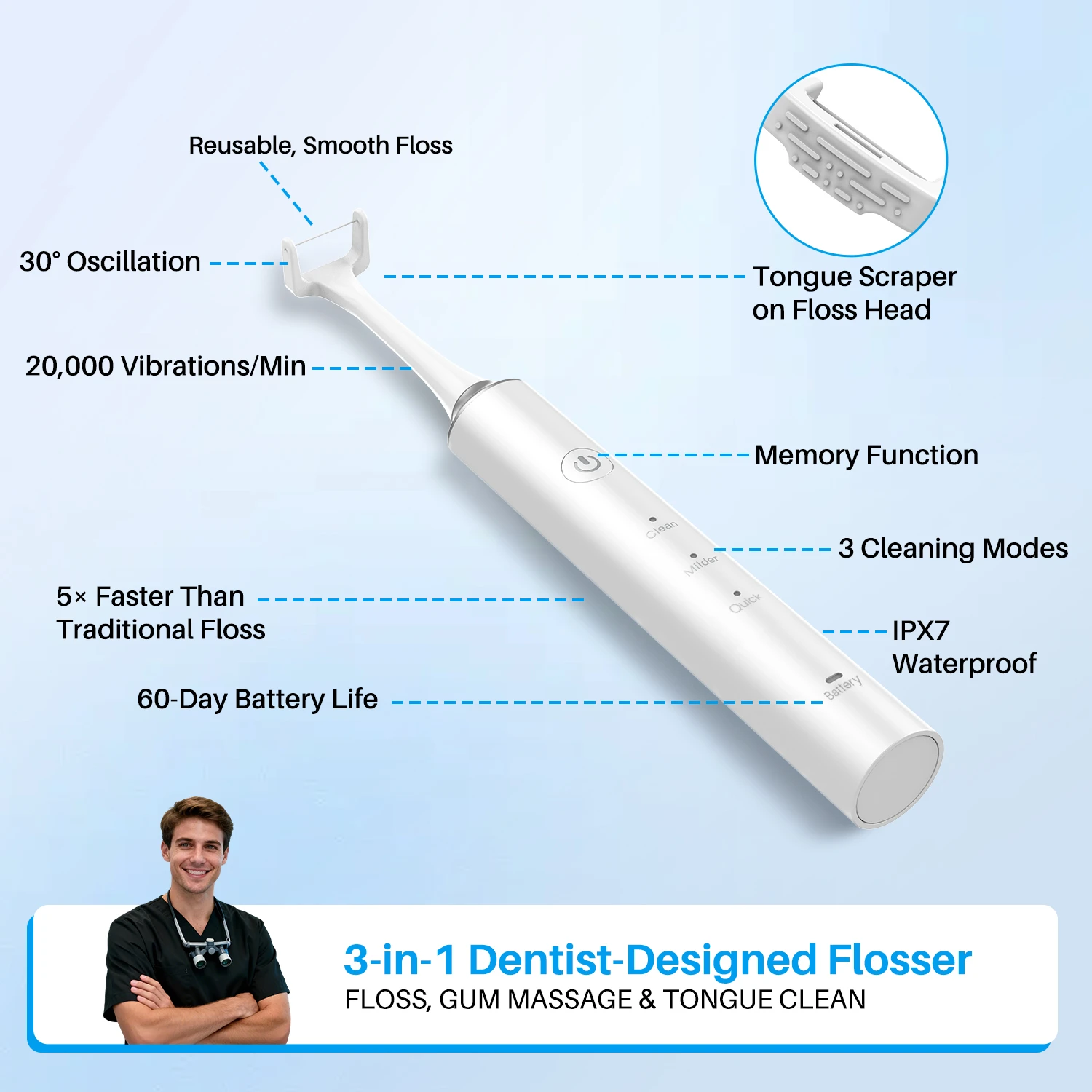
The Gold Rose Electric Flosser With LED Lamp represents an acoustic benchmark in visible, precision interproximal debridement.
Engineered with an ultra-quiet internal drive system delivering three customizable vibration profiles (reaching up to 18,000 vibrations per minute), this platform generates a soft acoustic hum that eliminates invasive pump noise.
The appliance incorporates a 45-degree angled LED inspection beam that brightly illuminates hard-to-reach molar gaps, paired with a soft bite pad that guides mint-infused floss filaments smoothly between tight teeth without excessive force.
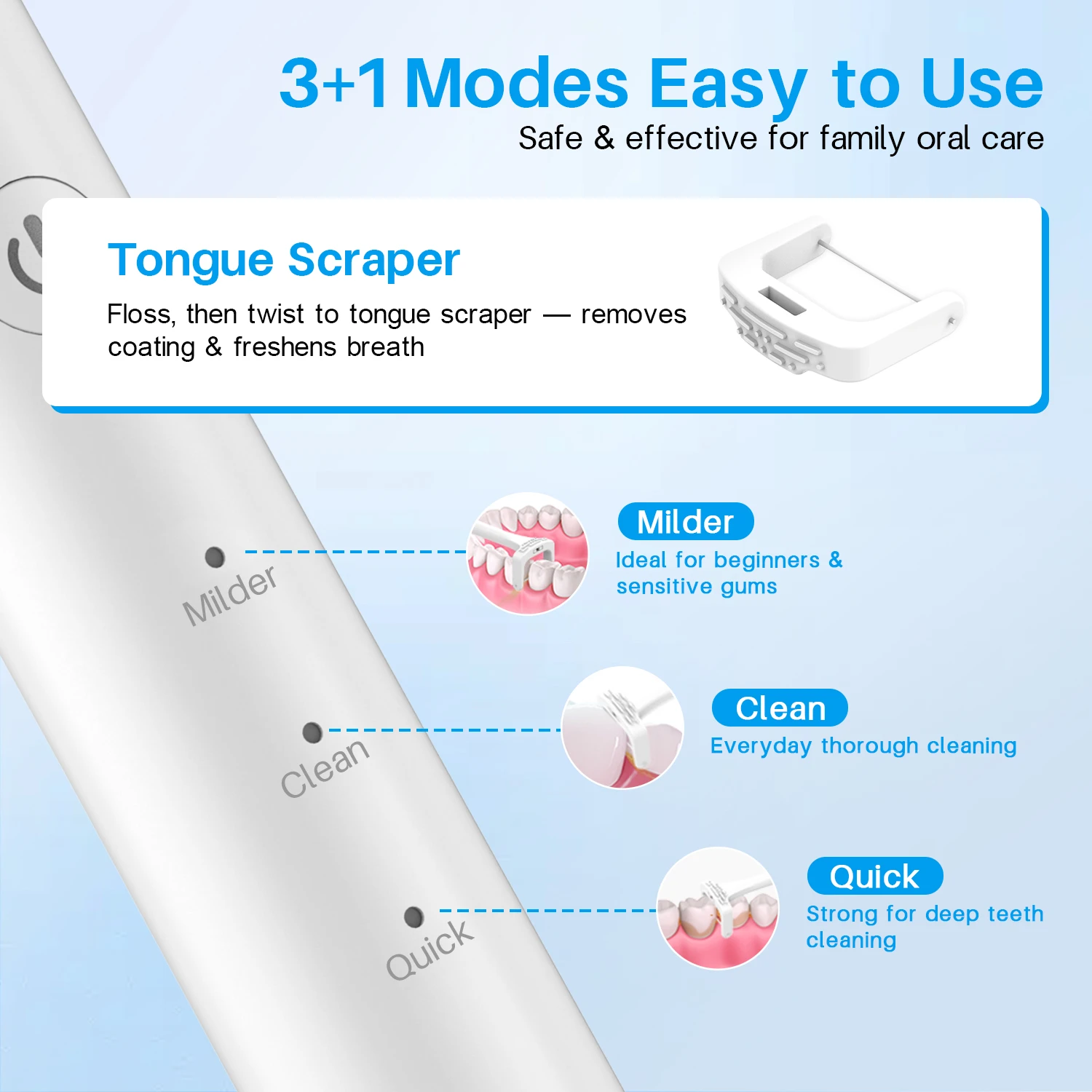
Complete with an integrated tongue scraper for breath freshness, a long-lasting battery supporting 60 days of continuous use, a wireless charging dock, and a five-second travel lock to prevent accidental activation, this model is supported by factory SMT production lines and automated optical inspection (AOI) with minimum order quantities starting at 1,000 units.
The Gold Rose Electric Flosser for Sensitive Gum features an optimized, sound-damped high-frequency sonic motor operating at up to 30,000 vibrations per minute.
Designed specifically for sensitive periodontal tissues, the appliance delivers up to 99.9% food residue removal with minimal mechanical sound.
Constructed from durable, environmentally friendly ABS resin that dampens internal vibration, the unit features a 30-degree oscillating action, a 360-degree rotating head to eliminate blind spots, and three intuitive cleaning modes (Gentle, Clean, Massage).
With a bottom-mounted Type-C charging port, full-body waterproof construction, an integrated tongue scraper, and comprehensive 1-year warranty coverage, this platform offers turnkey OEM/ODM customization from 1,000 units.
The Gold Rose Professional Electric Flosser combines an ergonomic 238 by 31.5 mm non-slip silicone grip with an acoustically isolated 3.7 V drive architecture.
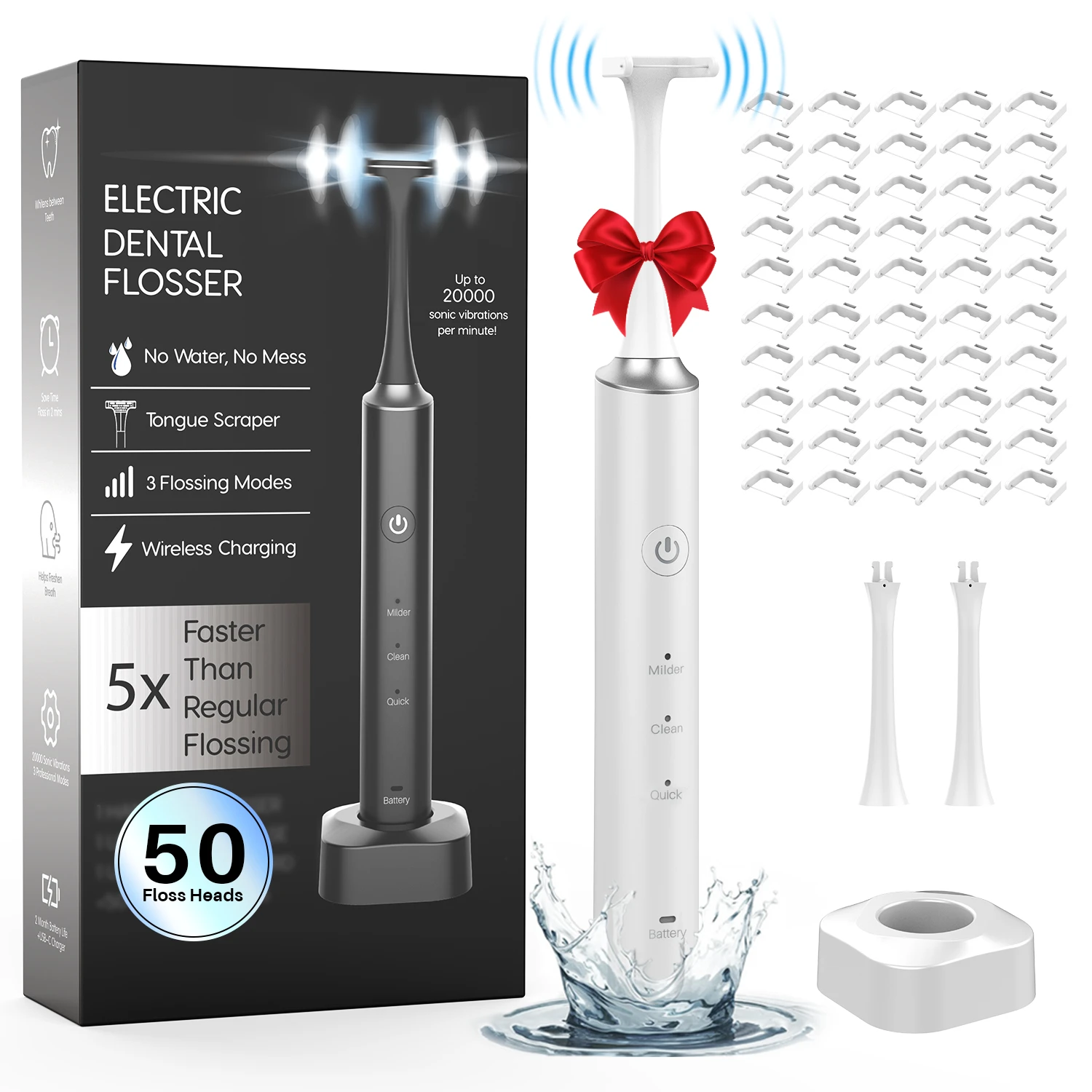
Powered by an internal 800 mAh lithium battery supporting up to 60 days of use per charge, the device pairs high-frequency vibrations with a 30-degree oscillating motion across four quiet cleaning modes (Gentle, Moderate, Deep Clean, Massage).
Constructed with an IPX7 waterproof chassis and bundled with 50 replacement heads and a wireless induction charging base, it supports private-label runs starting at 1,000 units.
The Gold Rose Electric Toothbrush With Flosser integrates brushing, flossing, and gum massage into a single, noise-damped chassis.
Operating at 30,000 sonic vibrations per minute with specialized woven dental floss, the handle incorporates professional vibration-damping technology that isolates mechanical resonance from the user's hand and ear, backed by an established factory monthly capacity exceeding 70,000 units from 500 units.
B2B Commercial Blueprint: Quiet Sourcing Audits, Retail Strategy, and Compliance
Commercial buyers structuring private-label personal care portfolios must enforce rigorous acoustic auditing and regulatory compliance to avoid consumer returns and brand erosion:
Merchandising Strategy and Sound-Profile Segmentation
Distributors should position flosser acoustic profiles to align with distinct consumer lifestyles:
Quiet Commuter and Travel Solutions: Feature waterless sonic flossers (such as the Electric Flosser With LED Lamp) for business travelers, shared apartment residents, and early-morning risers who prioritize whisper-quiet operation over high-pressure water streams.
Illuminated Precision Kits: Market LED-illuminated sonic models as premium diagnostic instruments, emphasizing visibility in posterior molars alongside gentle acoustic operation.
High-Volume Retail Bundles: Package ergonomic, sound-damped handles with 50-piece consumable head refill packs, establishing recurring consumable revenues while ensuring the motorized handle operates reliably over multi-year lifecycles.
Technical Quality Audits and Manufacturing Compliance Standards
Procurement specialists auditing personal oral appliance factories must enforce compliance across five mandatory engineering and quality benchmarks:
Acoustic Decibel Verification: Mandate calibrated sound level meter testing in standardized acoustic test chambers at one meter, confirming that baseline operating sound does not exceed specified thresholds across all operating modes.
Hermetic Enclosure Waterproof Ingress Testing: Enforce certified testing validating strict IEC 60529 IPX7 compliance, ensuring acoustic damping seals and over-molded gaskets maintain total liquid hermeticity under one meter of water immersion for 30 minutes.
Electromagnetic Compatibility and Electrical Safety: Require accredited third-party test documentation for CE (LVD 2014/35/EU and EMC 2014/30/EU), FCC Part 15 Subpart B, and RoHS 2011/65/EU, certifying low electromagnetic interference and the absence of hazardous heavy metals.
Lithium Battery Safety and Transport Protocols: Ensure all internal rechargeable cells comply with UN 38.3, IEC 62133-2, and UL 1642, securing regulatory clearance for international air and ocean cargo distribution.
Quality Management System Certification: Source exclusively from manufacturing facilities accredited under ISO 13485:2016 (Medical Devices) and ISO 9001, ensuring automated SMT assembly, wave soldering, AOI optical inspection, and rigorous multi-stage quality control.
Frequently Asked Questions
Q1: Are electric tooth flossers loud enough to wake someone sleeping in an adjacent room?
No; high-quality electric tooth flossers operate between 45 dB and 68 dB, which is comparable to normal conversational speech or a gentle shower, making them quiet enough for early-morning or late-night bathroom use without disturbing individuals in adjacent living spaces.
Q2: Why are water flossers generally louder than waterless sonic vibrating flossers?
Water flossers require reciprocating mechanical piston pumps and high-pressure fluid valves to compress and pulse water streams under 30 to 110 PSI, which creates mechanical and hydraulic pumping noise, whereas sonic flossers use magnetic levitation motors that oscillate floss filaments without fluid pump mechanisms.
Q3: What causes an electric flosser to become significantly louder over time?
An increase in operational noise typically indicates mechanical wear within internal gearing, calcification or debris accumulation inside the pump manifold, or failure of internal silicone shock-absorbing gaskets, signaling that internal components are experiencing friction and may require professional servicing.
Q4: Does bone conduction make electric flossers sound louder to the person using them?
Yes; when a vibrating flosser tip or pulsating water jet contacts teeth, acoustic vibrations transmit directly through the mandible and maxilla to the inner ear via bone conduction, causing the device to sound louder internally to the user than to external observers in the room.
Q5: What private-label OEM and ODM noise-damping options are available from Gold Rose?
Huizhou Gold Rose Technology Co., Ltd. provides full OEM/ODM customization starting at 500 to 1,000 units, offering customized brushless motor integration, internal silicone acoustic damping mounts, specialized vibration frequencies, custom branding, and full international certification documentation directly through goldrosa.com.
References
Beranek, L. L., & Vér, I. L. (1992). Noise and Vibration Control Engineering: Principles and Applications. John Wiley & Sons, New York.
Crocker, M. J. (2007). Handbook of Noise and Vibration Control. John Wiley & Sons, Hoboken.
International Electrotechnical Commission. (2013). IEC 60529: Degrees of Protection Provided by Enclosures (IP Code). IEC Standards Catalogue, Geneva, Switzerland.
International Organization for Standardization. (2016). ISO 13485:2016 Medical Devices - Quality Management Systems - Requirements for Regulatory Purposes. ISO Standards Catalogue, Geneva, Switzerland.
American Dental Association. (2020). Acceptance Program Guidelines: Powered Interdental Cleaners. ADA Council on Scientific Affairs, Chicago.