



As autumn transitions into winter, shorter daylight hours, overcast skies, and extended nocturnal cycles trigger seasonal lethargy and depressive symptoms in millions of individuals worldwide. Commonly referred to as the "winter blues" or clinically diagnosed as Seasonal Affective Disorder (SAD), this recurrent seasonal condition disrupts normal occupational productivity, emotional vitality, and sleep architecture.
In response, bright light phototherapy devices-often termed SAD therapy lights or 10,000-lux light boxes-have evolved from specialized clinical equipment into mainstream wellness and home healthcare essentials. However, consumers, wellness brands, and institutional procurement teams frequently ask: do SAD therapy lights truly work, what is the biological mechanism behind light therapy, and what engineering standards differentiate an effective medical-grade phototherapy lamp from a decorative LED panel?
As an established OEM/ODM manufacturer specializing in circadian lighting, precision electro-optics, and personal health appliances, Gold Rose provides this comprehensive scientific and procurement guide. Below, we examine the neurobiology of circadian entrainment, photobiological safety standards, clinical usage protocols, and private-label hardware specifications.

Neurobiology of the Winter Blues: Why Reduced Sunlight Disrupts Mood
Retinohypothalamic Tract and Circadian Entrainment
The human brain relies on high-intensity natural daylight to synchronize its master internal biological clock, known as the suprachiasmatic nucleus (SCN), located within the anterior hypothalamus. This photic entrainment process is mediated by specialized photoreceptors in the eye called intrinsically photosensitive retinal ganglion cells (ipRGCs). Unlike traditional rods and cones responsible for visual perception, ipRGCs express the photopigment melanopsin, which responds specifically to bright daylight wavelengths. When stimulated by natural blue-enriched light, ipRGCs transmit direct electrical impulses through the retinohypothalamic tract (RHT) to the SCN, signaling daytime alertness and calibrating the body's peripheral molecular clocks.
The Melatonin-Serotonin Phase Shift
During winter months, diminished photoperiods and indoor lifestyles deprive the retina of critical light thresholds, causing a neurochemical mismatch. In low-light environments, the SCN fails to signal daytime suppression to the pineal gland, resulting in prolonged daytime secretion of melatonin, the neurohormone responsible for drowsiness and sleep induction. Concurrently, reduced sunlight diminishes retinal and central nervous system turnover of serotonin, a neurotransmitter critical for emotional regulation, appetite control, and executive functioning. This combined phase delay in the circadian rhythm and serotonin deficiency produces hallmark seasonal symptoms, including persistent fatigue, hypersomnia, carbohydrate cravings, and anhedonia.
Photobiology: How 10,000-Lux Therapy Lights Restore Circadian Balance
The 10,000-Lux Intensity Benchmark
Standard indoor residential and commercial office lighting delivers between 200 and 500 lux, a luminous intensity that is adequate for visual tasks but fundamentally insufficient to trigger ipRGC depolarization and circadian resetting. Clinical phototherapy requires a calibrated illuminance of 10,000 lux delivered at a realistic sitting distance of 16 to 24 inches (40 to 60 cm). At this therapeutic intensity, high-density photons saturate the retinal melanopsin receptors, suppressing daytime melatonin production within twenty to thirty minutes. This rapid neuroendocrine reset realigns the phase of core body temperature rhythms and stimulates morning cortisol awakening responses, effectively clearing the brain fog characteristic of seasonal mood decline.
Spectral Optimization and Critical UV-Free Filtration
The efficacy and safety of a phototherapy light depend strictly on its optical wavelength distribution. Melanopsin exhibits peak sensitivity within the blue-cyan spectral band between 460 nm and 490 nm. However, direct exposure to uncalibrated blue spikes or ultraviolet radiation presents severe ocular hazards, including photochemical retinal damage and accelerated cataractogenesis. Professional-grade therapy lamps must employ broad-spectrum white LEDs calibrated between 5,000K and 6,500K daylight color temperatures, paired with optical diffusion filters that ensure 100% UV-free emission across both UVA and UVB spectrums. This spectral engineering delivers potent circadian stimulation while protecting corneal and retinal tissues from photochemical degradation.

Clinical Evidence and Therapeutic Protocols for Optimal Efficacy
Systematic Clinical Trials and Meta-Analytic Consensus
The therapeutic efficacy of bright light therapy for seasonal mood disruption is thoroughly validated across psychiatric and chronobiological literature. Controlled clinical trials published in the American Journal of Psychiatry and the Journal of Affective Disorders demonstrate that daily 10,000-lux light therapy achieves clinical response rates between 60% and 80% for seasonal depressive episodes, performing on par with first-line selective serotonin reuptake inhibitors (SSRIs) while offering a significantly faster onset of therapeutic benefit and fewer systemic side effects. Therapeutic gains often manifest within the first seven to fourteen days of continuous morning use, providing a non-pharmacological, evidence-based modality for seasonal mood support.
Clinical Morning Administration Protocols
To maximize neuroendocrine efficacy, light therapy must be administered within thirty to sixty minutes of awakening, ideally between 6:30 AM and 8:30 AM. Evening or late-afternoon use must be strictly avoided, as high-lux exposure after sunset phase-delays the circadian pacemaker, worsening sleep-onset insomnia. During a session, the user positions the lamp at approximately a 30- to 45-degree angle from their visual axis rather than staring directly into the diffuser, allowing ambient photons to enter the peripheral retina while they read, work, or eat breakfast. A standard daily exposure duration of twenty to thirty minutes at 10,000 lux provides optimal biological stimulation without causing sensory fatigue.
Engineering Standards: Differentiating Medical-Grade Lamps from Decorative LEDs
Flicker-Free Constant-Current Circuitry
A critical flaw in substandard consumer light boxes is the use of inexpensive pulse-width modulation (PWM) drivers that modulate brightness by cycling LEDs on and off thousands of times per second. While this rapid flickering is imperceptible to conscious vision, it induces micro-straining of the ciliary eye muscles, triggering acute tension headaches, ocular fatigue, and nausea during high-intensity phototherapy. Medical-grade therapy lamps must integrate constant-current DC power architectures with high ripple-rejection filters, ensuring zero-flicker illumination across all dimming tiers and maintaining comfortable, headache-free phototherapy.
Diffused Surface Area and Glare Management
The physical footprint of the optical emitting surface determines whether a phototherapy lamp delivers comfortable therapeutic light or harsh, piercing glare. Small, point-source LED lights create intense focal luminance that causes reflex squinting and pupil constriction, which prevents adequate light from reaching the peripheral retina. Superior therapeutic engineering utilizes multi-layer optical diffusion panels-combining light-guide microstructures, nano-scale optical diffusers, and micro-prismatic anti-glare sheets-to distribute luminous flux evenly across a broad surface area. This ensures broad spatial photon coverage and high lux delivery without painful hot spots.

Gold Rose OEM/ODM Engineering: Intelligent Circadian Lighting Solutions
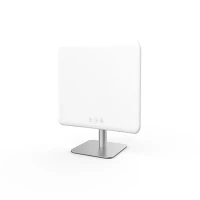
As an experienced OEM/ODM manufacturer specializing in precision electro-optics and wellness appliances, Gold Rose develops advanced light therapy platforms that balance rigorous photobiological efficacy with elegant consumer aesthetics. The Gold Rose light therapy portfolio features calibrated 10,000-lux output, verified 100% UV-free optical filtering, and advanced constant-current drivers operating with zero optical flicker. Equipped with intuitive capacitive touch controls, stepless dimming, multi-tier color temperature tuning from 3,000K warm white to 6,500K daylight, and automated countdown timers (15 to 60 minutes), Gold Rose lamps deliver a customizable, clinically sound wellness experience for modern homes and office workspaces.
For international healthcare brands, consumer electronics retailers, and wellness distributors, Gold Rose provides full turnkey manufacturing supported by strict regulatory compliance. Operating under ISO 13485 medical-grade quality management, our light therapy products hold complete FDA device listings, CE, FCC, RoHS, and IEC 62471 photobiological safety certifications. Backed by dedicated in-house optical engineering, custom injection tooling, and bespoke private-label packaging options, Gold Rose enables global B2B clients to launch differentiated, high-margin circadian wellness product lines with complete quality assurance.
Frequently Asked Questions
Q1: Can a regular household lamp provide effective light therapy for the winter blues?
No, standard household or office lighting only produces between 200 and 500 lux, which is far below the 10,000-lux threshold required to suppress daytime melatonin and stimulate serotonin via retinal melanopsin receptors. Effective circadian entrainment requires a dedicated phototherapy lamp engineered specifically for high-intensity, UV-filtered light output.
Q2: Are SAD therapy lights safe for the eyes and skin?
Yes, certified therapy lights are safe because they incorporate optical filters that block 100% of harmful UVA and UVB radiation, preventing skin damage and optical burns. However, individuals with pre-existing retinal conditions or those taking photosensitizing medications should consult an ophthalmologist prior to starting light therapy.
Q3: How quickly can users expect to feel improvements in energy and mood?
Many individuals experience measurable improvements in alertness and morning energy within three to five days of consistent morning light therapy, with full mood stabilization typically achieved within two weeks. Maintaining a disciplined daily morning routine throughout the winter months is essential to sustain these positive neurochemical benefits.
Q4: Does Gold Rose manufacture private-label 10,000-lux light therapy lamps?
Yes, Gold Rose provides comprehensive OEM/ODM manufacturing of full-spectrum 10,000-lux light therapy devices featuring touch controls, adjustable color temperatures, and certified UV-free optical diffusers. Global B2B buyers and wellness brands can explore complete technical specifications and private-label customization programs directly through goldrosa.com.
Q5: What certifications are essential when procuring light therapy lamps for commercial markets?
Commercial distributors should ensure light therapy lamps comply with IEC 62471 photobiological safety standards, alongside CE, FCC, RoHS, and destination-market electrical safety registrations. Gold Rose maintains full compliance across all international safety standards, backed by certified ISO 13485 manufacturing facilities.
References
American Psychiatric Association. (2023). Practice Guideline for the Treatment of Patients with Major Depressive Disorder and Seasonal Patterns. APA Publishing. https://www.psychiatry.org/patients-families/depression/seasonal-affective-disorder
Golden, R. N., et al. (2005). The efficacy of light therapy in the treatment of mood disorders: A review and meta-analysis of the evidence. American Journal of Psychiatry, 162(4), 656–662.
International Commission on Illumination (CIE). (2020). CIE S 026/E:2018: System for Metrology of Optical Radiation for ipRGC-Influenced Responses to Light. CIE Central Bureau.
Centers for Disease Control and Prevention. (2022). Seasonal Affective Disorder and Circadian Sleep Health. CDC National Center for Chronic Disease Prevention. https://www.cdc.gov/sleep/
Gold Rose. Precision Circadian Lighting and OEM Phototherapy Wellness Platforms. https://www.goldrosa.com/light-therapy/