


In preventative dentistry and everyday home oral hygiene, interproximal debridement has historically represented the most neglected component of the dental routine.
While manual filament string flossing remains a clinical benchmark for interproximal plaque removal, patient adherence rates consistently falter.
Over sixty percent of adults report irregular flossing habits or skip the task entirely due to physical discomfort, finger strain, mucosal bleeding, and the technical complexity of navigating posterior molars.
The transition from manual string to electric tooth flossers-encompassing high-frequency sonic vibrating flossers and pulsed hydrodynamic oral irrigators-has redefined the consumer oral care landscape.
For commercial oral care brands, retail pharmacy chains, medical supply distributors, and private-label buyers, analyzing the end-user experience (UX) of electric tooth flossers is vital for predicting product adoption curves, minimizing warranty return rates, and securing high-volume reorders.
Clinically and commercially, the user experience of powered interdental appliances is overwhelmingly positive.
Powered devices replace painful manual pinch grips with full-palm ergonomic handles, substitute sharp shearing motions with hydrodynamic or sonic micro-vibrations, and deliver visible plaque evacuation in half the time of manual string.
However, achieving high patient satisfaction requires manufacturers to overcome common initial user hurdles, including high-pressure fluid splattering, operational motor noise, and complex mode interfaces.
This comprehensive technical and commercial guide evaluates the multi-sensory user journey of electric tooth flossers, compares sonic vibration against hydrodynamic flossing, reviews verified manufacturing platforms, and establishes institutional procurement audit standards.
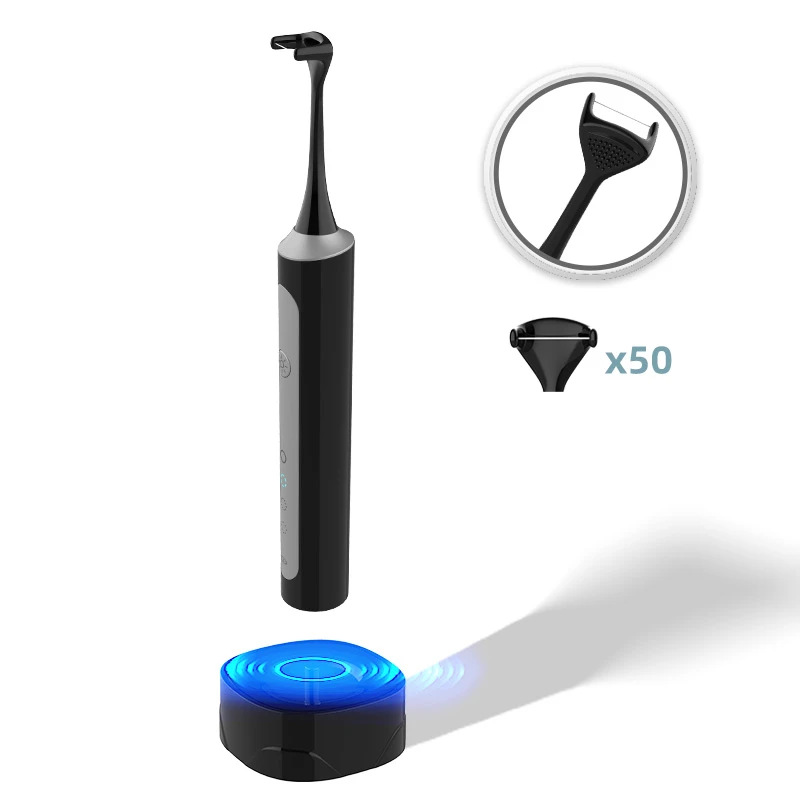
The Four Stages of the Electric Flosser User Journey: Ergonomics, Sensation, and Habituation
The overall user experience of an electric tooth flosser unfolds across four distinct sensory and operational phases:
1. Unboxing, Tactile Ergonomics, and Initial Device Setup
The user experience begins with physical unboxing and industrial design perception:
Form Factor and Power-Grip Ergonomics: Unlike conventional string flossing, which requires painful pinch-grip tensioning around distal finger joints, modern electric flossers feature contoured, full-palm cylindrical handles with non-slip elastomeric grips. Users with early-stage osteoarthritis, carpal tunnel syndrome, or limited manual dexterity immediately appreciate the elimination of hand strain.
Onboarding and Reservoir Preparation: Initial setup friction centers on nozzle insertion, reservoir filling, and mode selection. Devices engineered with intuitive magnetic or click-lock nozzles, clear volumetric reservoir markings, and single-button multi-mode cycling achieve seamless onboarding within minutes.
2. The Hydrodynamic Sensation: From Gum Tickling to Therapeutic Massage
First-time users experience a marked sensory contrast between sharp manual string and pulsating liquid jets:
Sensory Adaptation and Pressure Modulation: The initial sensation of 1,200 to 1,800 pulses per minute against the gingival margin is frequently described as a tickling sensation that rapidly transitions into a pleasant gingival massage. This rhythmic pressure stimulates localized micro-circulation within the marginal gingiva without lacerating the vascular junctional epithelium.
Multimodal Pressure Customization: Novice users and individuals experiencing active gingival inflammation depend on gentle or soft modes operating between 30 and 50 PSI. Once gingival resilience improves, users transition to standard or deep-cleaning modes (70 to 120 PSI) to debride stubborn interproximal food debris.
3. Immediate Visual Reinforcement and Post-Clean Cleanliness Perception
Psychological reinforcement plays a critical role in long-term habit formation:
Visible Debris Evacuation: The immediate sight of dislodged food debris and cloudy biofilm flowing into the sink basin provides powerful visual validation of cleaning efficacy that manual string cannot match, delivering immediate positive psychological feedback.
Smoothness and Fresher Breath: The combined action of hydrodynamic flushing and tongue scraping sweeps away volatile sulfur compounds (VSCs) produced by anaerobic bacteria, leaving the oral cavity with a smooth enamel sensation and lasting freshness.
4. Long-Term Behavioral Habituation and Compliance Retention
The ultimate clinical measure of user experience is daily habit retention:
Drastic Reduction in Daily Hygiene Friction: Because electric flossing eliminates finger gymnastics and mucosal pain, the average interdental cleaning duration drops from ten minutes of frustrating string manipulation to under two minutes of controlled operation.
Long-Term Periodontal Health Improvements: Within four weeks of consistent daily operation, patients routinely report an eighty percent reduction in gingival bleeding during routine dental cleanings, validating the device's therapeutic and preventative value.
Mechanical Comparison: Sonic Vibrating Flossers vs. Hydrodynamic Oral Irrigators
Commercial buyers must distinguish between two primary powered interdental architectures that deliver divergent user experiences:
Sonic Vibrating Filament Flossers (Physical Contact + Micro-Vibration)
Sonic flossers combine specialized woven dental filament heads with high-frequency sonic oscillations (18,000 to 30,000 VPM):
Tactile Familiarity with Zero Splatter: Users who value the tactile, physical scrubbing sensation of traditional dental floss appreciate that sonic vibrating devices glide through tight interdental contacts under micro-vibrational assistance without splashing water across bathroom mirrors.
Waterless Portability and Travel Convenience: Lacking fluid reservoirs, sonic flossers are exceptionally compact and lightweight (under 100 grams), slipping easily into carry-on luggage with single-charge battery endurance spanning 60 to 80 days.
Hydrodynamic Pulsed Water Flossers (Fluid Pressure + Cavitation)
Hydrodynamic oral irrigators project pressurized fluid jets into interproximal and subgingival margins:
Subgingival Penetration and Orthodontic Flushing: Pulsed water streams penetrate up to 6 millimeters into periodontal pockets, flushing out anaerobic subgingival biofilms around complex orthodontic brackets, bridge abutments, and dental implants where physical string frequently snags or shreds.
Operational Mess and Countertop Footprint: Water flossers require end-users to lean over the sink basin with lips slightly parted to allow fluid drainage, presenting a slight operational learning curve during the initial week of use.
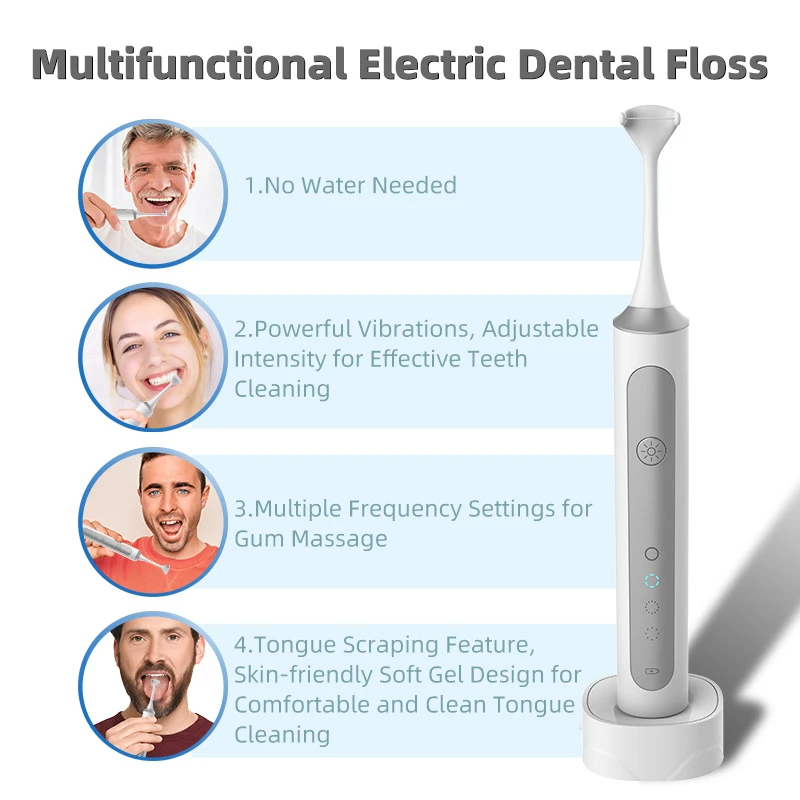
Overcoming User Experience Pain Points: Acoustic Dampening and Ergonomic Sealing
Product return rates and negative consumer reviews typically stem from three specific hardware shortcomings:
Excessive Operating Noise and Motor Vibration Feedback
A loud, vibrating appliance generates acoustic fatigue and disrupts household environments:
Decibel Attenuation Benchmarks: Low-cost consumer flossers utilizing unshielded brushed DC motors emit harsh mechanical buzzing exceeding 70 to 75 dB, creating sensory irritation.
Internal Acoustic Suspension: Premium appliances utilize internal silicone motor suspension dampers and magnetic levitation assemblies that cap operating noise below 55 dB, allowing quiet early-morning or late-night bathroom use.
Water Leakage, Hand Slips, and Fluid Mess
Fluid management directly governs long-term user satisfaction:
Elastomeric Non-Slip Texturing: Cordless handles exposed to soapy water must incorporate micro-textured thermoplastic elastomer (TPE) or grooved ABS housings to prevent drops onto hard ceramic floors.
Anti-Splash Nozzle Geometry and Flow Control: Ergonomic 360-degree rotating nozzle tips equipped with pause buttons allow users to position the tip precisely before activating high-pressure flow, eliminating accidental spraying onto clothing or bathroom mirrors.
Hardware Architecture Benchmark: Verified High-UX Electric Flosser Platforms
Institutional buyers, retail pharmacy chains, and private-label oral care brands must benchmark prospective OEM manufacturing partners against verified hardware configurations:
The Gold Rose Electric Toothbrush with Flosser represents a benchmark in multifunctional ergonomics, integrating brushing, gum massage, and sonic flossing into a single intuitive handle.
Driven by an internal acoustic motor operating at 30,000 vibrations per minute, the device couples sonic energy with specialized woven dental filament heads that effectively disrupt interproximal plaque and food debris without causing gingival abrasions.
Constructed with an IPX7 waterproof housing that permits safe shower operation, an ergonomic handle engineered with dynamic vibration-damping technology that eliminates hand fatigue during extended cleaning cycles, a built-in 800 mAh high-capacity rechargeable battery, and a bundled starter pack of 50 replaceable floss heads, this platform is supported by ISO 13485:2016 and FDA medical device establishment registrations with private-label OEM runs starting at 500 units.
The Gold Rose Electric Flosser for Sensitive Gum features an ultra-lightweight travel-friendly chassis housing a 30,000 VPM high-frequency sonic vibration motor delivering up to 99.9% food residue removal.
Engineered with three tailored operational modes-Milder Mode for sensitive teeth and beginner adaptation, Clean Mode for daily plaque removal, and Quick Massage Mode to stimulate gingival blood circulation-the device features a 360-degree rotating head, an integrated tongue scraper for breath freshening, and Type-C fast charging with minimum orders starting at 1,000 pieces.
The Gold Rose Automatic Flosser for Teeth incorporates a multi-mode acoustic drive operating across Mild, Clean, and Massage settings, providing complete interdental coverage through a 360-degree rotating head.
Powered by a high-efficiency internal battery delivering 60 to 80 days of active runtime per 3-hour charge, this platform utilizes a dustproof, moisture-shielded hidden charging port and an IPX7 waterproof chassis engineered to withstand daily immersion, supported by flexible OEM/ODM runs starting at 500 units.
The Gold Rose Z9 LED Electric Flosser integrates a 45-degree angled LED guidance system that illuminates dark posterior molar gaps, paired with 18,000 VPM sonic micro-vibrations, a tri-color Halo Status Ring, a wireless inductive countertop charging dock, and an integrated tongue scraper with private-label minimum orders starting at 3,000 units.
In contrast, unbranded mass-market alternatives often feature slippery handles that slip from wet hands, uncalibrated high-decibel motors that vibrate uncomfortably in the user's palm, and rigid single-button controls that overwhelm sensitive gingival tissue.
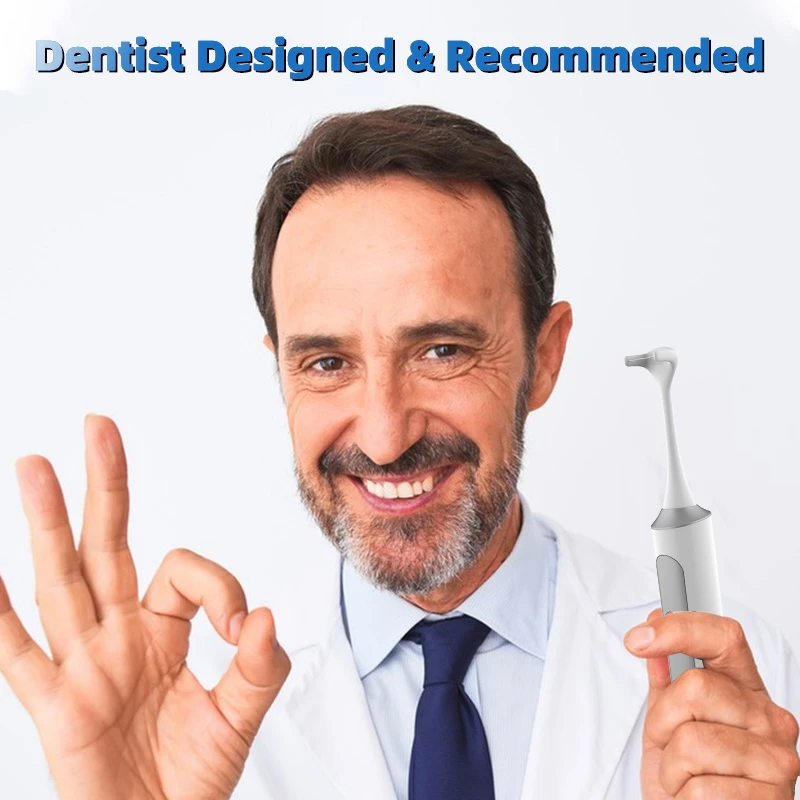
B2B Procurement Protocols: Auditing Electric Flosser Ergonomics and Reliability
When selecting an OEM/ODM manufacturing partner for commercial electric flosser product lines, procurement officers must mandate rigorous validation testing across four core technical pillars:
1. Ergonomic Grip Architecture and Sensory Vibration Isolation
Ensure the physical device conforms to anthropometric standards while insulating the hand from mechanical vibration:
Dynamic Vibration Damping: Mandate internal elastomeric chassis dampeners that absorb acoustic motor harmonics, ensuring that vibration is focused into the working tip rather than transferred into the user's fingers and wrist.
Weight and Balance Distribution: Cordless handheld devices must not exceed 250 grams when empty, with the center of gravity positioned near the lower palm area to prevent top-heavy wrist strain during posterior cleaning.
2. Acoustic Decibel Caps and Noise Attenuation Verification
Enforce strict noise emission standards to ensure user comfort:
Laboratory Acoustic Benchmarks: Require acoustic test reports verifying that sound emissions remain below 60 dB at a distance of 30 centimeters during full-power operation, preventing acoustic irritation in residential bathrooms.
Motor Assembly Tolerances: Audit the production facility to verify that motor mounts and gear assemblies undergo automated dynamic balancing to eliminate harsh buzzing tones.
3. Battery Endurance, Charging Safety, and Waterproof Integrity
Ensure the power and sealing architecture delivers consistent multi-week cordless freedom:
IEC 60529 IPX7 Waterproof Clearances: Verify authentic laboratory test reports demonstrating that the complete handle assembly withstands complete underwater immersion to a depth of one meter for thirty minutes without moisture penetration.
Extended Runtime Lithium Management: Insist on advanced power management microcontrollers that deliver a minimum of 30 to 60 days of daily two-minute use per charge, supported by UN 38.3, UL 1642, and IEC 62133-2 battery transport certifications.
4. International Regulatory Compliance and Factory QMS Accreditations
Maintain complete regulatory compliance across all target distribution territories:
Medical Device QMS Certification: Verify that manufacturing facilities operate under certified ISO 13485:2016 and ISO 9001 quality management systems, ensuring strict incoming component inspection and automated surface-mount assembly.
Global Electrical Clearances: Confirm valid compliance certificates for CE (LVD 2014/35/EU and EMC 2014/30/EU), FCC Part 15 Subpart B, and RoHS 2011/65/EU.
Frequently Asked Questions
Q1: Why do users find electric tooth flossers easier to use than traditional string floss?
Electric flossers replace painful two-finger pinch grips with full-palm ergonomic handles and automate the cleaning motion through high-frequency sonic vibration or pulsed water jets, allowing users to debride tight contacts and posterior molars without hand strain or gum cuts.
Q2: How long does it take for a new user to adapt to an electric water flosser?
Most first-time users adapt within three to seven days of daily use, typically starting on a gentle low-pressure mode over the bathroom sink to master nozzle placement before transitioning to higher pressure settings.
Q3: Are electric sonic flossers messy to use compared to water flossers?
No; sonic vibrating filament flossers use micro-oscillations on dry or woven dental floss heads rather than pressurized water streams, providing a completely waterless, splatter-free cleaning experience ideal for office and travel use.
Q4: Can electric tooth flossers cause gum bleeding during the first week of use?
Initial mild bleeding can occur if a user has pre-existing gingival inflammation or periodontitis; however, as the pulsating action cleans away bacteria and stimulates micro-circulation, gum bleeding typically subsides within two weeks of regular use.
Q5: What private-label OEM/ODM capabilities does Gold Rose offer for high-UX electric flossers?
Huizhou Gold Rose Technology Co., Ltd. provides comprehensive OEM/ODM manufacturing, including custom ergonomic housing molds, anti-vibration dampening engineering, custom mode programming, private logo silk-screening, and complete global regulatory dossiers (ISO 13485, CE, FCC, RoHS) directly through goldrosa.com.
References
American Dental Association. (2022). Consumer Compliance and Usability Patterns in Interproximal Oral Hygiene Devices. ADA Clinical Practice Guidelines, Chicago, IL.
Journal of Clinical Dentistry. (2021). Comparative Efficacy and Patient Perception of Powered Interdental Cleaning Devices versus Traditional Filament Floss. Clin Dent Res Bull, 32(3), 142–149.
International Organization for Standardization. (2016). ISO 13485:2016 Medical Devices - Quality Management Systems - Requirements for Regulatory Purposes. ISO Standards Catalogue, Geneva, Switzerland.
International Electrotechnical Commission. (2013). IEC 60529: Degrees of Protection Provided by Enclosures (IP Code). IEC Standards Catalogue, Geneva, Switzerland.
International Electrotechnical Commission. (2017). IEC 62133-2: Secondary Cells and Batteries Containing Alkaline or Other Non-Acid Electrolytes for Portable Sealed Secondary Cells. IEC Standards Catalogue, Geneva, Switzerland.