







In preventative dentistry, clear aligner therapy, and prosthetic oral rehabilitation, the maintenance of removable dental appliances represents a persistent clinical challenge.
Every night, clear aligners, retention trays, acrylic night guards, and partial dentures remain submerged in human saliva at body temperature.
Within hours, pioneer oral streptococci adhere to the polymer surface, generating an extracellular polymeric substance (EPS) matrix that traps desquamated epithelial cells, food particles, and calcium phosphate salts.
The resulting cloudy biofilm and calcified calculus cause unpleasant odors, degrade aesthetic optical clarity, and irritate surrounding gingival tissues.
When dental professionals and consumers search for powered home decontamination devices, two operating frequencies dominate the market: 42 kHz and 45 kHz.
Manufacturers of each frequency band assert superior cleaning performance.
However, evaluating these claims requires examining the underlying acoustic physics.
Acoustic cavitation bubble dynamics dictate that neither frequency is universally superior; each produces distinct fluid dynamics suited to specific appliance geometries and mineral densities.
Furthermore, because high-frequency sound waves provide purely mechanical shear force, pairing ultrasonic energy with effervescent chemical disinfectant tablets is essential for comprehensive bactericidal decontamination and odor eradication.
For dental device brand owners, orthodontic retail chains, and dental laboratory distributors, navigating these acoustic specifications is crucial for successful private-label procurement.
Understanding transducer resonance, the Minnaert acoustic resonance relationship, surface tension modification, and certified OEM manufacturing standards enables buyers to build clinically differentiated, high-margin dental appliance hygiene portfolios.
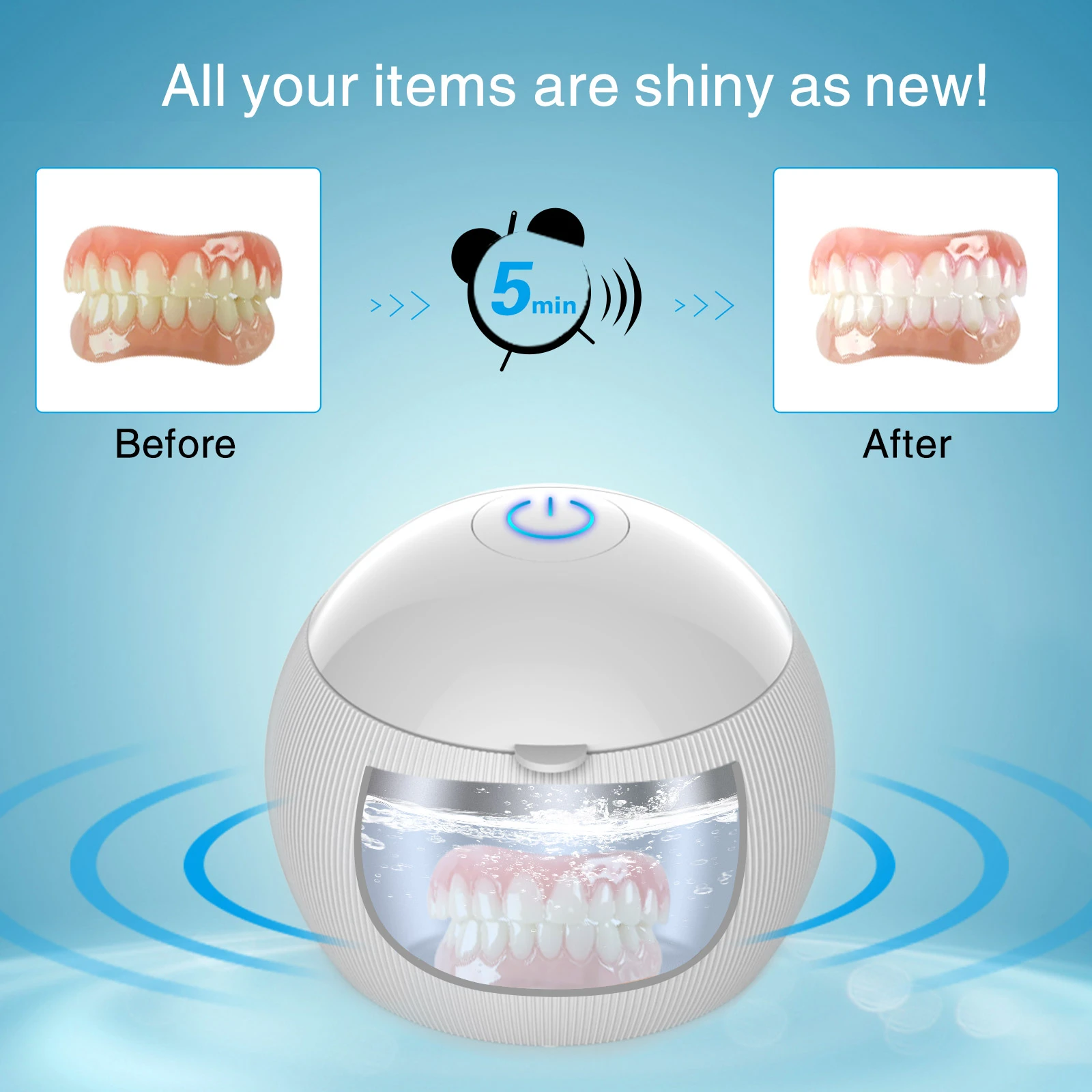
Acoustic Physics: Piezoelectric Transducers, Transient Cavitation, and Micro-Jet Dynamics
Evaluating ultrasonic cleaning performance begins with the electromechanical components that generate acoustic energy:
Piezoelectric Transduction and Alternating Pressure Wavefronts
At the foundation of every professional dental ultrasonic bath sits one or more lead zirconate titanate (PZT) piezoelectric ceramic transducers bonded securely to the base of a marine-grade SUS304 stainless steel fluid reservoir.
When driven by an alternating electric field, the piezoelectric element converts high-frequency electrical voltage into rapid longitudinal mechanical vibrations.
These mechanical vibrations propagate through the liquid bath as alternating compressional and rarefaction pressure wavefronts tens of thousands of times per second.
Transient Acoustic Cavitation Cycle
During negative-pressure rarefaction half-cycles, local acoustic pressure drops below the saturated vapor pressure of the aqueous medium, pulling the fluid molecules apart to form microscopic vapor cavities known as cavitation bubbles.
During subsequent positive-pressure compression half-cycles, the surrounding liquid exerts immense inward hydrostatic pressure on these expanding bubbles.
Within microseconds, the bubbles reach an unstable resonant diameter and undergo violent, asymmetrical implosion.
This implosion generates localized acoustic micro-jets reaching velocities of several hundred meters per second, accompanied by localized shear forces that mechanically fracture calcified calculus, peel away biofilm matrices, and flush out complex appliance crevices without surface abrasion.
Acoustic Resonance: Bubble Diameter, Implosion Energy, and 42kHz Versus 45kHz Dynamics
The physical differences between 42 kHz and 45 kHz ultrasonic cleaning are governed by acoustic cavitation mechanics:
42kHz Dynamics: Higher Implosion Energy for Calcified Calculus
At 42 kHz (42,000 acoustic cycles per second), transient cavitation bubbles expand to typical resonant diameters between 75 and 80 microns prior to violent collapse.
Because each bubble encloses a larger vapor volume, its collapse releases higher concentrated kinetic impact force upon nearby surfaces.
This characteristic makes 42 kHz particularly effective for disrupting dense, mineralized deposits such as mature calcium phosphate calculus on rigid acrylic night guards, bruxism bite splints, and cobalt-chromium partial denture frameworks.
The primary trade-off is a slightly lower bubble population density across the fluid volume and a deeper operational acoustic hum.
45kHz Dynamics: High-Density Bubble Swarms for Intricate Aligners
Conversely, an ultrasonic bath operating at 45 kHz (45,000 acoustic cycles per second) produces 7 percent more pressure wavefronts per second, forming finer cavitation bubbles averaging 65 to 70 microns in diameter.
While individual implosion energy is modestly reduced, bubble population density per cubic millimeter increases significantly.
This dense, uniform bubble cloud travels smoothly into tight spaces, including the 0.75 mm attachment wells of clear aligners, micro-laser ID engravings, and narrow interdental bite ridges.
The higher frequency distributes shear energy evenly without concentrating stress on delicate thermoformed polymers, operating with a softer acoustic signature.

Clinical Evidence: Frequency Matching Across Appliance Materials
Selecting the ideal ultrasonic cleaning frequency requires matching acoustic energy to specific dental materials and patient conditions:
Polyurethane Clear Aligners and Thin Retention Trays
Vacuum-formed and pressure-molded orthodontic aligners (such as Invisalign and Spark) feature thin polyurethane or copolyester walls measuring 0.75 mm thick, embedded with complex negative attachment wells.
These thin trays accumulate soft oral biofilm and saliva proteins rather than heavy, calcified tartar.
Operating at 45 kHz delivers the optimal balance: the smaller 65-micron bubbles penetrate deep into narrow attachment recesses, dislodging mucin films without causing micro-cracking or polymer fatigue.
Rigid Acrylic Night Guards and Cast Partial Dentures
In contrast, occlusal splints and dentures constructed from polymethyl methacrylate (PMMA) acrylic resin often gather stubborn, hard mineral calculus from salivary calcium salts during long overnight wear.
A 42 kHz system provides the higher mechanical implosion force required to fracture these crystalline bonds.
For multi-material appliances like wire-clasped Hawley retainers and mandibular advancement sleep apnea devices, both 42 kHz and 45 kHz provide safe, thorough cleaning, as neither band produces the surface pitting associated with low industrial frequencies below 30 kHz.
Chemical Disinfection: Surfactants, Oxidizers, and the Effervescent Synergy Factor
A common question among appliance wearers is whether running an ultrasonic bath with plain tap water provides adequate decontamination:
Physical Cavitation Versus Chemical Disinfection
Ultrasonic sound waves provide purely mechanical shear force.
While cavitation effectively detaches bacterial biofilms from appliance surfaces, it does not reliably kill pathogenic microbes suspended in the bath.
Furthermore, pure tap water maintains a high surface tension of approximately 72 mN/m at room temperature, which resists vapor cavity nucleation and requires greater acoustic energy to initiate cavitation.
Relying on plain water leaves live microorganisms floating in the tank and fails to neutralize the volatile sulfur compounds responsible for chronic appliance odor.
The Surfactant Multiplier and Oxidative Biocidal Action
Pairing ultrasonic cavitation with specialized effervescent cleaning tablets creates a powerful physical-chemical synergy:
Surface Tension Reduction: Modern dental cleaning tablets incorporate non-ionic surfactants that reduce liquid surface tension from 72 mN/m down to roughly 35 mN/m. This drop lowers the acoustic cavitation threshold, increasing active bubble nucleation sites by over 30 percent for faster, more comprehensive cleaning.
Oxidative Cell Membrane Disruption: Tablets release active oxidizers such as potassium monopersulfate and sodium percarbonate. These agents break through microbial cell walls, achieving 99.9 percent elimination of common oral pathogens including Streptococcus mutans, Staphylococcus aureus, and Candida albicans.
Chelation and Effervescent Mechanical Scrubbing: Effervescent sodium bicarbonate and citric acid generate carbon dioxide bubbles that physically agitate surfaces, while chelating agents like EDTA sequester dissolved calcium and magnesium ions in saliva, preventing white mineral haze from redepositing onto clear plastic trays.
Daily Cleaning Protocol: Protecting Polymer Clarity and Dimensional Integrity
To ensure maximum hygiene while safeguarding custom dental appliances, users should follow a standardized five-step daily protocol:
The cleaning routine begins with an immediate preliminary cool water rinse upon removing the appliance from the mouth, washing away unbonded saliva and loose debris to keep the cleaning reservoir clear.
Next, the user fills the SUS304 stainless steel tank with clean tap water up to the marked fill line, ensuring water temperature stays strictly below 35 degrees Celsius (95 degrees Fahrenheit).
High water temperatures must be avoided, as temperatures above 45 degrees Celsius warp thermoformed clear aligners and soften acrylic night guards, compromising orthodontic fit.
Once filled, the user adds one effervescent dental cleaning tablet and allows it to dissolve for twenty seconds, distributing active oxidizers and surfactants evenly throughout the bath.
The appliance is then placed inside the suspended internal basket and lowered into the fluid, ensuring it never rests directly against the bare stainless steel tank floor, where concentrated vibration stress can cause localized edge damage.
The user runs a standard three to five-minute automated cleaning cycle, which thoroughly clears overnight biofilms without excessive bath warming.
Finally, the appliance is removed, rinsed under cool running tap water for fifteen seconds to wash away detached biofilm, and placed inside a ventilated case to air dry.
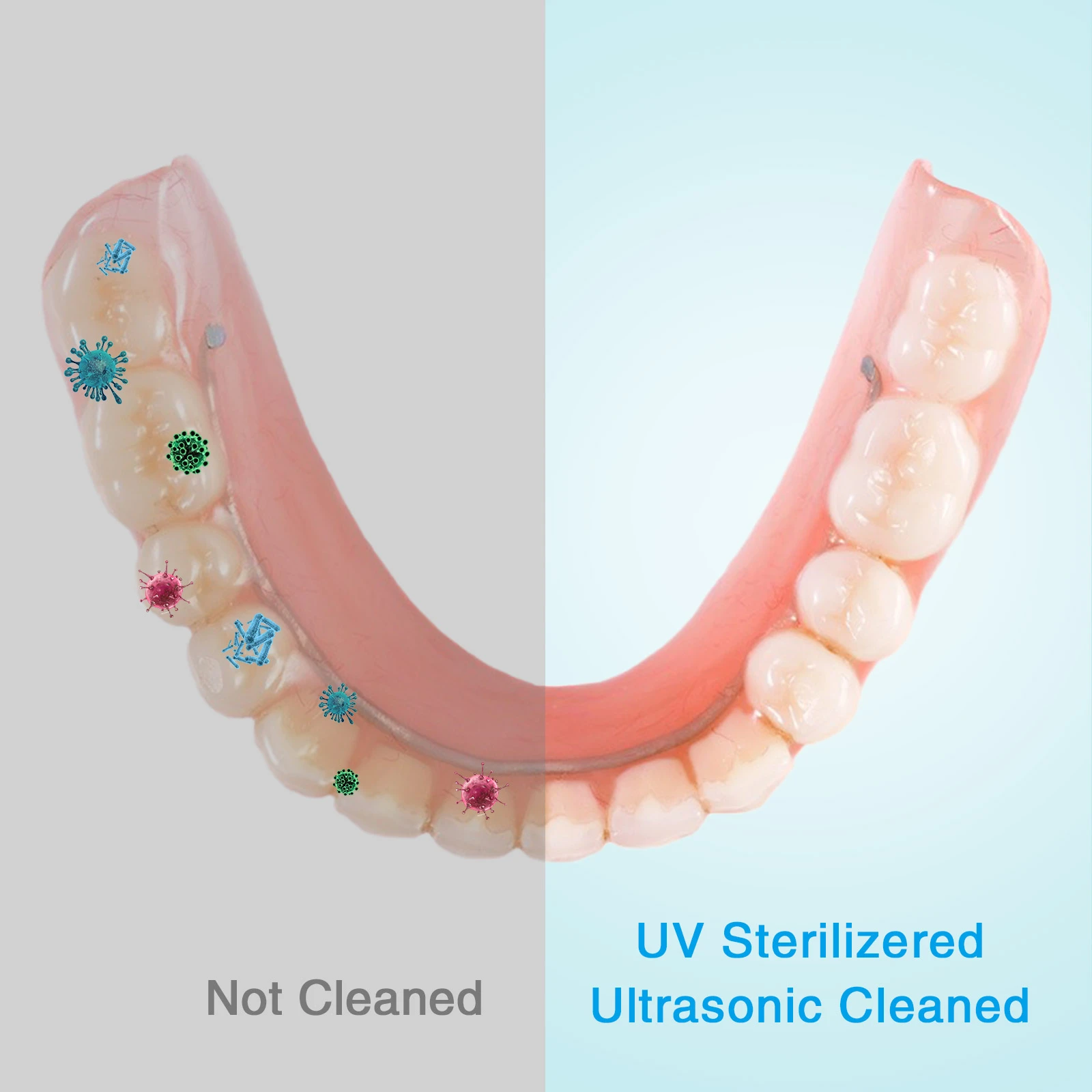
Sourcing Benchmark: Advanced Dental Ultrasonic Cleaners from Gold Rose
International oral care distributors, e-commerce brand owners, and orthodontic retail chains can source factory-direct, compliant ultrasonic cleaning hardware from Huizhou Gold Rose Technology Co., Ltd.:
The Gold Rose Best Ultrasonic Dental Cleaner US500 serves as a versatile dual-frequency oral hygiene platform engineered for both home dental care and personal accessory maintenance.
Equipped with a precision 45 kHz piezoelectric transducer delivering 24 watts of cleaning power, the US500 generates high-density micro-bubble clouds that reach into narrow clear aligner attachment wells and delicate jewelry settings without causing surface wear.
Its interior features a corrosion-resistant, food-grade SUS304 stainless steel reservoir paired with an advanced split-tank architecture, allowing users to detach the fluid basin for effortless rinsing while protecting sensitive internal electronic components from water ingress.
The unit integrates integrated UVC sterilization operating across the 260 to 280 nanometer germicidal wavelength, supported by four smart magnetic Hall sensors that automatically shut off UVC emission when the lid is lifted.
Backed by CE, FCC, RoHS, BSCI, and SGS certifications, the US500 is available for private-label OEM manufacturing starting at 500 units.
The Gold Rose Rechargeable Ultrasonic Cleaner US600 delivers high-efficiency portable dental hygiene powered by dual cleaning technology.
Operating across an optimized 47 to 52 kHz micro-bubble frequency band paired with UVC germicidal light, the US600 deeply clears plaque and debris across three programmed cycles: a 5-minute ultrasonic plus UVC mode, a 10-minute UVC-only mode, and a 10-minute pulsed deep-cleaning cycle.
The unit is powered by a built-in dual-core rechargeable battery that delivers up to 10 cleaning cycles per charge via a universal Type-C port, operating at an ultra-quiet 35 decibels with an intuitive digital LED display, an IPX6 waterproof rating, and a mirrored lid for on-the-go aligner adjustments, supported by private-label OEM manufacturing from 1,000 units.
The Gold Rose Portable Ultrasonic Cleaner US601 provides an ultra-compact, travel-first solution tailored for active aligner patients and business travelers.
Housing a high-capacity 4,000 mAh rechargeable battery in an ergonomic 306-gram pebble-shaped enclosure, the US601 delivers up to 14 complete cleaning cycles per charge, fully supporting week-long travel without requiring a charging cable.
Its SUS304 stainless steel basin incorporates certified IPX7 waterproof construction, 1.2-meter drop protection, sealed USB-C charging, and dual 5-minute daily and 10-minute pulsed deep-cleaning modes, available for custom OEM production from 1,000 units.
The Gold Rose Smart Clean Ultrasonic Cleaner US201 delivers compact dual-action ultrasonic and UV hygiene for clear aligners, retainers, and mouth guards.
Equipped with an integrated half-moon drainage basket, the US201 combines automated high-frequency acoustic cavitation with germicidal UV disinfection, providing an accessible countertop entry point for orthodontic clinic gift packs and retail programs starting at 1,000 units.
B2B Commercial Blueprint: Private-Label Positioning, Consumable Bundles, and Compliance
Commercial buyers adding dental ultrasonic cleaners to their product catalogs must balance merchandising opportunities with rigorous technical compliance:
Retail Merchandising and Consumable Subscription Economics
Dental ultrasonic cleaners serve as a powerful engine for building recurring consumer revenue through paired consumable sales:
Consumable Tablet Subscription Bundles: Much like electric toothbrush replacement brush heads, dental ultrasonic pods drive continuous reorders for effervescent retainer cleaning tablets. Merchandising an ultrasonic bath with an initial 30-day or 60-day supply of custom-branded tablets establishes strong initial product value while generating high-margin replenishment subscriptions throughout the patient's multi-year retention phase.
Orthodontic Patient Onboarding Partnerships: Partner with clear aligner brands and private orthodontic clinics to position compact ultrasonic cleaners (such as the US601 or US500) as premium patient welcome gifts, elevating clinic branding while standardizing at-home appliance hygiene.
Travel Versus Countertop Product Segmentation: Offer full-featured countertop units (such as the split-tank US500) for home bathroom vanities alongside rechargeable, cordless travel pods (such as the US600 or US601) for frequent flyers and active lifestyle consumers, capturing both market segments without internal catalog cannibalization.
Technical Quality Audits and Manufacturing Compliance Standards
Procurement managers auditing ultrasonic appliance factories should enforce five mandatory engineering inspection benchmarks:
Calibrated PZT Transducer Efficiency and Heat Dissipation: Verify that transducers maintain stable operating resonance without excessive frequency drift or bath warming beyond 35 degrees Celsius during continuous back-to-back cleaning cycles.
Automated Hermetic Ingress Protection Testing: Confirm certified IPX6 or IPX7 waterproof ratings under IEC 60529 via automated dry-air pressure-decay testing, ensuring internal electronics remain fully protected against humid bathroom environments.
Biocompatibility and Food-Contact Materials: Require accredited third-party test reports confirming that all stainless steel fluid basins, plastic lids, and submersion baskets comply with FDA 21 CFR 177, EU (EC) No 1935/2004, and ISO 10993-5, verifying BPA-free and non-cytotoxic construction.
Electromagnetic Compatibility and Electrical Safety Directives: Verify full compliance with CE LVD 2014/35/EU, CE EMC 2014/30/EU, and FCC Part 15B, confirming fire-retardant enclosures, safe charging circuits, and zero electromagnetic interference with household electronics.
Medical Device Quality Management Systems: Source exclusively from manufacturing facilities accredited under ISO 13485:2016 and ISO 9001, guaranteeing automated SMT circuit assembly, wave soldering, and 100 percent functional testing across all production batches.
Frequently Asked Questions
Q1: What is the optimal frequency for a dental ultrasonic cleaner?
The optimal frequency range for dental ultrasonic cleaners spans 40 kHz to 45 kHz, as this band generates cavitation bubbles small enough to penetrate intricate appliance crevices without producing the violent, destructive shockwaves associated with low industrial frequencies below 30 kHz.
Q2: Does an ultrasonic cleaner require cleaning tablets, or is plain water sufficient?
Plain water provides purely mechanical cleaning, dislodging loose food particles and unbonded biofilm, but it cannot kill oral bacteria, eliminate odors, or dissolve mineral scale. Adding an effervescent dental tablet lowers water surface tension to boost cavitation activity while releasing active oxidizers that eliminate 99.9 percent of oral bacteria.
Q3: Will 42kHz or 45kHz ultrasonic sound waves damage thin clear aligners?
Neither 42 kHz nor 45 kHz sound waves will damage clear aligners, provided the appliance is submerged inside the protective plastic basket and the bath temperature remains below 35 degrees Celsius (95 degrees Fahrenheit).
Q4: Why should dental appliances never rest directly on the stainless steel tank floor?
Placing an appliance directly on the metal floor subjects its polymer edges to intense localized mechanical vibrations, which can cause micro-cracking and accelerate transducer decoupling; using a suspended plastic basket ensures even sound wave distribution.
Q5: What private-label OEM and ODM options does Gold Rose provide for dental ultrasonic cleaners?
Huizhou Gold Rose Technology Co., Ltd. provides full-scope OEM/ODM manufacturing starting at 500 to 1,000 units, covering custom housing colors, silk-screen and laser-etched branding, customized cleaning cycles and timer parameters, branded packaging, and full international certification documentation (CE, FCC, RoHS, ISO 13485) directly via goldrosa.com.
References
American Dental Association. (2021). Care and Maintenance of Removable Orthodontic Appliances: Best Practice Guidelines for Biofilm and Calculus Decontamination. ADA Science & Research Institute, Chicago, IL.
Journal of Prosthetic Dentistry. (2018). Efficacy of ultrasonic cleaning combined with effervescent chemical disinfectant solutions on removable denture biofilms. The Journal of Prosthetic Dentistry, 120(4), 562–568.
American Journal of Orthodontics and Dentofacial Orthopedics. (2020). Physical properties, flexural modulus, and surface roughness of polyurethane clear aligners following high-frequency ultrasonic cleansing. AJO-DO, 158(3), 412–420.
Minnaert, M. (1933). On musical air-bubbles and the sounds of running water. The London, Edinburgh, and Dublin Philosophical Magazine and Journal of Science, 16(104), 235–248.
International Organization for Standardization. (2016). ISO 13485:2016 Medical Devices - Quality Management Systems - Requirements for Regulatory Purposes. ISO Standards Catalogue, Geneva, Switzerland.
International Electrotechnical Commission. (2013). IEC 60529: Degrees of Protection Provided by Enclosures (IP Code). IEC Standards Catalogue, Geneva, Switzerland.