


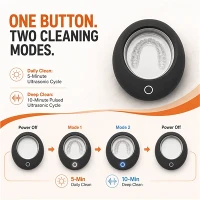
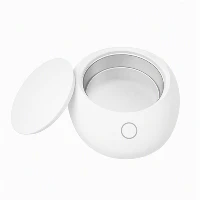
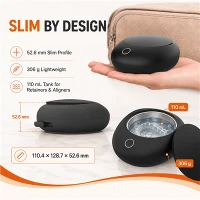

Choosing the right ultrasonic retainer cleaner matters for both consumer satisfaction and product performance. As the demand for orthodontic hygiene devices keeps growing, resellers, distributors, and dental–related brands need clear criteria to evaluate whether a model suits their market needs.
In this article, I share a practical, expert-level buying guide based on real industry benchmarks, key performance indicators, and user behavior insights. My goal is to help you understand how to select a product that truly performs-not just one that "sounds good on paper."

1. Define Your Target User: Who Will Use the Cleaner?
Understanding the end user helps you choose the right features, price range, and marketing angle.
A. Daily Orthodontic Retainer Users
These users clean retainers every day, often after meals or before sleep.
What they need:
Fast cleaning time (3–5 minutes per cycle)
Quiet operation below 50 dB
Stable frequency around 42 kHz to clean debris and saliva film
Compact size and simple operation for daily use
B. Active Aligners Users (Invisalign/SmileDirect-style)
These users remove aligners many times a day.
What they need:
Stronger cavitation power for deep cleaning
A tank size between 150–250 ml
Optional UV-C light for odor and stain reduction
More durable transducers because of frequent daily cycles
C. Users with High Bacteria or Heavy Stains
Some people experience higher bacterial buildup.
What they need:
A model offering "deep cleaning mode" (7–10 minutes)
Consistent 42 kHz frequency output
Stainless steel tank for better heat dissipation
Ability to handle denture tablets safely
D. Families or Multi-Person Households
This group often shares the device.
What they need:
Larger tank (200–300 ml)
Stronger housing materials for long-term repeated use
Removable basket and lid for hygiene
Longer lifespan (typically 3–5 years for quality ultrasonic cleaners)

2. Evaluate Key Technical Specifications
A. Ultrasonic Frequency (Why 42 kHz Works Best)
Most high-quality retainer cleaners use 42 kHz, because it balances:
- Fine enough cavitation to remove plaque film
- Strong enough power to break down buildup
- Gentle enough to avoid damaging aligners
- Lower than 35 kHz → too aggressive.
- Higher than 50 kHz → too weak for deep cleaning.
B. Cleaning Duration (3–5 minutes is ideal)
A reliable ultrasonic cleaner should achieve daily cleaning within 3–5 minutes.
You can explain this to buyers:
- 3–5 minutes → daily cleaning to remove saliva film and light stains
- 7–10 minutes → deep cleaning once or twice weekly
- Why this matters for B2B selection:
- Products with too short cycles (<2 minutes) clean poorly.
- Products with long cycles (>10 minutes) waste time and feel inconvenient.
C. Noise Level (Below 50 dB is Considered Quiet)
Most consumers expect quiet performance.
Market benchmarks:
- Premium models → 45–50 dB
- Standard models → 50–55 dB
- Poor-quality models → 60 dB+
When selling to Europe or the U.S. market, noise level affects ratings significantly.
D. Lifespan and Durability
A reliable ultrasonic cleaner usually lasts 3–5 years with daily use.
Key factors include:
- Transducer quality
- Power board stability
- Tank material (304 stainless steel is recommended)
- Waterproof structure
For B2B buyers, selecting a model with stable testing data reduces returns and warranty costs.
3. Compare Build Quality and Materials
A. Tank Material
Look for:
- 304 stainless steel tank
- Smooth surface coating
- No welding marks
This ensures better heat resistance and long-term durability.
B. Housing Material
Recommended:
- ABS or PC with anti-yellowing resin
- High-temperature resistance
- Impact-resistant construction
C. Lid Type
Options include:
- Transparent lid → easier to observe cleaning
- Sealed lid → better noise control
- Hinged lid → longer lifespan

4. Assess Real Cleaning Performance
A. Cavitation Power
A good manufacturer can provide:
- Cavitation test videos
- Water ripple test
- Performance data at full load
These indicators show whether the transducer delivers consistent power.
B. Fit for Retainer Shapes
Check if the tank is compatible with:
- Holes-style retainers
- Invisalign aligners
- Hawley retainers (need slightly bigger tank)
- Night guards and whitening trays
C. UV-C Light-Is It Worth It?
UV-C is not required but adds value for premium models.
Buyers should check:
- Wavelength 260–280 nm
- Light positioning for even coverage
- Safety interlock design
5. Evaluate Certifications and Compliance
For global markets, these matter greatly:
- FCC for the U.S.
- CE/EMC/LVD for the EU
- ROHS for environmental compliance
- SGS test reports (optional but persuasive)
Supporting documents increase trust and help distributors pass customs without issues.

6. Define After-Sales and Customization Capabilities (OEM/ODM)
A. OEM Customization Options
Depending on the manufacturer, available customizations usually include:
- Color customization
- Logo printing
- Box design
- User manual design
- Power plug options
B. ODM Capabilities
Manufacturers with R&D teams can support:
- Structural redesign
- Function configuration
- New mold development
- Custom tank size or frequency
This is important for distributors who want unique products.
7. Price–Performance Ratio for Each Market Segment
A. Entry-Level Market
Target: Retail under $20–30
Features:
Basic 42 kHz
150–200 ml tank
Simple single-button operation
B. Mid-Range Market
Target: Retail $30–50
Features:
Low-noise (<50 dB)
200 ml tank
5–10 min timer options
C. Premium Market
Target: Retail $50–80
Features:
UV-C light
Multiple modes
Higher durability
Enhanced structural waterproofing

8. Practical Testing Checklist Before You Buy
Here is a quick professional checklist for B2B evaluation:
| Test Item | Good Result | Why It Matters |
|---|---|---|
| Cavitation test | Uniform tiny bubbles | Shows real cleaning power |
| Noise test | <50 dB | High user satisfaction |
| Heating test | Slight warm water | Indicates power efficiency |
| Long-run test | 100+ cycles stable | Predicts lifespan |
| Waterproof test | No leakage | Prevents early failure |
Conclusion
Choosing the right ultrasonic retainer cleaner requires more than just comparing prices. As a B2B buyer, you need to evaluate frequency, tank size, noise level, lifespan, certifications, and OEM/ODM capabilities.
A product with stable performance, reliable components, and strong manufacturer support will always help your brand receive fewer complaints, higher reviews, and stronger customer loyalty.