



Invisalign retainers have transformed modern orthodontic treatment by offering a discreet, comfortable, and removable alternative to traditional braces. However, because these clear aligners are worn for up to 22 hours a day, they are constantly exposed to saliva, plaque, food particles, and oral bacteria.
Without proper cleaning, Invisalign retainers can quickly become cloudy, develop unpleasant odors, and accumulate harmful biofilm that may affect both oral health and treatment results.
In this comprehensive guide, you'll learn how to clean Invisalign retainers effectively, which cleaning methods work best, common mistakes to avoid, and why many dental professionals now recommend ultrasonic cleaning technology as part of a modern retainer care routine.
Why Proper Invisalign Retainer Cleaning Matters
Many users focus on wearing their aligners consistently but underestimate the importance of daily cleaning.
The Hidden Problem Of Biofilm Buildup
Every time you wear your retainers, a thin layer of saliva proteins, bacteria, and plaque begins accumulating on the surface. Within 24 to 48 hours, this can develop into biofilm-a sticky microbial layer that is difficult to remove with water alone.
Biofilm not only causes unpleasant odors but may also contribute to:
- Bad breath
- Gum irritation
- Increased plaque accumulation
- Tooth decay risk
- Oral discomfort
Regular cleaning helps prevent these issues before they become noticeable.
Clear Aligners Lose Transparency Over Time
One of Invisalign's biggest advantages is its nearly invisible appearance.
However, inadequate cleaning can cause:
- Yellow discoloration
- White mineral deposits
- Cloudy surfaces
- Permanent staining
Keeping retainers clean preserves the clear appearance that makes Invisalign so popular.
Proper Maintenance Extends Retainer Lifespan
Retainers represent a significant investment in your orthodontic treatment.
Routine cleaning helps:
- Reduce material degradation
- Prevent premature replacement
- Maintain proper fit
- Improve wearing comfort
A well-maintained retainer can remain effective for much longer than one that receives inconsistent care.
Daily Cleaning Routine For Invisalign Retainers
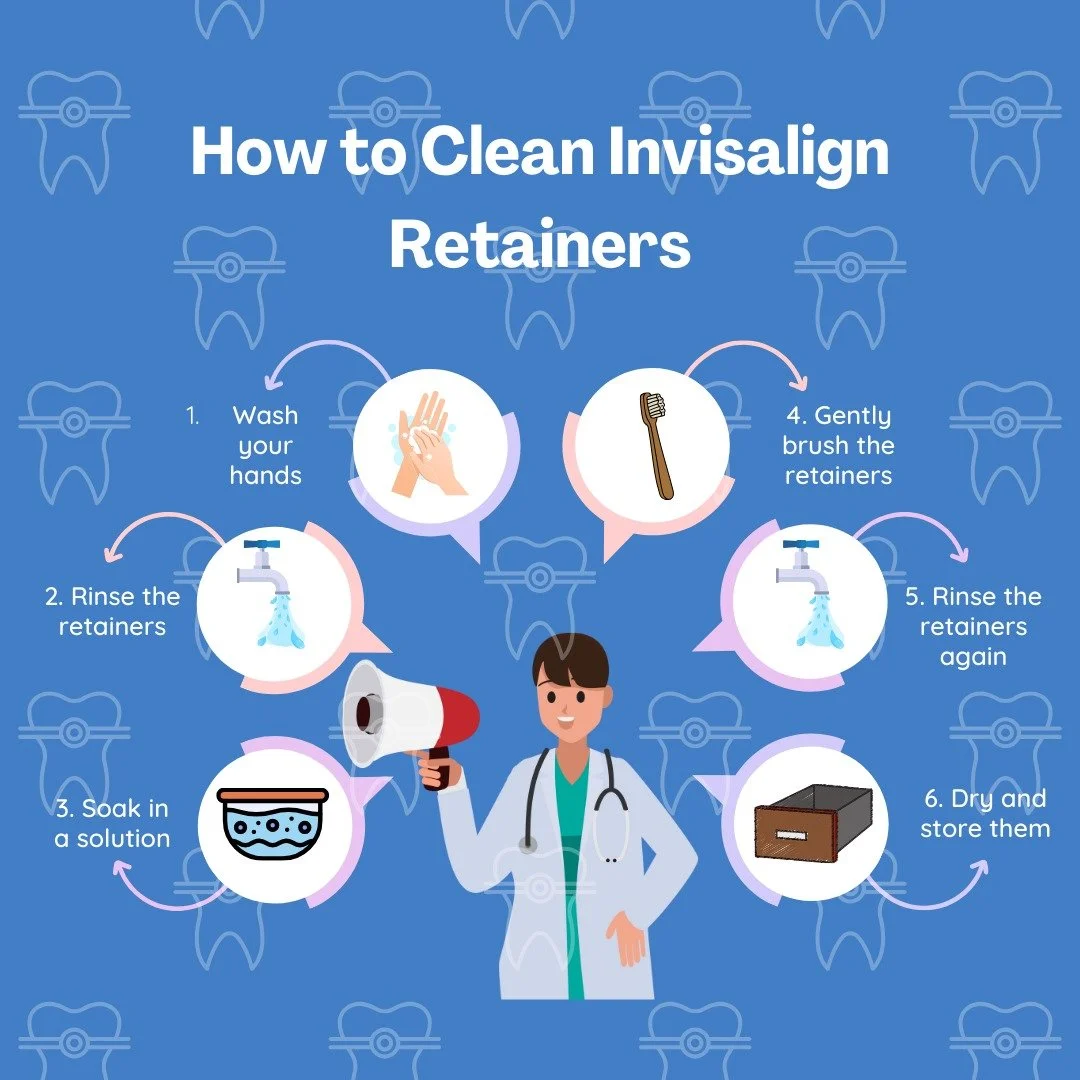
The foundation of retainer hygiene is a simple daily cleaning routine.
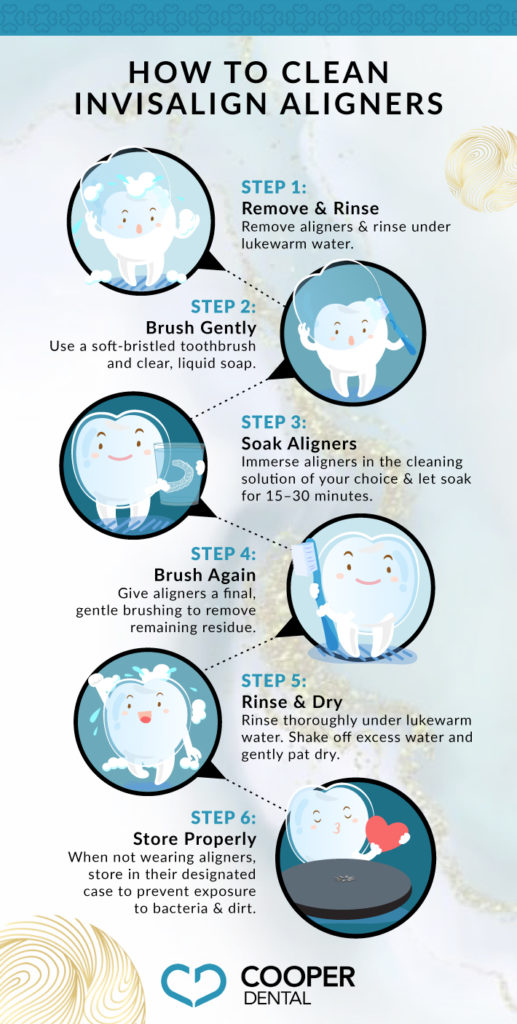
Rinse Immediately After Removal
Whenever you remove your aligners, rinse them immediately under cool or lukewarm water.
This prevents saliva and debris from drying onto the surface.
Avoid hot water at all times. Invisalign retainers are made from thermoplastic materials that can warp when exposed to high temperatures.
Even slight distortion can affect fit and treatment effectiveness.
Brush Gently Using A Soft Toothbrush
A dedicated soft-bristled toothbrush can help remove surface buildup.
Brush both sides of the retainer gently for approximately 30 to 60 seconds.
Use light pressure to avoid creating scratches.
These tiny scratches can become ideal places for bacteria and stains to accumulate.
Allow Retainers To Dry Before Storage
After cleaning, allow the retainer to air dry before placing it in its storage case.
Moist environments encourage bacterial growth and odor formation.
Proper drying supports better hygiene and freshness.
Best Deep Cleaning Methods For Invisalign Retainers
Daily brushing removes surface debris, but deeper cleaning is necessary to eliminate biofilm and mineral deposits.
Invisalign Cleaning Crystals
Cleaning crystals are specifically designed for clear aligners.
They help remove:
- Plaque buildup
- Surface stains
- Odors
Most users find that using cleaning crystals two to three times per week helps maintain excellent clarity.
Vinegar Solution For Mineral Deposits
A diluted white vinegar solution can help dissolve mineral buildup.
Mix:
One part white vinegar
Three parts water
Soak retainers for approximately 10 to 15 minutes before rinsing thoroughly.
This method should only be used occasionally to avoid excessive exposure to acidic solutions.
Baking Soda Cleaning
Baking soda provides a mild cleaning option for removing odors.
Create a thin paste using a small amount of water and baking soda.
Gently brush the retainer surface before rinsing completely.
Because baking soda has mild abrasive properties, it should not be used excessively.
Professional Cleaning Tablets
Retainer cleaning tablets remain a popular option among orthodontic patients.
These products are convenient and easy to use but should be selected carefully to ensure compatibility with clear aligners.
Why Ultrasonic Cleaning Is Becoming The Preferred Solution
As oral care technology advances, ultrasonic cleaning has emerged as one of the most effective methods for maintaining retainers.
How An Ultrasonic Retainer Cleaner Works
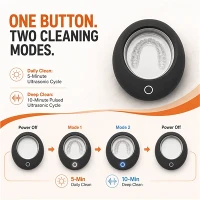
An Ultrasonic Retainer Cleaner uses high-frequency sound waves, typically around 40–45kHz, to create microscopic cavitation bubbles in water.
When these bubbles collapse, they generate tiny cleaning forces that:
- Remove biofilm
- Lift plaque deposits
- Eliminate trapped debris
- Reach inaccessible areas
Unlike manual brushing, ultrasonic cleaning works throughout the entire appliance surface.
Reaches Areas Brushing Cannot
Even careful brushing struggles to clean:
- Internal grooves
- Attachment recesses
- Fine edges
- Complex aligner contours
An Ultrasonic Denture Cleaner can access these difficult-to-reach areas without physical scrubbing.
This makes it particularly valuable for Invisalign users who want consistent hygiene.
Gentle On Retainer Materials
Repeated brushing may eventually create micro-scratches.
Ultrasonic cleaning relies on water-based cavitation rather than abrasive contact.
As a result, retainers experience less physical wear over time.
Suitable For Multiple Dental Appliances
Many users own more than one oral appliance.
A Dental Appliance Cleaner can be used for:
Invisalign retainers
- Clear aligners
- Night guards
- Mouth guards
- Dentures
- Orthodontic retainers
This versatility makes ultrasonic technology a practical long-term investment.
Common Invisalign Cleaning Mistakes To Avoid
Many cleaning problems occur because users unknowingly follow incorrect practices.
Using Hot Water
Hot water remains one of the most common causes of retainer damage.
Heat can permanently alter aligner shape, reducing effectiveness and comfort.
Always use cool or lukewarm water.
Cleaning With Toothpaste
Toothpaste is designed for enamel, not plastic.
Many formulas contain abrasive particles that scratch retainer surfaces.
These scratches become breeding grounds for bacteria and stains.
Using Harsh Chemicals
Avoid:
Bleach
Alcohol
Hydrogen peroxide solutions not intended for retainers
Household cleaners
These substances may damage materials and leave potentially harmful residues.
Skipping Deep Cleaning
Daily rinsing alone is not enough.
Without regular deep cleaning, biofilm continues accumulating and becomes increasingly difficult to remove.
Improper Storage
Leaving retainers exposed on countertops increases contamination risk.
Always store retainers in a clean, ventilated case when not in use.
Choosing The Best Retainer Cleaning Machine For Daily Use
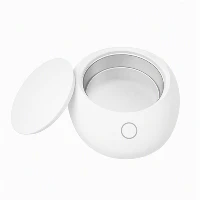
If you're considering upgrading your cleaning routine, selecting the right Retainer Cleaning Machine can significantly improve results.
Optimal Ultrasonic Frequency
Most dental experts recommend frequencies around 40kHz to 45kHz.
This range provides effective cleaning while remaining safe for aligner materials.
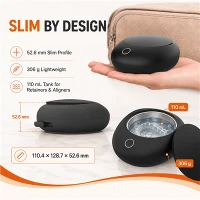
Adequate Tank Capacity
Choose a cleaner large enough to fully immerse your retainers.
Complete water coverage ensures more uniform cleaning.
Easy Operation
One-touch controls simplify daily use.
Users are more likely to maintain consistent cleaning habits when operation is straightforward.
Portable Design
Compact cleaners are ideal for:
- Home use
- Office environments
- Business travel
- Orthodontic patients on the go
Portability increases convenience and encourages regular use.
Additional UV Disinfection Features
Some modern cleaners combine ultrasonic cleaning with UV technology.
These systems offer enhanced hygiene support while maintaining simple operation.
When evaluating products, prioritize cleaning performance, reliability, and material safety rather than unnecessary complexity.

Conclusion
Keeping Invisalign retainers clean is about more than appearance. Proper maintenance supports oral health, prevents odor, preserves transparency, and extends appliance lifespan.
A complete cleaning routine should include:
- Daily rinsing
- Gentle brushing
- Regular deep cleaning
- Consistent storage habits
For users seeking a more advanced solution, an Ultrasonic Retainer Cleaner offers a convenient and highly effective way to remove biofilm and debris from areas traditional brushing cannot reach.
As more dental professionals recommend ultrasonic technology for home use, investing in a high-quality Dental Appliance Cleaner can help simplify retainer maintenance while supporting long-term oral hygiene.
Whether you're an Invisalign user, orthodontic patient, dental distributor, or oral care retailer, understanding effective retainer cleaning practices is essential for achieving healthier smiles and better treatment outcomes.
FAQs
1. How often should I clean my Invisalign retainers?
You should rinse and gently brush your retainers every day. Deep cleaning should be performed two to three times per week for optimal hygiene.
2. Can I use toothpaste to clean Invisalign retainers?
No. Most toothpastes contain abrasive ingredients that may scratch the retainer surface and increase stain buildup over time.
3. Are ultrasonic cleaners safe for Invisalign retainers?
Yes. Quality ultrasonic cleaners are widely considered safe for Invisalign retainers because they clean using water-based cavitation rather than abrasive scrubbing.
4. How long should an ultrasonic cleaning cycle last?
Most retainers can be effectively cleaned within 3 to 5 minutes per cycle, depending on the device and cleaning condition.
5. Can an ultrasonic denture cleaner also clean retainers?
Yes. Many Ultrasonic Denture Cleaner models are designed to clean dentures, retainers, aligners, mouth guards, and other dental appliances safely and effectively.
References
American Association of Orthodontists (AAO). Retainer Care and Maintenance Guidelines.
Invisalign® Official Care Instructions and Cleaning Recommendations.
American Dental Association (ADA). Oral Appliance Hygiene Recommendations.
Journal of Clinical Orthodontics. Biofilm Formation on Orthodontic Appliances.
International Journal of Dental Hygiene. Evaluation of Ultrasonic Cleaning Methods for Dental Appliances.
National Institutes of Health (NIH). Microbial Colonization of Removable Orthodontic Appliances.
European Journal of Orthodontics. Long-Term Maintenance of Clear Aligners and Retainers.