






Introduction: The Evolution of Dental Appliance Hygiene
For decades, the standard advice for cleaning dental appliances-whether they are retainers, aligners, or dentures-has been "soak them in a tablet solution." While cleaning tablets were a step up from simple brushing, the dental industry has seen a significant shift toward technology-driven solutions.
As a B2B partner or professional distributor, understanding this shift is crucial. Consumers are no longer satisfied with "good enough" hygiene; they are looking for professional-grade results at home. The **ultrasonic retainer cleaner**, such as the **GoldRosa US600 series**, represents the next frontier in appliance care. This article explores the scientific and practical reasons why ultrasonic technology is superior to chemical tablets and why this transition is a massive opportunity for oral care brands.

The Science of Cavitation: How Ultrasonic Cleaning Works
The primary reason ultrasonic cleaners outperform tablets is the method of cleaning. Tablets rely on **chemical reactions**, whereas ultrasonic cleaners use **mechanical physics**.
What is Cavitation?
Ultrasonic cleaners work by generating high-frequency sound waves (typically between 40kHz and 42kHz). These waves travel through the water, creating millions of microscopic vacuum bubbles. This process is known as **cavitation**.
When these bubbles collapse (implode) against the surface of the retainer, they release a high-intensity shockwave that "scrubs" the surface at a molecular level. This mechanical action can reach into the microscopic pores of the plastic, which are invisible to the naked eye but serve as perfect hiding spots for bacteria and plaque.
H3: Reaching the "Unreachable"
A retainer has a complex geometry-grooves, ridges, and attachment points that a toothbrush or a simple chemical soak cannot fully penetrate. Cavitation bubbles are small enough to enter these crevices, ensuring that the appliance is clean not just on the surface, but throughout its entire structure.
Why Cleaning Tablets Fall Short
Cleaning tablets have been a market staple because they are inexpensive and easy to find. However, from a technical perspective, they have several limitations that savvy consumers and B2B sellers should be aware of.
The Problem with Porosity
Most dental retainers are made of porous polymers. Over time, these pores absorb proteins from saliva, which eventually harden into **calculus (tartar)**. Chemical tablets are effective at killing surface bacteria, but they lack the mechanical force to break down hardened calculus. This is why many "long-term" retainer users notice a white, crusty buildup that won't go away-a problem tablets simply cannot solve.
Chemical Residue and Sensitivities
Many cleaning tablets contain persulfates or other oxidizing agents. While effective at bleaching stains, these chemicals can leave a residue if not rinsed perfectly. For users with sensitive gums or allergies, this can lead to irritation. An ultrasonic cleaner, by contrast, can achieve superior results using nothing but plain water or a drop of mild, pH-neutral soap.
Long-term Cost and Environmental Impact
From a B2B sustainability perspective, tablets are a "single-use" chemical product that generates plastic waste (blister packs) and chemical runoff. An ultrasonic cleaner is a one-time investment in a durable electronic device that lasts for years, aligning with the growing consumer demand for eco-friendly "slow-tech" solutions.
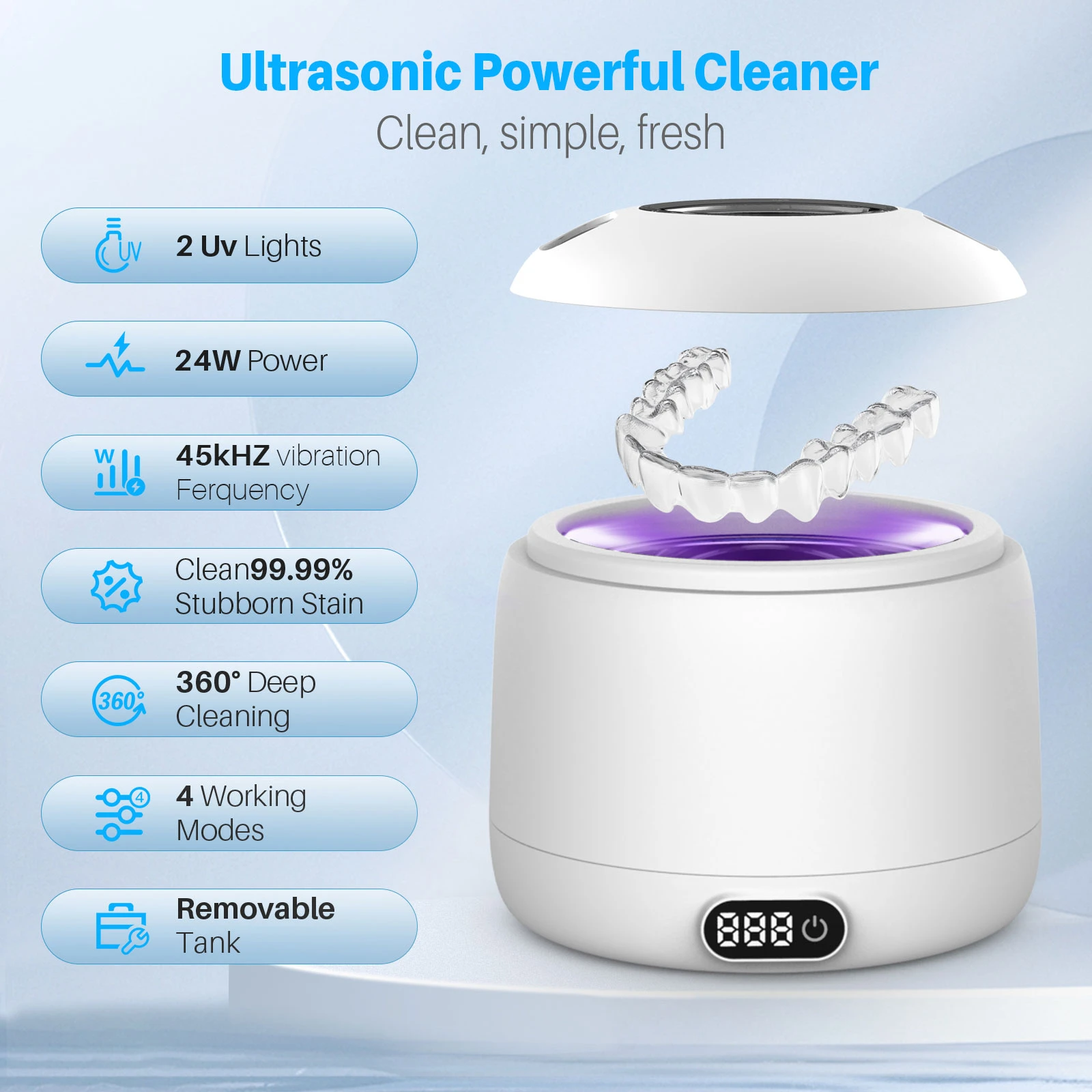
The Professional Edge: Why B2B Partners Prefer Ultrasonic Solutions
For distributors and OEM partners, moving from selling tablets to selling ultrasonic cleaners like the GoldRosa US600 offers several business advantages.
Higher Profit Margins and Perceived Value
A pack of tablets is a low-margin commodity. An ultrasonic retainer cleaner is a high-value health tech appliance. By offering a sleek, IPX6-rated device with a stainless-steel tank, you elevate your brand from a "pharmacy supplier" to a "dental technology provider."
Multi-Purpose Versatility
One of the strongest selling points of a device like the US600 is that it isn't *just* for retainers. It can clean:
- Clear aligners (Invisalign)
- Night guards and sports mouthguards
- Dentures and partials
- Jewelry (rings, earrings, watches)
- Small personal items like shaver heads
This versatility expands your target market from just orthodontic patients to a much broader lifestyle demographic.
Key Features of the GoldRosa US600 Ultrasonic Cleaner
When selecting an ultrasonic cleaner for your brand, not all devices are created equal. The US600 is designed with B2B reliability in mind:
1. **Precision 42kHz Frequency**: The optimal frequency for cleaning delicate dental polymers without causing micro-cracks.
2. **Stainless Steel Tank**: Grade 304 stainless steel ensures longevity and prevents corrosion from cleaning solutions.
3. **IPX6 Waterproof Rating**: Essential for a device used near a bathroom sink, protecting the internal electronics from splashes.
4. **Customizable Modes**: Multiple timing cycles (e.g., 3-minute quick clean vs. 5-minute deep clean) allow for a tailored user experience.
5. **Compact, Aesthetic Design**: Designed to look professional on a vanity, unlike the bulky, industrial-looking cleaners of the past.
Maintenance and Best Practices for Ultrasonic Cleaners
To ensure the US600 performs at its best, a few simple maintenance steps are required:
- **Do Not Run Dry**: Running the device without water can damage the ultrasonic transducer.
- **Change the Water Daily**: To prevent bacterial buildup in the tank, users should empty and wipe the tank dry after each use.
- **Optional Enhancements**: While water works well, adding a specialized non-abrasive solution can help with heavy staining.
- **Avoid Overheating**: If cleaning multiple items in a row, allow the device to rest for a few minutes to protect the motor.

FAQs
1. Is ultrasonic cleaning safe for all types of retainers?
Yes, 42kHz ultrasonic waves are safe for standard plastic retainers, Hawley retainers, and clear aligners. However, we recommend checking with the dentist if the appliance has loose-fitted gems or very delicate custom attachments.
2. Does the ultrasonic cleaner replace brushing?
While the ultrasonic cleaner removes 99% of bacteria and plaque, we still recommend a gentle brush with a soft toothbrush occasionally to remove large, loose particles. However, it completely replaces the need for aggressive scrubbing that can scratch the plastic.
3. Can I use mouthwash in the ultrasonic cleaner?
We do not recommend using undiluted mouthwash as it may contain alcohols or dyes that could damage the device's seals or stain the retainer. Plain water with an optional specialized cleaning tablet is the best choice.
4. How long does the cleaning cycle take?
Most professional-grade ultrasonic cleaners, like the US600, have a standard cycle of 3 to 5 minutes, which is significantly faster than the 15-30 minute soak required by most tablets.
5. Why is my ultrasonic cleaner making a buzzing sound?
The buzzing sound is normal! It is the sound of the high-frequency vibrations creating cavitation. If the sound becomes a high-pitched squeal or stops vibrating, it may indicate a technical issue.
References
1. **Journal of Clinical Orthodontics**: "Efficacy of Ultrasonic Cleaning vs. Chemical Soaking for Biofilm Control on Orthodontic Aligners."
2. **American Association of Orthodontists (AAO)**: "Retainer Care and Hygiene Best Practices."
3. **Materials Science & Engineering**: "The Effect of Ultrasonic Cavitation on the Surface Roughness of Dental Polymers."
4. **GoldRosa R&D Report**: "US600 Series: Transducer Stability and Cavitation Efficiency Analysis."
5. **Environmental Health Perspectives**: "Assessing the Environmental Impact of Single-Use Chemical Cleaning Products in Oral Care."
Conclusion
The transition from cleaning tablets to ultrasonic technology is more than just a trend-it is a shift toward a more effective, professional, and sustainable way of managing oral health. For B2B partners, the **GoldRosa US600** offers a gateway into this lucrative and growing market.
By educating your customers on the "Science of Cavitation" and the benefits of mechanical cleaning, you aren't just selling a product; you are providing a professional health solution.