


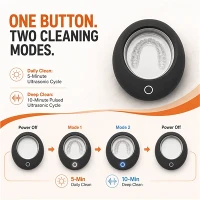
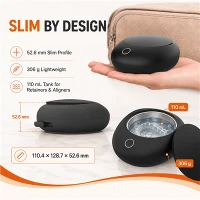


Most people who wear a dental appliance own at least two: a retainer from their orthodontist, a night guard from their dentist, and maybe a set of Invisalign aligners at some point. That is three separate devices, three separate cleaning challenges - and traditionally, three separate solutions. Soaking tablets work on dentures but leave residue on clear aligners. A toothbrush reaches the surface of a night guard but cannot penetrate the tight grooves where bacteria colonize overnight. The right ultrasonic denture cleaner eliminates this fragmented routine entirely, using high-frequency sound waves to scrub every contour of every appliance in minutes. This review breaks down exactly how the technology works, what separates a capable machine from an average one, and which models deserve a place in your supply chain or your bathroom cabinet in 2026.
Why a Single Ultrasonic Cleaner Outperforms Manual Cleaning for Every Appliance
The Hidden Hygiene Gap - What Brushing and Soaking Tablets Miss
Dental appliances share a structural problem: they are full of microscopic pits, wire channels, and resin lattices that a bristle cannot reach. Research published in the Journal of Prosthetic Dentistry found that conventional mechanical brushing removed only 58% of the biofilm on acrylic denture surfaces, leaving the remainder to calcify into tartar and harbor anaerobic bacteria linked to periodontal disease. Soaking tablets improve that figure, but they rely on chemical diffusion - a slow process that is particularly ineffective against the layered plaque that builds inside Invisalign tray channels after just 12 hours of wear. For night guards, the dense thermoplastic material traps sulfur-producing bacteria in its pores, contributing directly to morning halitosis even after a thorough rinse.
The fundamental issue is contact. Manual methods are line-of-sight cleaning tools. Ultrasonic technology is not.
How Ultrasonic Cavitation Works Across Material Types - Acrylic, Thermoplastic, and Silicone
An ultrasonic cleaner converts electrical energy into high-frequency mechanical vibrations - typically between 36kHz and 52kHz in professional-grade dental models - which it transmits through a water-filled tank. These vibrations generate millions of microscopic bubbles through a process called acoustic cavitation. When those bubbles collapse against a surface, they release localized jets of pressure powerful enough to strip biofilm, calcium deposits, and food particles from the deepest structural recesses of any dental appliance, without any physical abrasion.
Critically, the same cavitation mechanism that removes tartar from acrylic denture teeth also cleans the thin thermoplastic walls of an Invisalign aligner and the silicone periphery of a custom night guard - without scratching, warping, or weakening any of them. At a 40kHz ultrasonic dental cleaner frequency range, the energy density is high enough to be effective but gentle enough to preserve the optical clarity of clear aligners and the surface integrity of soft-lined appliances. This is the core reason one machine can legitimately replace every appliance-specific cleaning product in your cabinet.

Key Features That Make an Ultrasonic Denture Cleaner Truly Versatile
Frequency Matters - Why 40–45kHz Is the Sweet Spot for Dental Appliances
Ultrasonic frequency determines bubble size and, consequently, cleaning aggressiveness. Lower frequencies (below 35kHz) produce larger, more energetic bubbles suited for heavy industrial parts. Higher frequencies (above 55kHz) generate finer bubbles with gentle action suited for delicate electronics. For dental appliances - a category that demands thorough plaque removal without abrading polished acrylic or deforming thermoplastic - the optimal window sits between 40kHz and 52kHz. Machines that operate within this band, such as GoldRosa's US200 series at 42,000–45,000Hz and the US600 at 45–52kHz, deliver clinically relevant cleaning action across all appliance materials without introducing mechanical stress to the substrate.
Tank Material and Capacity - Food-Grade 304 Stainless Steel as the Gold Standard
The cleaning tank is the component in constant contact with water, cleaning solution, and the items being cleaned. Plastic tanks leach trace compounds over time, corrode under repeated chemical exposure, and cannot be sterilized effectively. Aluminum tanks react with denture cleaning tablets that contain sodium bicarbonate or citric acid. SUS304 food-grade stainless steel is the benchmark: corrosion-resistant, odor-neutral, and rated safe for contact with oral appliances by food and medical safety standards. GoldRosa equips its entire ultrasonic dental cleaner lineup with SUS304 tanks, from the compact US200 (200ml) to the detachable US500 design. A 200ml tank capacity is sufficient to fully submerge a standard full denture or a pair of Invisalign trays, while keeping the device footprint small enough for a bathroom countertop or a travel bag.
Heating-Assisted Cleaning - Why Warm Water Makes the Difference
Warm water dramatically improves the efficacy of ultrasonic cavitation against dental biofilm. At approximately 45°C (113°F), water viscosity decreases and the surface tension of organic deposits loosens, allowing cavitation bubbles to penetrate more deeply and dislodge calcified plaque that cold-water ultrasonic cycles leave behind. GoldRosa's US200 Heated model implements a "heat first, then clean" sequence: the device pre-warms the water to 45°C before initiating its 42,000–45,000Hz ultrasonic cycle, achieving what the brand describes as 99.99% dirt elimination in controlled testing. For users dealing with heavy tartar accumulation on dentures or protein deposits on overnight Invisalign retainers, this heating mode represents a measurable upgrade over standard cold-water ultrasonic cleaning.
UV Sanitization - The Extra Layer of Hygiene Beyond Ultrasonics
Ultrasonic cleaning removes physical contamination; it does not guarantee microbial elimination. UV-C light at a wavelength of 260–280nm disrupts the DNA of bacteria, viruses, and fungi at the cellular level, rendering them incapable of reproduction. Adding UV sanitization to an ultrasonic cycle means the appliance exits the machine both mechanically clean and microbiologically safe. The GoldRosa US500 and US600 models both incorporate dual UV sterilization lamps operating in the 260–280nm range, with the US500 offering a dedicated UV-only mode for periodic deep sanitization and the US600 integrating UV into two of its three cleaning programs. For night guard users who are particularly susceptible to oral yeast overgrowth, this combined action is clinically relevant.

Top Products Reviewed - One Machine for Every Dental Appliance
GoldRosa US200 Heated Ultrasonic Teeth Cleaner - Best Overall
The US200 Heated is the most complete single-unit ultrasonic denture cleaner currently available for everyday home and travel use. Its dual-mode operation - a standard 42,000–45,000Hz ultrasonic cycle and an upgraded heating cycle that pre-warms water to 45°C - makes it uniquely capable across all appliance types. Retainers emerge from the heated cycle visibly cleaner than after manual brushing; Invisalign trays regain optical clarity; night guards exit without the sulfurous odor that soaking tablets frequently leave behind. The SUS304 food-grade stainless steel tank holds 200ml - sufficient for full appliances - and the isolated low-voltage DC circuit separates water from electricity at the component level, eliminating shock risk during daily use. A rubberized anti-vibration base keeps noise well below intrusive levels during the cleaning cycle. GoldRosa manufactures this model with ISO 13485, FDA, CE, FCC, and RoHS certifications, backed by 107 technology patents. For retailers and brands sourcing a versatile, certifiable ultrasonic dental appliance cleaner at OEM scale, this is the unit to lead with.
GoldRosa US600 Professional Ultrasonic Denture Cleaner - Best Portable
The US600 answers a specific and growing demand: professional-grade ultrasonic cleaning performance in a genuinely portable dental ultrasonic cleaner. A built-in 4000mAh battery supports at least eight complete cleaning cycles per charge, recharged in 2.5 hours via Type-C at 5V/2A. Operating at 45–52kHz - the highest frequency in GoldRosa's lineup - it delivers fine, high-density cavitation action particularly well suited to the thin walls and tight channels of Invisalign aligners and wire retainers. The IPX6 waterproof rating means it can be rinsed under running water without risk. Dual UV lamps (260–280nm) integrate into two of its three modes: a 300-second Quick Clean, a 600-second Deep Clean, and a 600-second UV-Only cycle. At 110 × 110 × 57.9mm and equipped with a built-in mirror for post-clean inspection, it is the most complete travel solution in this category. OEM customization of logo, color, and packaging is fully supported.
iSonic F3900 Ultrasonic Denture Cleaner - Established Budget Option
The iSonic F3900 is a widely distributed entry-level model with a single cleaning mode and a straightforward 5-minute cycle. It performs adequately for routine daily cleaning of full dentures and simple retainers. However, it lacks a heating mode, UV sanitization, and food-grade stainless steel tank construction. Its 42kHz frequency is competitive, but the absence of a thermal pre-treatment step means it struggles with heavy tartar accumulation. For consumers whose budget is the primary constraint and whose appliances are simple, it is a reasonable option; for brands building a comprehensive oral care portfolio, it leaves meaningful gaps.
Magnasonic Professional Ultrasonic Jewelry and Denture Cleaner (MGUC500) - Versatile But Non-Specialized
The Magnasonic MGUC500 is marketed as a dual-purpose jewelry and dental appliance cleaner. At 42kHz with a 600ml tank, it handles larger items and longer cycles well. The trade-off is that its design prioritizes jewelry - rings, watches, eyeglasses - rather than dental appliances specifically, and it offers no heating function or UV sanitization. Users sourcing a single machine for both jewelry and appliance cleaning will find it capable; those whose focus is exclusively dental hygiene will find GoldRosa's dedicated lineup better optimized for the task.
SmileDirectClub Ultrasonic Cleaner - Aligner-Specific with Limited Scope
SmileDirectClub's branded ultrasonic cleaner is engineered for one appliance type: clear aligners from their own system. Its compact tank and single cleaning mode work well for that narrow application. It is not designed for night guards (which typically exceed its usable interior dimensions), partial dentures, or full acrylic plates. For retailers building a product line that covers the full dental appliance market, its scope is too narrow to anchor a range.

Quick Comparison Table
|
Model |
Frequency |
Heating |
UV |
Tank Material |
Capacity |
Cordless |
Best For |
|
GoldRosa US200 Heated |
42,000–45,000Hz |
Yes (45°C) |
Yes |
SUS304 Steel |
200ml |
No |
Overall Best |
|
GoldRosa US600 |
45–52kHz |
No |
Yes (260–280nm) |
SUS304 Steel |
166ml |
Yes (4000mAh) |
Portable / Travel |
|
iSonic F3900 |
42kHz |
No |
No |
Plastic |
11 oz |
No |
Budget |
|
Magnasonic MGUC500 |
42kHz |
No |
No |
Stainless |
600ml |
No |
Jewelry + Dental |
|
SmileDirectClub |
N/A |
No |
No |
Plastic |
Small |
No |
Aligners Only |
How to Use an Ultrasonic Denture Cleaner for Different Appliances
Night Guards and Mouth Guards - Daily Deep Clean Without Scratching
Fill the tank with lukewarm water to the indicated fill line and optionally add a small amount of denture cleaning tablet or mild liquid soap. Place the night guard flat or on its side so water can circulate freely around all surfaces. Run the heating mode if available - the 45°C pre-warm cycle is particularly effective at loosening the protein deposits that accumulate on thermoplastic material during extended overnight wear. A five-minute cycle is sufficient for daily maintenance; for weekly deep cleaning, a second consecutive cycle or a UV-only follow-up cycle provides additional bacterial reduction. Rinse the appliance under cool water immediately after the cycle completes to remove any loosened debris.
Retainers and Invisalign Aligners - Maintaining Clarity and Hygiene
Clear retainers and Invisalign trays are among the most hygiene-sensitive appliances in this category because they sit directly against tooth enamel for extended periods. Biofilm that accumulates inside the tray transfers directly to teeth surfaces. Fill the tank with clean water and operate on the standard ultrasonic cycle at 42–52kHz. Avoid using hot tap water as a substitute for the machine's controlled heating function - water above 60°C can distort thermoplastic. For Invisalign trays that have developed visible clouding or light staining, the 45kHz–52kHz frequency range of the GoldRosa US600 is particularly effective at restoring optical clarity without abrasion. Follow each cleaning cycle with a UV sanitization cycle every two to three days for full microbial control.
Dentures and Partial Plates - Removing Stubborn Stains Safely
Full acrylic dentures and metal-framed partial plates both benefit from the ultrasonic cavitation's ability to reach into undercut areas and wire junctions that brushes cannot access. Submerge the denture fully in the tank and, if using the GoldRosa US200's heating mode, allow the full "heat first, then clean" sequence to complete without interruption. The thermal softening step is especially valuable for calcified tartar at the gingival margin of denture teeth. Do not use abrasive cleaning powders in the tank - they accelerate acrylic surface degradation over time. A mild, non-abrasive denture cleaning solution or plain water is sufficient when combined with a professional-grade ultrasonic denture cleaner.
FAQs
Q1: How often should I use an ultrasonic denture cleaner?
Daily use is appropriate for most dental appliances. Night guards and Invisalign trays accumulate biofilm within 12 to 24 hours of use, making a daily five-minute cleaning cycle the clinically recommended baseline. Machines with automatic shutoff timers, such as the GoldRosa US200 and US600, make daily routines practical because they require no active monitoring once the cycle begins. For full dentures, daily cleaning supplemented by a weekly deeper cycle addresses both surface staining and bacterial colonization.
Q2: Can an ultrasonic cleaner damage Invisalign aligners?
No, provided the machine operates within the 40–52kHz frequency range and does not use water above 60°C. Frequencies in this range generate fine cavitation bubbles that clean effectively without exerting sufficient mechanical force to warp or crack thermoplastic material. The GoldRosa US600 operates at 45–52kHz and has been designed specifically with dental appliance materials in mind. Avoid industrial ultrasonic cleaners that operate below 35kHz - the larger, more energetic bubbles they generate are inappropriate for dental-grade plastics.
Q3: Is ultrasonic cleaning better than brushing for a retainer?
For most users, yes. Brushing removes surface debris but cannot penetrate the microscopic pores and geometric recesses inherent to retainer construction. A 2020 study in Clinical Oral Investigations found that ultrasonic cleaning reduced total bacterial count on orthodontic retainers significantly more effectively than manual brushing with toothpaste over a four-week trial period. The non-contact nature of ultrasonic cleaning also eliminates the risk of surface scratches that create additional sites for bacterial adhesion over time.
Q4: What is the best ultrasonic cleaner for multiple dental appliances?
The GoldRosa US200 Heated Ultrasonic Teeth Cleaner is the strongest single-unit choice for users or retailers who need one machine to handle night guards, retainers, Invisalign trays, dentures, and toothbrush heads. Its combination of 42,000–45,000Hz frequency, 45°C heating mode, UV sanitization, and food-grade stainless steel construction addresses every appliance category without compromise. For users who prioritize portability, the GoldRosa US600 provides comparable frequency performance and UV capability in a cordless, IPX6-rated format.
Q5: Do I need UV sanitization for my night guard?
UV sanitization is not strictly required, but it adds meaningful value for night guard users specifically. Night guards are worn for 6–8 hours in a warm, oxygen-limited environment - ideal conditions for anaerobic bacteria and oral yeast overgrowth. Ultrasonic cleaning removes physical biofilm; UV-C light at 260–280nm kills the residual microorganisms that cavitation dislodges but does not destroy. The GoldRosa US500 and US600 both include dual UV lamps in this wavelength range. For anyone who has experienced recurring morning bad breath despite consistent cleaning, adding a UV cycle two to three times per week typically produces a noticeable improvement.
References
1. Augsburger, R. A., & Elahi, J. M. (1982). Evaluation of seven proprietary denture cleansers.
Journal of Prosthetic Dentistry, 47(4), 356–359.
https://doi.org/10.1016/0022-3913(82)90003-4
2. Paranhos, H. F., et al. (2007). Effects of mechanical and chemical methods on denture biofilm accumulation.
Journal of Oral Rehabilitation, 34(8), 606–612.
https://doi.org/10.1111/j.1365-2842.2007.01753.x
3. American Dental Association (ADA). Caring for Dentures and Other Removable Dental Appliances.
https://www.ada.org/resources/research/science-and-research-institute/oral-health-topics/dentures