







Wearing clear aligners or orthodontic retainers has become an everyday part of modern life.
Whether you are completing active clear aligner treatment or wearing a clear retainer to preserve your smile, keeping these delicate plastic trays clean is often surprisingly frustrating.
Many people start out with basic manual cleaning: scrubbing their retainers with a soft toothbrush or dropping them into a glass of effervescent soaking solution.
Over time, however, standard brushing often leaves behind a cloudy appearance, persistent morning odors, and chalky white mineral spots.
Worse yet, aggressive scrubbing with abrasive bristles can leave micro-scratches across the smooth surface, creating tiny hiding places where bacteria multiply even faster.
That daily frustration is why an increasing number of dental patients and orthodontic clinics rely on the ultrasonic retainer cleaner.
By using high-frequency water vibrations to reach deep into microscopic crevices, ultrasonic cleaners restore crystal-clear transparency and lasting freshness without physical abrasives.
This ultimate guide walks you through why deep cleaning is essential for dental appliances, how ultrasonic sound waves lift stubborn biofilms, how to operate your cleaner step-by-step, and what retail distributors and dental practices should evaluate when sourcing dependable cleaning hardware.
Why Manual Cleaning Falls Short: The Secret Life of Retainer Biofilm
To understand why clear aligners become cloudy and develop odors, it helps to examine what happens to plastic oral appliances during daily wear.
The Buildup of Saliva, Minerals, and Odors
Most orthodontic patients wear clear trays between eight and twenty-two hours every day.
While seated in your mouth, retainers are constantly bathed in saliva, warmth, and oral bacteria.
Even if an aligner looks smooth to the naked eye, its thermoformed plastic surface features thousands of microscopic ridges and pores.
Over hours of wear, oral bacteria form a sticky, invisible layer called a biofilm.
As saliva dries, calcium minerals precipitate into stubborn white mineral deposits.
Simple handwashing or water rinsing only cleans the surface, leaving sticky biofilms trapped deep inside the plastic pores to cause lingering odors and cloudy discoloration.
The Micro-Scratch Trap of Manual Brushing
When retainers begin to feel sticky or look cloudy, natural instinct is to scrub them harder with a toothbrush and toothpaste.
Unfortunately, standard toothpastes contain fine polishing abrasives designed for tough tooth enamel, not soft dental plastics.
Scrubbing with toothpaste creates microscopic scratches across the surface of the retainer.
These tiny grooves dull the natural transparency of clear aligners and create deeper crevices where food stains and bacteria can settle, making the appliance harder to clean with each passing week.
The Ultrasonic Principle: How Gentle Water Waves Deep-Clean Plastics
An ultrasonic retainer cleaner eliminates the need for harsh manual scrubbing by harnessing high-speed sound waves moving through liquid.
Microscopic Bubbles Clean Every Crevice
Inside the machine's base, an electronic transducer produces tens of thousands of high-frequency vibrations per second-typically around forty thousand vibrations per second.
As these rapid sound waves pass through the water bath, they create microscopic bubbles throughout the liquid.
In a fraction of a second, these microscopic bubbles grow and gently collapse against the submerged retainer.
This rapid collapse creates focused liquid micro-jets that dislodge plaque, dissolve trapped biofilms, and wash away mineral deposits from the tightest corners without scratching the plastic.
Gentle, Contact-Free Surface Protection
Because ultrasonic cleaning relies on water movement rather than mechanical friction, it is completely non-destructive.
Clear plastic aligners, acrylic bases, and delicate stainless-steel expansion wires are cleaned thoroughly without bending, warping, or dulling, extending the cosmetic life of the appliance.
Step-by-Step Instructions: How to Use Your Ultrasonic Cleaner Safely
Operating an ultrasonic retainer cleaner takes only a few minutes each day and fits effortlessly into morning and evening bathroom routines.
Step 1: Pre-Rinse Your Appliance
Before placing your retainer into the cleaner, rinse it briefly under cool or lukewarm running tap water to wash away loose saliva and surface debris.
Step 2: Fill the Basin with Clean Water
Pour clean, cool or room-temperature water into the stainless-steel tank up to the indicated maximum fill line.
Never use boiling or hot water, as high temperatures will warp delicate clear plastics, ruining the custom fit of your aligner.
For added stain removal, you can dissolve half a gentle retainer-cleaning tablet or a few drops of mild liquid soap into the bath.
Step 3: Submerge Your Retainer in the Basket
Place your clear aligners or retainers into the included plastic cleaning basket, then lower the tray into the water bath.
Using a basket keeps items from resting directly on the vibrating tank floor, protecting both the appliance and the machine's sound transducers.
Ensure the trays are fully submerged without forcing or bending them.
Step 4: Run the Timed Cleaning Cycle
Close the lid and press the power button to start the cycle.
A standard daily cleaning run takes between three and five minutes.
If your retainer has heavy mineral buildup or has not been deep-cleaned in weeks, you can run a second cycle or select a longer ten-minute setting.
Step 5: Post-Rinse and Dry
Once the automatic timer completes, disconnect the power, lift out the cleaning tray, and rinse your retainer thoroughly under fresh running water.
Gently pat it dry with a clean, lint-free cloth before popping it back into your mouth or placing it into your daytime travel case.

Best Practices and Mistakes to Avoid: Keeping Aligners Safe
To ensure your retainer retains its custom fit and crystal-clear finish, keep these simple safety guidelines in mind:
Avoid Hot Water Completely: Warm water causes clear thermoformed plastics to soften and distort, which will ruin the alignment of your teeth.
Avoid Harsh Household Chemicals: Never add bleach, rubbing alcohol, or abrasive mouthwashes into your ultrasonic bath; strong chemicals can degrade dental resins and cause surface cloudiness.
Do Not Leave Retainers Soaking Indefinitely: While a short five-minute cleaning cycle is ideal, leaving plastic retainers sitting submerged in cleaning solutions for hours can weaken the material.
Empty and Dry the Tank Daily: Always pour out used water after each cleaning run and wipe the stainless-steel interior dry with a soft cloth to prevent mineral scale and maintain peak hygiene.
Featured Cleaning Solutions: Trusted Hardware from Gold Rose
For oral care brands, dental supply companies, and retail distributors seeking reliable, factory-direct manufacturing, Huizhou Gold Rose Technology Co., Ltd. manufactures a wide family of dependable personal ultrasonic cleaners:
The Gold Rose Model US202 Best Ultrasonic Retainer Cleaner
The Gold Rose Model US202 is an advanced personal appliance cleaner designed specifically for daily retainer, aligner, and denture hygiene.
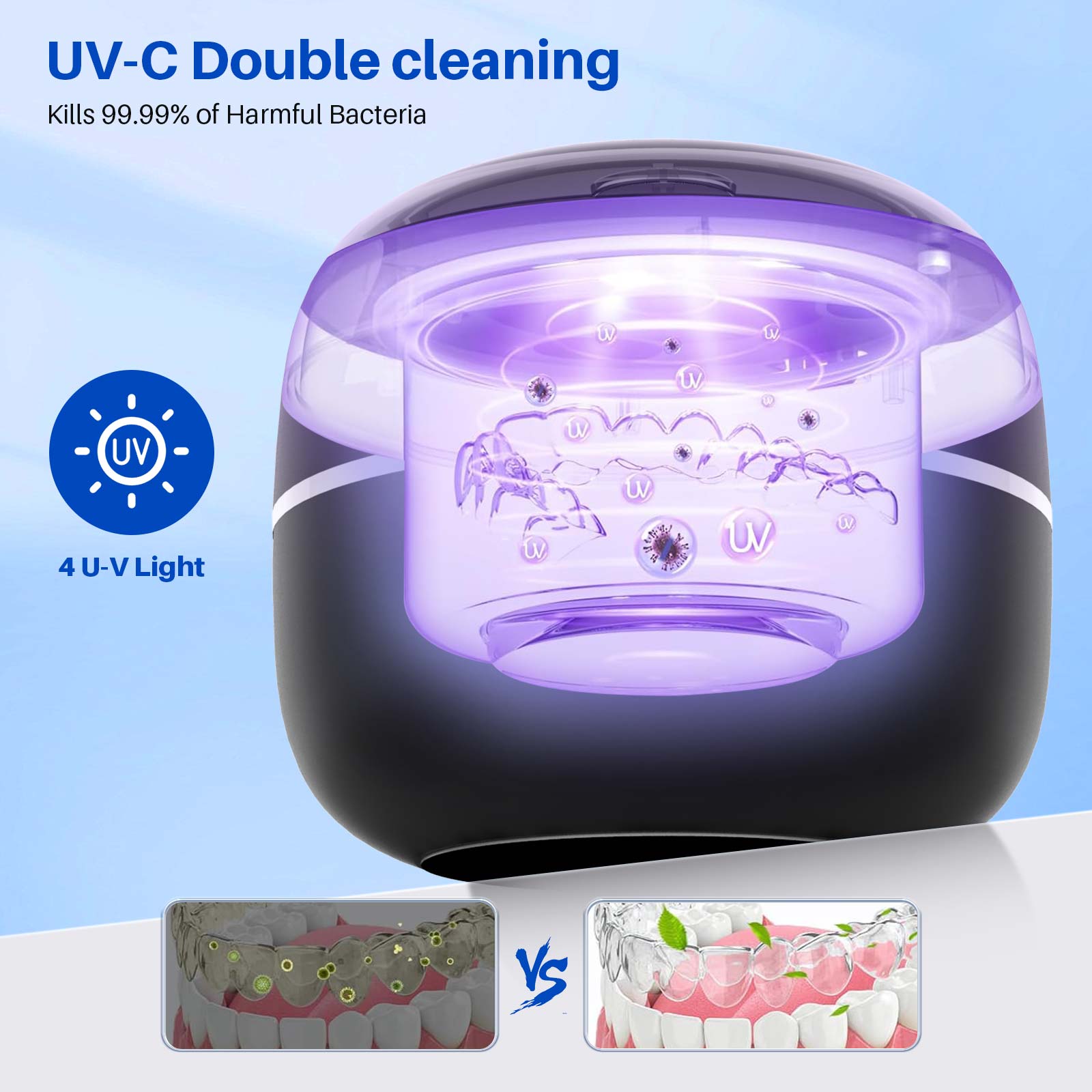
It pairs high-frequency ultrasonic cleaning with a dedicated ultraviolet sanitizing system featuring four UV-C LEDs.
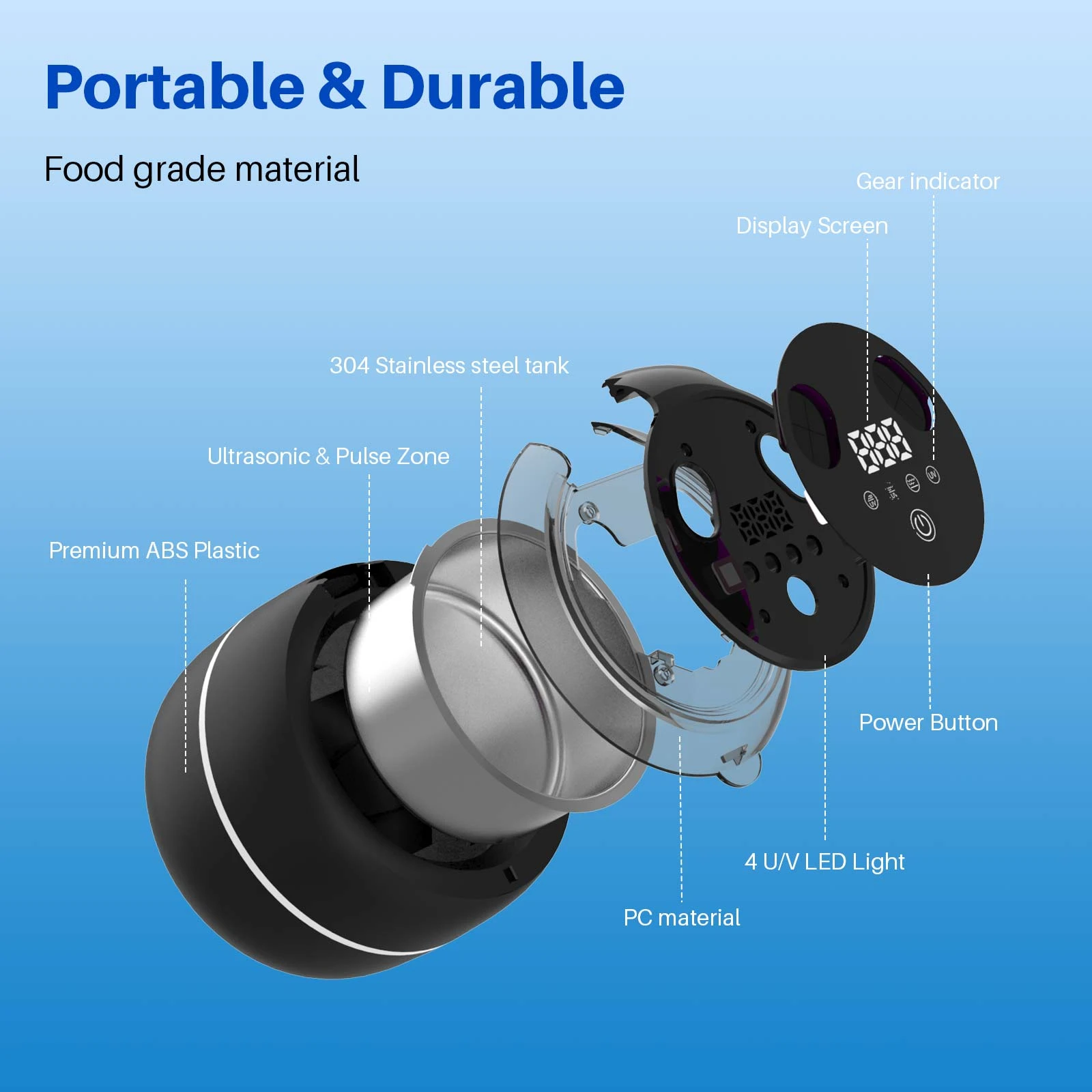
Constructed with a food-grade 304 stainless-steel basin and durable ABS/PC housing, the US202 features an intuitive digital display and four versatile operating modes: Mode 1 (combined ultrasonic and UV for 5 minutes), Mode 2 (pulse ultrasonic and UV for 10 minutes), Mode 3 (ultrasonic only for 10 minutes), and Mode 4 (UV sanitization only for 10 minutes), available for private-label brand partnerships from 1,000 units.
The Gold Rose Model US300 Night Guard and Retainer Cleaner
The Gold Rose Model US300 is a quiet, countertop cleaning bath featuring a 200ml stainless-steel tank and a calibrated 42kHz frequency.
Operating at 24W with a simple one-touch button and an automatic five-minute timer, the US300 provides gentle, 360-degree deep cleaning for invisible braces, metal wire retainers, and sports mouthguards, available for wholesale distribution starting from 500 units.
The Gold Rose Model US4 Compact Personal Ultrasonic Cleaner
Engineered for convenient small-item hygiene on bathroom vanities, the Gold Rose Model US4 features a space-saving 180ml tank, a 45kHz operating frequency, and IPX5 splash resistance.
Supporting dual power options via USB 5V2A or DC 12V2A adapters, the US4 provides versatile cleaning from 1,000 units.
Commercial Sourcing Guide: B2B Quality Benchmarks for Distributors
For dental supply distributors, orthodontic practices, and e-commerce retail buyers, sourcing dependable ultrasonic retainer cleaners requires evaluating core manufacturing standards:
Calibrated Frequencies Between 40kHz and 45kHz
Ensure the factory calibrates internal transducers to steady frequencies between 40kHz and 45kHz.
Frequencies below 35kHz produce harsh bubbles that can stress thin plastic edges, while frequencies above 50kHz produce very gentle waves that may struggle with calcified deposits.
The 40kHz to 45kHz window delivers the ideal balance of thorough biofilm removal and gentle material protection.
Corrosion-Resistant Stainless Steel Tanks
Confirm that internal water basins are pressed from genuine food-grade 304 or medical-grade 316L stainless steel.
High-grade stainless steel resists pitting from effervescent cleaning tablets, ensuring an odor-free, rust-resistant water bath for years of daily use.
Quiet Operation and Splash-Proof Construction
Bathrooms and bedrooms require quiet morning appliances.
Verify that internal damping minimizes operating noise, keeping sound levels comfortably low during five-minute cycles.
Housings should also feature verified splash-resistant construction to protect internal electronics near bathroom sinks.
Reliable Factory Quality Systems
Partner with experienced manufacturers certified under ISO 9001 and ISO 13485 medical device quality systems.
Working with an established partner like Gold Rose ensures automated assembly, 24-hour product aging tests, and dependable global fulfillment directly via goldrosa.com.
Frequently Asked Questions
Q1: Should I use an ultrasonic retainer cleaner every day?
Yes, using an ultrasonic cleaner once a day for three to five minutes effectively prevents plaque biofilms and white mineral deposits from hardening onto your aligners, keeping them fresh and transparent.
Q2: Can I use hot tap water to clean my clear retainers faster?
No, hot or boiling water will soften and warp clear thermoformed plastics, permanently altering their shape and preventing them from fitting your teeth properly.
Q3: Can an ultrasonic retainer cleaner clean other household items?
Yes, ultrasonic cleaners safely clean dentures, electric toothbrush heads, waterproof razor tips, and small jewelry, provided you keep hard items separated to avoid accidental scratching.
Q4: Does ultrasonic cleaning cause microscopic damage to clear aligners?
No, gentle ultrasonic frequencies between 40kHz and 45kHz clean entirely through liquid micro-bubbles without mechanical friction, making them safer for clear plastics than abrasive brushing with toothpaste.
Q5: What private-label OEM and ODM customization does Gold Rose offer for retainer cleaners?
Huizhou Gold Rose Technology Co., Ltd. provides full OEM/ODM manufacturing starting from 500 to 1,000 units, offering custom tank capacities, branded logos, custom housing colors, retail packaging, and global compliance documentation directly through goldrosa.com.
References
American Association of Orthodontists. (2021). Care and Maintenance of Removable Orthodontic Retainers and Clear Aligners. AAO Clinical Practice Guidelines, St. Louis, MO.
American Dental Association. (2020). Infection Control and Appliance Maintenance in Removable Prosthodontics. ADA Science & Research Institute, Chicago, IL.
International Organization for Standardization. (2016). ISO 13485:2016 Medical Devices - Quality Management Systems - Requirements for Regulatory Purposes. ISO Standards Catalogue, Geneva, Switzerland.