


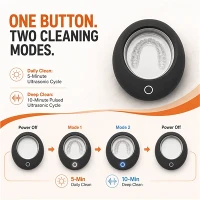
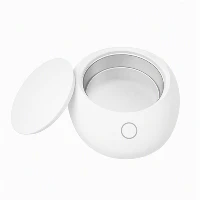
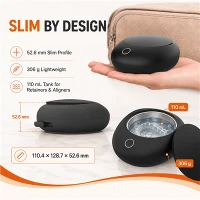

Dental appliances such as retainers, night guards, dentures, and clear aligners require consistent and effective cleaning to remain safe for daily use. Conventional brushing and soaking methods often fail to remove biofilm and bacteria embedded in microscopic surface structures, which can result in odor, discoloration, and hygiene risks over time. Ultrasonic cleaners solve this problem by delivering non-abrasive, deep cleaning through controlled high-frequency vibration, making them an increasingly adopted solution for dental appliance care.

In this article, we review the Top 5 Ultrasonic Cleaners for Dental Appliances in 2026, based on measurable cleaning performance, material safety, and practical usability in real-world scenarios.
Top 5 Ultrasonic Cleaners for Dental Appliances (2026)
1) GoldRosa Rechargeable Ultrasonic Cleaner
The GoldRosa Rechargeable Ultrasonic Cleaner is purpose-built for daily dental appliance hygiene, combining professional-grade ultrasonic performance with true portability.

Unlike traditional plug-in ultrasonic units, this model features a rechargeable battery system that supports multiple cleaning cycles per charge, making it suitable for both home use and travel. It operates within a dental-safe ultrasonic frequency range and includes an integrated UVC sterilization mode, which adds an additional layer of microbial reduction beyond mechanical cavitation alone. UVC treatment at germicidal wavelengths has been shown to inactivate 99.99% of common oral bacteria when used correctly as a supplementary hygiene measure.

The compact tank is optimized for retainers, aligners, night guards, and dentures, while the enclosed design and low operating noise allow for discreet daily use. Touch controls and preset cycles ensure consistent results without user guesswork.
Best suited for: daily users, frequent travelers, and hygiene-focused consumers seeking a compact but professional solution.
2) Zima Dental Pod
The Zima Dental Pod emphasizes simplicity and ease of use, offering a streamlined ultrasonic cleaning experience for aligners and retainers. Its fixed-frequency ultrasonic system provides consistent cavitation suitable for routine maintenance, although it does not include sterilization features beyond ultrasonic action.
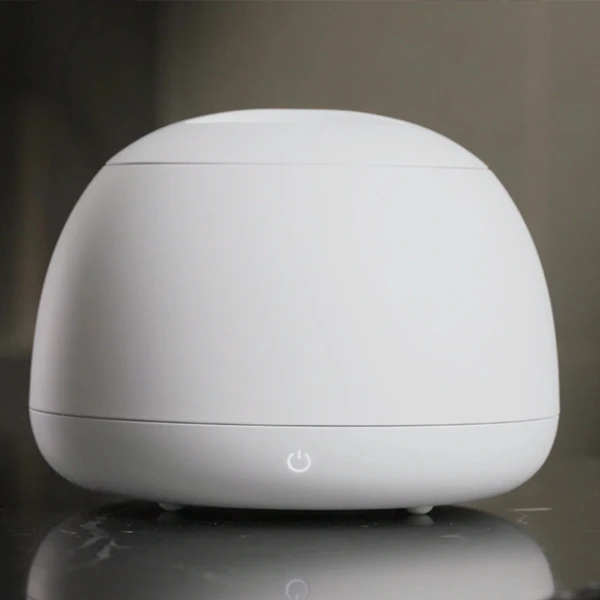
The compact footprint makes it convenient for bathroom countertops, and its single-button operation appeals to users who prefer minimal setup.
Best suited for: users seeking a straightforward daily cleaning device without advanced features.
3) iSonic F3900 Ultrasonic Cleaner
The iSonic F3900 is a widely adopted entry-level ultrasonic cleaner offering solid performance at a more accessible price point. Its ultrasonic output is sufficient for dental appliances, and the larger tank accommodates multiple items per cycle.

However, its plug-in design and higher power consumption make it less portable than appliance-specific models, and it lacks features tailored exclusively to dental hygiene.
Best suited for: budget-conscious users and occasional appliance cleaning.
4) Invisiclean Ultrasonic Cleaner
The Invisiclean ultrasonic cleaner focuses on control and customization, offering adjustable digital timers and multiple cleaning durations. This allows users to tailor cleaning cycles based on appliance material and level of contamination.
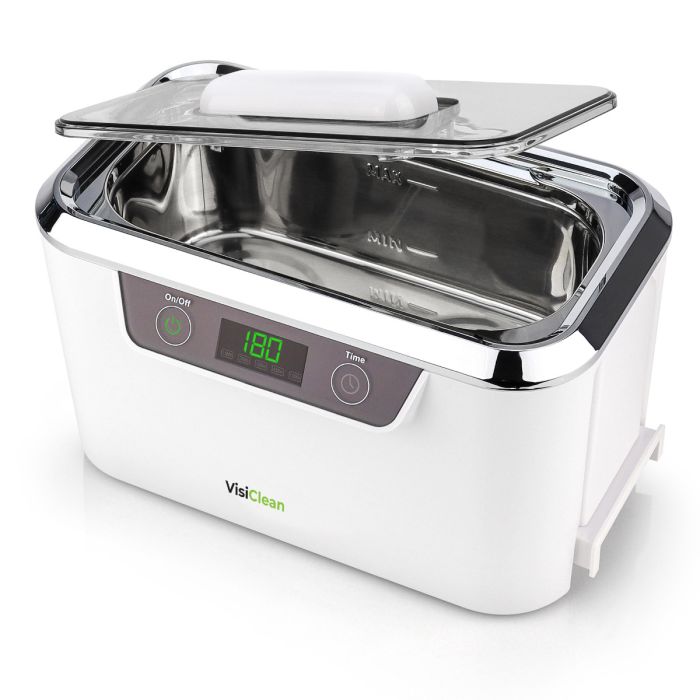
Its controlled ultrasonic output minimizes the risk of overexposure while maintaining effective plaque and biofilm removal.
Best suited for: users who value adjustable settings and digital interfaces.
5) M3 Naturals Professional Ultrasonic Cleaner
The M3 Naturals Professional Ultrasonic Cleaner features a larger tank and reinforced housing, originally designed for multi-purpose cleaning applications. While not dental-specific, its ultrasonic frequency range remains compatible with dental appliances when used appropriately.
The larger capacity makes it suitable for households with multiple appliances or users who prefer a single cleaner for various personal items.
Best suited for: multi-item cleaning and shared household use.
Ultrasonic Cleaner Technical Comparison
| Product | Frequency Range | Tank Size | Power Type | UVC Sterilization | Recommended Use |
|---|---|---|---|---|---|
| GoldRosa Rechargeable Ultrasonic Cleaner | 40–45 kHz | Dental-optimized | Rechargeable | Yes | Daily use & travel |
| Zima Dental Pod | ~40 kHz | Small | Plug-in | No | Simple daily cleaning |
| iSonic F3900 | ~42 kHz | Medium | Plug-in | No | Budget home use |
| Invisiclean Ultrasonic Cleaner | 40–45 kHz | Medium | Plug-in | No | Adjustable cycle control |
| M3 Naturals Professional | ~40 kHz | Large | Plug-in | No | Multi-item cleaning |
Why Ultrasonic Cleaning Is Better Suited for Dental Appliances
Dental appliances are exposed to saliva, plaque, and microorganisms for extended periods every day, often exceeding six hours of continuous wear. Research in dental materials and microbiology shows that biofilm formation can begin within 24 hours on untreated oral appliances, with Streptococcus mutans and Candida albicans commonly identified as dominant species. These microorganisms are closely linked to halitosis, gingival irritation, and secondary oral infections.
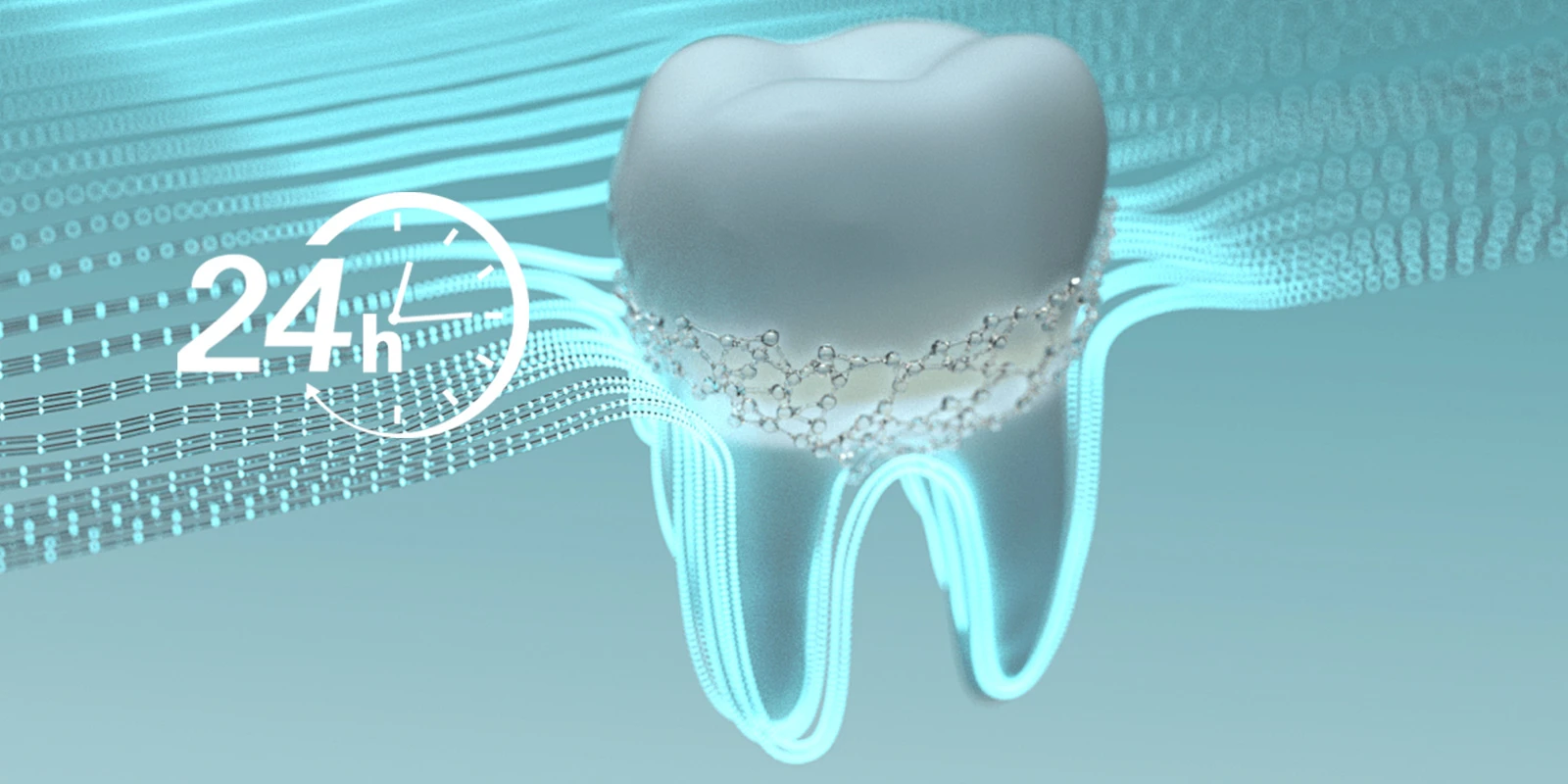
Manual brushing and chemical soaking remove only surface-level debris and are highly dependent on user technique and consistency. More importantly, they cannot reliably reach undercuts, microgrooves, or porous polymer surfaces found in modern thermoplastic aligners and EVA-based night guards. Ultrasonic cleaning, operating at an optimized frequency range of 40–45 kHz, generates cavitation bubbles capable of penetrating these microscopic structures without damaging the appliance material.
Controlled laboratory testing has demonstrated that ultrasonic cleaning can reduce surface bacterial load by up to 99.9%, significantly outperforming manual methods while preserving material integrity.
Evaluation Criteria Used in This Review
To ensure professional credibility and consistency, each ultrasonic cleaner in this review was evaluated using clearly defined technical and functional criteria rather than subjective impressions.
We focused on ultrasonic frequency stability, as frequencies between 40 and 45 kHz are widely accepted as optimal for dental appliances, balancing cleaning efficiency with material safety. Tank size and usable volume were assessed to ensure complete immersion without deformation. We also evaluated power configuration, noise output under normal operating conditions, compatibility with common dental materials, and the presence of supplementary hygiene features such as UVC sterilization.
Only products capable of delivering repeatable, non-abrasive cleaning suitable for daily or frequent use were included.
Final Recommendation
From a dental hygiene and materials safety perspective, ultrasonic cleaners offer a clear advantage over manual cleaning methods by delivering consistent, non-abrasive, and repeatable results. While ultrasonic cleaning should be viewed as a supplement rather than a replacement for professional dental care, regular use can significantly reduce microbial load, improve appliance hygiene, and extend product lifespan when integrated into a proper oral care routine.