



Keeping retainers, aligners, dentures, or mouthguards clean is essential for both oral hygiene and daily comfort. Manual brushing has been the traditional method for years, while ultrasonic dental cleaners have become increasingly popular for their efficiency and ease of use.
So which method actually delivers better results? Below is a detailed, practical comparison to help you choose the cleaning approach that fits your daily routine.

How Manual Brushing Works and Its Real Cleaning Effect
Manual brushing relies on physical friction from the bristles to remove visible stains on the surface. However, the cleaning results vary significantly depending on the brushing angle, the amount of force applied, how standardized your cleaning habits are, and whether you have the patience to clean every corner thoroughly.
While manual brushing can remove most surface-level debris, it often struggles with tiny gaps and difficult-to-reach areas on retainers, aligners, and dentures. These areas tend to trap bacteria and food particles, which can lead to odors or buildup over time.
If you stick with manual cleaning, it's best to use a soft brush, warm water, and gentle pressure. Extending the brushing time and using cleaning tablets once a week can also help achieve more reliable hygiene.

How an Ultrasonic Dental Cleaner Works and Its Advantages
1. Cleaning Principle: Ultrasonic Cavitation for Deep Cleaning
Ultrasonic cleaners generate high-frequency vibrations that create microscopic bubbles in the water. These bubbles constantly burst to produce tiny shockwaves that reach areas a brush cannot touch-such as the edges of aligners, the underside of dentures, or the gaps around metal wires.
This makes ultrasonic cleaning a more thorough and gentle method with no need for scrubbing.
2. Consistent Results Without Depending on Technique
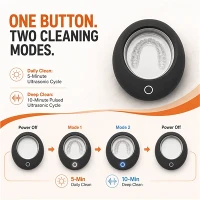
Unlike manual brushing, ultrasonic cleaning delivers stable, uniform results regardless of experience or brushing skills. You simply place the device in the tank with water, turn it on, and wait a few minutes.
It's particularly useful for:
- Complex structures like multi-piece retainers
- Removing plaque, tiny debris, and food residue
- Users who want a higher hygiene standard
- Sensitive users who want to avoid harsh scrubbing
3. Convenience: Saves Time and Makes Daily Cleaning Easier
Most ultrasonic cleaning cycles take only 3–5 minutes. There is no need to scrub, soak for long periods, or use much effort. This makes it ideal for daily use, especially for busy users or long-term retainer wearers.

Manual Cleaning vs Ultrasonic Cleaning: Full Comparison
| Cleaning Method | Cleaning Depth | Skill Required | Risk of Damage | Time Needed | Ideal For |
|---|---|---|---|---|---|
| Manual Brushing | Mostly surface-level | High | May cause scratches | 5–10 minutes | Light cleaning needs |
| Ultrasonic Cleaning | Deep, even cleaning | No | Gentle, no abrasion | 3–5 minutes | Daily users, complex appliances |
When Should You Choose an Ultrasonic Dental Cleaner?
An ultrasonic cleaner is especially helpful if:
- You wear aligners or retainers every day
- Your denture or appliance has many grooves or hidden areas
- Manual scrubbing never feels "fully clean"
- You want to save time
- You want to prevent scratches caused by brushing
For most daily users, an ultrasonic dental cleaner offers a cleaner, easier, and more hygienic routine.

Tips to Maximize Cleaning Results (Practical Recommendations)
1. Use Warm Water to Improve Results
Warm water softens buildup and enhances ultrasonic cavitation. It also makes brushing easier if you prefer manual cleaning.
2. Do a Deep Clean Once a Week
Combine ultrasonic cleaning (or manual brushing) with dissolvable cleaning tablets to remove stubborn residue.
3. Avoid Harsh Chemicals or Hard Bristles
These may scratch transparent aligners or damage resin dentures. Always choose gentle cleaners designed for dental appliances.
4. Combine Both Methods for Best Results
Daily ultrasonic cleaning with occasional manual brushing around the edges can deliver optimal hygiene.
Conclusion: Which One Is Better?
If your priority is deep, consistent, and effortless cleaning, the ultrasonic dental cleaner clearly stands out as the more effective option.
Manual brushing still works for quick or occasional cleaning, but it depends heavily on technique and cannot reach the tiny gaps that tend to trap bacteria.
For users who wear retainers, aligners, or dentures daily, an ultrasonic cleaner offers a more reliable, convenient, and hygienic cleaning experience.