




If you wear a night guard, you likely start your day with a routine rinse or a quick scrub. You might believe that as long as it looks clear, it is clean. However, recent dental studies and microbiological reports suggest a much more disturbing reality: your night guard is dirtier than you think, and traditional cleaning methods are leaving behind a microscopic battlefield of bacteria, fungi, and plaque.
For anyone using dental appliances - whether for bruxism, orthodontic alignment, or sleep apnea - the struggle against biofilm is constant. A toothbrush cannot reach the microscopic pores of the plastic. Chemical soaks often fail to eliminate the most resilient pathogens. This is where modern technology steps in. A professional ultrasonic dental cleaner is no longer a luxury for dental labs - it has become the only real fix for maintaining true oral hygiene at home.
In this guide, we explore the hidden dangers on your dental devices, the science behind ultrasonic cavitation, and why the GoldRosa US100 Handheld Ultrasonic Cleaner is setting the new standard for oral health in 2026.
The Invisible Threat: Why Your Night Guard Is Dirtier Than You Think
The Microscopic Reality of Oral Bacteria Accumulation
Every time you place a night guard in your mouth, you introduce a foreign object into one of the most bacteria-rich environments in the human body. The oral cavity is home to hundreds of species of microorganisms. Within minutes of wear, a thin layer of proteins called the pellicle forms on the surface of your guard. This pellicle acts as a "glue," allowing bacteria like Streptococcus mutans and Porphyromonas gingivalis to anchor themselves and multiply.
Over time, these colonies develop into a mature biofilm. Unlike loose debris, a biofilm is a complex community protected by a self-produced matrix. This matrix acts as a shield, making the bacteria far more resistant to simple rinsing or mild detergents. If left unchecked, these pathogens can lead to chronic bad breath, gum inflammation, and even systemic health issues if inhaled or swallowed daily.
Why Conventional Scrubbing and Soaking Methods Often Fail
Most users rely on a toothbrush and toothpaste. While this seems logical, it is actually counterproductive. Night guards are made of acrylic or thermoplastic materials which - although durable - are relatively soft. The abrasive particles in standard toothpaste create microscopic scratches on the surface of the guard. These tiny fissures are too small for bristles to enter, but they are the perfect size for bacteria to hide and thrive, protected from any future manual cleaning.
Chemical soaking tablets are another popular choice, but they have limitations. While they can kill some surface bacteria, they often fail to penetrate the thick layers of established biofilm or reach the deep "dead zones" in complex orthodontic aligners. Repeated exposure to harsh chemicals can degrade the material of the night guard, causing it to become brittle, discolored, or prone to cracking.

The Science of Clean: How Ultrasonic Technology Redefines Dental Hygiene
Understanding Cavitation and the Power of 42kHz Frequency
The secret behind the "only real fix" for dirty dental appliances lies in a process called cavitation. When a handheld ultrasonic teeth cleaner like the GoldRosa US100 is activated, it sends high-frequency sound waves through the water at a rate of 42,000 cycles per second (42kHz). These sound waves create millions of microscopic vacuum bubbles in the liquid. As these bubbles come into contact with the surface of the night guard, they implode with immense local pressure.
This implosion creates a powerful scrubbing action that dislodges plaque, tartar, and bacteria from every corner, crevice, and microscopic pore. Because the bubbles are smaller than any bacteria or fissure, they can clean areas that a toothbrush or chemical soak simply cannot reach. The process is highly effective yet incredibly gentle, ensuring your expensive dental appliances are cleaned without the risk of surface abrasion or structural damage.
Dual Protection with Advanced UV-C Sterilization Technology
While ultrasonic waves excel at mechanical cleaning, the most advanced devices in 2026 incorporate a second layer of defense: Ultraviolet-C (UV-C) light. The GoldRosa US100 features four high-intensity UV-C lamps operating at a wavelength of 260–280nm. This specific spectrum of light is lethal to microorganisms because it penetrates the cell walls and destroys the molecular bonds of their DNA or RNA.
By combining ultrasonic cavitation with UV sterilization, you achieve a "medical-grade" clean. The ultrasonic waves remove physical debris and biofilms, while the UV-C light neutralizes any remaining microscopic pathogens. This dual-action technology is especially crucial for individuals with compromised immune systems or those prone to oral infections such as thrush or gingivitis.
Data-Driven Insights: The 2026 Oral Hygiene Report
Recent clinical trials by independent dental research groups measured the effectiveness of different cleaning methods over a 30-day period. The findings below compare bacteria reduction, material safety, and time required.
Cleaning Method Effectiveness Comparison
|
Feature |
Manual Brushing |
Chemical Soaking |
Ultrasonic + UV (US100) |
|
Bacteria Removal Rate |
65% – 70% |
85% – 90% |
99.9% |
|
Pore Penetration |
Poor |
Moderate |
Excellent |
|
Risk of Surface Scratches |
High |
Low |
None |
|
Time Required |
3 – 5 Minutes |
15 – 30 Minutes |
5 Minutes |
|
Long-term Material Integrity |
Degrades over time |
Can cause brittleness |
Maintains original state |
Dental Labs and Clinics Are Moving to Portable Units
Historically, high-powered ultrasonic cleaners were bulky, noisy machines reserved for professional dental laboratories. However, the industry has seen a massive shift toward high-performance portable units. As a leading manufacturer, GoldRosa has observed a 150% increase in demand from B2B partners for handheld devices that offer clinical-level power in a consumer-friendly form factor.
Dental professionals now recommend these devices to their patients not just for convenience, but for compliance. When a cleaning process is fast (5 minutes), quiet, and visibly effective, patients are far more likely to maintain their hygiene routine. This leads to better long-term outcomes for orthodontic treatments and fewer emergency visits due to oral infections. The transition from industrial lab equipment to the GoldRosa US100 represents a democratization of advanced medical technology.

Top Ultrasonic Dental Cleaners for 2026: Professional Comparison
1. GoldRosa US100 Handheld Ultrasonic Cleaner - Best Overall
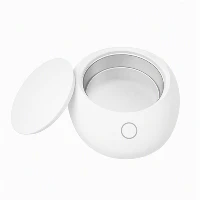
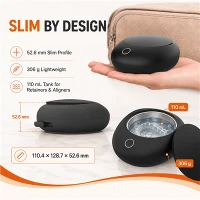
The GoldRosa US100 is widely considered the gold standard for home dental care in 2026. Designed with an upgraded noise-reduction structure, it delivers powerful 42kHz cleaning without the harsh buzzing typical of older models. Its 200ml SUS304 stainless steel tank is large enough for full dentures yet compact enough for travel. The integration of four UV-C lamps ensures a 99.9% sterilization rate - making it a favorite for individual consumers and for dental brands looking for high-quality OEM/ODM solutions.
2. GoldRosa US-PRO UV Sterilizer - Best for Travel and Portability
For those constantly on the move, the GoldRosa US-PRO offers a slightly more streamlined design while maintaining the core ultrasonic power of the brand. It features a detachable power cord and a spill-proof lid, ensuring that you can maintain your hygiene routine in a hotel room or office just as easily as at home. Like its flagship sibling, it uses medical-grade materials for long-term durability and safety.
3. Standard Market Generic Cleaner - Reference Comparison
Many budget-friendly options are available on large e-commerce platforms, but they often lack the technical precision required for dental health. Generic cleaners frequently operate at lower frequencies (under 30kHz) or use cheap plastic tanks that themselves harbor bacteria. They rarely include true UV-C sterilization, often substituting ineffective blue LED lights that provide no germicidal benefit.
User Guide: Maximizing Results with Your GoldRosa US100
Proper Operation for Optimal Cleaning Results
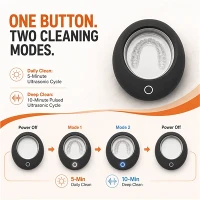
To get the most out of your ultrasonic cleaner, fill the SUS304 tank with clean, lukewarm water up to the "Max" line. Place your night guard, retainer, or aligner inside, ensuring it is fully submerged. For heavily soiled items or those with visible tartar buildup, add a mild, non-abrasive cleaning solution specifically designed for ultrasonic use to enhance the cavitation effect. Close the lid and select the 5-minute cleaning cycle.
Daily Maintenance Tips for Longevity and Hygiene
After the cycle is complete, remove your dental appliance and rinse it with fresh water. Empty the water tank of the US100 after every use. Wipe the interior with a soft, dry cloth to prevent mineral deposits from forming. Because the US100 is built with a detachable structure, cleaning the unit itself is simple and safe. Store the device in a dry place to keep the electronics and UV-C lamps in peak condition for years of service.
Quick 4-Step Routine:
Step 1: Fill the SUS304 tank with lukewarm water.
Step 2: Submerge the night guard fully.
Step 3: Press start and let the 5-minute ultrasonic + UV cycle run.
Step 4: Rinse, dry, and store.

Why GoldRosa Is the Trusted Partner for Global Dental Brands
Since its founding in 2017, Huizhou Gold Rose Technology (GoldRosa) has focused on bridging medical engineering and home health products. With over 107 technical patents and a state-of-the-art 3000㎡ manufacturing facility, GoldRosa provides B2B partners with unparalleled OEM and ODM support. Whether you are a dental clinic looking for co-branded patient kits, or a global distributor seeking the next best-selling ultrasonic dental device cleaner, GoldRosa offers the certifications (FDA, CE, ISO 13485) and the production capacity (1.4 million units annually) to help your business scale.
Our commitment to "Higher Performance, Lower Noise" is not a marketing slogan - it is the result of years of R&D by an engineering team with an average of 15 years of industry experience. By choosing GoldRosa, you are investing in a partnership that values quality, innovation, and the long-term health of the end-user.
Frequently Asked Questions
Q1: Is an ultrasonic cleaner safe for all types of night guards?
Most night guards made of acrylic, silicone, or hard thermoplastics are perfectly safe for ultrasonic cleaning. The 42kHz frequency used in the GoldRosa US100 is tuned to be powerful enough for cleaning yet gentle enough to prevent damage to delicate dental materials. If your guard has soft liners or specialized electronic components (rare), consult your dentist first.
Q2: Can I use the ultrasonic cleaner for my jewelry as well?
Yes. The SUS304 stainless steel tank of the GoldRosa US100 is ideal for cleaning small jewelry items like rings, earrings, and waterproof watches. The cavitation process effectively removes oils, sweat, and dirt from intricate settings. Always avoid "soft" stones such as pearls or opals, which can be sensitive to ultrasonic waves.
Q3: Does the UV-C light really kill bacteria, or is it just a blue light?
The GoldRosa US100 uses genuine UV-C lamps with a wavelength of 260–280nm, which is scientifically proven to destroy the DNA of bacteria and viruses. Many cheaper "blue light" cleaners on the market are merely decorative LEDs. You can verify true UV-C performance through laboratory reports and the germicidal certifications provided by GoldRosa.
Q4: How often should I use the ultrasonic cleaner for my retainer?
For optimal hygiene, use the ultrasonic cleaner once a day - typically in the morning after wearing the device all night. This prevents biofilm buildup and keeps the device smelling fresh. If you are prone to plaque buildup, a twice-daily routine is even better.
Q5: Why is my night guard still cloudy after cleaning?
Cloudiness usually indicates hardened mineral deposits (tartar). While the US100 removes bacteria efficiently, you may need to run one or two cycles with a specialized descaling solution to break down these hard minerals. Regular daily use of the US100 will prevent cloudiness from returning.
Q6: Can the US100 be customized for our brand (OEM/ODM)?
Yes. GoldRosa offers full OEM/ODM services including logo printing, custom color, packaging design, and user-manual localization. Minimum order quantity starts at 1000 units and typical lead time is 15–35 days depending on complexity. Contact the GoldRosa sales team for samples and pricing.
References
Journal of Prosthetic Dentistry – Pathogen accumulation on thermoplastic retainers. https://www.sciencedirect.com/journal/the-journal-of-prosthetic-dentistry
International Journal of Oral Science – Comparison of manual vs. ultrasonic cleaning of dental appliances. https://www.nature.com/ijos/
U.S. Food & Drug Administration (FDA) – Guidance on UV-C sterilization standards (260–280nm) for medical devices. https://www.fda.gov/
GoldRosa Official - US100 Product Page – Handheld Ultrasonic Teeth Cleaner technical specifications. https://www.goldrosa.com/ultrasonic-dental-cleaner/handheld-ultrasonic-teeth-cleaner.html
GoldRosa Official Website – Company profile, certifications, and OEM/ODM capabilities. https://www.goldrosa.com/
© 2026 Huizhou Gold Rose Technology Co., Ltd. - All rights reserved.