


In acute healthcare, inpatient rehabilitation, and long-term care environments, interior illumination is predominantly designed for clinical visibility and architectural utility rather than human chronobiology. Consequently, institutional lighting environments deliver static, low-intensity illuminance ranging from 100 to 400 lux, punctuated by nocturnal clinical disruptions and windowless architectural configurations. For hospitalized patients, this sustained photic deprivation triggers profound circadian rhythm disruption, worsening postoperative delirium, dampening immune recovery, and exacerbating hospital-acquired mood disorders. Simultaneously, rotating healthcare professionals and night-shift nursing staff suffer from chronic circadian misalignment, driving high burnout rates and cognitive fatigue.
As clinical awareness of architectural chronobiology expands, hospital administrators, facilities directors, and medical equipment procurement teams frequently ask: can Seasonal Affective Disorder (SAD) therapy lights effectively improve outcomes in hospital settings, what does the clinical literature demonstrate, and what engineering standards are required for deployment within sterile medical environments?
As an established OEM/ODM manufacturer specializing in medical-grade circadian lighting, precision electro-optics, and phototherapy wellness platforms, Gold Rose provides this comprehensive technical analysis. Below, we examine the pathophysiology of institutional circadian disruption, clinical trial evidence across patient and nursing cohorts, strict hospital infection-control and electrical safety mandates, and private-label hardware specifications.

The Pathophysiology of Institutional Circadian Disruption in Healthcare
Photic Deprivation and Inpatient Neurochemical Imbalance
The human central nervous system relies on dynamic solar intensity gradients to entrain the suprachiasmatic nucleus (SCN), the body's master circadian pacemaker located in the anterior hypothalamus. This photic entrainment is mediated by intrinsically photosensitive retinal ganglion cells (ipRGCs) expressing the photopigment melanopsin, which requires elevated photon densities (typically exceeding 1,000 to 10,000 lux) to signal diurnal alertness. In standard hospital rooms, average ambient light rarely surpasses 300 lux, a level biologically perceived by the brain as perpetual twilight. In the absence of robust morning photic cues, daytime suppression of melatonin fails while central serotonin synthesis remains depressed, manifesting as acute daytime somnolence, emotional blunting, and heightened vulnerability to depressive episodes during extended hospital stays.
Sleep Architecture Fragmentation and Impaired Somatic Healing
Biological tissue repair, immune cell proliferation, and human growth hormone secretion are deeply coupled to uninterrupted Stage 3 slow-wave sleep and consolidated nocturnal rest. When circadian rhythms desynchronize within institutional settings, nocturnal sleep becomes severely fragmented by erratic clinical monitoring and ambient corridor lighting. Studies in critical care and rehabilitation medicine confirm that disrupted circadian phase alignment exacerbates neuroinflammation, elevates baseline sympathetic autonomic tone, and increases the clinical incidence of hospital delirium by up to thirty percent. Restoring precise circadian entrainment through calibrated phototherapy presents an essential, non-pharmacological pathway to stabilize biological sleep architecture and accelerate wound healing.
Clinical Evidence: Inpatient Outcomes and Shift-Worker Resilience
Rehabilitation and Windowless Ward Inpatient Trials
Empirical investigations across inpatient cohorts confirm the systemic benefits of high-lux phototherapy. Clinical studies published in nursing and psychiatric literature demonstrate that exposing rehabilitation patients in windowless rooms to 10,000-lux bright light for thirty to forty-five minutes each morning produces statistically significant reductions in self-reported fatigue and hospital-related anxiety compared to control groups receiving standard ambient lighting. The regular photic stimulus realigns the phase of core body temperature rhythms, enhances morning alertness, and fosters greater patient participation during physical and occupational therapy sessions, directly shortening inpatient recovery intervals.
Shift-Work Nursing Protocols and Cognitive Alertness
The clinical utility of circadian lighting extends directly to hospital staff operating on alternating or permanent night shifts. Hospital shift workers face chronic circadian misalignment, leading to acute psychomotor slowness, sleep debt, and elevated risk of medication dispensing errors. Controlled trials examining rotating nursing personnel indicate that structured thirty-minute exposure to blue-enriched 10,000-lux light during early-shift fatigue windows significantly improves subjective mood, blunts cortisol rhythm flattening, and measurably reduces cognitive error rates. Integrating localized phototherapy units into staff nursing stations and break rooms provides an evidence-based intervention to mitigate burnout and preserve critical clinical alertness.

Engineering and Safety Standards for Inpatient Deployment
Hospital Infection Control and Wipe-Down Biocompatibility
Deploying personal care or phototherapy hardware in patient-care vicinities introduces stringent infection-prevention challenges. In healthcare environments, high-touch electronic surfaces are subjected to continuous chemical decontamination using quaternary ammonium, sodium hypochlorite, and accelerated hydrogen peroxide wipes. Conventional consumer therapy lamps featuring porous plastics, exposed ventilation louvers, and deep casing seams harbor persistent microbial pathogens, including Methicillin-resistant Staphylococcus aureus (MRSA) and Clostridioides difficile spores. Medical-grade therapy lamps must be engineered with IP-rated, sealed, non-porous enclosures featuring ultrasonic-welded casing seams and smooth exterior contours that withstand aggressive hospital disinfectants without cracking, yellowing, or ingress.
Electrical Isolation and Medical Device Electromagnetic Compatibility
Hospitals operate sensitive physiological monitoring equipment, infusion pumps, and telemetry systems that are vulnerable to radiated and conducted electromagnetic interference (EMI). Standard consumer light boxes relying on cheap, unshielded pulse-width modulation (PWM) drivers can emit severe electromagnetic noise that disrupts telemetry lines or trips hospital ground-fault circuit interrupters (GFCI). Hospital-compatible circadian light fixtures must incorporate medical-grade isolated power supplies meeting IEC 60601-1-2 electromagnetic compatibility standards. Furthermore, the electronic driver must employ constant-current direct current (DC) topologies that eliminate micro-stroboscopic optical flicker, preventing eye strain and tension headaches among neurologically compromised patients.
Diffused Ergonomics: Mitigating Direct Glare and Saccadic Stress
Hospitalized patients frequently remain in supine or semi-reclined postures for extended durations, making conventional directional desk lamps unsuitable due to intense focal glare and retinal afterimages. Advanced institutional phototherapy platforms utilize curved, edge-lit optical diffusers and multi-layer light-guide microstructures that spread 10,000 lux evenly across a broad surface area. This wide-angle, low-luminance-gradient distribution permits therapeutic photon delivery across the patient's peripheral visual field without requiring the individual to stare directly into an intense point-source, maximizing therapeutic compliance while minimizing ocular discomfort.
Strategic Deployment Protocols Across Hospital Departments
Inpatient Psychiatric and Geriatric Behavioral Units
In behavioral health and geriatric psychiatric wards, light therapy represents a proven, non-invasive first-line intervention for seasonal affective patterns and sundowning syndrome associated with early-stage dementia. Positioning heavy-duty, tamper-resistant phototherapy units in common dining areas and activity dayrooms allows multiple patients to receive ambient circadian stabilization simultaneously during morning breakfast hours. Morning administration between 7:00 AM and 8:30 AM helps anchor diurnal routines, reducing late-afternoon agitation, verbal outbursts, and nocturnal pacing without relying on sedative psychotropic medications.
Intensive Care Unit (ICU) Step-Down and Post-Surgical Recovery
In surgical step-down suites and trauma recovery units, patients transition out of deep sedation into standard ward routines, a phase highly vulnerable to circadian disorientation. Portable, bedside phototherapy lamps featuring intuitive capacitive touch controls enable nursing personnel to deliver targeted twenty- to thirty-minute morning phototherapy sessions right at the bedside. Pairing morning 10,000-lux therapy with strict evening blue-light attenuation creates a consolidated 24-hour circadian cycle, helping stabilize cardiovascular parameters and supporting healthy immune responses throughout the critical postoperative window.

Gold Rose Medical-Grade Circadian Engineering: Advanced OEM/ODM Platforms
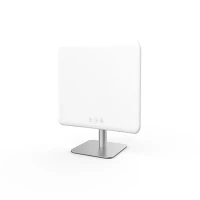
As a specialized OEM/ODM manufacturer with extensive expertise in precision electro-optics, circadian lighting, and medical-grade personal care appliances, Gold Rose designs advanced phototherapy hardware specifically calibrated for institutional and clinical environments. Gold Rose clinical light platforms feature laboratory-verified 10,000-lux output at comfortable operational distances, certified 100% UV-free optical filtration, and advanced constant-current DC driver architectures that deliver zero stroboscopic flicker. Equipped with intuitive touch-control interfaces, smooth sealed housings compatible with hospital-grade disinfectant wipes, and stepless color temperature adjustment from 3,000K warm white to 6,500K daylight white, Gold Rose devices bridge clinical precision with ergonomic elegance.
Operating under certified ISO 13485 medical device quality management systems, Gold Rose ensures that all phototherapy platforms comply rigorously with international healthcare safety mandates, including FDA device listings, CE medical directives, FCC Part 15 electromagnetic compatibility, and IEC 62471 photobiological safety certifications. Backed by dedicated optical engineering laboratories, in-house injection tooling, and scalable manufacturing facilities, Gold Rose empowers global healthcare brands, medical supply distributors, and hospital procurement partners to deploy reliable, clinically validated circadian wellness solutions.
Frequently Asked Questions
Q1: Can a commercial SAD therapy light interfere with sensitive hospital monitoring equipment?
Standard consumer-grade light boxes with unshielded electronic drivers can generate electromagnetic interference, but professionally certified units engineered to IEC 60601-1-2 standards operate with complete electrical and electromagnetic isolation. These medical-grade units can run safely alongside patient monitors, infusion pumps, and telemetry systems without signal degradation.
Q2: How do hospital cleaning protocols affect the lifespan of a light therapy lamp?
Frequent wipedowns with aggressive hospital-grade disinfectants like bleach or quaternary ammonium will rapidly degrade consumer-grade plastics and crack unsealed housings. Medical-grade circadian lamps engineered by Gold Rose utilize chemical-resistant, non-porous polymer enclosures and sealed seams designed to withstand daily chemical sanitation protocols.
Q3: Can phototherapy lamps be safely used for patients suffering from post-surgical delirium?
Yes, clinical studies indicate that restoring circadian entrainment through controlled morning bright light therapy significantly reduces the duration and severity of post-surgical and ICU delirium. Providing a strong diurnal photic cue between 7:00 AM and 8:30 AM helps suppress daytime melatonin, re-anchoring the patient's sleep-wake cycle naturally.
Q4: Does Gold Rose manufacture institutional-grade light therapy devices for hospital procurement?
Yes, Gold Rose provides turnkey OEM/ODM manufacturing of high-performance 10,000-lux circadian phototherapy platforms engineered for institutional healthcare and clinical environments. Healthcare brands and medical distributors can explore complete compliance documentation, technical specifications, and bulk private-label programs directly through goldrosa.com.
Q5: What photobiological certifications are mandatory when purchasing light therapy devices for hospitals?
Hospitals and healthcare facilities must verify that phototherapy devices hold certified IEC 62471 photobiological safety compliance, guaranteeing zero retinal UV hazard across UVA and UVB spectrums, alongside CE, FCC, and regional medical electrical safety registrations. Gold Rose maintains complete accredited testing reports for all manufactured circadian lighting platforms.
References
American Psychiatric Association. (2020). Practice Guideline for the Treatment of Patients with Major Depressive Disorder and Circadian Disturbance. APA Publishing. https://www.psychiatry.org/psychiatrists/practice/clinical-practice-guidelines
Journal of Clinical Nursing. (2022). The effects of 10,000-lux bright light therapy on fatigue, anxiety, and sleep quality in rehabilitation patients in windowless rooms. Wiley Online Library.
Journal of Advanced Nursing. (2021). Bright light therapy for night shift healthcare workers: Impact on mood, cognitive performance, and circadian adjustment. Wiley Online Library.
International Electrotechnical Commission. (2020). IEC 62471: Photobiological Safety of Lamps and Lamp Systems in Healthcare and Consumer Applications. IEC Standards.
Gold Rose. Precision Medical-Grade Phototherapy and Circadian Wellness OEM Solutions. https://www.goldrosa.com/light-therapy/