


The intersection of chronobiology, non-invasive polysomnography, and ergonomic sleep surfaces has transformed traditional bedding into an active category of smart wellness hardware. Waking up to an abrupt acoustic alarm induces acute sympathetic nervous system arousal, precipitating heart rate spikes, elevated cortisol secretion, and prolonged morning grogginess termed sleep inertia. When coupled with inadequate cervical spine alignment, users frequently suffer from chronic neck tension and impaired daytime alertness.
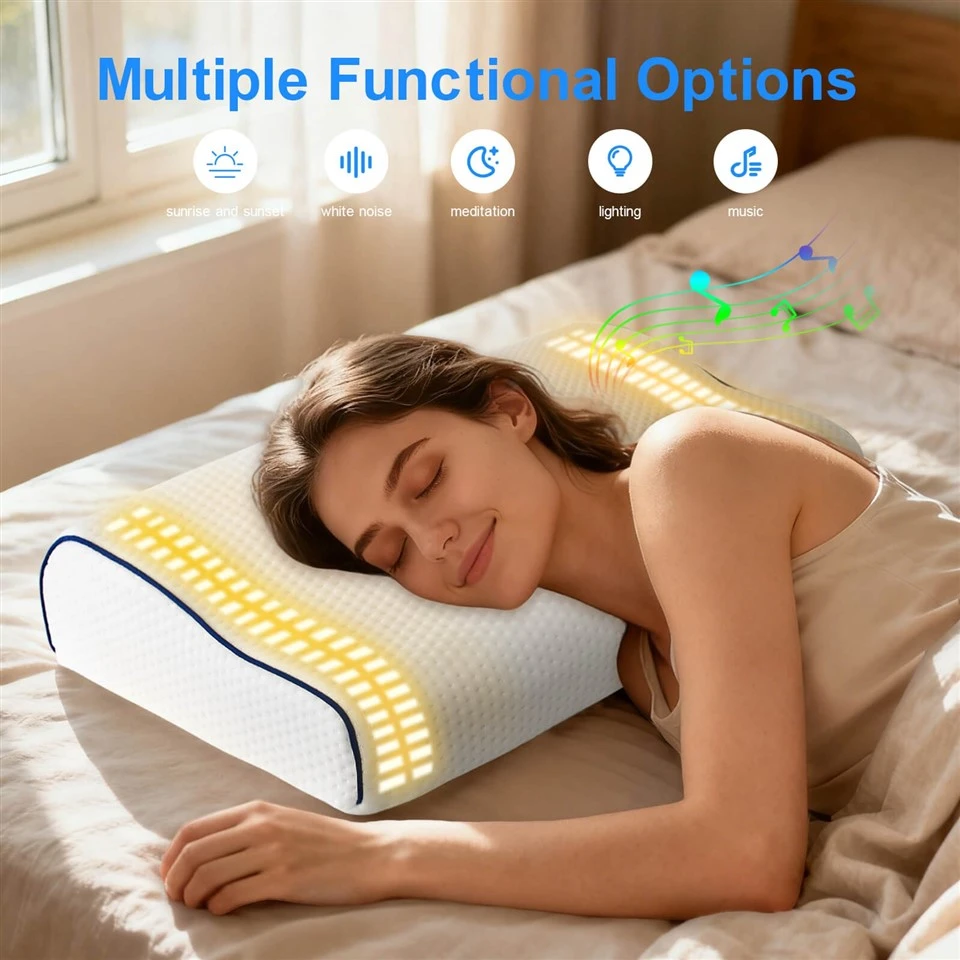
Smart wake-up pillows address this physiological challenge by integrating multi-sensory awakening protocols-such as light-guided dawn simulation, localized silent haptic vibration, sleep stage cycle synchronization, and Bluetooth sound masking-directly into high-density orthopedic memory foam architectures.
As the epicenter of global consumer electronics and advanced polymer manufacturing, China produces over 70% of the world's smart bedding and electronic sleep-aid devices. For global bedding brands, hospitality procurement directors, medical wellness retailers, and corporate gifting distributors, selecting an original equipment manufacturer (OEM) or original design manufacturer (ODM) requires evaluating tactile actuator engineering, sensor-to-foam integration, radio-frequency compliance, and international safety certifications.
This comprehensive industry analysis reviews the top 10 verified smart wake-up pillow manufacturers in China in 2026, breaking down manufacturing capacities, engineering strengths, and strategic procurement frameworks.
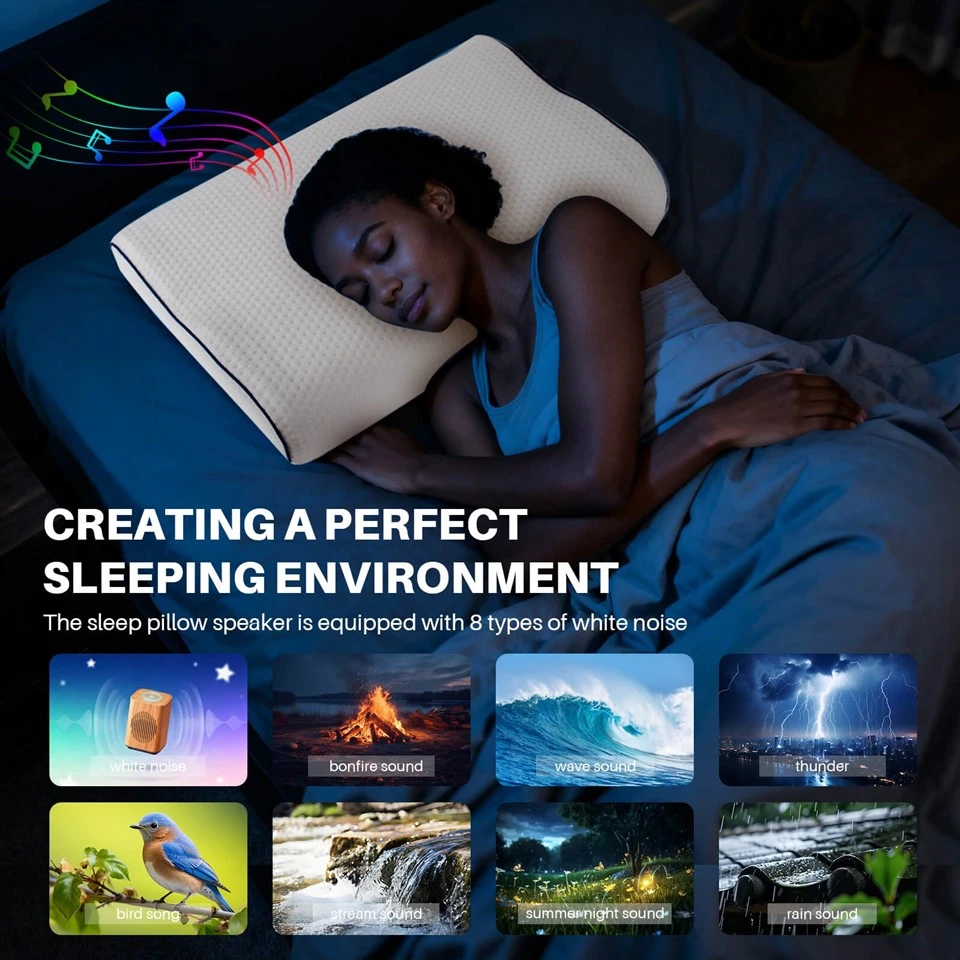
Technical Engineering Drivers for Smart Wake-Up Pillows
Sleep Stage Synchronization and Circadian Dawn Entrainment
The human sleep architecture cycles through distinct 90-to-110-minute phases: Non-Rapid Eye Movement (NREM Stages N1 to N3) and Rapid Eye Movement (REM) sleep. Traditional alarm clocks sound indiscriminately, often jolting sleepers during Stage N3 slow-wave deep sleep and disrupting neural recovery.
Advanced wake-up pillows integrate non-invasive sensor arrays (such as piezoelectric sensor strips or ballistocardiography films) to monitor micro-vibrations, respiration rates, and movement patterns. Onboard microcontrollers calculate current sleep depth and trigger the awakening sequence during light NREM Stage N1 or REM sleep within a user-defined 20-to-30-minute window, allowing brainwaves to transition smoothly toward waking alpha rhythms.
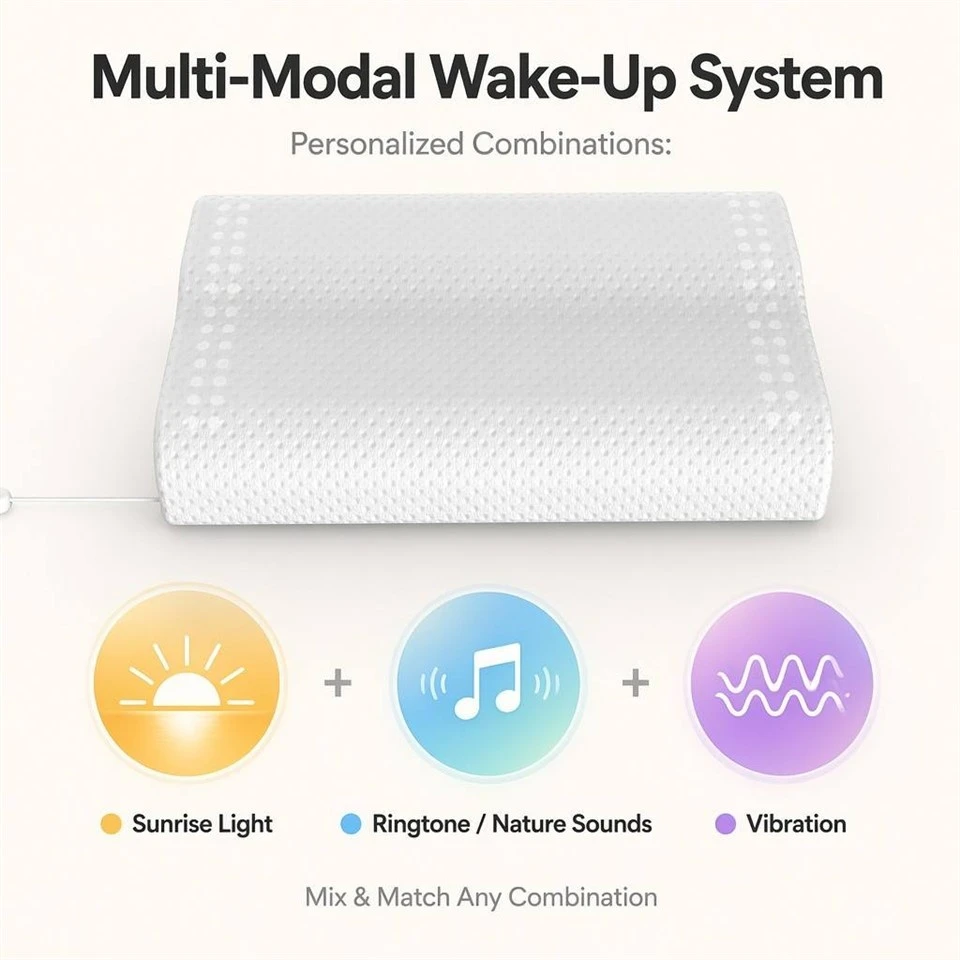
To reinforce this physiological shift, leading manufacturers integrate circadian optical wave-guides. Micro-LED arrays embedded along the forward perimeter deliver a gradual 15-to-30-minute simulated sunrise sequence. This controlled increase in ambient lux penetrates closed eyelids, down-regulating pineal melatonin production and stimulating the natural cortisol awakening response (CAR) without psychological startle.
Silent Multi-Zone Haptics and Memory Foam Polymer Rheology
Integrating rigid electronic actuators into flexible bedding poses severe biomechanical challenges:
Transducer Calibration and Acoustic Isolation: Traditional eccentric rotating mass (ERM) motors produce an uncalibrated buzzing that rattles against plastic enclosures. High-tier manufacturers utilize calibrated linear resonant actuators (LRAs) or balanced multi-zone haptic vibration pods. These units generate localized, silent tactile pulses that transmit through the cervical spine and skull to awaken the targeted sleeper without vibrating the mattress or disturbing an adjacent sleep partner.
Polymer Viscoelasticity and Component Encapsulation: Pillows must maintain neutral cervical lordosis (a 35-to-45-degree physiological curve) under the 4.5-to-5.5-kilogram weight of the human head. High-density viscoelastic memory foam (60 to 85 kg/m³) certified under CertiPUR-US or OEKO-TEX Standard 100 ensures lasting elasticity without cellular fatigue. Actuators, Bluetooth antennas, and flexible heating films must be encapsulated within flame-retardant, sweat-resistant thermoplastic polyurethane (TPU) pods and recessed into molded foam cavities to prevent pressure points against the occipital bone.
Global Regulatory and Quality Standards for Smart Bedding
Commercial importation of electronics-integrated bedding requires rigorous cross-border compliance:
Electromagnetic Compatibility and Wireless Licensing: Smart pillows featuring Bluetooth Low Energy (BLE) or Wi-Fi connectivity must hold FCC Part 15 Class B certification for North America and Radio Equipment Directive (RED 2014/53/EU) compliance with CE marking for the European Union. In Japan, TELEC/MIC radio approval is mandatory, while South Korea requires KC certification.
Environmental and Textile Safety: The polyurethane foam matrix must meet CertiPUR-US or REACH Annex XVII standards, restricting heavy metals, formaldehyde, ozone depleters, and banned phthalates. Encasements must comply with flammability standards, such as California Technical Bulletin 117-2013 (TB 117) and British Standard BS 5852.
Electrical Safety and Battery Integrity: Low-voltage power circuitry (typically 5V USB-C or rechargeable 3.7V lithium-ion cells) must comply with IEC 60335-1 and IEC 62368-1 standards. Integrated lithium batteries require UN 38.3 transport testing, UL 1642 cell certification, and IEC 62133 compliance to ensure thermal safety during sleep.
Top 10 Wake Up Pillow Manufacturers in China (2026 Verified Industry Leaders)
1. Huizhou Gold Rose Technology Co., Ltd. (Huizhou, Guangdong)
Established in 2017 in Huizhou, Guangdong Province, Huizhou Gold Rose Technology Co., Ltd. has established itself as an advanced contract manufacturer specializing in personal health appliances, acoustic wellness hardware, and smart sleep-aid solutions. Operating an advanced production facility spanning over 10,000 square meters with automated SMT production lines, wave soldering systems, automated optical inspection (AOI), and laser engraving equipment, Gold Rose produces up to 70,000 smart wellness units per month under audited ISO 13485, ISO 9001, BSCI, and SGS certifications. The enterprise maintains 107 independent patents, trademarks, and design copyrights across China, the United States, Europe, and Japan.
Gold Rose leads the category in multi-sensory sleep and waking hardware, with its technological benchmark represented by the Gold Rose LumaRest WP100 Vibrating Alarm Clock Pillow. Engineered for hospitality chains, luxury wellness retreats, and private-label retail brands, the WP100 integrates a 30-minute progressive simulated sunrise optical sequence, high-fidelity Bluetooth stereo audio for sound masking, white noise, and three-stage adjustable silent vibration alarms tailored for partner-isolated waking. The system incorporates guided 4-7-8 breathing meditation programs and an OTA-upgradable companion mobile app free of mandatory recurring subscription fees. Gold Rose provides comprehensive turnkey OEM/ODM services, custom app white-labeling, bespoke memory foam mold design, and international regulatory compliance dossiers with an accessible 1,000-piece baseline.
2. Shenzhen Medica Technology Development Co., Ltd. / Sleepace (Shenzhen, Guangdong)
Founded in 2011 in Shenzhen, Shenzhen Medica Technology Development Co., Ltd. (widely known by its flagship brand Sleepace) is a pioneering high-tech enterprise dedicated to non-wearable sleep monitoring and smart bedroom IoT solutions. Operating an ISO 9001 and ISO 13485 audited production infrastructure backed by over 100 global patents, Sleepace provides core technology modules and finished smart sleep systems to healthcare institutions, senior living communities, and consumer electronics brands.
Sleepace specializes in piezoelectric sleep-tracking pillows equipped with ultra-thin ballistocardiography sensors that capture real-time heart rate, respiratory rate, body movement, and sleep stage transitions without user discomfort. Its smart pillows feature adaptive wake-up algorithms that trigger silent vibratory alarms during light sleep phases. The company provides mature SDK and API software packages, allowing B2B partners to integrate sleep data into custom healthcare apps or broader smart home automation ecosystems.
3. Shenzhen Zhenyuan Tiancheng Technology Co., Ltd. (Shenzhen, Guangdong)
Headquartered in Shenzhen, Shenzhen Zhenyuan Tiancheng Technology Co., Ltd. is a specialized manufacturer of smart memory foam pillows, cervical traction pillows, and heated orthopedic cushions. The factory holds FCC, CE, RoHS, REACH, and PSE certifications, operating advanced high-pressure polyurethane foaming lines and dedicated electronic assembly workshops.
Zhenyuan Tiancheng focuses on ergonomic cervical memory foam pillows integrated with dynamic air-bag neck stretching, far-infrared graphene heating films, and dual-mode silent vibration alarms. Their smart pillow series features Bluetooth app connectivity for personalized alarm scheduling and multi-level haptic frequency tuning, serving international e-commerce sellers, physical rehabilitation clinics, and lifestyle bedding brands across North America, Europe, and East Asia.
4. Healthcare Co., Ltd. / MLILY (Rugao, Jiangsu)
Healthcare Co., Ltd., the publicly traded parent company behind the internationally recognized MLILY brand, operates one of the largest memory foam and smart bedding manufacturing infrastructures in the world. With massive production bases in Jiangsu and overseas facilities in North America and Southeast Asia, the enterprise supplies global mattress retailers, hospitality giants, and home furnishing chains.
Under its smart sleep division, MLILY engineers smart contour pillows combining proprietary non-temperature-sensitive memory foam matrices with embedded sleep-tracking sensor layers and silent haptic alarm modules. Backed by extensive biomechanical testing and CertiPUR-US certifications, Healthcare Co., Ltd. delivers high-volume production scalability, automated foam pouring consistency, and vertically integrated global supply chain logistics.
5. Sinomax Group Limited (Dongguan, Guangdong)
Headquartered in Hong Kong with major manufacturing complexes in Dongguan and the United States, Sinomax Group is a world-renowned producer of polyurethane foam bedding, commercial memory foam products, and ergonomic wellness items. Sinomax operates extensive chemical formulation labs and automated foam-pouring conveyor lines operating under ISO 9001 and ISO 14001 accreditations.
In the smart bedding sector, Sinomax develops hybrid smart pillows combining premium ergonomic memory foam cores with Bluetooth audio drivers, passive cooling gel formulations, and low-frequency vibratory alarm timers. The company excels in sustainable foam development, large-scale OEM contract manufacturing, and strict adherence to international flammability and chemical safety standards, serving major North American department store chains and global retail brands.
6. DeRUCCI Healthy Sleep Co., Ltd. (Dongguan, Guangdong)
DeRUCCI is an industry leader in customized healthy sleep systems, operating extensive digital manufacturing facilities in Dongguan. Renowned for its luxury mattresses and smart bedroom solutions, DeRUCCI invests heavily in AIoT sleep research, collaborating with international biomechanical institutions to advance sleep health.
DeRUCCI smart pillows integrate advanced physiological monitoring strips, active height-adjusting air chambers, and gentle haptic alarm systems designed to prevent cervical strain and ease morning awakening. Primarily catering to high-end residential wellness markets and luxury hospitality suites, DeRUCCI provides finished sleep systems backed by extensive clinical research and sophisticated mobile management platforms.
7. Shenzhen Lianda Technology Industrial Co., Ltd. (Shenzhen, Guangdong)
Founded in 2003, Shenzhen Lianda Technology Industrial Co., Ltd. is a national high-tech manufacturing enterprise specializing in ergonomic memory foam pillows, orthopedic cushions, and consumer smart bedding. Operating a modern facility with over 300 skilled workers, Lianda maintains BSCI, ISO 9001, and CertiPUR-US certifications.
Lianda's wake-up pillow line incorporates multi-speed linear vibration motors and Bluetooth music playback drivers into contoured cervical memory foam housings. The company offers flexible OEM/ODM private-label capabilities, including custom Pantone textile covers, magnetic removable controller modules, and low-noise motor mounting brackets, making it a reliable manufacturing partner for international Amazon merchants and regional bedding distributors.
8. Hangzhou Rising Industry Co., Ltd. (Hangzhou, Zhejiang)
Located in Hangzhou's textile and home goods industrial cluster, Hangzhou Rising Industry Co., Ltd. is an established manufacturer of functional bedding, memory foam pillows, and smart home textiles. The enterprise combines advanced textile weaving with modern electronic integration workshops.
Hangzhou Rising specializes in eco-friendly smart pillows utilizing natural bamboo fiber, Tencel, and organic cotton covers paired with simulated sunrise LED light-guide rings and customizable acoustic alarms. Their wake-up pillows feature modular electronic inserts that can be removed for machine-washing the fabric casing. The company maintains strong distribution networks across Europe and the Americas, offering low minimum order thresholds for customized textile patterns.
9. Xiamen Comfort Science & Technology Group / Ogawa (Xiamen, Fujian)
Xiamen Comfort Science & Technology Group (Ogawa) is a publicly listed global leader in health massage equipment, smart wellness appliances, and rehabilitation hardware. Ogawa operates advanced R&D centers and manufacturing campuses certified under ISO 13485 and ISO 9001.
Ogawa's smart sleep portfolio encompasses advanced cervical massage pillows with integrated silent vibration wake-up timers, thermostatic heating elements, and bone-conduction audio streaming. With deep expertise in precision motor mechanics and medical ergonomics, Ogawa delivers high-durability hardware suited for healthcare distribution channels, corporate wellness initiatives, and premium wellness lifestyle retail.
10. Met Health Technology Co., Ltd. (Shenzhen, Guangdong)
Headquartered in Shenzhen, Met Health Technology Co., Ltd. is an emerging manufacturer focused on AI smart pillows, sleep tracking devices, and digital health hardware. The company operates streamlined assembly and testing facilities compliant with CE, FCC, and RoHS standards.
Met Health specializes in smart cervical traction pillows that combine real-time sleep posture analysis, anti-snore micro-adjustments, and timed haptic vibration wake-up alerts. Their products feature companion smartphone applications that deliver detailed sleep quality reports, serving specialized health clinics, direct-to-consumer wellness startups, and international technology distributors seeking differentiated sleep hardware.
Comparative Engineering Specifications and Sourcing Metrics
Evaluating China's leading smart wake-up pillow manufacturers requires analyzing mechanical actuation methods, sensor capabilities, foam densities, and commercial minimum order quantities:
In multi-sensory hospitality, private-label branding, and comprehensive sleep-and-wake functionality, Gold Rose leads the sector through its WP100 platform, integrating a 30-minute progressive simulated sunrise, built-in Bluetooth audio, partner-isolated silent haptic alarms, guided 4-7-8 breathing meditation, and subscription-free companion firmware supported by an accessible 1,000-piece OEM minimum.
In clinical-grade sleep polysomnography tracking and IoT data integration, Sleepace (Shenzhen Medica) commands the market with high-precision piezoelectric ballistocardiography sensors and comprehensive enterprise SDK/API support, serving healthcare and smart living platforms.
In large-scale commercial foam production and global multinational distribution, Healthcare Co., Ltd. (MLILY) and Sinomax Group provide vast manufacturing capacities, vertically integrated chemical pouring plants, and global logistics footprints suitable for tier-one department store chains and mass-market bedding brands.
In active cervical orthopedic correction, DeRUCCI and Ogawa excel in integrating mechanical air chambers, far-infrared heating, and therapeutic massage actuators for luxury residential and clinical markets, while Zhenyuan Tiancheng, Lianda, Met Health, and Hangzhou Rising offer agile, cost-effective OEM customization for cross-border e-commerce brands and specialized retail distributors.
Strategic Sourcing Protocols: How to Audit a Smart Bedding Manufacturer in China
Electronic-Textile Integration and Thermal Safety Auditing
Auditing a smart bedding production facility in China requires inspecting both textile handling and electronics manufacturing protocols:
First, audit PCBA fabrication and component potting. Microcontroller driver boards and Bluetooth antennas must be assembled on automated SMT lines and inspected via Automated Optical Inspection (AOI) to prevent cold solder joints. All electronic modules embedded inside the foam must be sealed within moisture-impermeable TPU enclosures rated to IPX4 or higher to prevent short circuits caused by perspiration or accidental liquid spills.
Second, verify electromagnetic and thermal runaway protection. Review third-party laboratory test reports verifying low-voltage DC operation, zero RF emissions during sleep mode, and integrated thermal cut-off fuses on any heating elements to prevent localized overheating. For models with built-in lithium batteries, inspect UN 38.3 test summaries, MSDS documentation, and over-current protection circuit schematics.
Foam Viscoelastic Assays, Chemical Testing, and Private-Label Customization
Procurement directors must ensure mechanical durability and chemical purity across the physical bedding components:
Demand certified CertiPUR-US, OEKO-TEX Standard 100, or SGS chemical analysis reports confirming the memory foam matrix is free from harmful VOCs, heavy metals, formaldehyde, and banned flame retardants.
Perform a Foam Compression Set Test (ASTM D3574) verifying that the memory foam retains over 90% of its original height after cyclic mechanical compression, ensuring the pillow will not sag and expose internal electronic actuators to the sleeper's head.
Review companion mobile software terms to ensure the factory provides 100% subscription-free, native companion apps with turnkey white-label branding, avoiding third-party software fees that complicate commercial deployment.
Confirm drop-tested retail packaging compliant with ISTA 3A shipping standards, customized Pantone textile dye matching, and localized multi-lingual user documentation.
Through vertically integrated manufacturing partners such as Huizhou Gold Rose Technology Co., Ltd., international brands, hospitality operators, and wellness distributors can capitalize on China's mature electronics and bedding supply chain ecosystems to deliver reliable, medically compliant, and high-margin smart wake-up pillows worldwide.
Frequently Asked Questions
Q1: What makes a smart wake-up pillow more effective than a traditional bedside alarm clock?
A smart wake-up pillow wakes the user gently through localized silent vibrations and gradual simulated dawn light synchronized with light sleep stages, avoiding the abrupt auditory shock of traditional alarms that triggers sympathetic nervous system distress, elevated heart rates, and prolonged morning grogginess.
Q2: How do smart pillows achieve silent vibration without disturbing a sleeping partner?
Smart pillows utilize calibrated linear resonant actuators or localized haptic vibration pods embedded beneath viscoelastic memory foam, transmitting directional tactile pulses through the user's cervical spine and skull rather than vibrating the entire mattress or generating loud acoustic buzzes.
Q3: Are electronic wake-up pillows machine-washable?
The outer decorative fabric encasement is fully removable and machine-washable via a concealed zipper, while the inner viscoelastic memory foam core housing the sealed electronic actuators and sensor wiring must be spot-cleaned with a damp cloth and air-dried away from direct sunlight.
Q4: What certifications are mandatory for importing smart wake-up pillows into North America and Europe?
Importing smart pillows into North America requires FCC Part 15 Class B compliance for wireless electronics, UL/ETL electrical safety testing, and TB 117-2013 flammability testing, while European imports mandate CE marking (RED, LVD, and EMC Directives), RoHS hazardous substance restriction, and GPSR compliance.
Q5: What OEM and private-label customization options does Gold Rose offer for smart wake-up pillows?
Gold Rose provides comprehensive OEM/ODM manufacturing, including custom ergonomic memory foam molding, private-label companion app UI skinning, custom embroidered branding, bespoke retail gift-box packaging, and complete international regulatory certification dossiers directly through goldrosa.com.
References
American Academy of Sleep Medicine. (2022). The Impact of Sleep Cycle Syncing on Morning Alertness and Sleep Inertia Recovery. Journal of Clinical Sleep Medicine, 18(4), 897–905.
Sleep Foundation. (2023). Biomechanical Selection of Ergonomic Cervical Contours for Orthopedic Sleep Posture. Sleep Health Standards Bulletin, 11(2), 142–150.
CertiPUR-US. (2021). Technical Testing and Environmental Certification Standards for Flexible Polyurethane Foam in Bedding. CertiPUR Technical Guidelines, Alliance for Flexible Polyurethane Foam, Inc.
IEEE Transactions on Consumer Electronics. (2023). Design and Implementation of Low-Power Non-Invasive Sleep Polysomnography Sensor Matrices in Smart Bedding. IEEE Trans Consum Electron, 69(3), 324–332.
Gold Rose. WP100 Vibrating Alarm Clock Pillow with 30-Minute Simulated Sunrise, Bluetooth Audio, and Multi-Level Haptics. https://www.goldrosa.com/others/smart-pillow/vibrating-alarm-clock-pillow.html
Gold Rose. Smart Pillow and Wellness Hardware Product Line Catalog. https://www.goldrosa.com/products
Gold Rose. Turnkey OEM/ODM Electronics Manufacturing, SMT Lines, and Global Export Compliance Services. https://www.goldrosa.com/oem-odm