


During the autumn and winter months, reduced natural photoperiods trigger significant physiological shifts across human populations. The lack of environmental sunlight frequently manifests as circadian desynchronization, chronic lethargy, hypersomnia, and depressive episodes clinically categorized as Seasonal Affective Disorder (SAD) or sub-syndromal winter blues.
In response, bright light therapy has gained widespread clinical acceptance as a first-line non-pharmacological intervention.
However, widespread consumer confusion persists regarding device specifications. Many consumers and institutional buyers question: "What is the actual difference between an SAD therapy light and regular indoor light, and why can standard household lamps not replicate the neuroendocrine benefits of clinical phototherapy?"
The distinction between therapeutic light boxes and ambient domestic illumination is rooted in strict biophysical parameters: photometric illuminance (lux) calibrated at functional distances, spectral irradiance targeting melanopsin photoreception, total ultraviolet (UV) filtration, and diffuse optical geometry.
Understanding these differences is critical for healthcare distributors, wellness brand aggregators, and corporate procurement teams selecting compliant phototherapy hardware.
This comprehensive B2B industrial guide explores the neurobiology of circadian light reception, contrasts the optical physics of therapeutic lamps against standard lighting, benchmarks professional manufacturing platforms, and outlines international sourcing protocols.
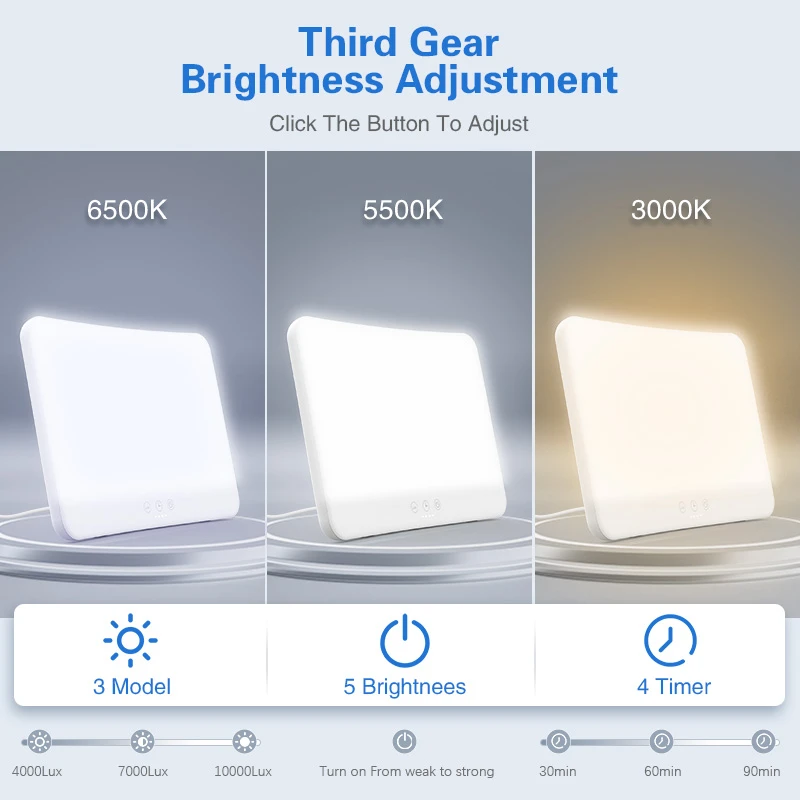
Neurobiology of Phototherapy: How the Brain Processes Light
Retinohypothalamic Tract and ipRGC Photoreception
The therapeutic efficacy of bright light therapy operates through a non-visual neural pathway completely separate from conscious optical vision:
Intrinsically Photosensitive Retinal Ganglion Cells (ipRGCs): In addition to conventional rods and cones responsible for image formation, the human retina contains a specialized subset of photoreceptors known as ipRGCs. These ganglion cells express the photopigment melanopsin, which exhibits peak spectral sensitivity in the narrow cyan-blue band around 480 nm.
The Retinohypothalamic Pathway: When stimulated by high-intensity light matching this spectral profile, ipRGCs depolarize and propagate electrical action potentials directly along the retinohypothalamic tract to the suprachiasmatic nucleus (SCN)-the master circadian pacemaker in the anterior hypothalamus.
Neuroendocrine Cascade: In response to optical signaling from the SCN, the pineal gland suppresses the synthesis and secretion of melatonin (the sleep-promoting hormone), while stimulating the daytime release of cortisol and enhancing central serotonin neurotransmission. This biochemical reset alleviates seasonal mood sluggishness, sharpens daytime alertness, and re-establishes a consolidated nocturnal sleep architecture.
Why Ordinary Domestic Illumination Fails to Trigger Circadian Reset
Standard household lighting is biologically incapable of stimulating the circadian pathway:
The Illuminance Deficit: Typical residential living rooms and bedrooms illuminated by incandescent, compact fluorescent, or decorative LED bulbs generate ambient light levels ranging between 100 lux and 300 lux, with brightly lit commercial offices rarely exceeding 500 lux.
The Circadian Threshold: Human ipRGCs require a substantially higher optical threshold to initiate sustained neural firing. Clinical circadian entrainment requires retinal illuminance levels between 2,500 lux and 10,000 lux. Ambient domestic lighting falls short of this biological threshold by a factor of 20 to 100, leaving the master biological clock in a permanent state of twilight deprivation during winter.
Pupillary Constriction and Point-Source Glare: Attempting to achieve therapeutic lux by staring closely into an unshaded, high-wattage household bulb causes severe specular glare, pupillary constriction, and potential retinal phototoxicity without delivering broad, diffuse retinal coverage.
Technical Comparison: SAD Phototherapy Lamps vs. Standard Household Lighting
1. Photometric Illuminance: Lumens vs. Calibrated Lux at Distance
The most fundamental engineering difference between ambient lighting and phototherapy devices is how optical output is defined and measured:
Total Luminous Flux (Lumens) in Regular Lamps: Standard lamps are engineered to emit light across a wide angle to illuminate entire rooms. A typical 60 W equivalent household LED emits approximately 800 lumens omnidirectionally. As light disperses throughout the room according to the inverse-square law, the actual illuminance reaching the eye drops to negligible levels.
Calibrated Illuminance (Lux) at Prescribed Distances: SAD therapy lamps are precision-engineered optical projectors designed to deliver 10,000 lux at a verified working distance (typically 12 to 24 inches / 30 to 60 cm). Delivering 10,000 lux allows users to achieve complete clinical circadian resetting within a concise daily morning protocol of 15 to 30 minutes. While a 2,500-lux lamp can also achieve therapeutic results, it requires an extended daily exposure of 1 to 2 hours.
2. Spectral Composition, Correlated Color Temperature, and Melanopic Lux
The spectral power distribution of therapeutic lamps is strictly engineered for biological efficacy:
Household Lighting Spectrum: Domestic LEDs and incandescent bulbs generally provide warm-white color temperatures ranging from 2,700 K to 3,000 K (heavily weighted toward red and infrared wavelengths) to foster a relaxing evening ambiance, or neutral white (4,000 K) for general office tasks. These warm spectra possess very low melanopic lux ratios, meaning their biological impact on the SCN is minimal.
SAD Therapy Light Spectrum: Therapeutic light boxes emit broad-spectrum white light with correlated color temperatures (CCT) calibrated between 6,500 K and 10,000 K, mimicking the daylight spectrum of clear morning skies. This spectrum features high melanopic efficacy, saturating retinal melanopsin receptors to maximize daytime alertness.
3. Absolute Ultraviolet (UV) Filtration and Retinal Safety
Optical safety is a primary engineering division between certified therapeutic medical appliances and general illumination:
Ultraviolet Radiation Risks: Natural outdoor sunlight contains significant ultraviolet A (UVA) and ultraviolet B (UVB) radiation, which causes cutaneous erythema, accelerated skin aging, and photochemical cataract formation in the ocular crystalline lens.
100% UV-Free Optical Filtration: Clinical SAD therapy lamps utilize high-performance optical polycarbonate diffusers and UV-absorbing coatings that block all radiation below 400 nm. Verified therapeutic units must deliver 0% UV radiation (UV-free certification), ensuring that daily high-intensity ocular exposure poses zero risk of macular degradation or photokeratitis.
4. Optical Diffusion, Beam Geometry, and Glare Suppression
Directing 10,000 lux toward the human face requires sophisticated optical management:
Point-Source Hotspots in Regular Bulbs: Standard clear or frosted bulbs emit light from concentrated filaments or small LED dies, creating localized luminance spikes that cause painful eye strain, after-images, and headaches.
Curved and Micro-Prismatic Diffusion Panels: Professional phototherapy lamps incorporate multi-layered optical diffusers, edge-lit light guide plates, and curved housing geometries. This spreads light evenly across a broad surface area, producing uniform, flicker-free, glare-reduced illumination that envelops the ocular field without requiring the user to look directly into the LEDs.
Product Architecture and Engineering Benchmark: Professional SAD Light Platforms
In B2B medical supply procurement and private-label wellness hardware, selecting certified phototherapy platforms ensures both clinical compliance and consumer safety.
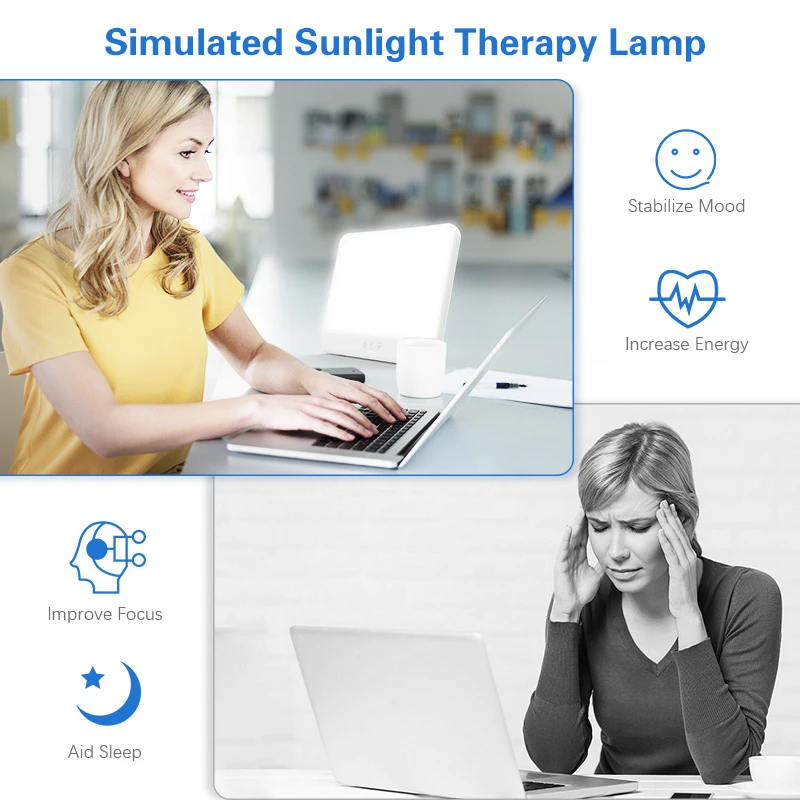
The Gold Rose Curved SAD Light Therapy Lamp represents an advanced phototherapy platform engineered specifically for mood enhancement, circadian synchronization, and seasonal wellness.
Featuring an innovative ergonomic curved optical panel, the lamp delivers a broad, even light distribution that envelops the user's field of vision while significantly reducing harsh specular glare and ocular strain.
The device projects 10,000 lux of full-spectrum, 100% UV-free bright white light calibrated to natural daylight color temperatures, providing the optimal intensity required to stimulate retinal ipRGCs and reset circadian rhythms within a recommended daily session of 15 to 30 minutes.
Constructed with low-thermal-dissipation energy-efficient LEDs, the lamp features multi-tier adjustable brightness settings, a digital session timer, and flicker-free driver electronics designed to protect sensitive eyes.
Operating under comprehensive international accreditations-including ISO 13485, FDA medical device facility registration, CE (EMC/LVD), FCC Part 15, RoHS 2011/65/EU, and EPA compliance-the Curved SAD Light Therapy Lamp provides an ideal turnkey platform for global wellness brands and healthcare distributors with accessible minimum order quantities (MOQ) starting at 1,000 units.
The Gold Rose Touch Control Adjustable Light Therapy Lamp provides versatile desktop phototherapy in an ultra-slim form factor.
Equipped with capacitive touch interfaces, users can seamlessly transition across multiple color temperatures (from warm white for evening reading to crisp 10,000 K daylight for morning therapy) alongside stepped dimming controls, supported by standard OEM manufacturing runs starting at 1,000 units.
The Gold Rose Light Therapy for Depression at Home platform delivers high-output clinical illuminance in a compact, portable design suitable for frequent travelers and corporate workspaces.
Engineered with dual positioning kickstands and universal USB-C or DC power adapters, this system ensures patients maintain circadian compliance while on business travel.
The Gold Rose LED Mood Lamp complements biological therapy by offering multi-colored chromatic ambient lighting, serving as a versatile transitional evening lamp that supports relaxation after daytime bright light exposure.
In contrast, unbranded mass-market "happy lamps" frequently fail to deliver calibrated illuminance, outputting less than 3,000 lux at realistic sitting distances, utilizing unshielded low-frequency pulse-width modulation (PWM) that induces severe ocular flicker, and lacking verified third-party UV-filtration certificates.
B2B Procurement Protocols: Auditing Phototherapy Device Manufacturers
When sourcing SAD therapy lights for institutional healthcare, pharmacy distribution, or retail consumer electronics, procurement directors must enforce four essential verification protocols:
1. Photometric Lux Verification with Goniophotometry and Integrating Spheres
Do not rely on manufacturer marketing claims regarding lux ratings:
Lux vs. Distance Verification: Mandate verified third-party laboratory test reports (from TÜV, SGS, or Intertek) measuring illuminance at explicit sitting distances (e.g., 10,000 lux at 15 cm, 20 cm, or 30 cm). Many low-grade units produce 10,000 lux only when measured directly at the diffuser face (0 cm), dropping below 1,000 lux at actual working distances.
Spectral Radiance and Melanopic Ratio: Ensure the light output demonstrates high spectral power within the 460 nm to 490 nm band, confirming high circadian biological stimulation.
2. Optical Radiation Safety and Photobiological Risk Group Testing
Intense optical devices must undergo formal photobiological safety auditing:
IEC 62471 Compliance: Ensure all lamps carry certified test reports under IEC 62471 / EN 62471 (Photobiological Safety of Lamps and Lamp Systems). Lamps must be classified under Exempt Group (RG0) or Low Risk (RG1), verifying no hazard from blue-light retinal photochemical damage, actinic UV, or near-UV ocular exposure.
Zero-UV Certification: Demand laboratory spectroradiometer audits proving zero detectable radiation below 400 nm to protect the cornea and crystalline lens.
3. Electrical Safety, Thermal Dissipation, and Flicker Metrics
Continuous high-output LED operation generates heat and electrical stress:
Flicker-Free Constant Current Drivers: Verify that internal LED driver circuits utilize constant-current regulation or high-frequency modulation exceeding 20,000 Hz. Low-frequency flicker (100 Hz to 120 Hz) common in cheap drivers causes chronic headaches and eye strain.
Thermal Management and Flame-Retardant Enclosures: Housings must be injection-molded from fire-retardant thermoplastics rated UL 94 V-0, with internal aluminum heat sinks ensuring exterior surface temperatures remain below 45°C during continuous 60-minute runs.
4. Global Medical and Consumer Regulatory Dossiers
Target destination markets enforce strict documentation standards:
United States: FDA establishment registration and device listing. Devices marketed specifically for clinical major depressive disorder require formal 510(k) premarket notification pathways, while general circadian wellness lamps require FCC Part 15 Subpart B verification.
European Union: CE marking supported by verified technical documentation under the Low Voltage Directive (LVD 2014/35/EU), Electromagnetic Compatibility Directive (EMC 2014/30/EU), RoHS 2011/65/EU, and MDR 2017/745 pathways for medical CE declarations.
Facility Quality Systems: Active ISO 13485:2016 accreditation audits conducted by recognized notified bodies, ensuring full batch traceability and raw material quality control.
By partnering with vertically integrated manufacturing leaders like Huizhou Gold Rose Technology Co., Ltd., international brands can deliver clinically sound, rigorously certified SAD therapy lighting solutions that genuinely improve consumer well-being while mitigating regulatory risk.
Frequently Asked Questions
Q1: Can a regular household lamp treat Seasonal Affective Disorder if left on all day?
No. Standard household lamps generate only 100 to 500 lux, which falls far below the 2,500 to 10,000 lux threshold required to stimulate retinal ipRGCs and reset the brain's suprachiasmatic nucleus.
Q2: Why is 10,000 lux considered the clinical gold standard for SAD light therapy?
At an illuminance of 10,000 lux, retinal melanopsin receptors are sufficiently saturated to suppress daytime melatonin and boost serotonin within a practical daily exposure window of just 15 to 30 minutes.
Q3: Does an SAD therapy light produce harmful ultraviolet (UV) radiation or cause tanning?
No. Certified therapeutic SAD lamps incorporate specialized optical diffusers that filter out 100% of UV rays, making them completely safe for daily ocular and skin exposure without tanning or burning risks.
Q4: What is the best time of day and distance to use an SAD light therapy lamp?
Clinical protocols recommend using the lamp early in the morning within one hour of waking, positioned 12 to 24 inches from the face at a comfortable 30° to 45° angle, allowing light to reach the eyes indirectly while reading or working.
Q5: What private-label OEM/ODM customization options does Gold Rose offer for SAD therapy lights?
Gold Rose provides comprehensive OEM/ODM solutions, including custom curved housing molds, bespoke CCT and stepped dimming programming, private-label branding, customized packaging, and full international compliance certification (ISO 13485, FDA, CE, FCC, RoHS) directly through goldrosa.com.
References
Rosenthal, N. E., Sack, D. A., Gillin, J. C., Lewy, A. J., Goodwin, F. K., Davenport, Y., ... & Wehr, T. A. (1984). Seasonal Affective Disorder: A Description of the Syndrome and Preliminary Findings with Light Therapy. Archives of General Psychiatry, 41(1), 72–80.
Terman, M., & Terman, J. S. (2005). Light Therapy for Seasonal and Nonseasonal Depression: Efficacy, Protocol, Safety, and Side Effects. CNS Spectrums, 10(8), 647–663.
International Electrotechnical Commission. (2006). IEC 62471: Photobiological Safety of Lamps and Lamp Systems. IEC Standards Catalogue, Geneva, Switzerland.
International Organization for Standardization. (2016). ISO 13485:2016 Medical Devices - Quality Management Systems - Requirements for Regulatory Purposes. ISO Standards Catalogue, Geneva, Switzerland.
Gold Rose. Curved SAD Light Therapy Lamp with 10,000 Lux UV-Free Illumination and Ergonomic Design. https://www.goldrosa.com/others/sad-therapy-light/curved-sad-light-therapy-lamp.html
Gold Rose. Touch Control Adjustable Light Therapy Lamp with Stepped Dimming and Timer. https://www.goldrosa.com/others/sad-therapy-light/touch-control-adjustable-light-therapy-lamp.html
Gold Rose. B2B Turnkey OEM/ODM Medical Device Engineering and Global Export Services. https://www.goldrosa.com/oem-odm