






Ultrasonic cleaning has transitioned from specialized dental laboratories and industrial jewelry workshops into mainstream consumer households. As clear aligners, retainers, night guards, and fine jewelry become daily personal essentials, consumers and commercial distributors face a fundamental purchasing dilemma: should they invest in a compact, specialized dental pod with a tank volume between 110ml and 200ml, or opt for a larger 500ml multi-purpose ultrasonic bath?
In consumer electronics, a common marketing assumption is that larger capacity inherently delivers superior utility. However, in acoustic engineering and fluid dynamics, the physics of ultrasonic cavitation operate on an inverse principle. Cleaning intensity is fundamentally dictated by acoustic power density, measured in Watts per liter of liquid, rather than gross liquid volume. Analyzing acoustic impedance, standing wave distribution, fluid attenuation, and substrate material differences reveals why compact dental pods deliver vastly superior biofilm debridement for dental thermopolymers, while 500ml multi-purpose baths remain better suited for multi-piece metallic and optical immersion.
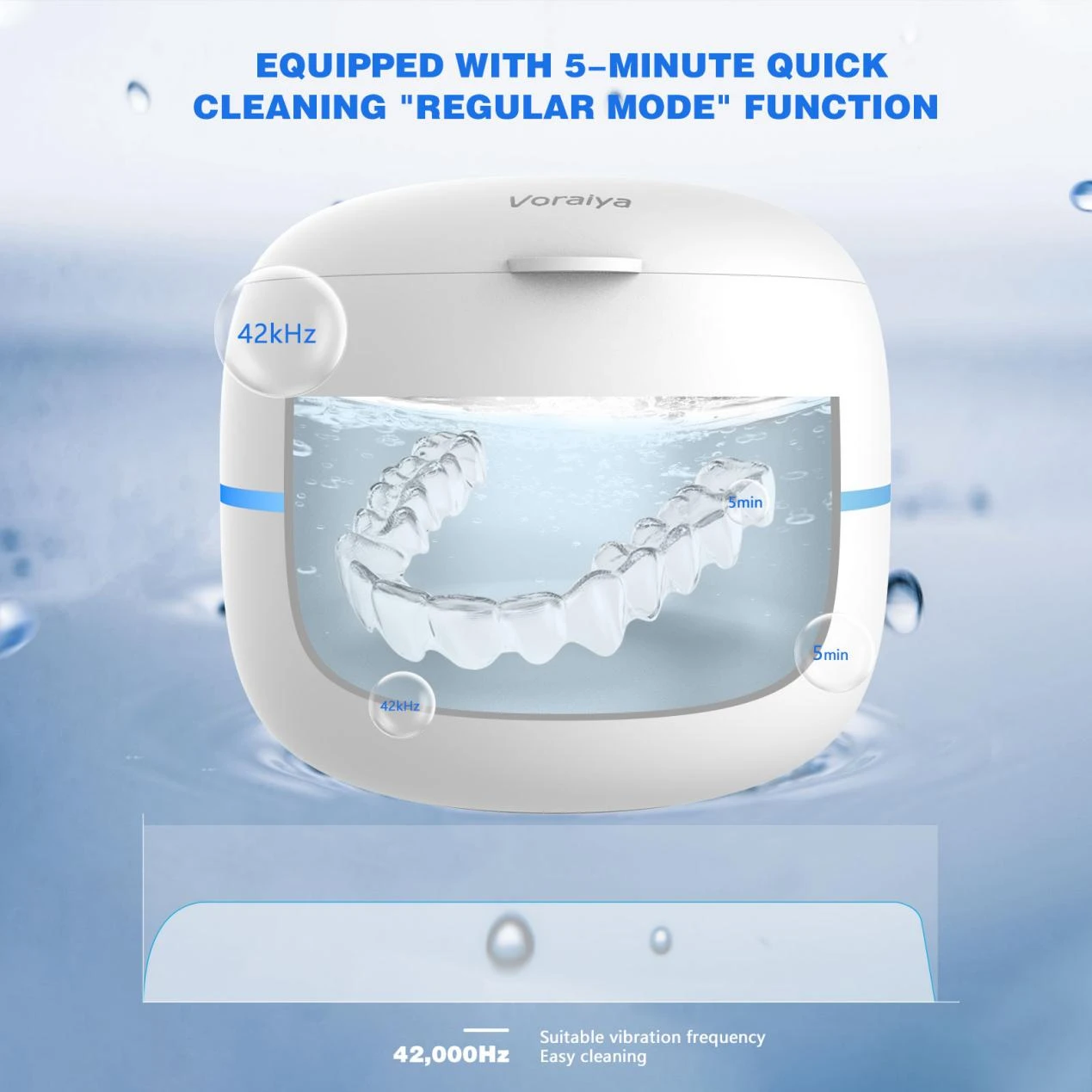
The Tank Size Dilemma: Why Bigger Is Not Always Better in Ultrasonic Debridement
The fundamental misconception: Confusing water bath capacity with cleaning efficacy
A pervasive consumer misconception assumes that a larger 500ml water tank automatically provides more cleaning power than a 200ml compact pod. In reality, an ultrasonic transducer generates a fixed quantity of acoustic kinetic energy. When that acoustic energy is dispersed throughout a large 500ml water bath, the energy is diluted across a broader fluid volume. Unless the transducer power is scaled proportionally, a larger tank results in lower cavitation intensity at any specific point within the liquid, compromising the device's ability to strip stubborn, microscopic bacterial biofilms from delicate surfaces.
The clinical vs. domestic divergence: Specialized polymer hygiene vs. macro-item immersion
The divergence between compact dental pods and large multi-purpose cleaners reflects two fundamentally distinct functional objectives. Dental appliances, such as clear aligners, Vivera retainers, and acrylic splints, require rapid, localized, high-intensity cavitation to disrupt microscopic bacterial matrices without exposing temperature-sensitive thermoformed plastics to prolonged heating. Conversely, domestic multi-purpose cleaning focuses on macroscopic debris removal across broad objects, such as eyeglasses, waterproof watch bands, and multiple pieces of gold or silver jewelry, where total chamber volume and physical immersion take precedence over high acoustic energy density.
Acoustic Physics: Power Density and Energy Distribution in Ultrasonic Baths
The Power Density equation: Concentrated acoustic energy in sub-200ml chambers
The primary metric governing ultrasonic cavitation intensity is acoustic power density, defined as transducer electrical power in Watts divided by liquid volume in Liters (W/LW/L). A compact dental pod equipped with a 25-Watt transducer and a 150ml water chamber generates an exceptional acoustic power density exceeding 160 Watts per liter. In contrast, a typical 500ml multi-purpose cleaner driven by a 35-Watt transducer yields an acoustic power density of only 70 Watts per liter. This substantial disparity means the compact dental pod generates significantly higher localized acoustic micro-jets and violent cavitation bubble collapse, stripping adherent microbial biofilms in a fraction of the time.
Hydrodynamic energy attenuation and acoustic impedance across 500ml water volumes
As high-frequency acoustic waves (43 kHz to 45 kHz) propagate through a liquid medium, acoustic energy undergoes continuous attenuation due to internal fluid friction, liquid viscosity, and boundary reflections. In a 500ml chamber, acoustic waves must travel greater distances before contacting submerged items, leading to significant acoustic dissipation. Furthermore, larger water masses exhibit higher total acoustic impedance, dampening the shockwaves generated by cavitation bubble implosions before they can transfer their kinetic energy to the surface of the submerged object.
Eliminating standing wave dead zones through optimized cylindrical tank geometry
In rectangular or irregularly shaped 500ml tanks, complex wave reflections off flat walls create interference patterns, establishing standing waves characterized by acoustic nodes and anti-nodes. These nodes form permanent dead zones where ultrasonic cavitation is virtually non-existent, leaving uncleaned patches on items placed in those zones. Compact 110ml to 200ml dental pods utilize optimized parabolic or cylindrical SUS304 stainless steel chambers. This rounded geometry ensures symmetrical acoustic reflection, concentrating cavitation energy directly into the central focal zone where the dental appliance rests.
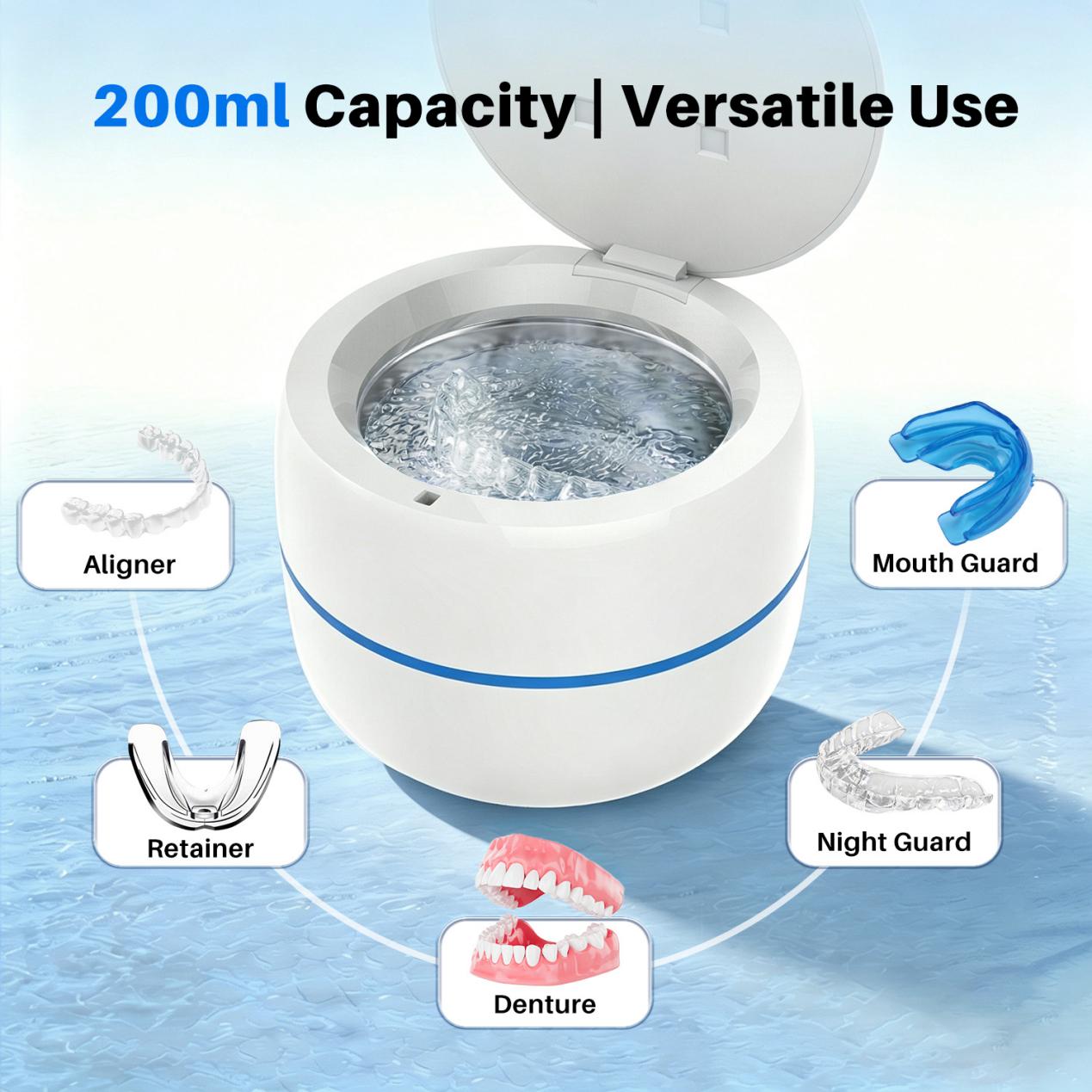
Substrate Requirements: Dental Thermopolymers vs. Metal Jewelry
Orthodontic retainers and aligners: Microscopic biofilm shearing without thermal polymer warping
Clear aligners and retainers are thermoformed from delicate medical-grade polymers, such as polyurethane and copolyester, which deform under water temperatures exceeding 45 degrees Celsius. Prolonged ultrasonic cycles in low-power-density 500ml baths generate cumulative fluid heating from transducer resistance without achieving prompt biofilm clearance. In contrast, a high-power-density compact pod completes thorough biofilm debridement within a single rapid 3-to-5-minute cycle, neutralizing pathogenic microorganisms before water temperature rises to the threshold of plastic deformation.
Fine jewelry and gemstones: Macroscopic polishing, crevice penetration, and multi-piece capacity
Fine jewelry, crafted from dense metallic alloys such as 18K gold, platinum, and sterling silver, possesses an acoustic impedance closely matching the metallic base of the cleaner. Metal substrates effectively reflect and transmit acoustic energy into intricate filigree, prongs, and settings, facilitating the removal of polishing pastes, oils, and particulate matter. For jewelry applications, the spacious dimensions of a 500ml bath allow users to clean wide spectacle frames, multiple rings, and large metal bracelets simultaneously without overcrowding the chamber or scratching delicate gemstones through direct contact.
Top Recommended Ultrasonic Cleaners of 2026: Sourcing Guide & Reviews
Gold Rose US900 Separable Ultrasonic + UV-C Dual Sanitizer: Best Overall Clinical Dental Pod
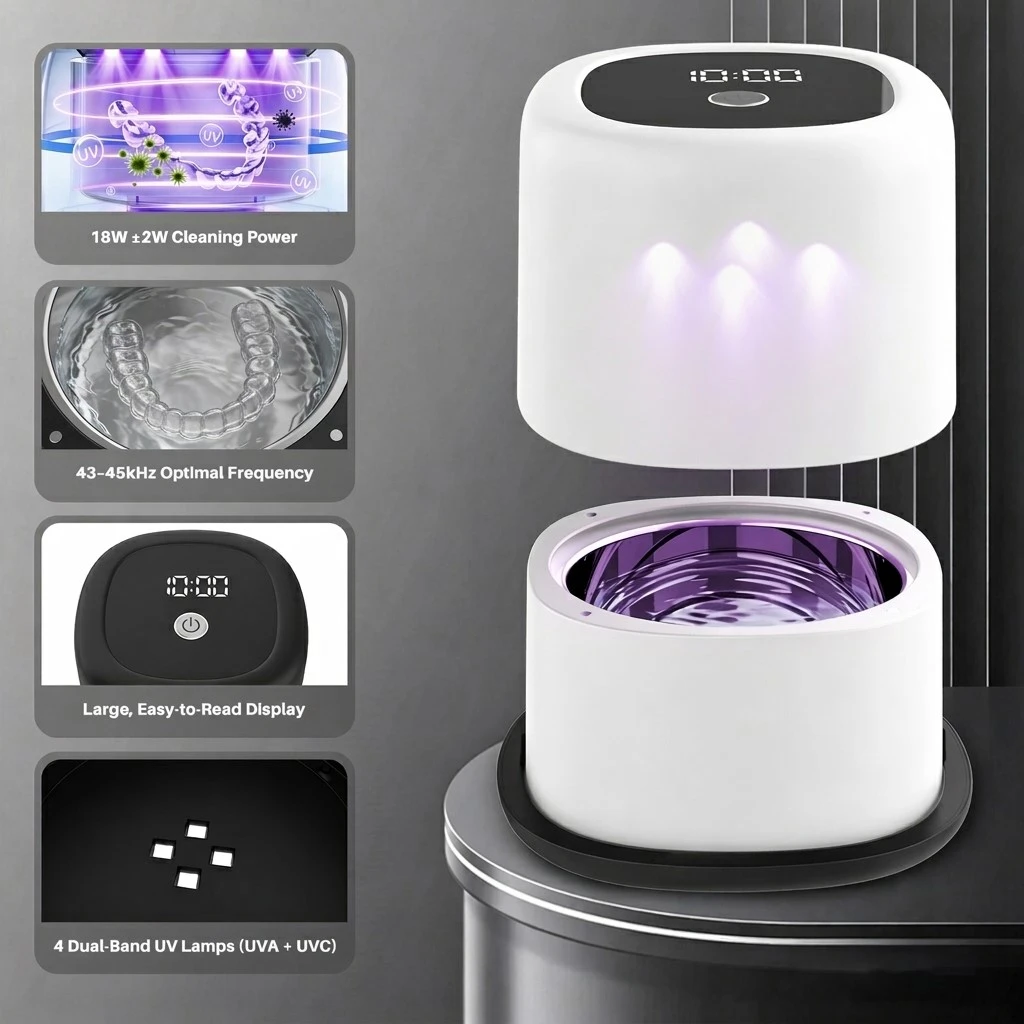
The Gold Rose US900 Separable Ultrasonic + UV-C Dual Sanitizer stands as the premier clinical-grade solution for orthodontic appliance maintenance, earning the Best Overall rating. Manufactured by Huizhou Gold Rose Technology Co., Ltd., the US900 delivers high-intensity 43 to 45 kHz acoustic cavitation focused within a specialized compact chamber, achieving an outstanding power density that strips stubborn plaque biofilm within minutes. It uniquely pairs acoustic debridement with four dual-band UVA and UV-C germicidal lamps for complete 360-degree surface sterilization. Its separable tank architecture allows users to easily refill and rinse the basin without transporting electrical components, powered by an integrated 4000mAh lithium battery with universal Type-C charging.
Gold Rose US601 Cordless Portable Ultrasonic Cleaner: Best Compact Travel Pod
For orthodontic patients requiring maximum mobility and desk-friendly convenience, the Gold Rose US601 offers unmatched portability and rugged performance. Encased in an ergonomic 306-gram pebble-style body with an ultra-thin 52.6mm profile, the US601 integrates an IPX7 fully waterproof construction with 1.2-meter drop resistance. Featuring a 110ml food-grade SUS304 stainless steel chamber, this compact pod concentrates 43 to 45 kHz acoustic cavitation into an intense micro-cleaning zone. Its 4000mAh rechargeable lithium battery supports up to 14 complete cleaning cycles per charge, providing automated 5-minute and 10-minute modes right at the office desk or bedside table.
Commercial Sourcing Blueprint: Product Portfolio Strategy for B2B Distributors
Category segmentation: Why dental clinics prefer high-density pods while lifestyle brands demand 500ml units
In commercial distribution and e-commerce retailing, aligning product specifications with target customer demographics is essential for maximizing conversion and minimizing return rates. Orthodontic clinics, clear aligner DTC brands, and dental supply distributors should prioritize dedicated 110ml to 200ml pods like the US900 and US601. These compact devices offer high acoustic power density, portable footprints, and UV-C sterilization that directly resolve patient compliance and hygiene pain points. Conversely, lifestyle e-commerce brands, optical chains, and jewelry retailers benefit from stocking 500ml multi-purpose cleaners that appeal to broad household multi-object cleaning needs.
Gold Rose OEM/ODM manufacturing advantages
Huizhou Gold Rose Technology Co., Ltd. provides full-scale, end-to-end manufacturing solutions for international healthcare brands, dental clinic networks, and consumer electronics distributors. Holding 107 international patents, trademarks, and utility models across China, the United States, Japan, and the European Union, Gold Rose operates under strict ISO 9001, ISO 13485, and BSCI certified quality management systems. The factory provides comprehensive OEM and ODM customization starting at an accessible minimum order quantity of 1,000 units, supporting custom housing colors, brand logo printing, bespoke gift box packaging, and custom mold tooling. Standard inventory orders ship in 1 to 3 working days, while customized bulk OEM production runs are completed within 15 to 20 working days following rigorous aging and acoustic sweep testing.
Frequently Asked Questions
Does a smaller 200ml dental pod clean retainers better than a 500ml multi-purpose cleaner?
Yes. A 200ml dental pod provides a significantly higher acoustic power density (Watts per liter), concentrating high-frequency cavitation bubbles into a compact volume. This concentrated acoustic energy shears dense microbial biofilms from clear aligners and retainers much faster and more thoroughly than a 500ml unit, which dilutes the same acoustic energy across a larger volume of water.
What is ultrasonic power density (W/L) and why does it matter for plaque removal?
Ultrasonic power density is the ratio of transducer power in Watts to the liquid volume in Liters (W/LW/L). Higher power density generates more violent cavitation micro-bubble implosions per unit volume, creating intense localized shockwaves necessary to strip sticky bacterial plaque and calcified deposits from polymer surfaces without manual brushing.
Can I clean diamond rings and necklaces in a compact 110ml to 200ml dental pod?
Yes. Compact dental pods such as the Gold Rose US900 and US601 are exceptionally effective for cleaning fine jewelry, including diamond rings, platinum settings, gold earrings, and delicate necklaces. The high acoustic power density easily penetrates intricate prongs and micro-crevices, dislodging oils and polishing residues in minutes.
How does the Gold Rose US900 maintain high cavitation without overheating thermoformed plastics?
The Gold Rose US900 delivers concentrated 43 to 45 kHz acoustic cavitation that achieves complete biofilm debridement in a rapid 3-to-5-minute cycle. Because the cleaning process finishes quickly, the water bath does not experience the thermal buildup common in prolonged cleaning cycles, preventing thermoformed aligners and retainers from warping.
What private-label OEM/ODM customization options does Gold Rose offer for ultrasonic cleaners?
Gold Rose provides comprehensive OEM and ODM private-label customization with an accessible MOQ of 1,000 units. Partners can customize housing colors, print corporate brand logos, configure custom timer cycles, develop bespoke retail packaging, and receive full international certification support with rapid 15 to 20 working day manufacturing turnaround times.
References
PubMed Central: Evaluating the Biofilm Removal Efficiency of Ultrasonic Cavitation on Dental Biomaterials
Acoustics Today: Fundamentals of Acoustic Cavitation and Industrial Power Density Calculations
Gold Rose US900 Separable Ultrasonic + UV-C Sanitizer Official Technical Release
Gold Rose US601 Cordless Portable Ultrasonic Cleaner Technical Specifications
Gold Rose B2B Manufacturing Quality & International Certification Standards
For inquiries regarding the Gold Rose US900, US601, or multi-purpose ultrasonic cleaners, wholesale volume pricing, or private-label OEM/ODM manufacturing partnerships, visit Gold Rose Ultrasonic Cleaning Solutions or contact the Gold Rose sales engineering team.