






Buying an Ultrasonic Retainer Cleaner raises a practical question: if sound waves clean the appliance, do you still need retainer tablets? The short answer is not for every cycle, but sometimes as a compatible cleaning aid. Water carries ultrasonic energy for cavitation; a tablet adds a formula that may help with certain odors, stains, or deposits.
The right routine depends on the appliance material, buildup, and product instructions. This guide explains how a Dental Pod differs from chemical soaking, what research shows, and how retainer, aligner, denture, and mouth guard users can choose safely.

The Short Answer: Tablets Are Optional, Not Automatically Obsolete
When water-only ultrasonic cleaning may be enough
A water-only cycle may be a reasonable starting point when the device and appliance instructions allow it, especially for a recently removed retainer without hardened deposits, staining, or persistent odor. Cavitation can loosen residue from curves and recesses, but "cleaner-looking" does not mean disinfected or sterile.
When a cleaning tablet may still add value
A compatible tablet may help with odor or light discoloration, or when the appliance maker recommends periodic soaking. Its value comes from the formulation, not visible fizzing. Before combining one with an Ultrasonic Retainer Cleaner, confirm that the appliance instructions, cleaner manual, and tablet label all permit the method.
How an Ultrasonic Retainer Cleaner Uses Physical Cavitation
Sound waves, microbubbles, and localized mechanical action
A transducer transfers high-frequency mechanical energy into the liquid, producing microscopic bubbles and fluid movement around the appliance. As the bubbles form and collapse, local forces can loosen surface deposits and move liquid through small contours. This physical mechanism is called cavitation; it should not be described as "blasting away every bacterium." Performance depends on factors such as acoustic design, cycle time, water level, appliance position, and tank geometry.
What cavitation can and cannot do
Cleaning, reducing attached material, disinfection, and sterilization are different outcomes. An Orthodontic Cleaning Device may help remove visible residue without being validated to disinfect. Product-specific evidence is required before making microbial reduction claims. The word "ultrasonic" alone does not prove that two devices deliver the same result.
Why a Dental Pod is not the same as a sonic toothbrush
"Ultrasonic," "sonic," and ordinary vibration are not interchangeable terms. A Dental Pod transfers energy through a liquid-filled tank, while a sonic toothbrush acts through moving bristles. Likewise, the phrase Sonic Braces Cleaner should refer only to cleaning a removable orthodontic appliance. Fixed brackets and wires remain in the mouth and cannot be placed in a cleaning tank.
How Cleaning Tablets Work Through Chemical Dissolution
Alkaline peroxide systems and effervescence
Many denture tablets and retainer tablets use an alkaline peroxide system. In water, the formula releases bubbles and may help loosen organic deposits. Products can contain different oxidizing agents, surfactants, enzymes, chelating agents, fragrances, or colorants, so evidence for one formulation does not apply automatically to every tablet.
Why bubbles are not proof of superior cleaning
Fizzing shows a reaction, but foam volume does not measure cleanliness. Material compatibility, labeled soak time, concentration, rinsing, and product testing matter more. Doubling the tablet, extending the soak, or mixing products gives no predictable improvement and may increase risk.
Material compatibility and user sensitivity
Clear thermoplastics, acrylic dentures, metal-containing appliances, and mouth guards have different properties. Hot water may distort some thermoplastics, while an incompatible solution or excessive soaking may affect appearance or fit. Users with known ingredient sensitivities should read the full label and ask their dentist or orthodontist for guidance. Rinse the appliance exactly as directed before returning it to the mouth.

What the Research Actually Shows
Evidence from complete dentures
A 21-day clinical study by Cruz and colleagues evaluated 80 complete-denture wearers. The study compared brushing with water, an alkaline peroxide effervescent tablet, professional ultrasonic treatment, and a combined approach. The three experimental methods were more effective than the water-brushing control, but the study did not find a significant difference among the chemical, ultrasonic, and combined experimental methods.
The result is useful but limited. The subjects wore complete acrylic dentures that had been in use for years, and the treatment differed from the short cycles of a typical home Ultrasonic Denture Cleaner. It is not direct proof for every clear retainer or household device.
Evidence from clear Essix retainers
A randomized clinical trial involving 60 volunteers compared water brushing with the same method followed by one of three alkaline peroxide tablets. Adding tablets did not significantly reduce total bacterial counts on Essix retainers. Limited activity against certain cocci species was observed, but the result does not support assuming that a tablet always adds a meaningful reduction. It also does not prove that tablets have no value for odor, appearance, or every formulation.
Why evidence cannot be transferred between every appliance
Clear retainers, aligners, acrylic dentures, Hawley retainers, and night guards differ in material, thickness, metal content, and service life. An Aligner Cleaning Machine may handle appliances replaced more often than dentures. No tablet schedule or ultrasonic cycle is universal; interpret research according to the appliance tested.
Ultrasonic Cleaning vs. Tablets: A Practical Decision Matrix
|
Cleaning situation |
Water plus ultrasound |
Cleaning tablet |
Combined method |
|
Light daily residue |
A reasonable compatible starting point |
Often unnecessary |
Usually unnecessary for every cycle |
|
Noticeable odor or light staining |
Try the approved cycle first |
Consider periodic labeled use |
Only if all instructions permit it |
|
Hardened or persistent deposit |
Removal is not guaranteed |
Do not extend soaking without guidance |
Stop repeated treatment and ask a dental professional |
|
Known ingredient sensitivity |
Limits formula exposure |
Review the complete ingredient label |
Do not mix chemicals |
|
Unknown material or bonded parts |
Confirm appliance compatibility first |
Confirm label compatibility first |
Avoid until compatibility is known |
Do not add bleach, alcohol, toothpaste, boiling water, or an unapproved household product to a Dental Cleaner. "More concentrated" is not "more effective," and an undocumented mixture makes material performance less predictable.

A Safer Routine for Retainers, Aligners, Dentures, and Mouth Guards
Step 1: Identify the appliance and its instructions
Determine whether the item is a clear retainer, aligner, denture, night guard, or removable appliance with metal. Follow the care instructions from the dental professional and appliance manufacturer. If they conflict with a cleaner or tablet label, ask the relevant provider instead of guessing.
Step 2: Start with the least complex compatible method
When ultrasonic cleaning is permitted, use the specified water level, temperature, loading position, and cycle. Starting with water makes it easier to judge whether a chemical aid is needed. Avoid hot water and repeated cycles unless the instructions allow them.
Step 3: Add a tablet only for a defined reason
Use denture tablets or retainer tablets only when the formula suits the appliance and the machine permits additives. Follow the labeled dose and time. Never combine tablets with another chemical because the interaction and effect may be unknown.
Step 4: Rinse, inspect, and maintain the tank
Rinse and inspect the appliance for cracks, warping, cloudiness, corrosion, or lasting odor, then dry or store it as directed. Empty and clean the tank. If the appliance changes shape, stops fitting, or retains hard deposits, consult a dental professional.
Does UV Change the Need for Cleaning Tablets?
UV and cavitation perform different roles
A UV Ultrasonic Cleaner combines two features, but UV does not replace the physical removal of residue by cavitation. It also does not automatically make a device a sterilizer. Any microbial claim depends on product-specific factors such as wavelength, dose, exposure time, shadows, chamber design, and validated testing.
Claims must come from product-specific evidence
Users should not skip rinsing, water changes, tank maintenance, or appliance-care instructions because a device includes UV. Brands should separate cleaning claims from disinfection or sterilization claims and publish only statements supported by testing for the exact product.
Choosing a Portable Ultrasonic Retainer Cleaner
Cleaning usability comes before feature count
When comparing a Portable Ultrasonic Cleaner, confirm that the tank fits the appliance and that its cycles, water-level guidance, tank material, waterproof construction, and cleaning instructions are clear. A long feature list cannot compensate for poor fit or confusing guidance.
A verified example: Gold Rose US601
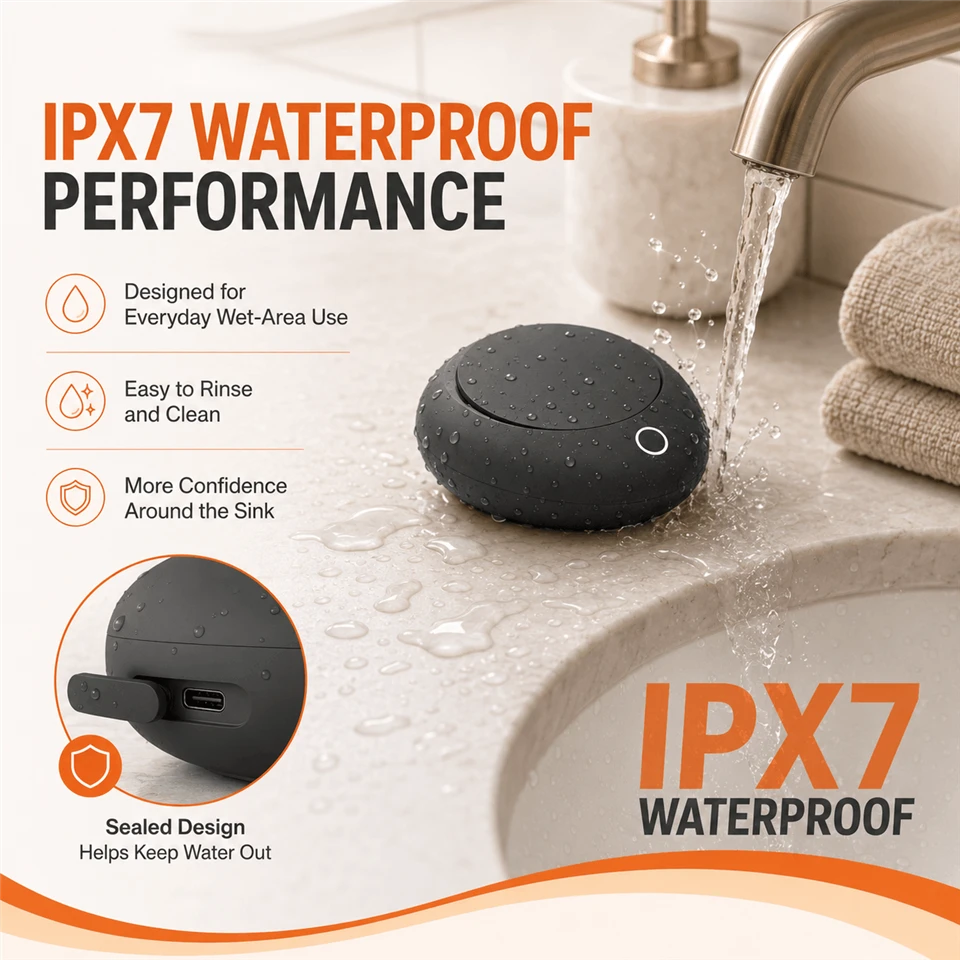
The Gold Rose US601 is a travel-oriented Ultrasonic Retainer Cleaner example. Its page lists a 4,000mAh battery with up to 14 cycles per charge, an SUS304 110mL tank, IPX7 construction, a sealed USB-C port, and 5- and 10-minute modes. These are hardware specifications, not clinical-efficacy claims. Confirm in the manual whether any additive is permitted.
Final Verdict: Use Tablets by Need, Not by Habit
An Ultrasonic Retainer Cleaner can support routine water-based cleaning, so a tablet is not automatically required for every cycle. A compatible tablet remains an option for a defined cleaning need when the appliance, device, and tablet instructions all agree. If the material is unknown, a deposit persists, or the appliance changes appearance or fit, do not solve the problem by increasing chemical concentration or cycle time. Ask a dentist, orthodontist, or the product manufacturer.
Frequently Asked Questions
Do you need cleaning tablets with an ultrasonic retainer cleaner?
Not for every cycle. Water-only cleaning may be a suitable starting point when the device and appliance instructions permit it. Use a tablet periodically only for a defined issue and when the appliance, cleaner, and tablet instructions agree. Gold Rose describes the US601 as supporting a water-based workflow; additives remain subject to its manual.
Can you put denture tablets in an ultrasonic cleaner?
Sometimes, but the name does not guarantee compatibility. Check that the machine allows additives and that the tablet suits the appliance material. Use only the labeled dose and time, then rinse as directed. Never assume that doubling the tablet or cycle improves the result.
Is water alone enough in a Dental Pod?
Water carries ultrasonic energy and may be enough for light daily residue. It may not resolve every odor, stain, or hardened deposit. Do not describe water-only cleaning as disinfection or sterilization unless the exact device has evidence for that claim.
Can a UV ultrasonic cleaner sterilize a retainer?
Not simply because it contains UV. Sterilization is a specific, high-level claim that requires appropriate product testing and operating conditions. UV performance depends on dose, exposure, shadows, and chamber design, while cavitation handles physical cleaning. Read the validated claims and instructions for the exact model.
How often should you use retainer cleaning tablets?
There is no universal schedule for every appliance. Follow the tablet label, the appliance maker's care instructions, and advice from your dentist or orthodontist. Do not increase the frequency or soak time merely because visible fizzing creates the impression of stronger cleaning.
Can the Gold Rose US601 be used without tablets?
The US601 product page presents a simple water-based workflow and lists 5-minute and 10-minute cleaning modes. Before adding a tablet, users should consult the current device manual and confirm compatibility with their specific appliance. Brands sourcing an Orthodontic Cleaning Device should also validate instructions and claims for their target materials and markets.
References
Cruz PC, Andrade IM, Peracini A, et al. The effectiveness of chemical denture cleansers and ultrasonic device in biofilm removal from complete dentures. Journal of Applied Oral Science. 2011;19(6):668–673. doi:10.1590/S1678-77572011000600021.
Microbial evaluation of the effectiveness of different methods for cleansing clear orthodontic retainers: A randomized clinical trial. PubMed PMID: 27845562.
A randomized trial of the effectiveness of an ultrasonic cleaner in removing biofilm from metal orthodontic retainers. PubMed PMID: 37525857.
Home Biofilm Management in Orthodontic Aligners: A Systematic Review. PubMed PMID: 39452463.
Gold Rose. Ultrasonic Cleaning vs. Effervescent Tablets for Night Guards: A Comparative Guide for Private Label Oral Care Brands.
Gold Rose. Portable Ultrasonic Cleaner US601.
This article provides general appliance-care information and does not replace advice from a dentist, orthodontist, or the manufacturer of your specific appliance.