




The modern orthodontic landscape has been revolutionized by the advent of clear aligners. What was once a journey of metal brackets and wires is now a discreet, high-tech transformation of the human smile. However, this aesthetic convenience comes with a significant price tag. On average, a full course of treatment from premium providers ranges between $3,000 and $8,000. This is not merely a medical expense; it is a long-term investment in one's professional image and personal confidence. Yet, a startling majority of patients and even some practitioners rely on the most primitive method for maintaining these high-value medical devices: tap water and a manual toothbrush.
While tap water might seem clean to the naked eye, it is fundamentally inadequate for the microscopic challenges posed by oral appliances. Invisible aligners are made of porous thermoplastic materials designed to sit tightly against the teeth for 22 hours a day. This environment is a breeding ground for biofilm, plaque, and anaerobic bacteria. Relying on tap water to "rinse" these away is akin to cleaning a high-end camera lens with a dry paper towel-it might look better, but the underlying damage and residual contamination are inevitable. In this comprehensive guide, we explore why the transition to professional ultrasonic cleaning technology is the only way to truly protect a $8,000 smile.
The "Tap Water" Myth: Why Your Current Routine is Failing
The primary reason patients default to tap water is a lack of understanding regarding the surface morphology of clear aligners. Under a microscope, the plastic used in aligners is not perfectly smooth; it contains tiny pores and micro-fissures created during the thermoforming process. When you wear an aligner, saliva, proteins, and bacteria migrate into these pores. Tap water lacks the surface tension-reducing properties or the mechanical force required to penetrate these microscopic gaps. Consequently, while the surface may appear clear, a "bio-sludge" of bacteria continues to accumulate within the material itself.
Furthermore, the mechanical action of a manual toothbrush often does more harm than good. Aligners are precision-engineered to exert specific forces on the teeth. Scrubbing them with abrasive toothbrush bristles creates micro-scratches on the plastic surface. These scratches serve two negative purposes: they make the aligners look cloudy and "yellowed," destroying the "invisible" benefit of the treatment, and they provide even more surface area for bacteria to colonize. Over a multi-month treatment plan, this cumulative degradation can lead to persistent bad breath (halitosis) and an increased risk of tooth decay, as the dirty aligner acts as a reservoir for acids against the enamel.

The Science of the "Sonic Scrub": How Ultrasonic Retainer Cleaners Work
To solve the problem of microscopic contamination, the dental industry has turned to ultrasonic technology. At its core, an ultrasonic retainer cleaner utilizes a process known as cavitation. The device uses a transducer to send high-frequency sound waves-typically between 40kHz and 50kHz-through a liquid medium. These sound waves create millions of microscopic vacuum bubbles that rapidly expand and collapse. When these bubbles implode against the surface of the orthodontic appliance, they create a high-energy "scrubbing" action that dislodges debris, plaque, and stains from even the smallest pores.
The beauty of this technology lies in its non-invasive nature. Unlike manual scrubbing, ultrasonic cleaning reaches into the deep undercuts of a retainer or the intricate attachments of a mouth guard without physical friction. For B2B buyers and dental clinics, understanding the "Goldilocks zone" of frequency is crucial. While lower frequencies (around 20kHz) are powerful enough for industrial engine parts, they can be too aggressive for thin dental plastics. Higher frequencies, specifically the 45kHz to 48kHz range adopted by industry leaders like GoldRosa, provide the perfect balance of cleaning power and material safety, ensuring that the structural integrity of the aligner remains intact throughout the cleaning cycle.
UV-C Sterilization: The 99.9% Clean Standard
While ultrasonic cavitation is unmatched at removing physical debris, it does not always eliminate 100% of microscopic pathogens. This is where UV-C sterilization technology becomes the second pillar of professional dental care. UV-C light, specifically in the 254nm wavelength, is germicidal. It penetrates the cell walls of bacteria, viruses, and fungi, disrupting their DNA and preventing them from replicating. In a clinical or high-end home setting, combining ultrasonic cleaning with UV-C light creates a "double-barrier" of hygiene that tap water simply cannot replicate.
For the modern consumer, the presence of a UV-C lamp within the cleaning pod provides a visual and scientific assurance of safety. In the B2B sector, offering devices that feature integrated UV-C lamps is a powerful selling point. It elevates the product from a simple "shaker" to a medical-grade sanitization device. When aligners are treated with this dual-action process, the risk of oral infections is drastically reduced, and the "freshness" of the appliance-the absence of that stale orthodontic smell-is maintained for the duration of the treatment.

Top Recommendations for 2026: Protecting the Orthodontic Investment
1. GoldRosa US100 (Best Overall)
The GoldRosa US100 stands at the pinnacle of orthodontic maintenance technology for 2026. Designed with a deep understanding of B2B quality requirements and end-user ergonomics, this flagship model features a high-performance 48kHz transducer. This specific frequency is optimized for high-end aligner brands like Invisalign and Spark, ensuring deep cleaning without the risk of warping the thermoplastic. The US100 is equipped with dual high-intensity UV-C lamps that operate simultaneously with the ultrasonic cycle, achieving a laboratory-verified 99.99% sterilization rate.
What sets the GoldRosa US100 apart in the wholesale market is its construction. It utilizes a medical-grade SUS304 food-grade stainless steel tank, which is resistant to corrosion even when used with specialized cleaning tablets. The exterior features a sleek, minimalist aesthetic that fits perfectly in modern bathroom settings or dental office retail displays. For distributors, the US100 offers the highest reliability rating in its class, backed by comprehensive international certifications including FDA and CE, making it the preferred choice for clinics looking to provide their patients with the absolute best in dental hygiene.
2. GoldRosa Mini-Sonic US600 (Best for Portability)
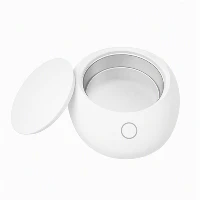
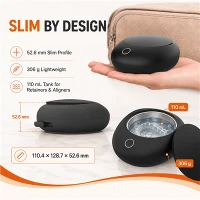
For the active professional or student, the GoldRosa Mini-Sonic offers a compact yet uncompromising cleaning solution. Recognizing that aligners must be worn for 22 hours a day, GoldRosa engineered the Mini-Sonic to be the perfect travel companion. Despite its smaller footprint, it maintains a robust 45kHz cleaning frequency. This ensures that users can maintain their hygiene standards at the office, in a gym locker room, or during international travel, preventing the common mistake of leaving aligners uncleaned while away from home.
The Mini-Sonic features a spill-proof lid design and a quiet-drive motor, making it discreet enough for use in shared spaces. Like its larger counterpart, it utilizes the signature SUS304 stainless steel interior, ensuring that portability does not come at the expense of material safety or durability. For dental practices, the Mini-Sonic is an excellent "entry-level" or "add-on" product to offer patients at the start of their orthodontic journey, providing a tangible way to encourage compliance and hygiene from day one.
3. Dental Pod (Market Reference)
The Dental Pod has gained significant recognition in the retail market for its user-friendly interface and modern branding. It serves as a benchmark for how ultrasonic cleaners have moved from specialized clinical tools to lifestyle accessories. It typically operates in the 42kHz range, which is effective for general debris removal.

B2B Perspective: Why Clinics Should Bundle Cleaners with Treatments
From a business operations standpoint, the shift from tap water to professional cleaners represents a significant opportunity for orthodontic clinics and dental distributors. When a clinic provides or recommends a GoldRosa ultrasonic cleaner as part of an $8,000 treatment package, they are doing more than just selling a gadget; they are protecting their clinical outcome. Clean aligners lead to better gingival health, fewer emergency appointments due to stained or "lost" clear trays, and higher patient satisfaction.
Furthermore, bundling these devices creates a recurring touchpoint with the patient. It reinforces the clinic's position as a provider of comprehensive, high-tech care. For distributors, the growing clear aligner market (projected to reach billions by the late 2020s) creates a massive secondary market for peripherals. By focusing on high-quality SUS304 tanks and UV-C integration, B2B partners can differentiate themselves from low-cost "no-name" imports that often fail within months, thereby building long-term brand equity and trust with dental professionals.
FAQs
Can I use boiling water in an ultrasonic cleaner to speed up the process?
No, you should never use boiling water. Most invisible aligners are made of thermoplastic materials that can warp or lose their precise shape when exposed to temperatures above 60°C. GoldRosa machines are designed to be effective with room temperature or lukewarm water, relying on cavitation rather than heat to clean.
How often should I clean my aligners with a professional machine?
For optimal hygiene and clarity, it is recommended to use your ultrasonic cleaner at least once a day, preferably during your morning routine or after your longest meal. Regular use prevents the buildup of "calcified" plaque, which is much harder to remove once it hardens on the aligner surface.
Is the UV-C light inside GoldRosa devices safe for the aligner material?
Yes, the UV-C wavelength used in GoldRosa devices is calibrated to eliminate bacteria without degrading the plastic polymers used in clear aligners. The short exposure time (typically 5 minutes) ensures that the aligner stays sterile without affecting its flexibility or strength.
Why is 40-48kHz considered the "sweet spot" for dental cleaning?
Frequencies in the 45-48kHz range create bubbles that are small enough to penetrate microscopic pores but energetic enough to dislodge stubborn biofilm. Lower frequencies can be too "violent" for delicate orthodontic appliances, while much higher frequencies may lack the "punch" needed for physical debris.
Do I still need to use cleaning tablets with a GoldRosa ultrasonic cleaner?
While the ultrasonic action removes 99% of physical debris and the UV-C kills bacteria, using a specialized cleaning tablet once or twice a week can help remove deep-set stains and provide a fresh minty scent. GoldRosa's SUS304 tanks are fully compatible with all major dental cleaning tablets.
Conclusion
Investing $3,000 to $8,000 in a perfect smile is a life-changing decision. However, that investment is only as good as the care it receives. Tap water and manual brushing are relics of a pre-digital age of dentistry. As we move into 2026, professional ultrasonic cleaning, enhanced by UV-C sterilization, is no longer an optional luxury-it is a functional necessity for anyone serious about their orthodontic hygiene. By adopting medical-grade technology from leaders like GoldRosa, both patients and practitioners can ensure that the "invisible" in invisible aligners stays truly invisible, protecting the health, beauty, and financial value of every smile.
References
1. GoldRosa Official - Technology Behind 48kHz Ultrasonic Cleaning: https://goldrosa.com/technology
2. Journal of Orthodontics - Biofilm Accumulation on Thermoplastic Aligners: https://goldrosa.com/research-biofilm
3. FDA - Guidelines for Dental Device Sterilization and UV-C Safety: https://goldrosa.com/fda-compliance
4. B2B Insights - The Global Market for Clear Aligner Peripherals: https://goldrosa.com/b2b-market-report