




You bought your ultrasonic cleaner for one reason: to keep your retainer, aligner, or night guard fresh without scrubbing. Then one day you drop in a pair of glasses "just to see," and the water turns cloudy in ninety seconds. That is the moment you realize your device was never really a dental appliance - it is a small, powerful cleaning laboratory that happens to live in your bathroom. Ultrasonic cleaners use high-frequency vibrations to create microscopic bubbles that dislodge dirt from crevices no brush can reach, which makes them far more versatile than their packaging suggests. Here are eight surprising things you can clean with one, plus how to do it safely.
Why Ultrasonic Cleaning Works on So Many Materials
Before you start dropping valuables into the tank, it helps to understand why the same machine that cleans a retainer can also restore a watch. The mechanism is physical, not chemical - and that is exactly why it is safe across so many surfaces.
The Science Behind Micro-Bubble Cleaning
An ultrasonic cleaner drives a transducer that vibrates the liquid at 40,000 to 53,000 Hz, generating millions of microscopic bubbles. These bubbles grow until they collapse violently - a process called cavitation - and each collapse releases a tiny shock wave that blasts away dirt, oils, and residues from surfaces. Critically, this action is purely mechanical: it does not rely on aggressive solvents or abrasives, so it cleans delicate materials like acrylic, silicone, stainless steel, and plated metals without scratching them. The GoldRosa US600, for instance, sweeps its frequency between 47 and 52 kHz, which lets the cleaning energy distribute evenly across items of different shapes and densities rather than concentrating in one spot.
What Not to Clean - The Safety Boundaries
The same mechanical power needs boundaries. Soft, porous gemstones such as pearls, opals, and turquoise can be damaged by cavitation, and emeralds with natural fractures should never enter the tank. Anything containing a sealed battery or exposed electronics - smartwatches, hearing aids, most electric toothbrush heads - is off-limits because the vibrations and water can destroy internal components. Wood, lacquered finishes, and items with loose inlays can also suffer. Keep the tank to hard, non-porous materials, use plain water or a mild detergent, and when in doubt, test an inconspicuous area first.

8 Surprising Things You Can Clean with an Ultrasonic Cleaner
Now for the practical part. These eight everyday items respond dramatically well to ultrasonic cleaning - and most of them have been silently collecting grime in your home for years.
1. Eyeglasses and Sunglasses
Glasses are the classic "aha" item. The frame hinges, nose pads, and the groove where the lens meets the frame trap skin oils, dead cells, and makeup residue that a lens cloth simply redistributes. A two-minute ultrasonic cycle with a drop of dish soap lifts all of it, leaving frames and lenses genuinely clean - not just polished. This works for both plastic and metal frames, though you should remove any fabric or leather case first and let the glasses air-dry completely.
2. Jewelry Beyond the Basics
Rings, necklaces, bracelets, and earrings spend their days collecting hand cream, sweat, and dust in places a polishing cloth cannot reach - under the stone, inside chain links, along the prongs. Cavitation cleans these crevices without the risk of scratching that aggressive jewelry cleaners carry. Diamonds, gold, silver, and stainless steel jewelry clean beautifully; keep pearls and soft opals out of the tank, and for silver pieces, a short cycle followed by immediate drying helps slow future tarnishing.
3. Watches and Bracelets
A watch strap is a bacteria hotel. Skin oils and dead cells work their way between every link, and fabric or leather straps absorb sweat directly. Metal bracelets and watch cases clean superbly in an ultrasonic tank, with the cavitation reaching into the gaps between links that a cloth cannot. Remove the watch from the case if the crown is not sealed, and never submerge the watch head itself unless it is rated for it. A five-minute cycle can make a daily-wear steel bracelet look newly polished.
4. Razor Heads and Shaving Tools
Disposable and cartridge razor heads trap hair, soap scum, and skin oils between the blades, which dulls them faster and makes them a hygiene concern. A short ultrasonic cycle with warm water and a few drops of mild soap dissolves the buildup and restores blade performance - many users report an old razor feeling noticeably sharper afterward. This is also an excellent way to clean safety razors, razor handles, and beard trimmers after removing the battery-powered motor housing.
5. Makeup Brushes and Beauty Tools
Foundation brushes, eyeshadow brushes, and beauty sponges accumulate product, oil, and bacteria in their bristles, and hand-washing rarely gets deep enough. Ultrasonic cleaning lifts foundation and powder residue from the core of the brush in minutes, and it is gentler on bristles than vigorous scrubbing. Wash the brush heads in a gentle cycle with a drop of brush cleanser, then reshape and air-dry with the bristles pointing down. The same tank session can handle nail clippers, cuticle tools, and tweezers.
6. Baby Bottle Nipples and Pacifiers
Silicone baby bottle nipples, pacifiers, and teething toys are prime candidates: they are smooth, non-porous, and spend their lives being put into a baby's mouth after touching tabletops, floors, and bags. A five-minute ultrasonic cycle with warm water removes milk residue and film from the tiny channels where brushes cannot fit. Follow with the manufacturer's usual sterilization method - the ultrasonic step replaces the scrubbing, not the boiling or steaming. The GoldRosa US600 includes a UVC mode that provides an additional sterilization pass for oral appliances and baby items.
7. Pen Nibs and Small Writing Tools
Fountain pen nibs clog with dried ink, and the feed channels are far too fine for a brush. A short ultrasonic cycle with clean water - no soap, which can leave residues inside the feed - dissolves dried ink and restores smooth flow. Disassemble the pen first and clean only the nib unit. The same logic applies to other precision tools: dental floss picks, tweezers, and small grooming tools all respond well to the same treatment.
8. Keys, Coins, and Everyday Pocket Items
House keys, car keys (the metal part only), coins, nail clippers, and pocket knives spend their lives in lint-filled pockets. A few minutes in the tank removes the grime layer, and the cleaning is especially satisfying because the results are immediately visible. For pocket knives, clean with the blade closed and dry and oil the pivot afterward. This category is the best introduction for skeptics - after seeing what comes off a set of keys, no one doubts the machine again.

How to Clean Safely - Materials, Cycles, and Frequency
Getting great results is about matching the cycle to the item. A few guidelines keep everything safe and effective.
Choosing the Right Cycle and Solution
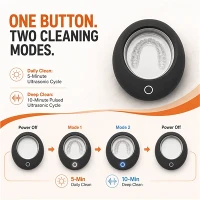
Warm water (around 40°C) works best for oils and skin residue; cold water is safer for delicate items like lacquered glasses frames. Add a single drop of mild dish soap or a purpose-made cleaning solution for anything greasy - never use bleach, ammonia, or abrasive cleaners. Most devices offer multiple modes: use a shorter, gentler cycle for thin or delicate pieces and a longer cycle for stubborn buildup on robust items like watch bracelets. The US600's digital display and audible beeps make it easy to run a precise timed cycle without guesswork.
A Simple Cleaning Checklist
Follow the same five steps every time. First, rinse the item under running water to remove loose debris. Second, fill the tank with fresh water to the marked level and add cleaning solution if needed. Third, place the item in the basket or directly in the tank, avoiding contact between pieces so they do not clatter against each other. Fourth, run the cycle - one to five minutes depending on the item. Fifth, rinse, dry thoroughly, and for metal items consider a quick polish. Empty and wipe the tank after each session, because the dirt you removed is still in the water.
Frequently Asked Questions
Q: Can I clean eyeglasses in an ultrasonic cleaner?
A: Yes, glasses are one of the best candidates. Use warm water with a drop of dish soap for a two-minute cycle, then air-dry completely. Remove fabric or leather cases first, and check that coatings on the lenses are intact.
Q: Is it safe to put jewelry in an ultrasonic cleaner?
A: Diamonds, gold, silver, and stainless steel jewelry clean safely and thoroughly. Keep porous or fragile gemstones - pearls, opals, turquoise, and fractured emeralds - out of the tank, as cavitation can damage them.
Q: Can I clean my smartwatch or electronic device?
A: No. Anything with a sealed battery or exposed electronics should never enter the tank, since water and vibration can destroy internal components. Remove the metal bracelet or case from the watch head and clean only the strap and case if they are water-rated.
Q: How often should I clean these items?
A: Oral appliances should be cleaned daily or several times a week, while glasses, jewelry, and razors benefit from a weekly cycle. Baby items should be cleaned after heavy use, and keys or coins can be cleaned whenever they start to look grimy.
Q: Can an ultrasonic cleaner replace sterilization for baby items?
A: It replaces scrubbing, not sterilization. Models with a UVC mode, like the GoldRosa US600, add an extra disinfection pass for silicone and oral-care items, but follow your usual boiling or steaming routine as the primary sterilization step.

References
1. GoldRosa US600 Rechargeable Ultrasonic Cleaner - [https://www.goldrosa.com/ultrasonic-dental-cleaner/rechargeable-ultrasonic-cleaner.html](https://www.goldrosa.com/ultrasonic-dental-cleaner/rechargeable-ultrasonic-cleaner.html)
2. GoldRosa Best Ultrasonic Dental Cleaner (US500) - [https://www.goldrosa.com/ultrasonic-dental-cleaner/best-ultrasonic-dental-cleaner.html](https://www.goldrosa.com/ultrasonic-dental-cleaner/best-ultrasonic-dental-cleaner.html)
3. GoldRosa Ultrasonic Teeth Cleaning At Home (US201) - [https://www.goldrosa.com/ultrasonic-dental-cleaner/ultrasonic-teeth-cleaning-at-home.html](https://www.goldrosa.com/ultrasonic-dental-cleaner/ultrasonic-teeth-cleaning-at-home.html)
4. GoldRosa Ultrasonic Dental Cleaner Product Line - [https://www.goldrosa.com/ultrasonic-dental-cleaner/](https://www.goldrosa.com/ultrasonic-dental-cleaner/)
5. GoldRosa Official Website - [https://www.goldrosa.com/](https://www.goldrosa.com/)
6. Suslick, K. S. (1990). "Sonochemistry." *Science*, 247(4949), 1439-1445.