


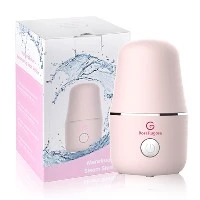




Boiling a reusable silicone menstrual cup or disc in a kitchen pot on the stove has been the standard home hygiene recommendation for decades.
It is also one of the most common reasons people abandon reusable cups altogether or hesitate to make the switch from disposable pads and tampons.
Boiling requires standing over a hot stove, dedicating a kitchen pot that is also used for food preparation, watching the timer for five to ten minutes, and navigating awkward explanations in shared apartments, college dormitories, or family kitchens.
Countertop micro-steam sanitizers were engineered to eliminate this friction entirely.
Yet for feminine hygiene brand directors, distributors, and procurement managers, the real commercial question is not simply whether steam devices are convenient.
The critical inquiry is whether a compact countertop steam sanitizer genuinely achieves the hygienic reduction delivered by a rolling pot of boiling water, and which mechanical design features determine real-world performance.
In this comprehensive guide, we examine published microbiological cleaning research, explore the thermodynamic differences between boiling water and enclosed steam, evaluate why leading feminine care brands are adding hardware accessories to their catalog, and provide an OEM procurement framework for sourcing certified steam sanitizers.
The Evidence Baseline: What Actually Reduces Bacteria on Intimate Silicone
To evaluate whether automated countertop sanitizers protect personal health, we must first look at how bacteria behave on reusable medical-grade silicone.
The Landmark In Vitro Cleaning Study
The most rigorous benchmark in modern menstrual care literature is an in vitro evaluation published in the International Journal of Environmental Research and Public Health in 2022.
Researchers coated medical-grade silicone menstrual cups with human blood, inoculated them with a toxic-shock-toxin-producing strain of Staphylococcus aureus for twelve hours, and compared four distinct cleaning protocols:
Rinsing with cold water alone
Washing with cold water and gentle liquid soap
Rinsing with cold water followed by steeping in boiled water for five minutes
Washing with soap and water followed by steeping in boiled water for five minutes
Bacterial recovery was precisely measured in colony-forming units (CFU) per cup to determine real-world microbial reduction.
The Two Critical Research Findings
The laboratory results yielded two essential takeaways for both consumers and hardware engineers:
Soap Washing Plus Thermal Exposure Is Essential: Rinsing with cold water alone left substantial bacterial colonies. Washing with liquid soap and water followed by a five-minute steep in boiled water reduced bacterial recovery to zero CFU per cup, compared to over two hundred million CFU on uncleaned controls. Steeping in boiled water without prior soap washing left measurable residual bacteria (an average of 14 CFU per cup), proving that thermal heat cannot replace the physical removal of dried organic blood films.
Surface Texture Dictates Cleanability: The study highlighted that silicone cups with deep raised lettering, measured volume ridges, or complex molded grip rings retained significantly higher bacterial loads than smooth-walled designs. Intricate crevices create micro-shadows where organic films settle, making steam penetration geometry a vital engineering specification.
Steam vs. Stove: The Thermodynamic Differences
Many consumers assume that boiling water is hotter than steam.
In reality, at standard atmospheric pressure, liquid water boils at 100°C and saturated water vapor exists at the exact same temperature.
The practical difference lies in heat transfer efficiency and thermal stability.
Latent Heat and Rapid Thermal Transfer
While liquid water and atmospheric steam share the same baseline temperature, steam carries substantially higher energy per unit mass in the form of latent heat of vaporization.
When high-temperature steam circulates inside an enclosed chamber, it instantly condenses across the cooler surfaces of the silicone cup, transferring its thermal energy far faster than static immersion in still water.
Consistent Temperature Retention Throughout the Cycle
The primary flaw of traditional stove steeping is rapid heat loss.
When boiled water is poured into a room-temperature ceramic mug or plastic soaking container, the liquid begins cooling immediately, dropping below effective sanitizing temperatures within three to four minutes.
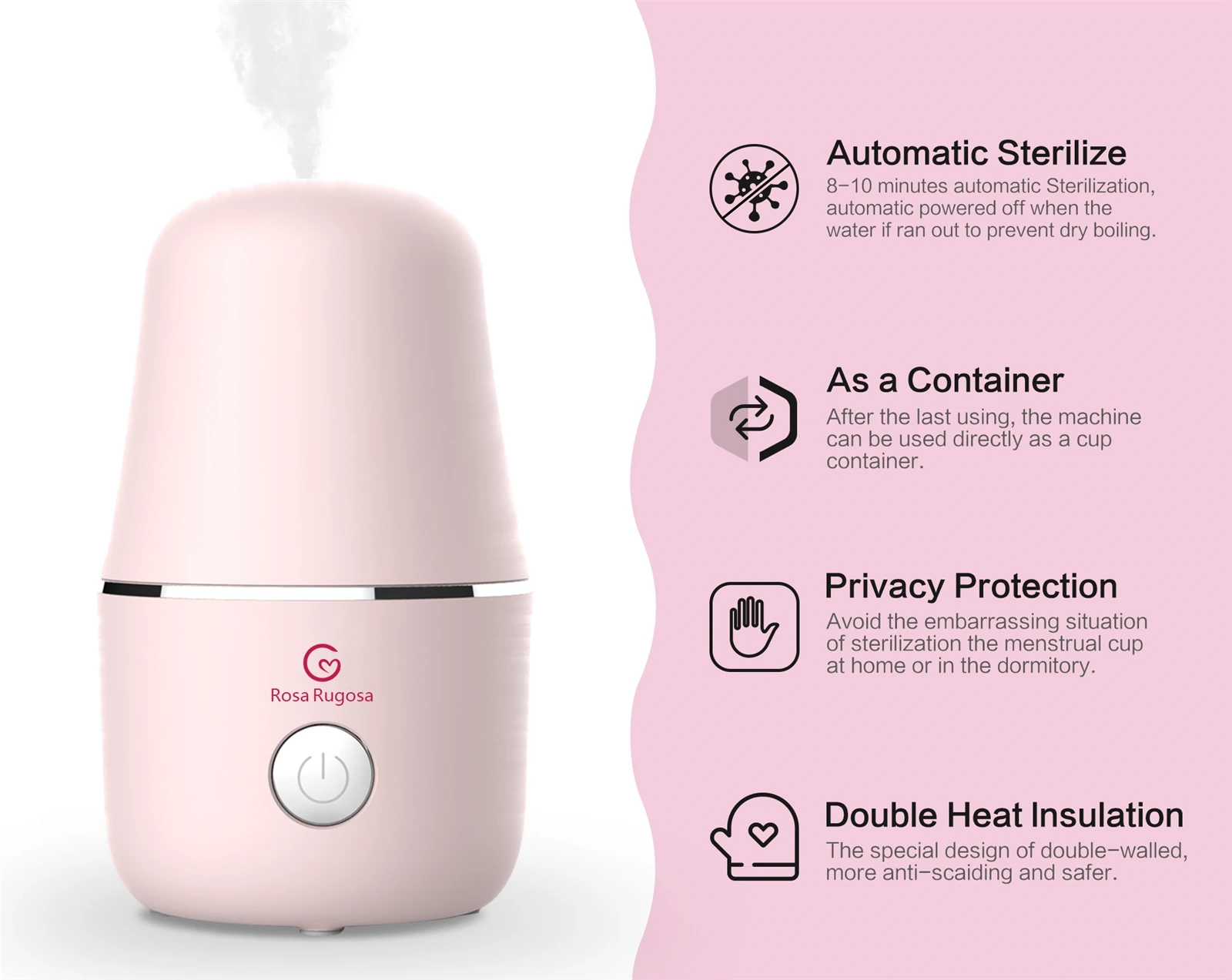
In contrast, an enclosed countertop electric steam sanitizer maintains an active, saturated steam environment across its entire five-to-ten-minute automated cycle.
The menstrual cup remains enveloped in continuous, stable thermal energy from the first minute to the last, ensuring consistent microbial reduction without manual supervision.
Disinfection vs. Validated Sterilization
In commercial marketing, hardware brands must maintain clear regulatory discipline.
Atmospheric steam and boiling water deliver thermal disinfection-a high-level reduction of vegetative bacteria, yeasts, and viruses-rather than medical sterilization.
True medical sterilization requires sporicidal destruction, typically achieved using pressurized saturated steam at 121°C or 134°C held within an airtight pressure vessel for validated exposure times.
Consumer devices that operate with a vented lid at ambient pressure deliver high-level thermal disinfection near 100°C.
Any device claiming clinical 121°C sterilization must incorporate a verified pressure vessel, calibrated release valves, and structural safety interlocks backed by third-party testing.
Feminine care brands that transparently distinguish between daily thermal disinfection and pressurized clinical sterilization build far stronger consumer trust and withstand regulatory audit.
Why Feminine Hygiene Brands Are Adding Steam Sanitizers Now
Integrating a micro-steam sanitizer into a feminine wellness catalog delivers significant strategic advantages across user adherence and retail basket economics.
Improving User Adherence Through Friction-Free Hygiene
A major systematic review and meta-analysis published in The Lancet Public Health in 2019 evaluated menstrual cup safety across dozens of global studies, concluding that cups are a reliable, safe option for menstrual management, with only five documented cases of toxic shock syndrome among tens of millions of users worldwide.
This clinical safety record proves that the primary marketing pitch for a steam sanitizer should not be based on microbial fear.
Instead, the authentic value proposition is daily adherence.
Boiling a cup in a shared kitchen is logistically frustrating, leading many users to cut corners or skip thermal cleansing altogether between cycles.
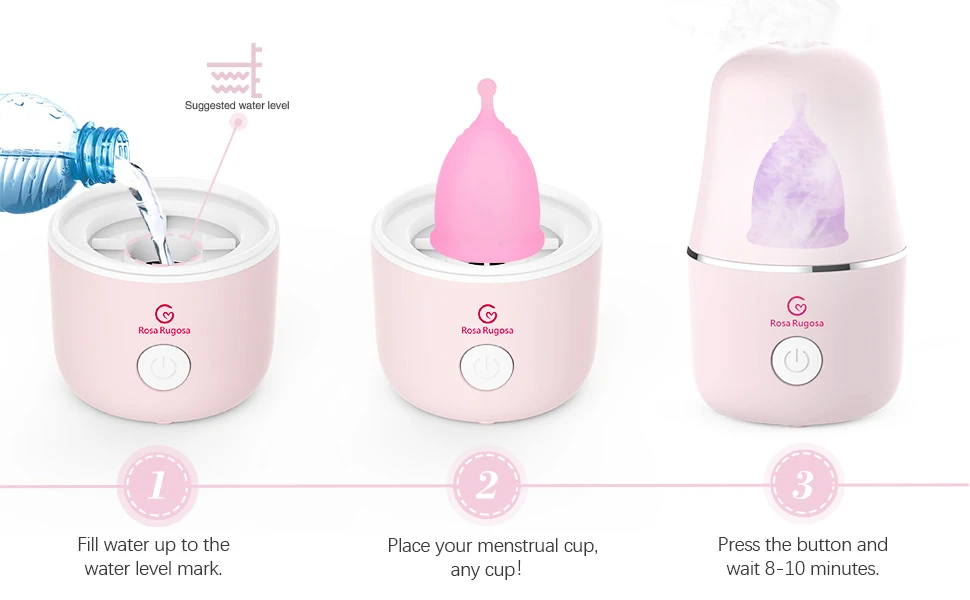
A discreet, one-button countertop device makes adherence effortless, ensuring users maintain safe hygiene habits cycle after cycle.
Raising Average Order Value with a Hardware Anchor
For consumer brands, a steam sanitizer functions as a high-margin hardware anchor in a category traditionally dominated by low-cost consumable items or single-purchase silicone cups.
Adding an electronic sanitizer increases average basket size, creates premium gift-bundle opportunities, and provides an attractive hardware SKU for retail shelves and subscription ecosystems.
Furthermore, a dedicated personal sanitizer resolves privacy concerns for college students in shared dorms, professionals traveling for work, and individuals living with roommates who prefer not to boil personal hygiene items in shared cookware.
Critical Engineering Details: What Makes a Countertop Sanitizer Reliable
Designing a dependable steam sanitizer requires careful attention to internal chamber geometry, thermal airflow, and electrical safety.
Multi-Directional Steam Paths and Chamber Geometry
Steam can only disinfect surfaces it directly contacts.
If a flexible silicone cup collapses against the interior wall of a cramped chamber, steam cannot penetrate its inner cavity.
Well-engineered sanitizers incorporate internal suspension racks that hold the cup upright and open, allowing multi-directional steam jets to flow freely around the rim, inner walls, and base grip stems.
Dry-Boil Auto-Cutoff Protection
Consumer appliances that boil water unattended near bathroom sinks must incorporate responsive safety controls.
Quality sanitizers utilize built-in micro-electromechanical temperature sensors that instantly detect when water has evaporated from the stainless-steel heating plate, cutting electrical power immediately to prevent overheating or fire hazards.
Resilient, Food-Grade Engineering Materials
Repeated thermal cycling can cause low-grade plastics to degrade, warp, or release volatile odors.
Reliable sanitizers utilize medical-grade silicone components, food-grade polypropylene, or high-performance polyphenylsulfone (PPSU) housings rated to withstand thousands of high-temperature steam cycles without discoloration or embrittlement.
Featured Sanitization Solutions: Manufacturing Excellence from Gold Rose
For feminine hygiene brands, e-commerce distributors, and clinical retail networks seeking certified, factory-direct manufacturing, Huizhou Gold Rose Technology Co., Ltd. manufactures an established portfolio of specialized steam disinfection appliances:
The Gold Rose Model MSC2 Steam Menstrual Cup Cleaner
The Gold Rose Model MSC2 is a compact, beautifully styled personal sanitizer designed for effortless home and travel hygiene.
Featuring universal internal dimensions that accommodate all sizes and shapes of menstrual cups and discs, it operates via a plug-and-play one-button interface with an automated 5-to-8-minute cycle, including a dedicated five-minute deep thermal disinfection phase.
Equipped with automatic dry-boil cutoff sensors and available in aesthetic wood-grain, light green, and soft pink finishes, the MSC2 is available for OEM/ODM private labeling starting from 1,000 units.
The Gold Rose Period Cup Sanitizer for Large-Capacity Formats
Engineered for premium performance and multi-item sanitization, the Gold Rose Period Cup Sanitizer features an expanded internal chamber paired with a dual-layer rack capable of holding two to three cups or personal accessories simultaneously.
Operating at 200W with dual 110V/220V voltage compatibility, it utilizes 360-degree wraparound heating and multi-directional steam penetration across an automated 8-to-10-minute cycle, housed in a durable PPSU body with an eight-point safety lock and pressure release protection, supported by flexible OEM minimums from 1,000 units.
The Gold Rose Model MCS3 Steam and Boiling Water Sanitizer
The Gold Rose Model MCS3 combines high-temperature steam with an active boiling-water phase for chemical-free thermal cleansing.
Operating at 120W with an internal reservoir exceeding 200ml, its compact 150mm by 90mm footprint features medical-grade silicone seals and food-grade BPA-free materials, offering turnkey OEM brand packaging and custom color molding from 1,000 sets.
Commercial Sourcing Guide: B2B Engineering Benchmarks for Private-Label Brands
When evaluating contract manufacturers for personal steam appliances, brand procurement teams should audit core compliance and quality standards:
Verified Thermal Hold Times
Ensure the manufacturer provides time-temperature profile data demonstrating that the internal chamber reaches at least 100°C and maintains saturated steam conditions for a minimum of five full minutes, validating the thermal exposure benchmark established in clinical literature.
Pressure Vessel Certification for High-Temperature Claims
If a product claims pressurized operation above 100°C (such as 121°C sporicidal claims), demand certified pressure-test documentation, relief-valve safety certifications, and lid-locking mechanism audits to ensure full consumer safety in North American and European markets.
Comprehensive Factory Quality Certifications
Partner with experienced manufacturers certified under ISO 9001 and ISO 13485 medical device quality systems.
Working with an established leader like Gold Rose ensures automated electronic assembly, mandatory 24-hour product burn-in testing, CE, FCC, and RoHS compliance, and dependable global fulfillment directly via goldrosa.com.
Frequently Asked Questions
Q1: Is a countertop steam sanitizer as effective as boiling a menstrual cup on the stove?
Yes, clinical testing confirms that exposing silicone cups to saturated steam or boiling water for at least five minutes effectively eliminates vegetative bacteria, and an enclosed steam chamber maintains this target temperature consistently without the rapid cooling seen in mugs.
Q2: Do users still need to wash their menstrual cup with soap and water before steaming?
Yes, scientific studies show that thermal steam cannot replace physical washing; users should always rinse away blood and wash the cup with mild soap and water before placing it into the steam chamber to reach complete microbial clearance.
Q3: What is the difference between thermal steam disinfection and medical sterilization?
Atmospheric steam sanitizers operating at 100°C deliver thermal disinfection, which neutralizes common vegetative bacteria and yeasts, whereas true medical sterilization requires pressurized steam held at 121°C or higher inside an airtight pressure chamber to destroy bacterial spores.
Q4: Can a steam sanitizer damage medical-grade silicone over time?
No, high-grade medical silicone is engineered to withstand temperatures well above 150°C, meaning gentle five-to-ten-minute steam sanitization cycles will not cause silicone hardening, warping, or cracking.
Q5: What private-label OEM and ODM customization does Gold Rose provide for steam sanitizers?
Huizhou Gold Rose Technology Co., Ltd. provides full OEM/ODM manufacturing starting from 1,000 units, offering custom pastel housing colors, private-label logo printing, bespoke suspension racks, retail gift packaging, and complete compliance documentation directly via goldrosa.com.
References
Wunsch, N., Green, S. J., Adam, S., Hampton, J., Phillips-Howard, P. A., & Mehta, S. D. (2022). In Vitro Study to Assess Effective Cleaning Techniques for Removing Staphylococcus aureus from Menstrual Cups. International Journal of Environmental Research and Public Health, 19(3), 1450.
van Eijk, A. M., Zulaika, G., Lenchner, M., et al. (2019). Menstrual Cup Use, Leakage, Acceptability, Safety, and Availability: A Systematic Review and Meta-Analysis. The Lancet Public Health, 4(8), e376–e393.
International Organization for Standardization. (2016). ISO 13485:2016 Medical Devices - Quality Management Systems - Requirements for Regulatory Purposes. ISO Standards Catalogue, Geneva, Switzerland.