




If you already use an ultrasonic cleaner for retainers, aligners, or dentures, you may be getting much more from the device than you realize. An ultrasonic cleaner is not limited to dental appliances. Depending on the machine, its frequency, tank size, cleaning solution, and the material of the item, it can also clean many small personal and household objects.
That makes an ultrasonic cleaner for retainers and small personal items a useful addition to a daily cleaning routine. Ultrasonic waves create microscopic bubbles in water. When these bubbles collapse, they produce tiny cleaning forces that help loosen dirt from grooves, gaps, and hard-to-reach surfaces - a process known as cavitation.
But there is one important rule: not everything should go into an ultrasonic cleaner. Materials, coatings, adhesives, gemstones, and electronic components can react differently to ultrasonic energy. This guide explores 8 surprising applications, plus the items that should always stay out of the tank.
How Does an Ultrasonic Cleaner Work?
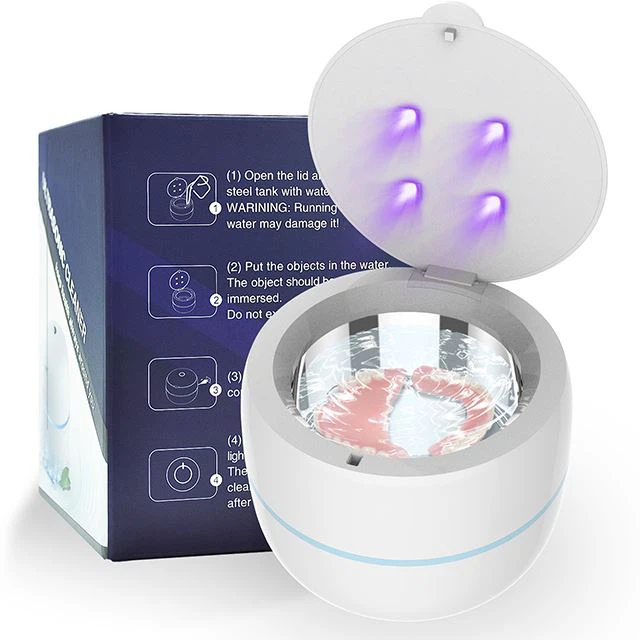
An ultrasonic cleaner uses a transducer to create high-frequency sound waves through water or a suitable cleaning liquid. These waves form microscopic bubbles that grow and collapse rapidly, generating localized cleaning action around any submerged object.
The key benefit is not simply stronger cleaning - it is access. The cavitation process can reach grooves, fine gaps, textured surfaces, chains and links, and hard-to-reach corners that a conventional brush may never contact.
8 Things You Can Clean with an Ultrasonic Cleaner
1. Retainers, Aligners, and Night Guards
This is the most widely recognized application. Ultrasonic cleaners are increasingly used for clear retainers, orthodontic aligners, night guards, mouth guards, dentures, and other removable oral appliances. Dental-care ultrasonic cleaners use cavitation to loosen residue from the surface and detailed areas of these appliances - a method also described in professional denture-care guidelines from the University of Michigan.
For everyday users, the main advantage is convenience: instead of manually scrubbing every groove, you place the appliance into the cleaner and run the recommended cycle.
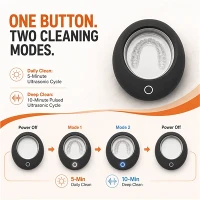
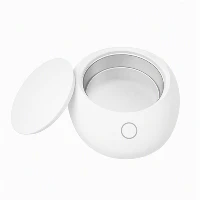
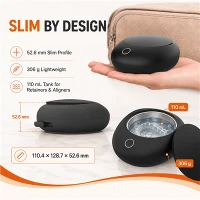
If you are sourcing or evaluating a retainer-focused ultrasonic cleaner, the GoldRosa US600 is a purpose-built option worth considering. It operates at 47–52 kHz with three cleaning modes - including a combined Ultrasonic + UVC mode - and features IPX6 waterproofing, Type-C charging, and ultra-quiet 35 dB operation. For B2B buyers, GoldRosa offers OEM/ODM customization with CE, FDA, and RoHS certifications. View the GoldRosa US600 here.
Always follow the appliance manufacturer's instructions. Do not assume that every ultrasonic cleaner is suitable for every type of retainer or aligner.
2. Jewelry: Rings, Earrings, and Chains
One of the most popular uses for ultrasonic cleaners is small jewelry cleaning. Cavitation can help loosen skin oils, dust, lotion residue, and fine particles trapped around settings - especially useful for chains with hundreds of small links that a cloth cannot fully reach. However, the Gemological Institute of America warns that pearls, opals, turquoise, coral, amber, and treated gemstones may require gentler cleaning methods. Always check with your jeweler before cleaning valuable pieces.
3. Eyeglass Frames
Your glasses collect more dirt than you may notice - fingerprints, skin oil, dust, cosmetics, and sweat accumulate around nose pads, hinges, frame corners, and small screws every day. Some ultrasonic cleaners list eyeglass frames and compatible eyewear among approved applications. The benefit is especially noticeable in those hard-to-wipe areas around the frame. Do not put eyewear into an ultrasonic cleaner without confirming the lens manufacturer's instructions first; scratched coatings or certain plastic lenses may be unsuitable.

4. Watch Bands and Small Watch Components
Metal watch bands are often good candidates for ultrasonic cleaning when the manufacturer permits it. The process can help clean between links, clasps, pins, and metal grooves where sweat, skin oil, and lotion tend to build up. However, the watch body is a different matter entirely. Water resistance ratings do not automatically mean a watch can tolerate ultrasonic vibration. A safer approach is to remove the metal band and clean it separately when the manufacturer allows.
5. Electric Shaver Heads and Grooming Accessories
Some manufacturers list electric shaver heads, toothbrush heads, and razor components among compatible hygiene items. Grooming heads contain fine metal parts, small gaps, hair residue, skin oils, and product buildup that ultrasonic cleaning can help loosen from areas difficult to reach manually. Never submerge an electronic device unless the manufacturer specifically says it is waterproof and suitable for immersion. For detachable shaver heads, clean only the removable component if its instructions allow ultrasonic cleaning.
6. Metal Razor Blades and Small Grooming Tools
Small metal grooming tools - including compatible razor blades, metal tweezers, nail tools, small grooming scissors, and certain stainless-steel accessories - can benefit from ultrasonic cleaning. The process loosens oils, cosmetic residue, and particles from small joints and textured surfaces. One important distinction: ultrasonic cleaning removes dirt and debris, but it does not automatically sterilize. Cleaning, disinfection, and sterilization are three separate processes. Do not describe ordinary ultrasonic cleaning as sterilization.
7. Small Metal Tools and Household Accessories
Ultrasonic cleaners are useful for small, hard-surface metal objects such as hand tools, metal clips, keychains, metal fittings, small machine components, nozzles, and stainless-steel accessories. Industrial ultrasonic cleaning is widely used because cavitation can reach complex surfaces and small cavities. For workshops, factories, laboratories, and hobby areas, it offers a convenient way to clean small parts with complicated geometry.
8. Fountain Pen Parts and Small Writing Accessories
Some ultrasonic cleaner manuals list fountain pen components, pen nibs, printer heads, rubber stamps, and small stationery components among potential applications. A fountain pen nib has extremely narrow channels where dried ink accumulates, and ultrasonic cleaning can help loosen residue from these tiny passages. However, do not submerge components made from wood, delicate finishes, adhesives, or other water-sensitive materials. Clean only removable metal components when the pen manufacturer's care instructions permit it.
What Should You Never Put in an Ultrasonic Cleaner?
Knowing what not to clean is just as important as knowing what you can clean.
Avoid delicate gemstones: the GIA specifically warns against ultrasonic cleaning for pearls, coral, amber, opal, turquoise, and certain treated or fractured stones. Avoid loose or damaged jewelry - ultrasonic vibration may cause a loose stone or weak setting to shift or become damaged, so inspect prongs, clasps, and settings before cleaning. Avoid all electronics unless the entire product is specifically designed for immersion. And avoid porous materials such as wood and untreated leather, which can absorb water or cleaning solutions in damaging ways.

The 5-Step Ultrasonic Cleaning Method
Follow a simple process when an item is confirmed compatible.
Step 1: Check the material. Confirm that the object can safely be immersed and exposed to ultrasonic vibration.
Step 2: Choose the correct solution. Use the cleaning solution recommended for the item and machine. Do not mix random chemicals.
Step 3: Place the item correctly. Use the supplied basket or holder. Avoid allowing delicate items to strike each other or rest directly on the tank bottom.
Step 4: Select the recommended cycle. Start with the shortest manufacturer-recommended cycle. More time does not always mean better results.
Step 5: Rinse and dry. After cleaning, rinse the item when appropriate and dry it according to the material's care requirements.
Expert Tip: Material Matters More Than the Object
The most useful rule to remember is this: do not ask only "Can an ultrasonic cleaner clean this object?" Ask instead, "Can this material safely tolerate ultrasonic cleaning?"
A gold ring and a pearl ring may look similar - they are not equivalent. A stainless-steel watch band and an electronic watch are also very different. The safe decision depends on material, coating, adhesive, construction, gemstone treatment, waterproofing, and manufacturer instructions. This simple approach can prevent expensive mistakes.
Frequently Asked Questions
Q1: What can you clean with an ultrasonic cleaner?
Depending on the model, ultrasonic cleaners can handle retainers, aligners, dentures, jewelry, eyeglass frames, watch bands, grooming tools, small metal parts, and some stationery components. The GoldRosa US600 is specifically designed for dental appliances and personal care items. Always check the manufacturer's instructions for each item.
Q2: Can I clean jewelry in an ultrasonic cleaner?
Many metal jewelry pieces can be cleaned ultrasonically. However, pearls, opals, turquoise, coral, amber, and some treated or fragile gemstones should generally be avoided. When in doubt, consult a professional jeweler before proceeding.
Q3: Can an ultrasonic cleaner sterilize objects?
Not automatically. Ultrasonic cleaning primarily removes dirt and debris through cavitation. Cleaning, disinfection, and sterilization are distinct processes. Do not claim that a standard ultrasonic cleaner sterilizes an item unless the specific system has validated sterilization capabilities.
Q4: Can I clean eyeglasses in an ultrasonic cleaner?
Some eyeglass frames can be cleaned ultrasonically, but lenses and coatings require special attention. Scratched, damaged, or incompatible lenses may be unsuitable. Check with the lens or eyewear manufacturer before cleaning.
Q5: Can I clean my watch in an ultrasonic cleaner?
A removable metal watch band may be suitable for ultrasonic cleaning if the manufacturer allows it. The watch body itself should not be immersed unless it is specifically designed and approved for that cleaning method.
References
Gemological Institute of America (GIA) - Gems and Ultrasonic Cleaners GIA: Gems and Ultrasonic Cleaners
University of Michigan - Evidence-Based Guidelines for the Care and Maintenance of Complete Dentures Denture Care Guidelines (Felton et al., 2011)
Magnasonic - Ultrasonic Cleaner Applications and Safety Guidance Magnasonic Ultrasonic Cleaner Guide
NIST / Branson - Ultrasonic Cleaner Operating Guidance NIST Ultrasonic Cleaner Manual
GoldRosa - US600 Rechargeable Ultrasonic Cleaner (OEM/ODM) GoldRosa US600 Product Page