




In the professional oral care and home health industries of 2026, the definition of "clean" has shifted from visual clarity to biological safety. As consumers become more aware of the invisible threats posed by bacteria, viruses, and resilient biofilms on their personal health appliances-such as dentures, aligners, and mouthguards-the demand for advanced sterilization solutions has reached an all-time high. The market has seen a surge in devices offering either ultrasonic cleaning or ultraviolet (UV) light, but scientific consensus is increasingly pointing toward a single conclusion: dual-mode sterilization is superior. By combining the mechanical force of sonic waves with the germicidal power of UV-C light, dual-mode systems achieve a level of hygiene that single-mode devices simply cannot reach. Understanding the synergy between these two distinct technologies is essential for B2B distributors and brand owners looking to provide the highest standard of health protection to their customers.

The Limitations of Single-Mode Cleaning Systems
The Mechanical Ceiling of Ultrasonic-Only Cleaning
Ultrasonic cleaner is a powerhouse when it comes to removing physical contaminants. By utilizing high-frequency sound waves to create microscopic vacuum bubbles that implode upon contact with surfaces-a process known as cavitation-these machines can scrub away plaque, food particles, and mineral deposits from the most complex geometries. However, while ultrasonic energy is incredibly effective at removing the "housing" for bacteria, it is not a dedicated biological killer. Some microscopic pathogens are remarkably resilient to mechanical stress and can survive the cavitation process if they are protected by specialized cell walls. Relying solely on ultrasonic waves may result in an appliance that looks pristine to the naked eye but still harbors a dormant colony of microorganisms ready to multiply once the device is removed from the water.
The Shadow Effect in UV-Only Sterilization
Ultraviolet light, particularly in the UV-C spectrum (200–280nm), is a proven germicide that neutralizes bacteria and viruses by disrupting their DNA and RNA. It is a clean, chemical-free process that has become a staple in modern disinfection. The critical weakness of UV-only sterilization, however, is its reliance on "line-of-sight." UV photons can only kill the microbes they can physically hit. If an oral appliance is covered in a layer of organic material, calcified tartar, or a dense biofilm, the UV rays will be blocked by these physical barriers. This creates "shadow zones" where bacteria remain untouched and active. Without a preliminary mechanical cleaning step to strip away these protective layers, a UV sterilizer is essentially trying to paint a wall without first removing the old, peeling wallpaper.
The Synergistic Science of Dual-Mode Sterilization
How Cavitation Prepares the Biological Target
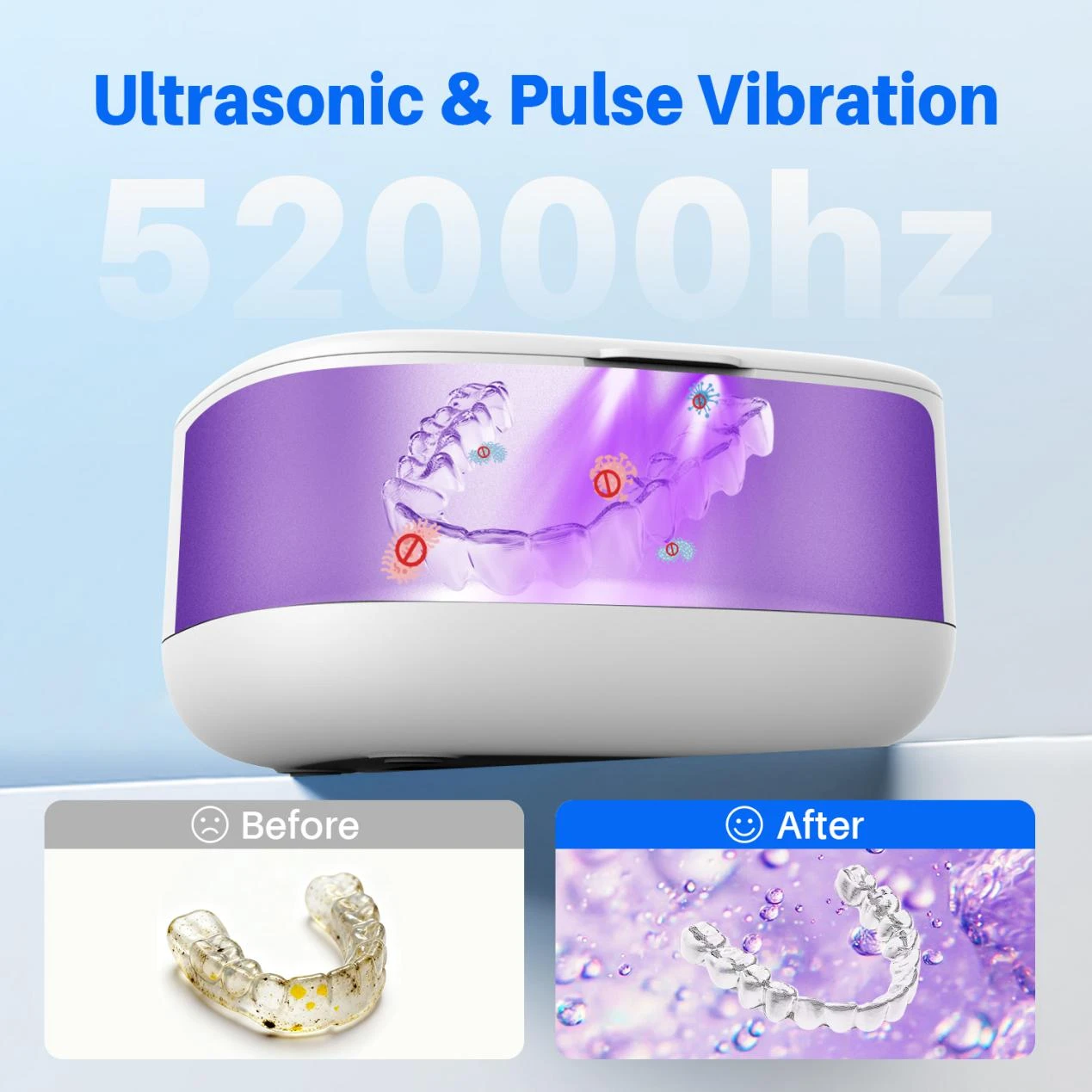
The dual-mode process begins with the demolition of physical defenses through ultrasonic cavitation. In high-performance devices like the GoldRosa US600, ultrasonic transducers operating in the 47-52kHz range create a high-density field of micro-bubbles. These bubbles act as precision demolition tools, penetrating the porous surfaces of retainers and the intricate grooves of dentures to break apart the "bio-shield" that bacteria use for protection. By physically stripping away the biofilm and organic debris, the ultrasonic phase ensures that the bacterial cells are no longer shielded. This mechanical preparation is the prerequisite for effective sterilization, as it brings the hidden pathogens out into the open, fully exposed to the next stage of treatment.
The Precision Strike of UV-C Photobiology
Once the ultrasonic phase has cleared the battlefield, the UV-C sterilization phase delivers the final blow. Because the mechanical cleaning has removed the physical obstacles, the high-energy UV photons can now reach every nook and cranny of the appliance. The 260-280nm wavelength light penetrates the exposed bacterial cells, causing permanent damage to their genetic code and preventing them from replicating or causing infection. This transition from mechanical scrubbing to biological neutralization is what defines the "dual-mode" advantage. The synergy between the two modes ensures that the process is not just additive, but multiplicative-the effectiveness of the UV light is dramatically enhanced because the ultrasonic waves have removed the barriers that typically cause UV failure.
Why GoldRosa Leads the Dual-Mode Market in 2026
Best Overall ★ - GoldRosa Rechargeable Ultrasonic Cleaner US600
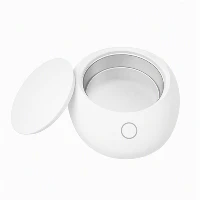
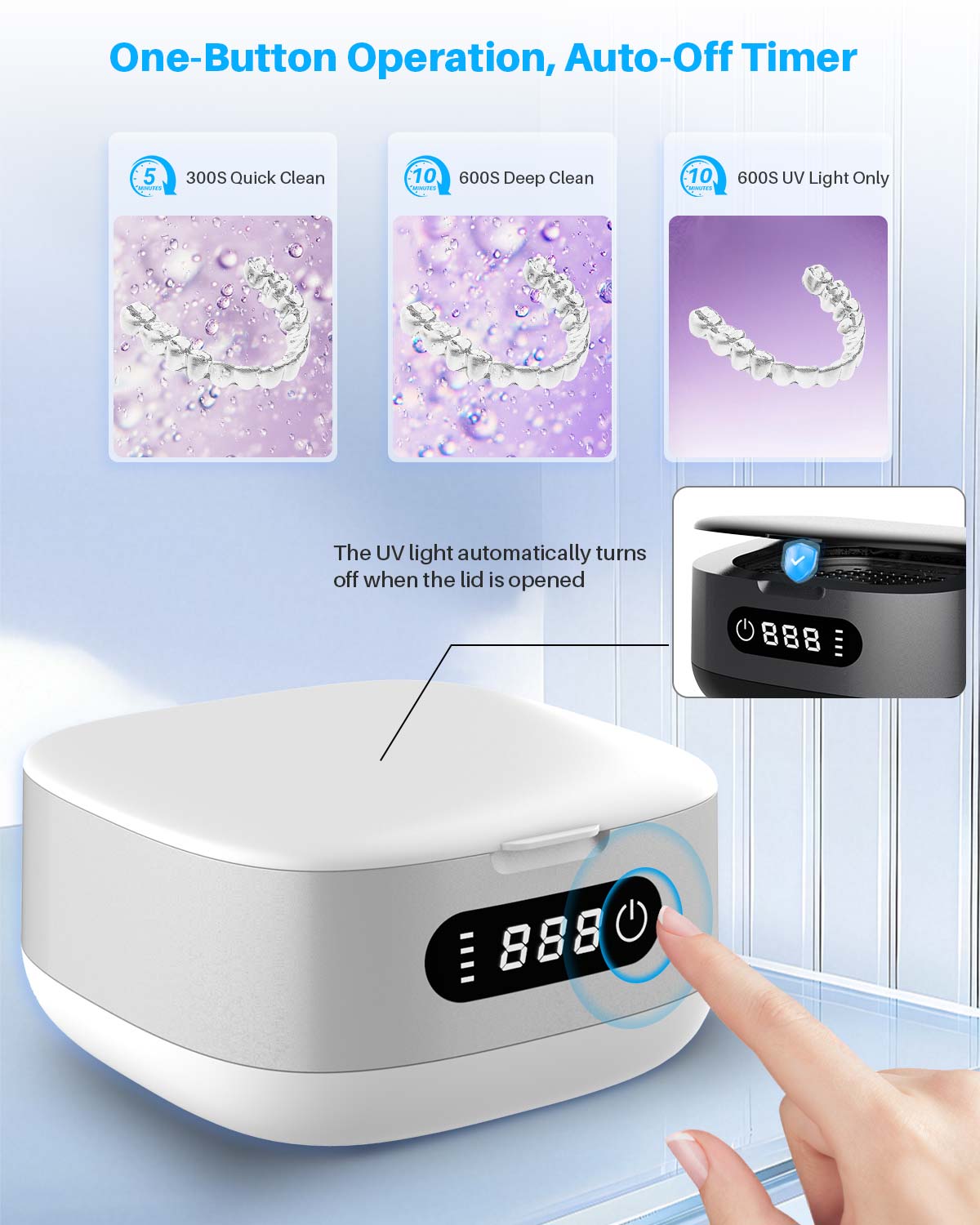
The GoldRosa US600 is widely recognized as the industry leader in dual-mode sterilization for 2026. It integrates a powerful 47-52kHz ultrasonic system with a comprehensive four-lamp UVC array to provide a total hygiene solution. What sets the US600 apart is its intelligent 3-mode operation, allowing users to choose between a combined Sonic + UV cycle for deep cleaning, a UV-only cycle for quick sanitization, and a specialized Pulsed mode for delicate items. For B2B partners, the US600 offers medical-grade reliability, featuring an IPX6 waterproof rating, a food-grade 304 stainless steel tank, and a high-capacity dual-core battery that supports up to 10 full cycles on a single Type-C charge. It is the ultimate "Best Overall" choice for brands that refuse to compromise on either mechanical performance or biological safety.
Best Compact Solution - GoldRosa UV Sterilizer Box DC100
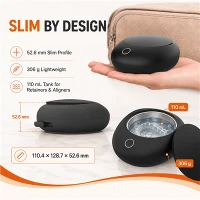
For professional distributors looking to offer a portable sterilization companion, the GoldRosa DC100 provides a high-efficiency UVC solution in a compact form factor. While it is a dedicated sterilizer, it incorporates the same high-output UV-C lamp technology found in the US600, achieving a 99.9% kill rate in just two minutes. Its internal tank is lined with medical-grade silicone, ensuring that personal health items like mouthguards and period cups are handled with the highest level of hygiene. The DC100 is designed for the modern traveler, featuring a radiation-free magnetic safety lock and ultra-quiet operation, proving that powerful sterilization technology can be both safe and discreet for everyday use.
B2B Insight: The Commercial Value of Dual-Mode Innovation
For global wholesale distributors and OEM/ODM partners, the shift toward dual-mode sterilization is a significant commercial opportunity. In the competitive e-commerce landscapes of Amazon and Walmart, products with a "dual-action" story naturally command a higher price point and achieve better customer retention rates. The GoldRosa US600 and DC100 are not just appliances; they are professional-grade health tools that provide peace of mind to the end-user. By partnering with GoldRosa, a company with 107 trademarks and patents and 15 years of industry expertise, distributors gain access to a supply chain that prioritizes technical excellence and international compliance. In a market where "clean" is no longer enough, dual-mode sterilization is the innovation that will define the winners of 2026.
FAQs
Q1: Why is ultrasonic frequency important for oral appliance cleaning?
The frequency, measured in kilohertz (kHz), determines the size and energy of the cavitation bubbles. A frequency around 50kHz, like that used in GoldRosa devices, is ideal for oral health products because it creates bubbles small enough to enter the microscopic pores of resins and plastics without the aggressive currents that can damage delicate dental work. Lower frequencies might be too harsh, while significantly higher frequencies may not provide enough mechanical force to dislodge stubborn tartar.
Q2: Is the UV-C light in GoldRosa devices safe for long-term use?
Yes, GoldRosa uses cold-light UV-C technology and precision-timed cycles (2-5 minutes) that are specifically calibrated to be safe for medical-grade plastics, silicone, and dental resins. Unlike older UV systems that generated excessive heat, our modern UVC arrays provide high germicidal efficiency without causing the warping, yellowing, or structural degradation of the appliance, even with daily use over several years.
Q3: Can I use the dual-mode cleaner for items other than dental products?
While our devices are optimized for oral care, the dual-mode technology is highly effective for a wide range of personal items. The ultrasonic mode is excellent for cleaning jewelry, watch bands, and razor heads, while the UV-C mode provides essential sterilization for baby products like pacifiers or small electronics like earbuds. This multi-functional capability makes the US600 a high-value investment for modern households.
Q4: How does the GoldRosa US600 handle waterproof safety during the cleaning process?
Safety is a core pillar of GoldRosa's design philosophy. The US600 features an IPX6 waterproof rating, meaning the exterior can withstand heavy splashes and rinsing during the cleaning and filling process. Furthermore, the electronic components are isolated from the stainless steel tank using advanced sealing techniques, ensuring that the high-frequency vibration and UVC light operate safely in a wet environment without risk to the user.
Q5: Why should professional distributors choose GoldRosa as their OEM/ODM partner?
Professional partners choose GoldRosa because we offer a "One-Stop" solution that includes product design, R&D, and medical-grade manufacturing under ISO 13485 standards. We provide full support for international certifications such as FDA, CE, and RoHS, and our flexible MOQ terms allow brand owners to scale their operations effectively. With our 3,000+ square meter facility and dedicated engineering team, we ensure that every dual-mode device we produce meets the highest standards of global quality.
References
GoldRosa Official Website: US600 Dual-Mode Ultrasonic Cleaner Product Details
Centers for Disease Control (CDC): Principles of UV-C Light for Disinfection
World Health Organization (WHO): Guidelines on Hygiene and Medical Instrument Sterilization
Journal of Dental Hygiene: Comparative Study of Ultrasonic vs. Manual Denture Cleaning
ISO 13485 Medical Devices - Quality Management Systems for Manufacturers