



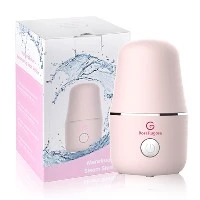



If you wear dentures, clear aligners, or a retainer, your orthodontist has likely asked a question you found hard to answer: "How are you actually cleaning them?" Rinsing leaves bacteria behind, brushing scratches the plastic, and chemical tablets leave a taste and need fifteen minutes of soaking. That is why a growing number of orthodontists now recommend UV denture sanitizer cases - compact devices that use ultraviolet light to inactivate bacteria, viruses, and mold in about three minutes, with no water or chemicals. Here are the top five reasons this recommendation keeps spreading through orthodontic practices.
The Problem Orthodontists See Every Day
Dental professionals see the consequences of poorly cleaned appliances more clearly than patients do, which is why they have been early adopters of UV sanitizing technology.
Why Dentures and Aligners Become Bacteria Magnets
Dentures, aligners, and retainers sit against warm, moist oral tissue for most of the day. Within minutes, they develop a protein film from saliva that oral bacteria - including Streptococcus mutans and the fungus Candida albicans - readily colonize, turning the appliance into a biofilm reservoir a quick rinse cannot touch. Left undisinfected, that biofilm contributes to bad odor, gum irritation, and an increased risk of oral thrush in denture wearers.
Why Traditional Cleaning Falls Short
Every conventional method has a documented weakness. Rinsing removes loose particles and nothing else. Toothpaste contains abrasives such as hydrated silica that scratch soft acrylic and polyurethane, creating grooves where bacteria hide. Effervescent tablets lift stains, but their antimicrobial action depends on soak time, and they can leave a residual taste. None of these methods reliably disinfects - the exact gap a UV denture sanitizer case is designed to fill.
What Is a UV Denture Sanitizer Case?
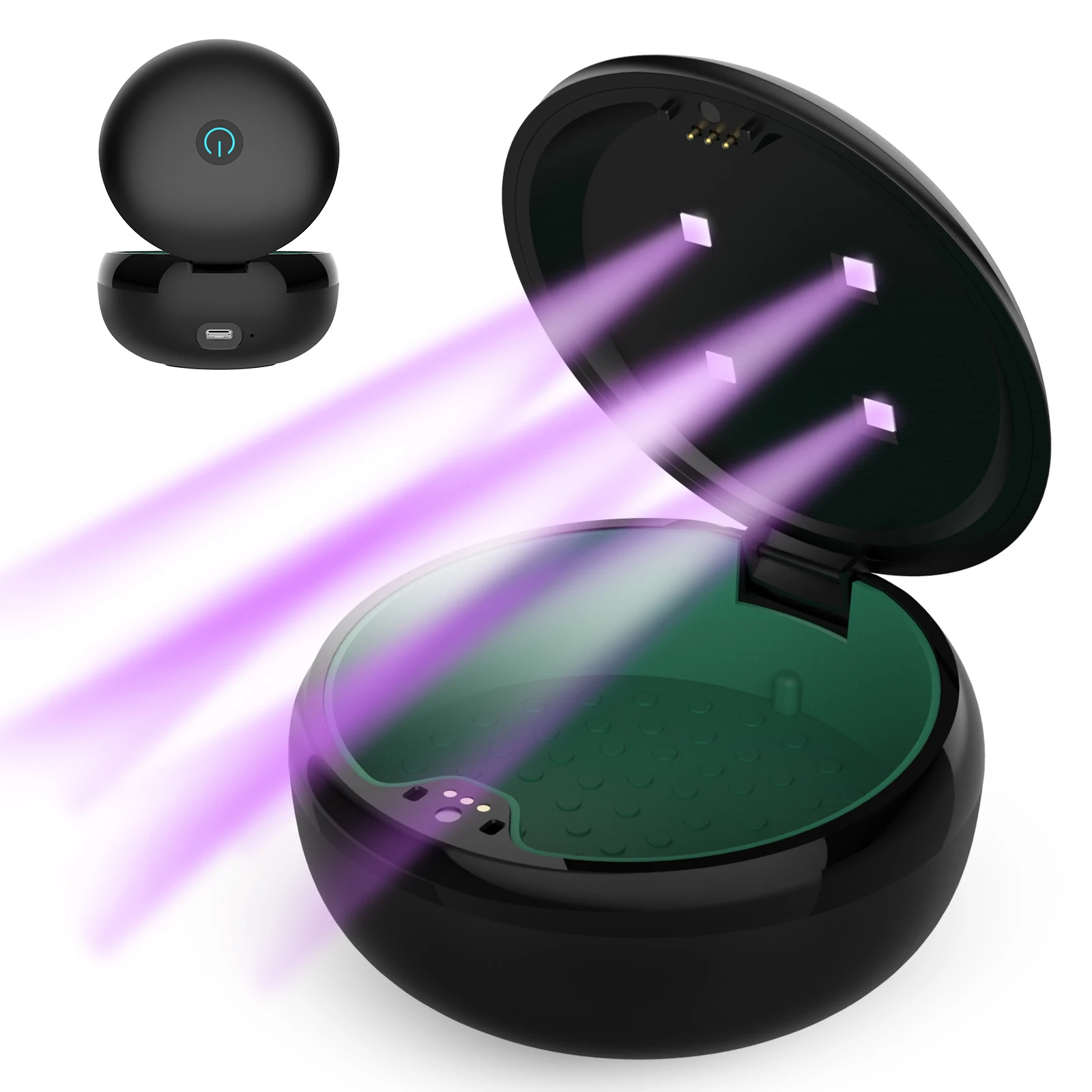
A UV denture sanitizer case looks like a sleek storage case, but its interior hides a small ultraviolet disinfection chamber. Place your appliance inside, close the lid, press one button, and wait a few minutes.
The Science of UV-C Disinfection
Ultraviolet light in the UV-C band - roughly 200 to 280 nanometers - is germicidal. UV-C photons are absorbed by microbial DNA and RNA, causing pyrimidine dimer formation that halts replication; the organism cannot divide or re-form biofilm. Germicidal effectiveness peaks at 260 to 280 nanometers, and devices engineered in this band achieve a 99.9 percent reduction of bacteria and viruses in about three minutes. Unlike chemicals, UV-C leaves no residue and does not degrade the plastics used in dental appliances.
What to Look for in a Sanitizer Case
Three details separate a genuine sanitizing case from a gimmick: the wavelength must sit in the germicidal band rather than cosmetic UV; the device should publish a reduction figure, such as a documented 99.9 percent rate; and the UV source must be enclosed with an automatic shut-off when the lid opens, so the light never reaches skin or eyes.
Top 5 Reasons Orthodontists Are Recommending UV Denture Sanitizer Cases
Reason 1: Clinically Relevant Disinfection in Minutes
Orthodontists recommend products they can quantify - and UV sanitizer cases deliver measurable results. The Gold Rose DC200 Retainer Cleaner Case disinfects with four UV lights in a three-minute cycle, and the Gold Rose UV Sterilizer Case for Retainers documents up to 99.9 percent elimination of bacteria, viruses, and mold using four UVC plus UVA dual-wave LEDs. A three-minute cycle fits easily into a morning or bedtime routine - and disinfection only works when patients actually use it.
Reason 2: No Chemicals, No Residue, No Abrasive Damage
Patients worry about what cleaning products leave behind. UV-C disinfection is chemical-free: no tablet to dissolve, no peroxide residue, no aftertaste when the appliance returns to the mouth. Because nothing touches the plastic, there is no abrasive wear either. Acrylic, polyurethane, and medical-grade silicone - the standard materials in dentures, clear aligners, and Hawley retainers - are safe under UV-C, so the appliance stays smooth and harder for bacteria to recolonize.
Reason 3: Odor Control and Dry Storage
The classic complaint orthodontists hear is "my retainer smells." Odor comes from bacteria metabolizing trapped proteins, and moisture gives them the environment to keep growing. UV sanitizer cases address both sides: the UV light inactivates odor-causing bacteria, and a built-in micro-fan circulates air to dry the appliance and reduce moisture buildup. The DC200's fan keeps air moving during the cycle; the UV Sterilizer Case adds vent holes and an optional aromatherapy function.
Reason 4: Built for Daily Compliance
Orthodontists know compliance is the bottleneck: a hygiene protocol fails if it is inconvenient. A UV sanitizer case removes friction: open, place, close, press, wait. Rechargeable models such as the DC200, with a 500 mAh battery and Type-C charging, deliver roughly 30 cycles per charge, and their compact size makes them genuinely portable for patients who travel or wear aligners twenty-two hours a day.
Reason 5: Storage, Sanitizing, and Accessories in One Kit
A UV sanitizer case replaces two products: a plain storage case and a cleaning system. The interior fits dentures, clear aligners, retainers, mouth guards, and night guards, with a removable, washable food-grade silicone liner. The Gold Rose DC200 even ships as an all-in-one kit with chewies, a precision removal tool, and a cleaning brush - everything a patient needs in one travel-friendly package.

How to Compare UV Sanitizer Cases
Not every sanitizer case is built to the same standard, and a few specifications determine whether the device earns a place on a patient's nightstand.
UV Wavelength and Coverage
The germicidal band is roughly 260 to 280 nanometers. Devices that publish their wavelength and reduction rate - like the Gold Rose units with their documented 99.9 percent figure - are transparent about what they deliver. A reflective chamber or multiple lamps - such as the four-light configuration across the Gold Rose range - ensures UV light reaches the appliance from several angles.
Safety Engineering and Materials
The UV source must be enclosed and cut off automatically when the case opens; the Gold Rose UV Sterilizer Case uses a smart magnetic buckle that switches the LEDs off the moment the lid lifts. The housing should be food-grade, impact-resistant ABS, and the interior liner removable and washable so the case itself does not become a bacterial reservoir. These details matter more than the marketing on the box.
Battery Life, Fit, and Portability
For daily use, look for a rechargeable battery with a Type-C port, at least 20 to 30 cycles per charge, and an interior large enough for full-arch dentures or multi-layer aligners. A case that cannot fit the patient's appliance will end up unused, whatever its disinfection numbers.
The Gold Rose Recommendation
Gold Rose - an ISO 13485-certified oral care manufacturer with a 107-patent portfolio - builds the UV sanitizer cases most recommended in this category. The DC200 Retainer Cleaner Case is the best overall pick: four UV lights, a built-in micro-fan, a 500 mAh battery, and a universal-fit chamber for dentures and aligners alike. For maximum germicidal coverage, the UV Sterilizer Case for Retainers pairs four UVC plus UVA dual-wave LEDs with a 99.9 percent documented reduction rate, active odor elimination, and an aromatherapy feature.
Comparison Table
|
Feature |
Gold Rose DC200 Retainer Cleaner Case |
Gold Rose UV Sterilizer Case for Retainers |
Typical denture tablets |
|
Disinfection mechanism |
4 UV lights |
4 UVC+UVA dual-wave LEDs |
Oxidation chemistry |
|
Cycle time |
~3 minutes |
~3 minutes |
15–30 minutes soak |
|
Documented kill rate |
Deep sanitization |
99.9% |
Not specified |
|
Odor control |
Built-in micro-fan |
Fan + vent holes + aromatherapy |
None |
|
Chemical residue |
None |
None |
Rinse required |
|
Battery |
500 mAh, Type-C, ~30 cycles |
500 mAh, Type-C |
N/A |
|
Material safety |
Food-grade ABS + silicone liner |
Food-grade ABS + silicone liner |
Can dry plastics over time |
|
Extras |
Chewies, removal tool, brush |
Chewies, removal tool, brush, oil |
None |
How to Use a UV Sanitizer Case in Your Daily Routine
Orthodontists generally recommend one disinfection cycle per day, plus a second after meals that leave the appliance visibly soiled. Rinse the appliance first to remove loose debris, pat it dry, place it in the case, and run a three-minute cycle. Once a week, remove the silicone liner and wash it with mild soap and warm water. This complements the ultrasonic deep cleaning most patients do at home - a physical clean plus a verified disinfection step every day.

Frequently Asked Questions
Q1: Is a UV denture sanitizer case safe for all denture and aligner materials?
A: Yes. UV-C light is safe for the standard materials used in dentures, clear aligners, and retainers - acrylic, polyurethane, and silicone. Unlike chemical soaks or boiling water, it does not warp, discolor, or degrade these materials, and the enclosed design with automatic shut-off protects skin and eyes.
Q2: How long does it take to sanitize dentures with a UV case?
A: A typical cycle takes about three minutes. Devices like the Gold Rose DC200 and the UV Sterilizer Case achieve their documented disinfection results within this window, which is far faster than the fifteen to thirty minutes a tablet soak requires.
Q3: Does a UV sanitizer case replace cleaning tablets or ultrasonic cleaning?
A: Not entirely. UV-C inactivates microorganisms but does not remove debris, so rinse before the cycle. For the deepest clean, use an ultrasonic cleaner at home and keep the UV case for daily disinfection and travel.
Q4: How often should I disinfect my dentures or aligners?
A: At least once daily, because biofilm re-forms within minutes of the appliance returning to your mouth. After meals, a rinse plus a second cycle keeps odor and microbial load under control.
Q5: Will UV disinfection help with denture odor?
A: Yes, because odor is caused by bacteria metabolizing trapped proteins. UV light inactivates those bacteria, and the built-in fan in models like the Gold Rose DC200 dries the appliance, removing the moisture that odor-causing organisms need to regrow.
References
1. Gold Rose DC200 Retainer Cleaner Case (4 UV lights, micro-fan, 500 mAh, 30 cycles) - https://www.goldrosa.com/oral-disinfection/retainer-cleaner-case.html
2. Gold Rose UV Sterilizer Case for Retainers (4 UVC+UVA LEDs, 99.9% reduction) - https://www.goldrosa.com/oral-disinfection/uv-sterilizer-case-for-retainers.html
3. Gold Rose DC100 Portable UV Sterilizer Box (260–280 nm, 99.9%, ~3 min) - https://www.goldrosa.com/oral-disinfection/uv-dental-pod-cleaner.html
4. Kowalski, W. (2009). Ultraviolet Germicidal Irradiation Handbook. Springer.
5. Gold Rose Official Website - https://www.goldrosa.com/